The world’s most widely used bitumen classification, graded by needle-penetration depth, supplied across the ASTM D946 and EN 12591 series from 20/30 to 200/300.
ASTM D946 · EN 12591Penetration grades20/30 to 200/300
Penetration grade16 grades
ClassificationNeedle penetrationat 25 °C, 100 g, 5 s
StandardsASTM D946 · EN 12591and non-standard grades
Range20/30 to 200/30016 grades
QualityBatch CoAon every shipment
pen0%
01 / YOUR SUPPLY PARTNER
Why source penetration grade bitumen from Nuroil.
Grade, specification and delivery confirmed for your requirement, from Nuroil Trading in Sharjah.
Both standards, the full range
Quote against ASTM D946 or EN 12591 from one supplier, from hard 20/30 to soft 200/300, matched to the standard and edition in your project documents.
Every batch tested
Penetration and softening point are tested on each batch against the specified standard before it ships, so the grade on the paperwork is the grade in the drum.
Packed for your site
New steel drums for containerised supply, jumbo bags for compatible grades, or heated bulk by vessel and tanker for receivers with hot storage.
02 / THE MATERIAL
What is penetration grade bitumen?
IN SHORT
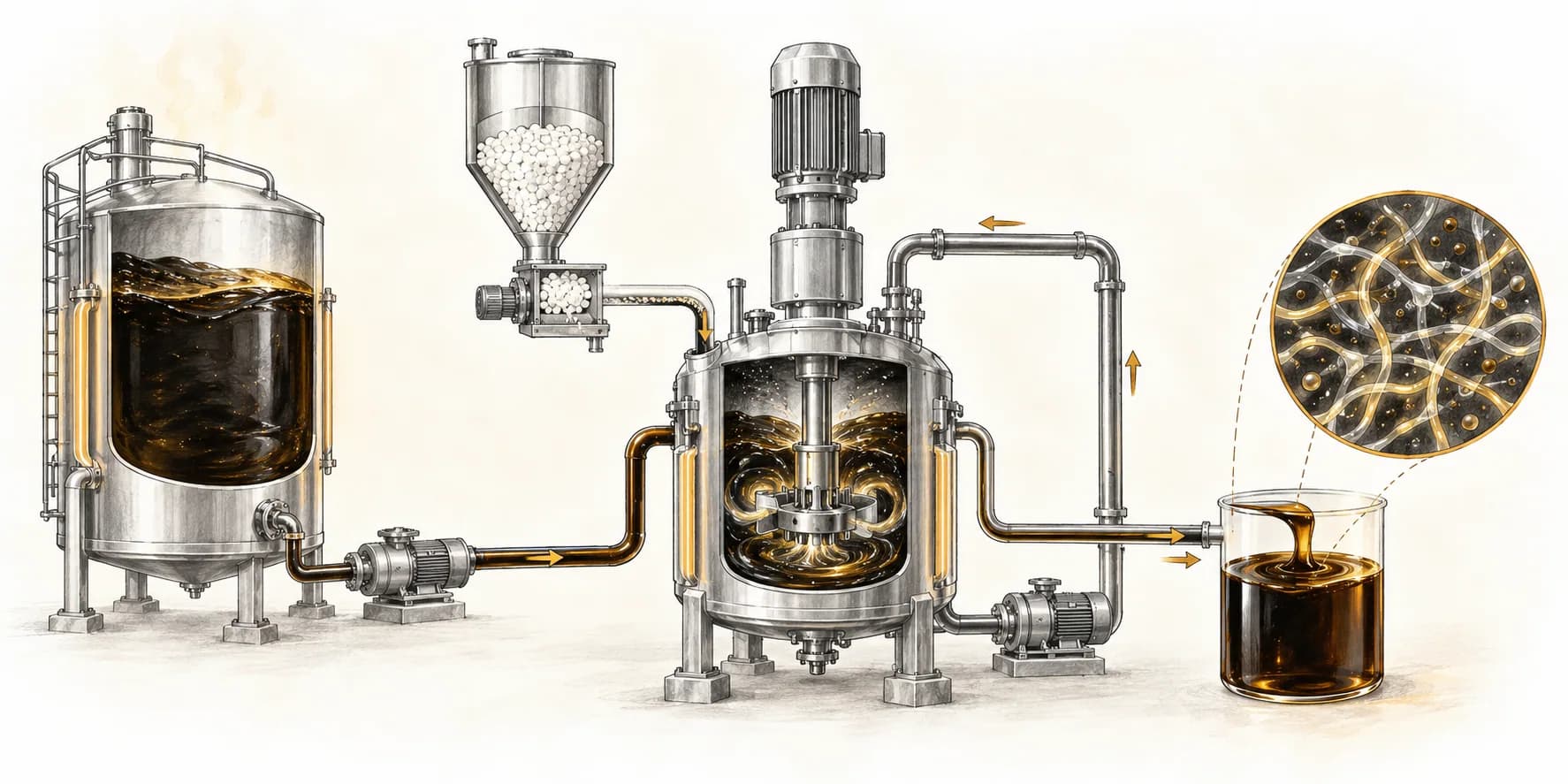
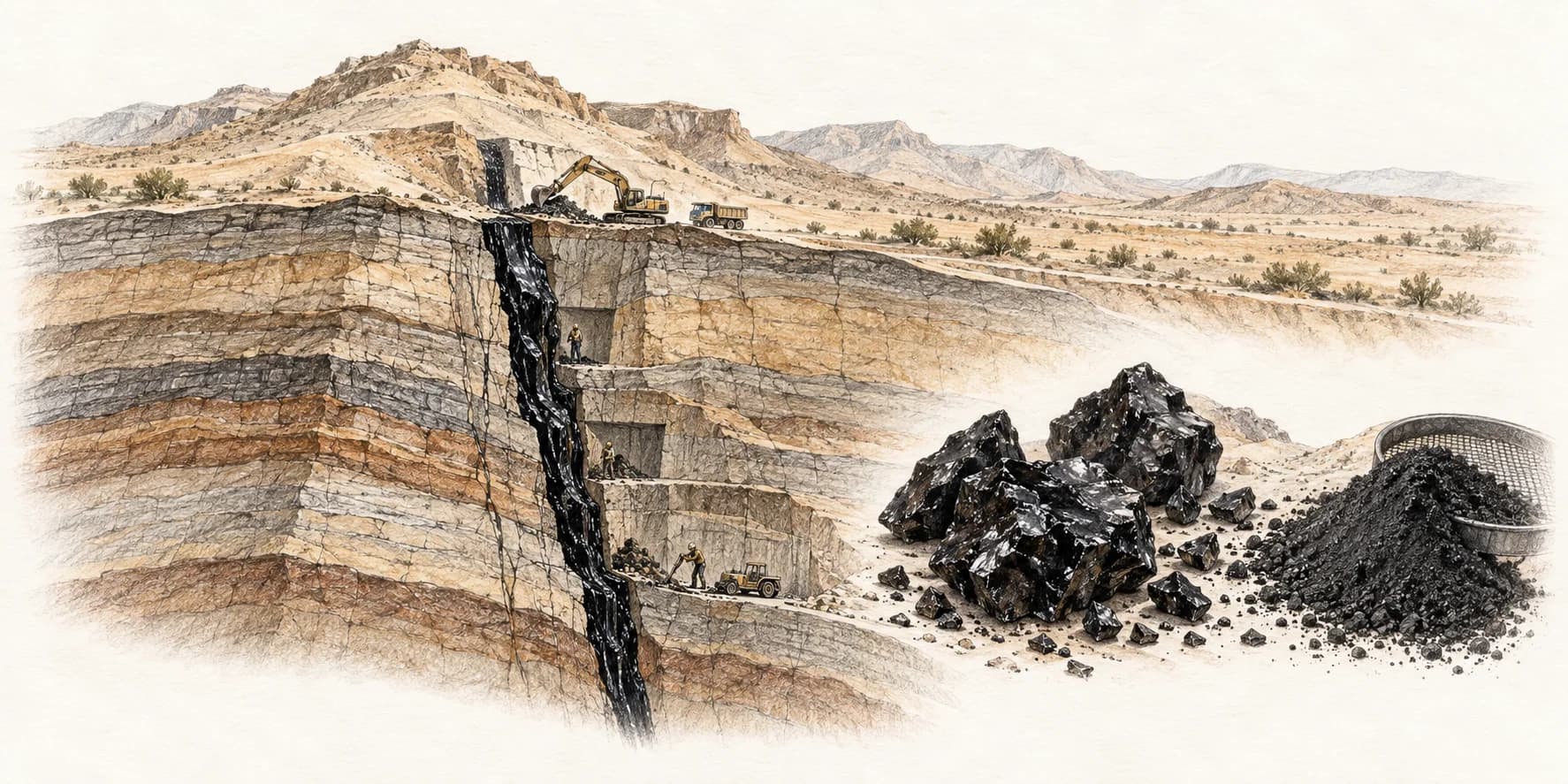
The heavy residue after vacuum distillation of crude oil, without further oxidation or chemical modification.
Material
Straight-run vacuum residue
Classification
Needle penetration at 25 °C
Standards
ASTM D946 · EN 12591
Range
20/30 to 200/300
03 / READING THE GRADES
The penetration test explained.
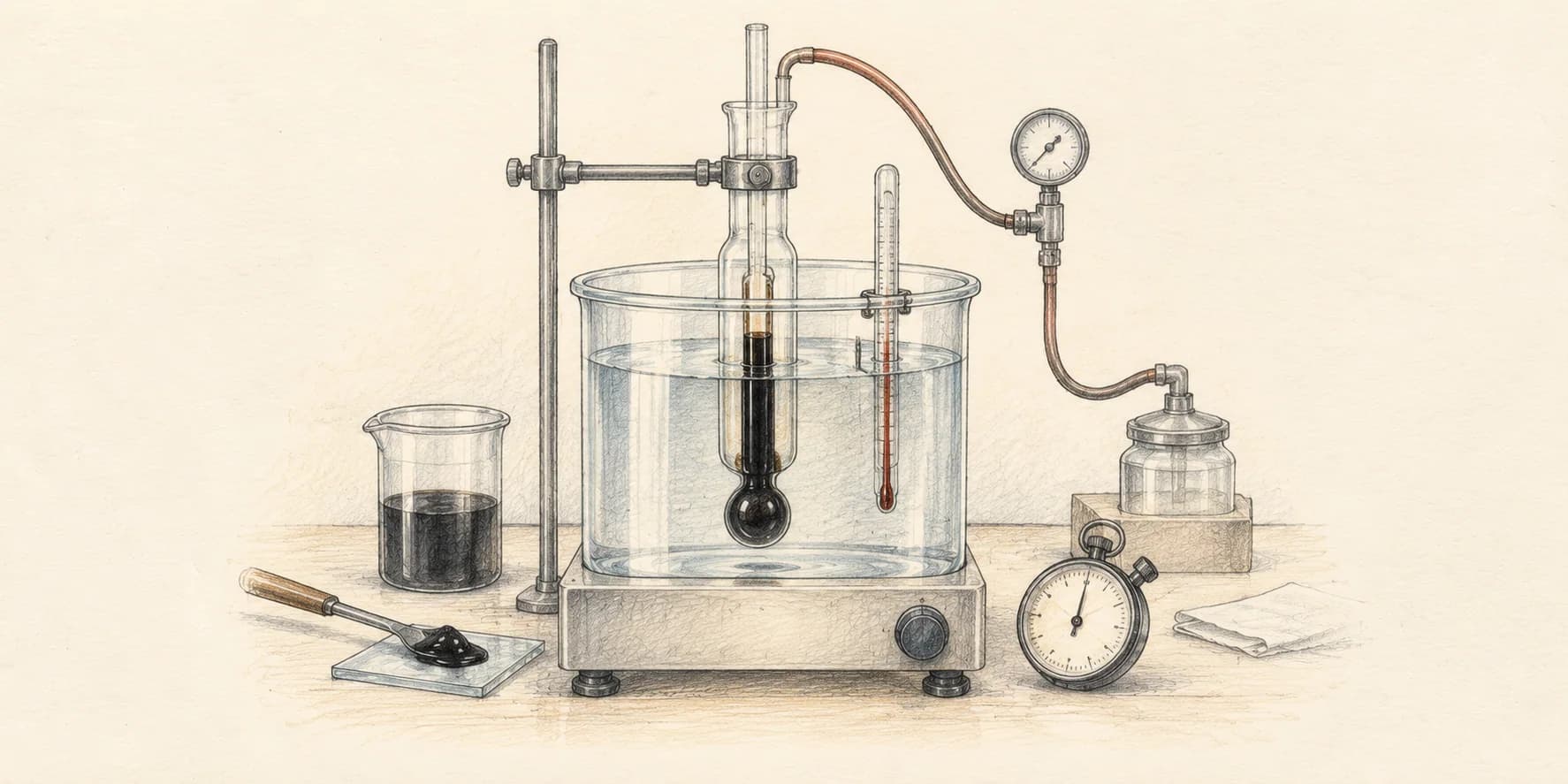
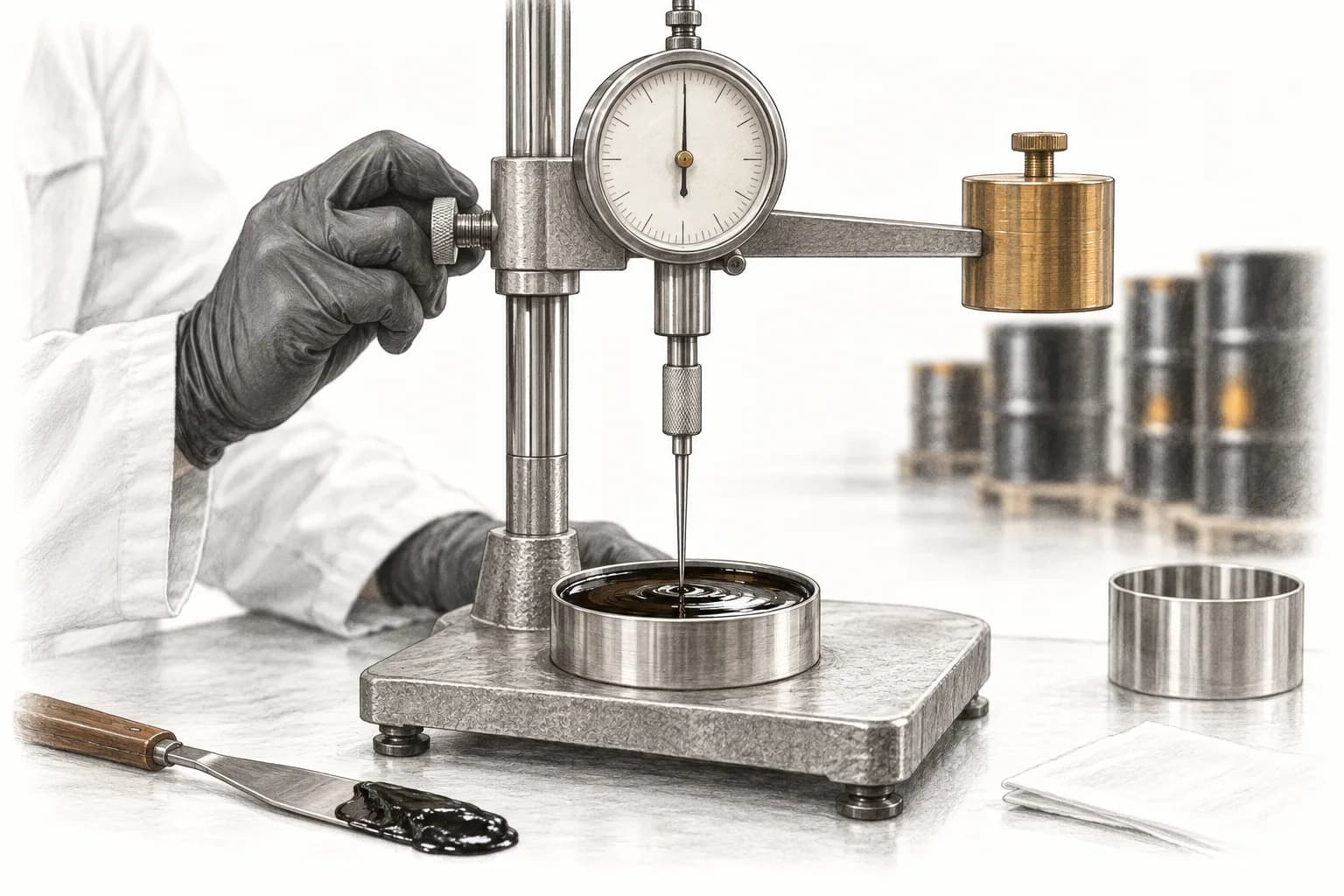
A small movement, a measured grade: a standard needle measures the consistency of the bitumen sample under controlled conditions.
01
Standard test conditions
The bitumen sample is tested at 25°C using a standard penetration needle under controlled laboratory conditions.
02
100 g applied load
A total load of 100 grams is applied to the needle to ensure consistent and comparable test results.
03
5-second penetration
The needle is allowed to penetrate the bitumen for exactly 5 seconds, after which the penetration depth is measured.
04
Determines the bitumen grade
The measured depth, expressed in tenths of a millimetre (0.1 mm), is used to classify penetration grades such as 60/70.
04 / STRENGTHS & LIMITS
Strengths and limits of penetration grading.
What it tells you
The test is done at 25°C (77°F), which is reasonably close to a typical pavement average temperature.
It may correlate better with low-temperature binder properties than the viscosity test, which is performed at 60°C (140°F).
Temperature susceptibility can be determined by running the test at temperatures other than 25°C.
The test is quick and inexpensive, so it can easily be used in the field.
What it does not tell you
The test is empirical and does not measure a fundamental engineering parameter such as viscosity.
Shear rate is variable and high during the test; binders typically behave as a non-Newtonian fluid at 25°C, which affects the result.
Temperature susceptibility cannot be determined from a single test at 25°C.
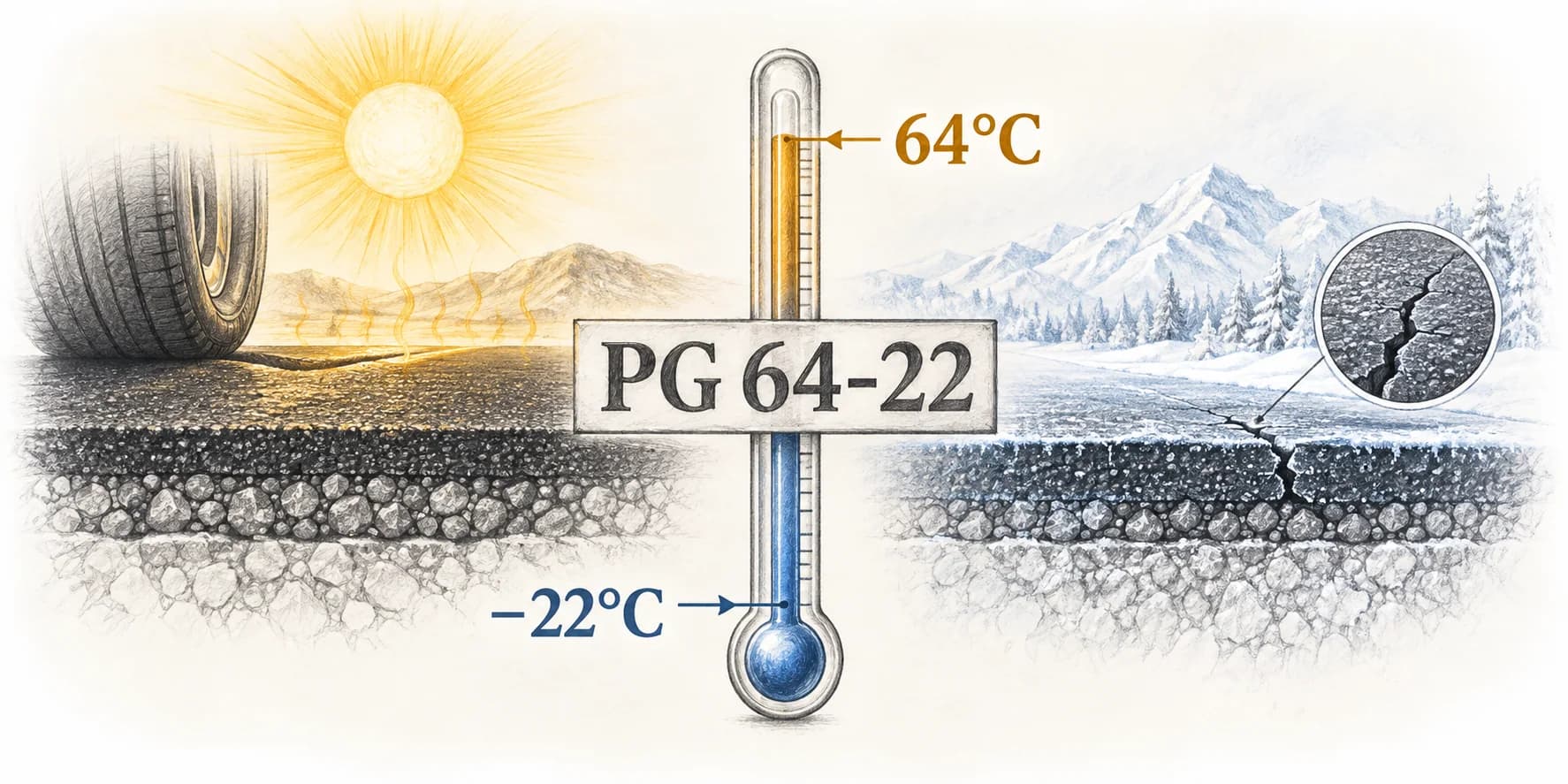
The test gives no information from which to establish mixing and compaction temperatures; viscosity grading or the Superpave PG system addresses these limits directly.
05 / FULL COMPARISON
Catalogue specifications.
Published values from each grade's specification. ASTM D946 itself sets no softening-point limit; the ASTM minimums are those stated on the grades' specifications. The batch Certificate of Analysis decides.
Technical data sheet · Typical values
Bitumen 40/50
NUR-BT-01Penetration grade bitumen · ASTM D946 · EN 12591
Standard
ASTM D946
Penetration at 25 °C (0.1 mm)
40–50
Softening point
49 °C min
Flash point
230 °C min
Ductility at 25 °C
100 cm min
Test methods
ASTM D5 · D36 · D92 · D113
Typical use
Hot climates, heavy traffic and high-temperature stability
Typical values from each grade's published specification. The test certificate for the offered batch decides.
It means penetration between 60 and 70 tenths of a millimetre in the standard needle test at 25°C. Lower numbers indicate harder bitumen.
02What is the difference between ASTM 60/70 and EN 50/70?
They have close penetration ranges but belong to different standards and are not automatically interchangeable. Follow the standard and edition named by the project.
03Which grade should I use for a hot climate?
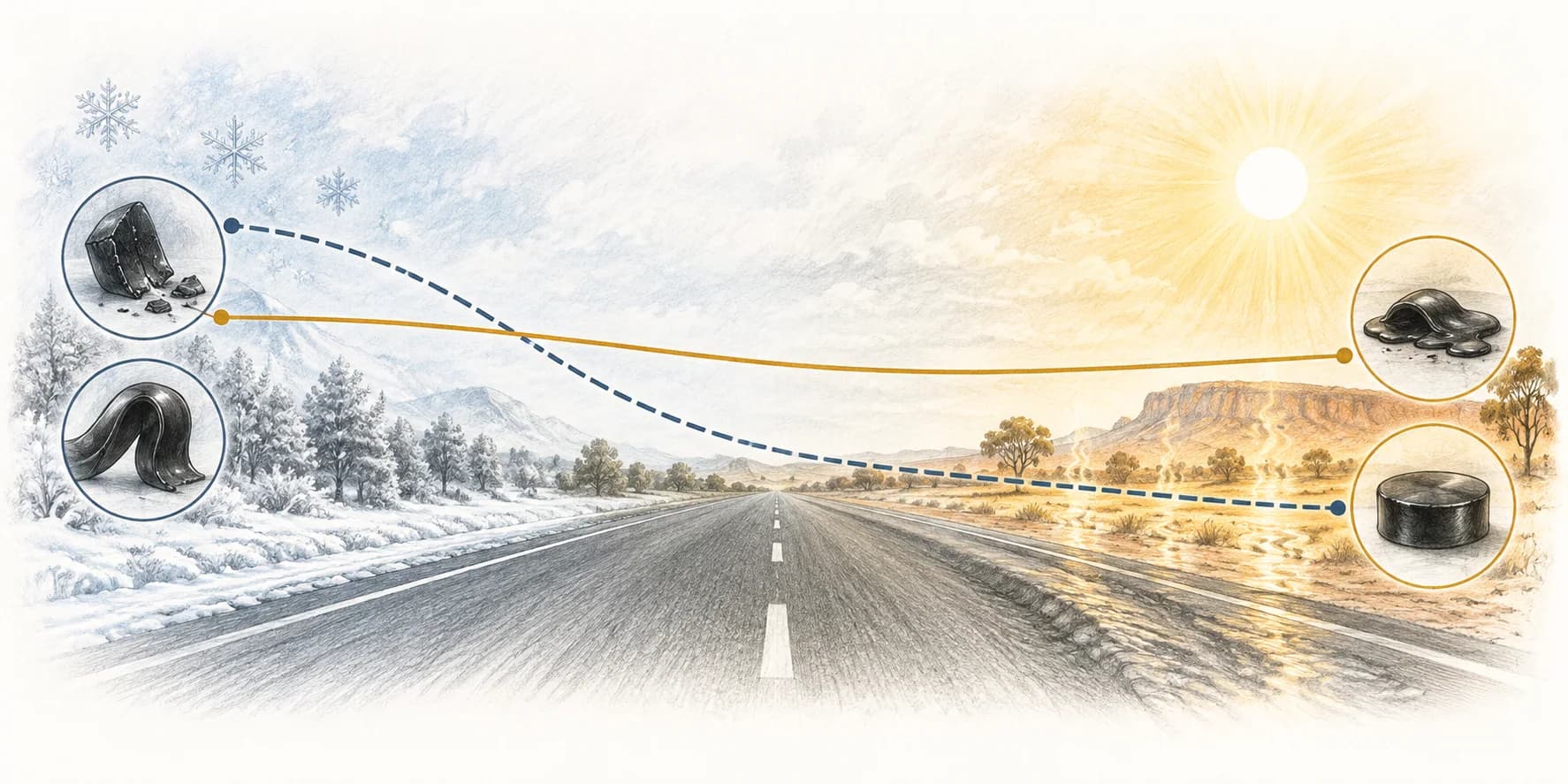
Harder grades such as ASTM 40/50 or EN 20/30–30/45 resist deformation under heat and heavy traffic better.
04What is the difference between penetration and viscosity grade?
Penetration grading uses needle depth at fixed conditions; viscosity grading classifies resistance to flow at a reference temperature.
05What documents come with each shipment?
Every shipment includes a Certificate of Analysis. Certificate of Origin, MSDS and third-party inspection reports are available on request.
06What packing formats are available?
Drums, jumbo bags and bulk supply are available depending on grade, quantity and destination facilities.
07What Incoterms do you offer?
FOB is commonly quoted from Jebel Ali, Port Khalid and Sharjah Hamriyah. CFR and CIF are available on request.
08How is penetration grade tested before shipment?
Each batch is tested for penetration and softening point against the specified standard, with results reported on the CoA.