Bitumen 100/120 is another grade of penetration bitumen, similar to Bitumen 85/100 but softer. Bitumen 100/120 is less commonly used compared to other grades but is crucial in specialised applications requiring extra flexibility.
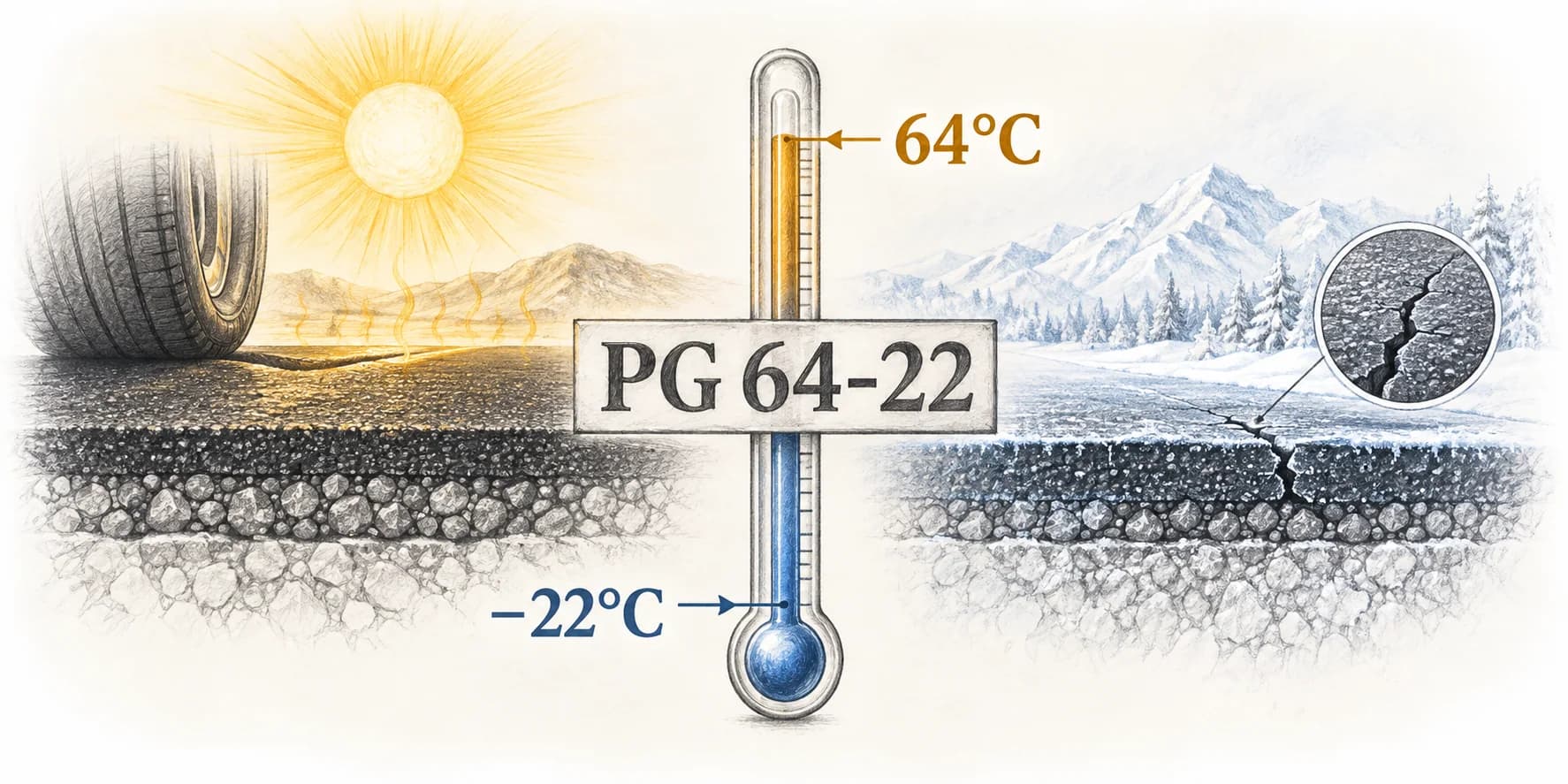
The main application of Bitumen 100/120 is in road construction, specifically for producing flexible asphalt pavements in cold climates. Due to its softer nature, Bitumen 100/120 is particularly well-suited for environments where the pavement must endure significant temperature fluctuations, especially in colder regions where other, harder grades might become brittle and prone to cracking.
Bitumen 100/120 is a non-standard grade, outside the ASTM D946 and EN 12591 series; its limits are those of the grade's specification, tested by ASTM methods.
Share the grade, standard and edition your project names and our team will confirm the fit and the supply arrangement.
Both standards, the full rangeQuote against ASTM D946 or EN 12591 from one supplier, from hard 20/30 to soft 200/300, matched to the standard and edition in your project documents.
Every batch testedPenetration and softening point are tested on each batch against the specified standard before it ships, so the grade on the paperwork is the grade in the drum.
Full shipping documentationA Certificate of Analysis travels with every shipment. Certificate of Origin, MSDS and third-party inspection reports are arranged on request.
Three UAE load portsLoading from Jebel Ali, Port Khalid and Hamriyah gives flexibility on vessel timing and routing. FOB is standard; CFR and CIF are quoted on request.
Packed for your siteNew steel drums for containerised supply, jumbo bags for compatible grades, or heated bulk by vessel and tanker for receivers with hot storage.
Trade risk handledThe Nuroil team manages transport, insurance, logistics and foreign-currency payments, and can discuss financing options with overseas buyers.
What Nuroil does on every order
Why source Bitumen 100/120 from Nuroil?
Tested against your standard
Penetration and softening point on every batch, reported on the Certificate of Analysis.
ASTM or EN, as specified
Share the standard and edition your project names; closely related grades are not treated as interchangeable.
Drum to bulk
New steel drums, jumbo bags, tanker vessel or tank container, matched to your receiving facilities.
FOB, CFR or CIF
FOB Jebel Ali, Port Khalid or Hamriyah; CFR and CIF on request.
02 TECHNICAL DATA
Catalogue specification.
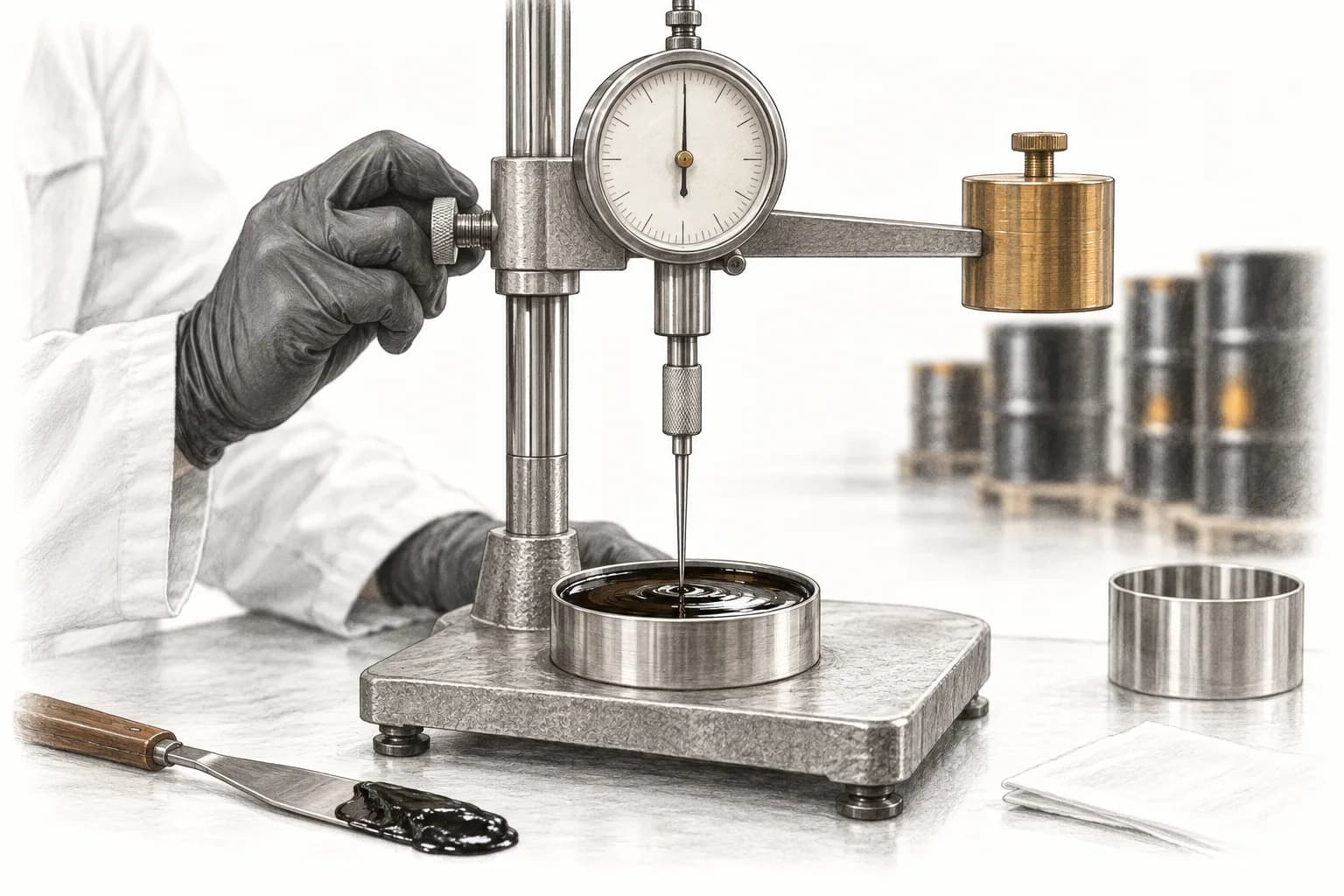
Penetration at 25 °C, 100 g, 5 s
100–120 (0.1 mm)ASTM D5
Softening point (ring and ball)
40 °C minASTM D36
Ductility at 25 °C, 5 cm/min
100.0 cm minASTM D113
Flash point, Cleveland open cup
250.0 °C minASTM D92
Solubility in trichloroethylene
99.5% minASTM D2042
Thin-film oven test (TFOT)
Residue conditioningASTM D1754
Loss on heating, after TFOT
0.5% wt maxASTM D6
Drop in penetration, after TFOT
20.0% maxASTM D5
Spot test
NegativeAASHTO T102
Bitumen 100/120 beside the grades nearest to it in penetration. Lower numbers mean harder bitumen; choose by the standard, climate and traffic your project names.
Property
85/100
100/120This page
100/150
120/150
Standard
ASTM D946
Non-standard grade
EN 12591
ASTM D946
Penetration at 25 °C (0.1 mm)
85–100
100–120
100–150
120–150
Softening point
42 °C min
40 °C min
39–47 °C
38.0 °C min
Flash point
230 °C min
250.0 °C min
240.0 °C min
218 °C min
Ductility at 25 °C
100 cm min
100.0 cm min
Not in the EN table
100 cm min
Typical use
Cooler climates and surface dressing
A softer alternative to 85/100
Cool climates and lower-traffic roads
Cold climates and lower-traffic roads
03 APPLICATIONS
Where it is used.
01
Asphalt paving in cold climates
Bitumen 100/120 is used to produce asphalt mixes that are more flexible and less likely to crack in low temperatures. This makes it ideal for roads, highways, and other surfaces in regions with harsh winters.
02
Surface dressing
It is used in surface dressing applications, where a thin layer of bitumen is sprayed on the road surface and then covered with aggregate. This process provides a protective layer that helps prolong the road's life by preventing water ingress and enhancing skid resistance.
03
Maintenance of existing roads
Bitumen 100/120 is also used in maintenance processes like crack sealing and patching, where its flexibility can help repair damaged sections of roads without introducing new vulnerabilities.
04 SAFETY & HANDLING
Not classified cold. Handled hot, with care.
Penetration grade bitumen is generally not classified as hazardous when cold. It is stored, pumped and loaded hot, and the Safety Data Sheet for the offered grade decides; review it before first handling.
Not classified
GHS Generally not classified as hazardous when cold. Check the SDS for the offered grade.
Hot product Handled hot: contact causes severe burns, and hydrogen sulphide can collect in tank headspace. Per SDS.
UN
Not regulated cold · UN 3257 when shipped hot, per SDS
Transport
Elevated temperature liquid, Class 9, when hot · per SDS
01
Hot product burns
Contact with hot bitumen causes severe burns. Wear heat-resistant gloves, face protection and covering clothing when handling it hot.
02
Hydrogen sulphide in the headspace
H₂S can collect in the headspace of heated tanks and tankers. Ventilate and test the atmosphere before opening or entry, per SDS.
03
Avoid overheating
Prolonged excessive heat accelerates ageing and hardening before application. Use the heating range appropriate to the grade.
04
Follow the SDS
Classification, first aid and fire-fighting measures are on the Safety Data Sheet for the offered grade.
Plan heating and handling.
Before it arrivesHeating and receiving confirmed
Confirm heating, storage and handling requirements for your grade and packing format before shipment arrives. Hot bulk bitumen requires suitable heated receiving facilities.
Grade temperatureUse the heating and application range appropriate to the selected grade.
Avoid overheatingProlonged excessive heat accelerates ageing and hardening before application.
Modifier compatibilityConfirm compatibility with project-required polymers or additives before site blending.
Receiving facilitiesHot bulk bitumen requires suitable heated storage, pumps and safe transfer equipment.
Standards and test methods.
HS code2713.20
Transport, coldNot regulated
Transport, hotUN 3257
Nuroil specification
A non-standard grade: the limits are those of the grade specification
ASTM D5 / ASTM D36
Penetration and ring-and-ball softening point
ASTM D92 / D113 / D2042
Flash point, ductility and solubility
ASTM D1754 / ASTM D6
Thin-film oven residue and loss on heating
AASHTO T102
Spot test
National road authority specification
May reference a standard or national variant; confirm the exact standard, grade and edition before ordering
05 PACKING OPTIONS
Drums, jumbo bags or bulk.
Packing availability is confirmed for Bitumen 100/120 and the offered source. Container loads in the planner are typical planning figures; the offer confirms them.
Small quantities
Drums
New steel drums of 200, 180 or 156 kg, or customised, palletised for containerised supply.
Include the grade, ASTM or EN standard, quantity, destination, specification and packing preference. Our team replies with a tailored offer. We reply with a firm FOB, CFR or CIF offer, usually within 24 hours.