ASTM D3381 · IS 73:2013Viscosity gradesAC · AR · VG
Viscosity grade15 grades
ClassificationViscosity at 60 °Cvacuum capillary viscometer
StandardsASTM D3381 · IS 73:2013AC, AR and VG grades
RangeAC-2.5 to VG-4015 grades
QualityBatch CoAon every shipment
visc0%
01 / YOUR SUPPLY PARTNER
Why source viscosity grade bitumen from Nuroil.
Grade, specification and delivery confirmed for your requirement, from Nuroil Trading in Sharjah.
AC and VG grades, one supplier
Quote against ASTM D3381 AC grades or IS 73:2013 VG grades, matched to the standard and edition named in your project documents.
Every batch tested at 60 °C
Absolute viscosity is measured with a vacuum capillary viscometer alongside the other limits of the specified grade, with results on the CoA.
Packed for your site
New steel drums for containerised supply, jumbo bags for compatible grades, or heated bulk by vessel and tanker for high-volume receivers.
02 / THE MATERIAL
What is viscosity grade bitumen?
IN SHORT
Straight-run refinery residue classified without further oxidation or chemical modification.
Material
Straight-run vacuum residue
Classification
Viscosity at 60 °C
Standards
ASTM D3381 · IS 73:2013
Range
AC-2.5 to AC-40 · AR-1000 to AR-16000 · VG-10 to VG-40
03 / READING THE GRADES
The viscosity test explained.
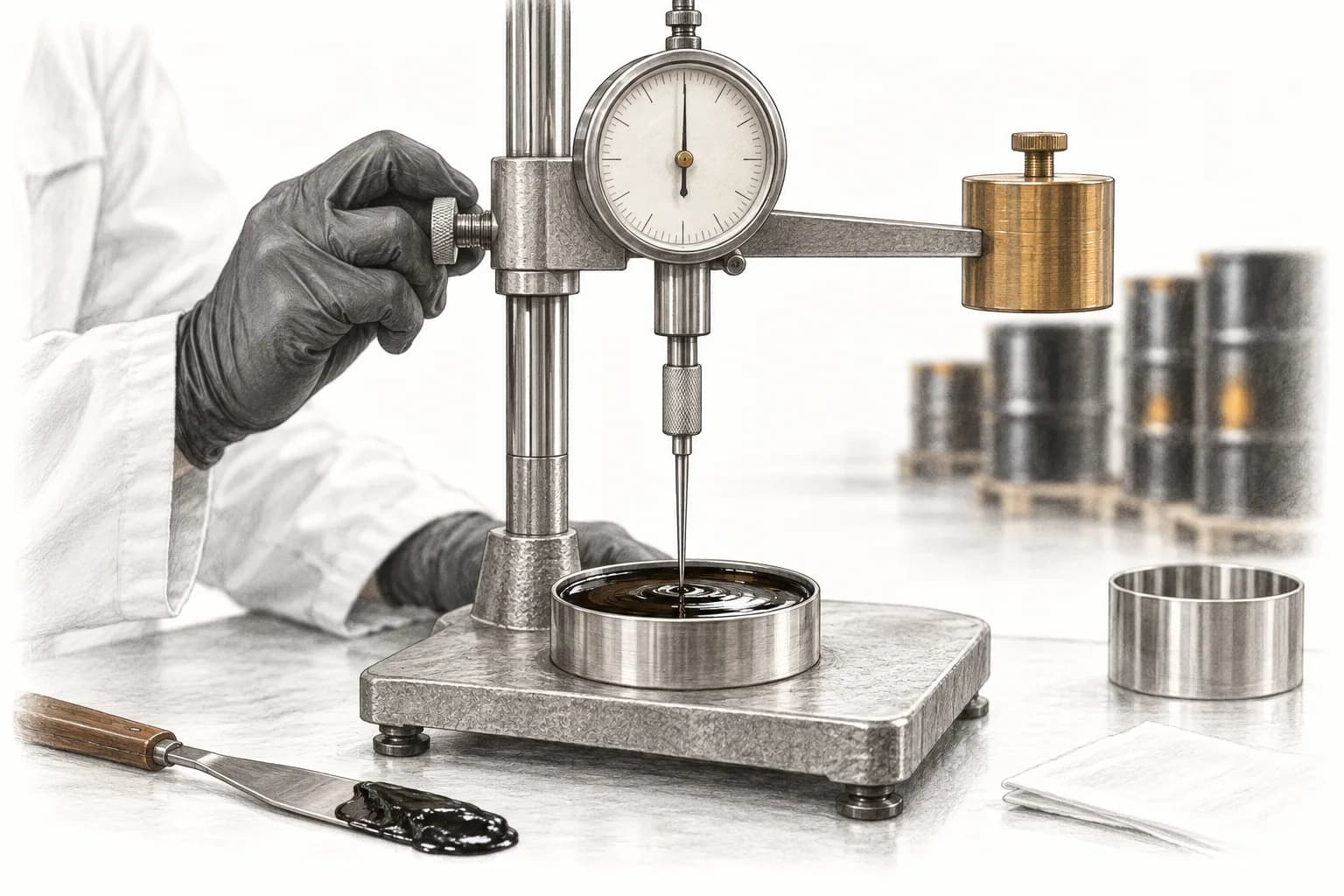
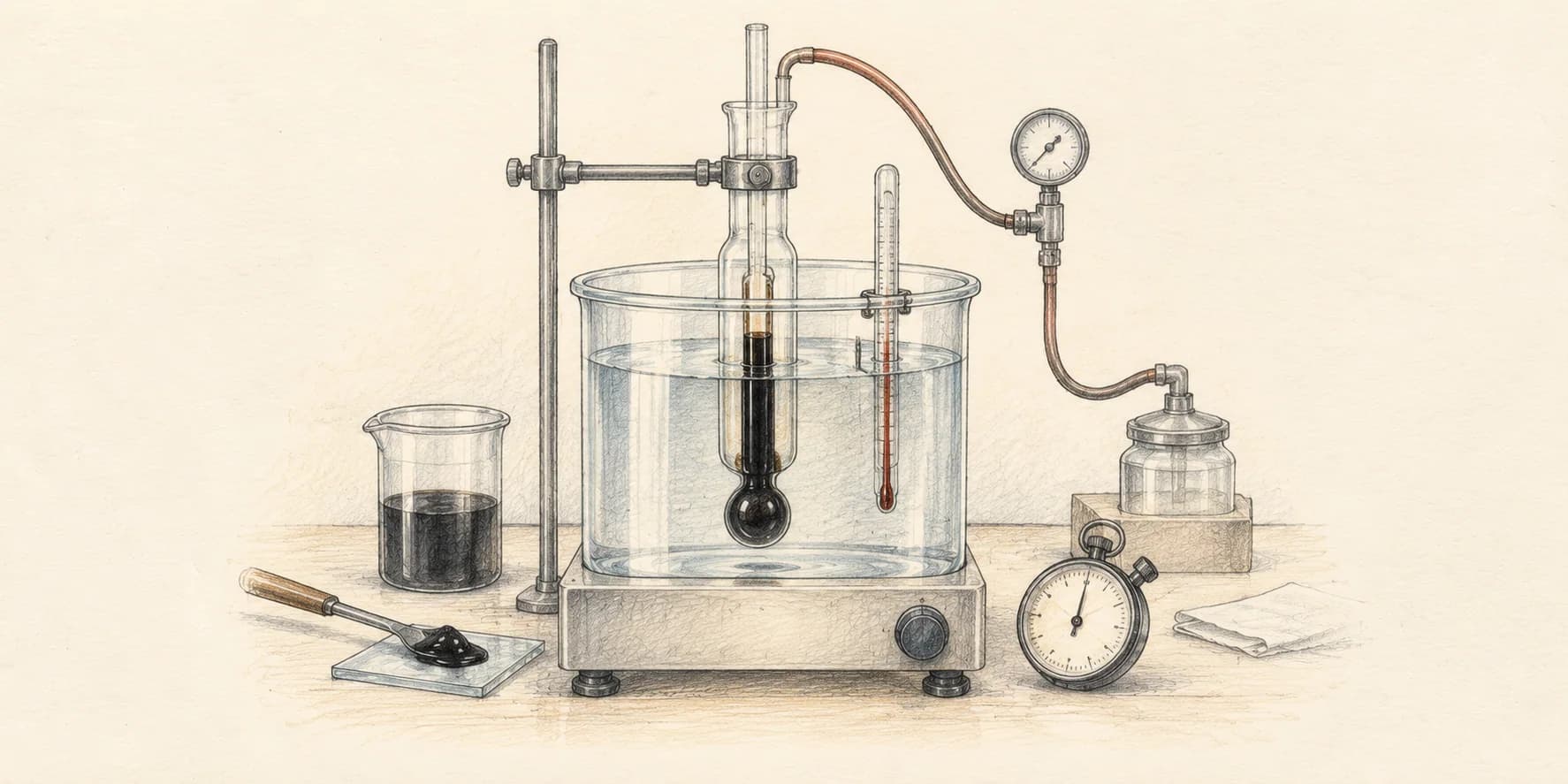
A timed flow, a measured grade: a vacuum capillary viscometer measures how the bitumen resists flow at 60 °C.
01
Tested at 60 °C
The viscosity of bitumen is measured at a controlled 60°C, representing the material’s resistance to flow under elevated service temperatures.
02
Timed through a calibrated tube
A vacuum capillary viscometer measures the time required for the bitumen sample to flow between two calibrated marks.
03
Result expressed in poise
The measured flow time is converted into absolute viscosity, expressed in poise, and used to determine the viscosity grade.
04
Higher-temperature performance checked separately
Additional viscosity limits, such as measurements at 135°C, help assess handling, pumping, mixing and compaction behaviour.
04 / STRENGTHS & LIMITS
Strengths and limits of viscosity grading.
What it tells you
Unlike penetration depth, viscosity is a fundamental engineering parameter.
Test temperatures correlate well with service: 25°C (77°F) average pavement temperature, 60°C (140°F) high pavement temperature and 135°C (275°F) mixing temperature.
Temperature susceptibility can be assessed because viscosity is measured at three temperatures, where penetration is measured only at 25°C.
Testing equipment and standards are widely available.
What it does not tell you
The principal grading, done at 25°C (77°F), may not accurately reflect low-temperature binder rheology.
Under the AC system, thin film oven test residue viscosities can vary greatly within the same AC grade, so binders of the same grade may behave differently after construction.
The testing is more expensive and takes longer than the penetration test.
05 / FULL COMPARISON
Catalogue specifications.
Published values from each grade's specification. AR grades are graded on the aged residue, so their viscosity is not directly comparable with the AC and VG values measured on the original binder. The batch Certificate of Analysis decides.
Technical data sheet · Typical values
Bitumen AC-20
NUR-BT-01Viscosity grade bitumen · ASTM D3381 · IS 73:2013
Standard
ASTM D3381 · AC
Graded on
Original binder
Viscosity at 60 °C
2000 ± 400 P
Kinematic viscosity at 135 °C
210 cSt min
Penetration at 25 °C (0.1 mm)
40 min
Flash point
232 °C min
Typical use
General paving and moderate climates
Typical values from each grade's published specification. The test certificate for the offered batch decides.
Match the product to the crop, equipment or process and confirm the specification before you order.
01
Hot-mix asphalt paving
Viscosity grading relates binder consistency to the mixing, laying and in-service temperatures used for asphalt pavement.
02
Indian road construction
VG-10 to VG-40 grades align with IS 73:2013 and are widely specified by Indian road authorities.
03
High-temperature performance
Higher-viscosity VG-40 or AC-40 binders support heavily trafficked roads where heat and slow loads increase rutting risk.
04
Surface dressing and maintenance
Softer grades such as AC-2.5, VG-10 and VG-20 are used for surface dressing, patching and crack sealing.
08 / HOW IT IS MADE
How viscosity grade bitumen is made.
Distilled, graded and tested: the final binder is tested for viscosity at 60 °C and released against the complete limits of the specified ASTM or IS grade.
01
Produced by vacuum distillation
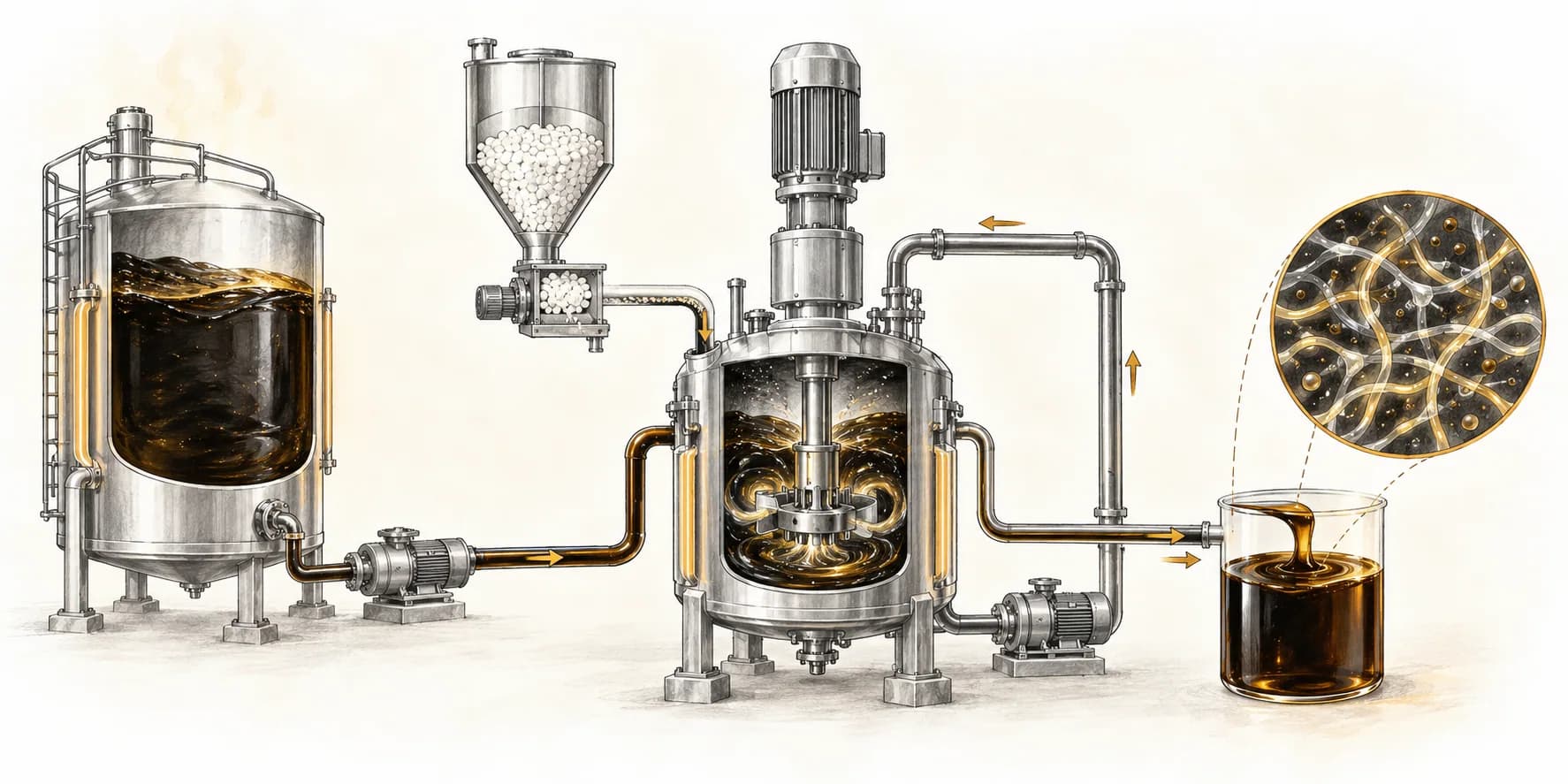
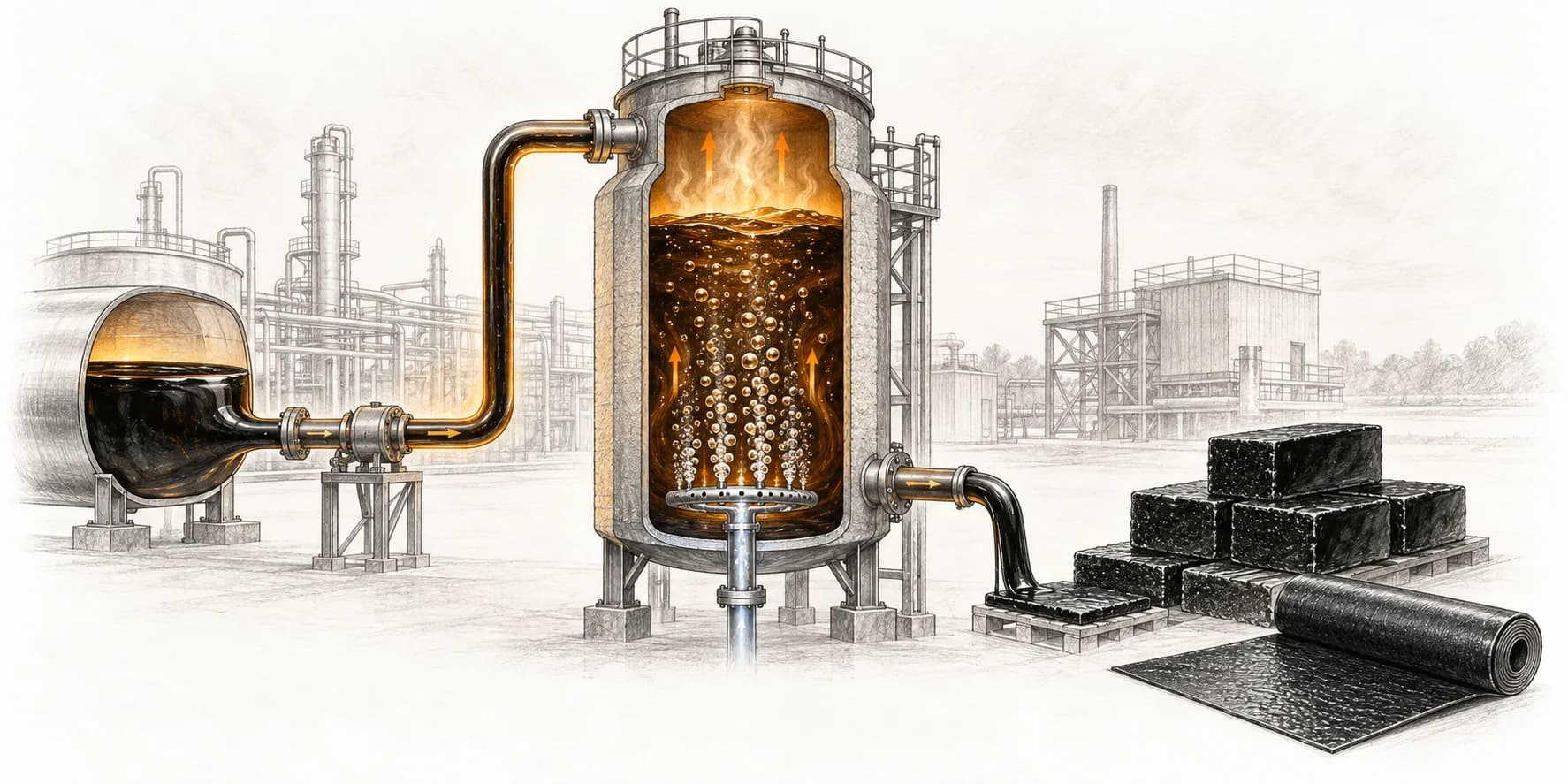
Crude oil is processed under reduced pressure to remove lighter petroleum fractions while retaining the heavy residue used as paving bitumen.
02
Straight-run bitumen base
The remaining heavy residue forms the base material for viscosity grade bitumen without requiring additional air blowing.
03
Graded by viscosity
The material is classified primarily by its resistance to flow, commonly measured at 60°C, rather than by penetration alone.
04
Tested against grade specifications
The finished binder is checked against the required ASTM or IS viscosity grade limits before release and supply.
09 / COMPATIBILITY & HANDLING
Plan heating and handling.
Confirm heating, storage and handling requirements for your grade and packing format before shipment arrives.
01
Grade temperature
Use the heating and application range appropriate to the selected grade.
02
Avoid overheating
Prolonged excessive heat accelerates ageing and hardening before application.
03
Modifier compatibility
Confirm compatibility with project-required polymers or additives before site blending.
04
Receiving facilities
Hot bulk bitumen requires suitable heated storage, pumps and safe transfer equipment.
10 / REFERENCE METHODS
Standards and test methods.
Confirm the exact standard, grade and edition referenced in the project before ordering.
Trade and safety codes
For customs declarations, shipping documents and safety data sheets.
HS code2713.20Petroleum bitumen
Transport, coldNot regulatedSolid or cold product in drums or bags, per SDS
Transport, hotUN 3257Elevated temperature liquid, n.o.s., Class 9, when shipped hot in bulk, per SDS
VG means Viscosity Grade under IS 73:2013. VG-30 permits viscosity of 2400–3600 poises at 60°C and is widely specified for Indian road paving.
02What is the difference between AC-20 and VG-20?
They describe similar ranges under different standards, ASTM D3381 and IS 73:2013. Follow the exact standard named by the project.
03What is the difference between viscosity and penetration grade?
Both classify straight-run bitumen, but viscosity grading measures flow resistance at 60°C while penetration grading measures needle depth at 25°C.
04Which VG grade is most commonly used in India?
VG-30 is widely specified for general paving; VG-10 and VG-20 suit cooler or lighter-duty work, and VG-40 suits hot high-stress service.
05What documents come with each shipment?
Every shipment includes a Certificate of Analysis. Certificate of Origin, MSDS and third-party inspection are available on request.
06What packing formats are available?
Drums, jumbo bags and bulk supply are available depending on grade, quantity and destination facilities.
07What Incoterms do you offer?
FOB is commonly quoted from UAE ports; CFR and CIF destination-port offers are available.
08How is viscosity grade tested?
Each batch is tested for absolute viscosity at 60°C with a vacuum capillary viscometer (ASTM D2171, or IS 1206 Part 2 for IS 73 grades), alongside the other limits of the specified grade, with results on the CoA.