Multigrade M500 · M600AS 2008 gradesClass 50 to 600
AS 20088 grades
StandardAS 2008residual bitumen for pavements
Classes50 · 170 · 240 · 320 · 450 · 600by viscosity at 60 °C
MultigradeM500 · M600for wide temperature swings
QualityBatch CoAon every shipment
AS0%
01 / YOUR SUPPLY PARTNER
Why source australian standard bitumen from Nuroil.
Grade, specification and delivery confirmed for your requirement, from Nuroil Trading in Sharjah.
AS 2008 classes and multigrade
Class 50 to 600 viscosity binders and M500 and M600 Multigrade, quoted to the AS 2008 edition in your project documents.
Every batch tested
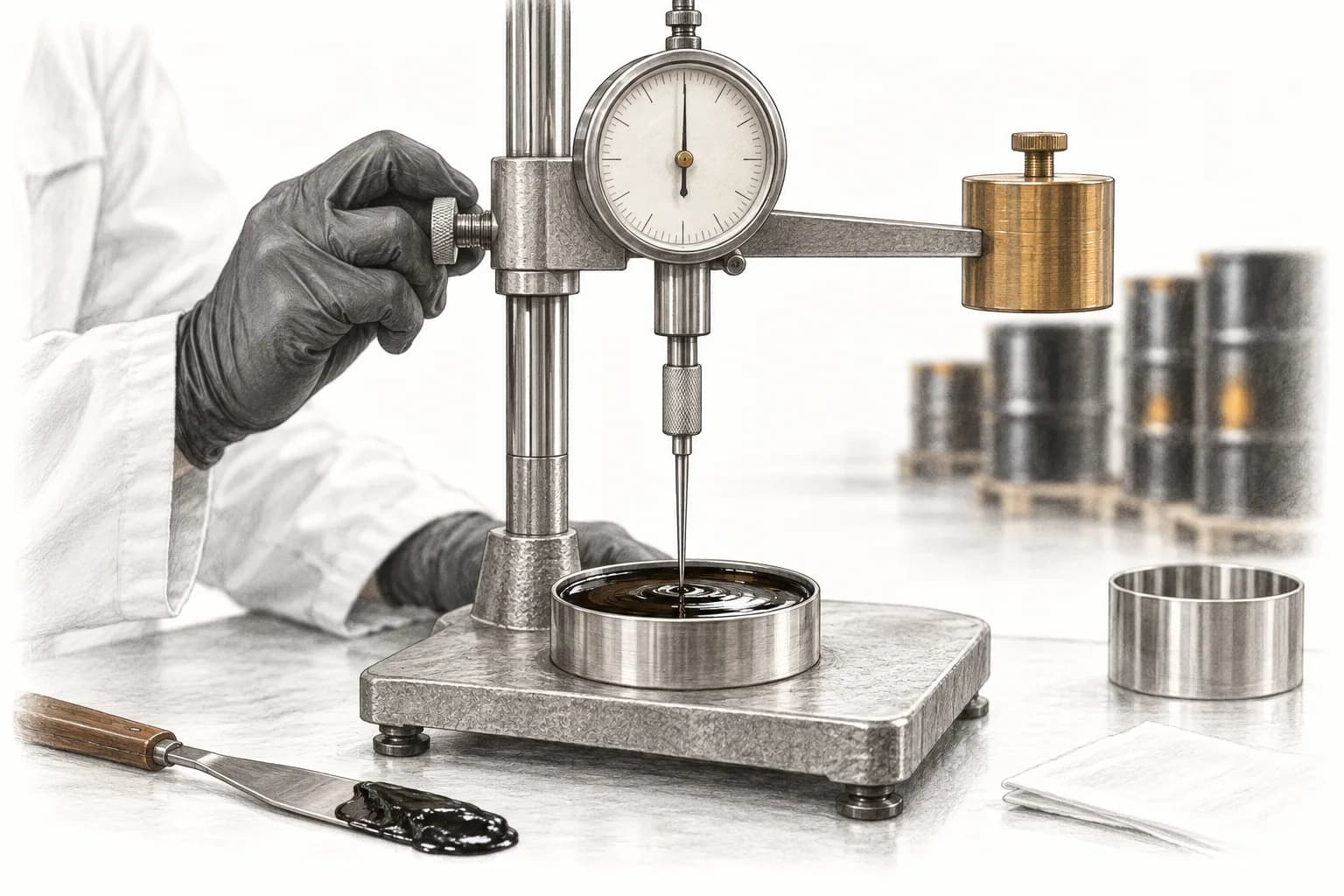
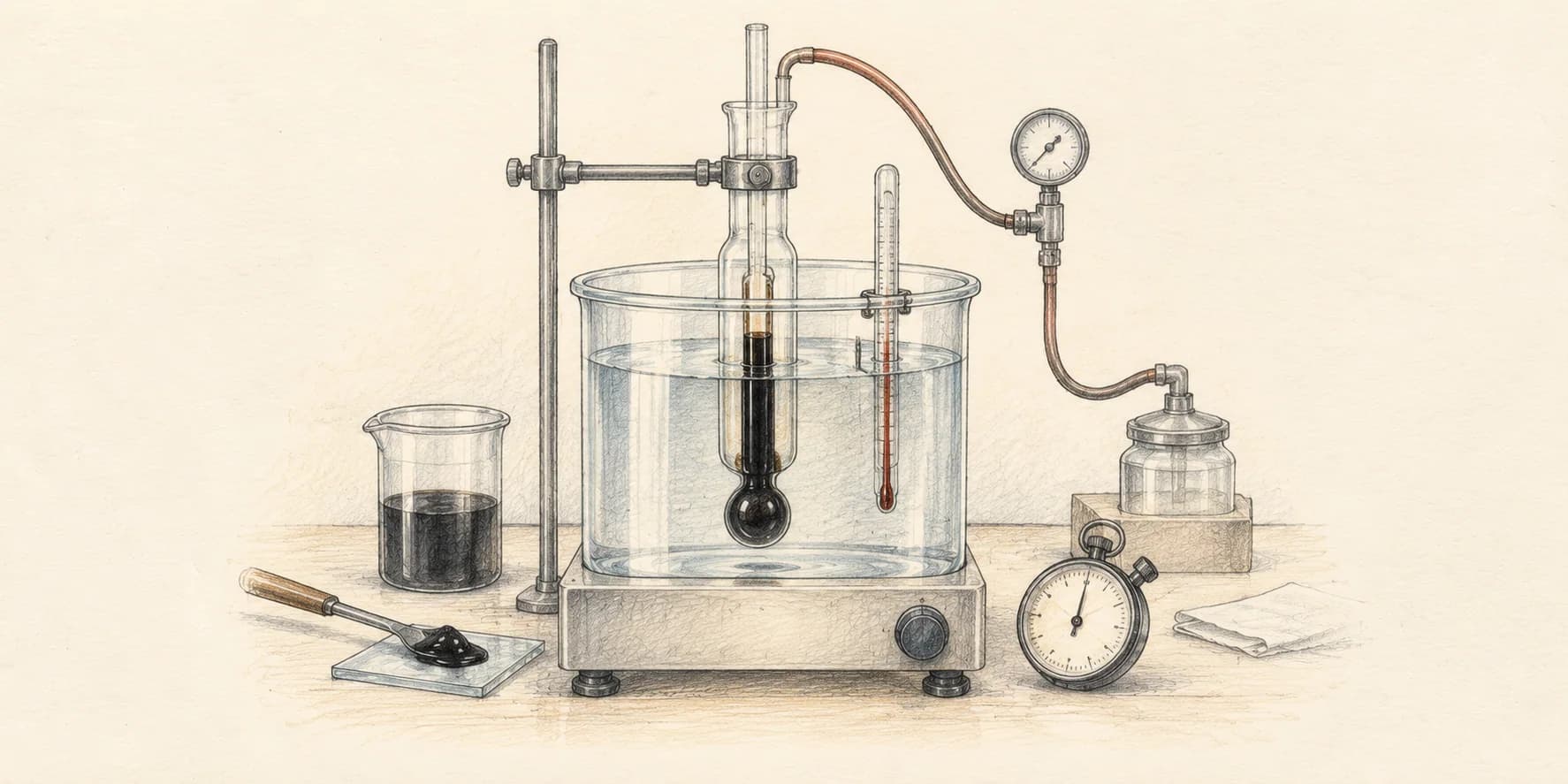
Each batch is tested for viscosity at 60°C against the specified AS 2008 class, with results reported on its Certificate of Analysis.
Packed for your site
New steel drums for containerised supply, jumbo bags for compatible grades, or heated bulk by vessel and tanker.
02 / THE MATERIAL
What is Australian standard bitumen?
IN SHORT
AS 2008 is Australia’s national standard for residual bitumen used in pavement construction. Standard classes are defined by viscosity at 60°C.
Standard
AS 2008
Classification
Viscosity at 60 °C
Classes
Class 50 to Class 600
Multigrade
M500 · M600
03 / READING THE GRADES
Reading the AS 2008 classes.
The class number is the nominal viscosity at 60 °C in Pa·s. Penetration equivalents are approximate reference correlations, not specifications.
01
Class 320 means 320 Pa·s
It identifies nominal viscosity of 320 Pa·s at 60°C, roughly comparable to 40/50 penetration bitumen, but always specified directly as its AS 2008 class.
02
Approximate penetration equivalents
Class 50 is about 180–200 pen, Class 170 about 60–70 pen and Class 600 about 25–35 pen.
03
New Zealand sealing grades
In New Zealand sealing bitumens are characterised by penetration grade: 180/200 is the approximate equivalent of Class 50, 80/100 of Class 170.
04
Multigrade M500 and M600
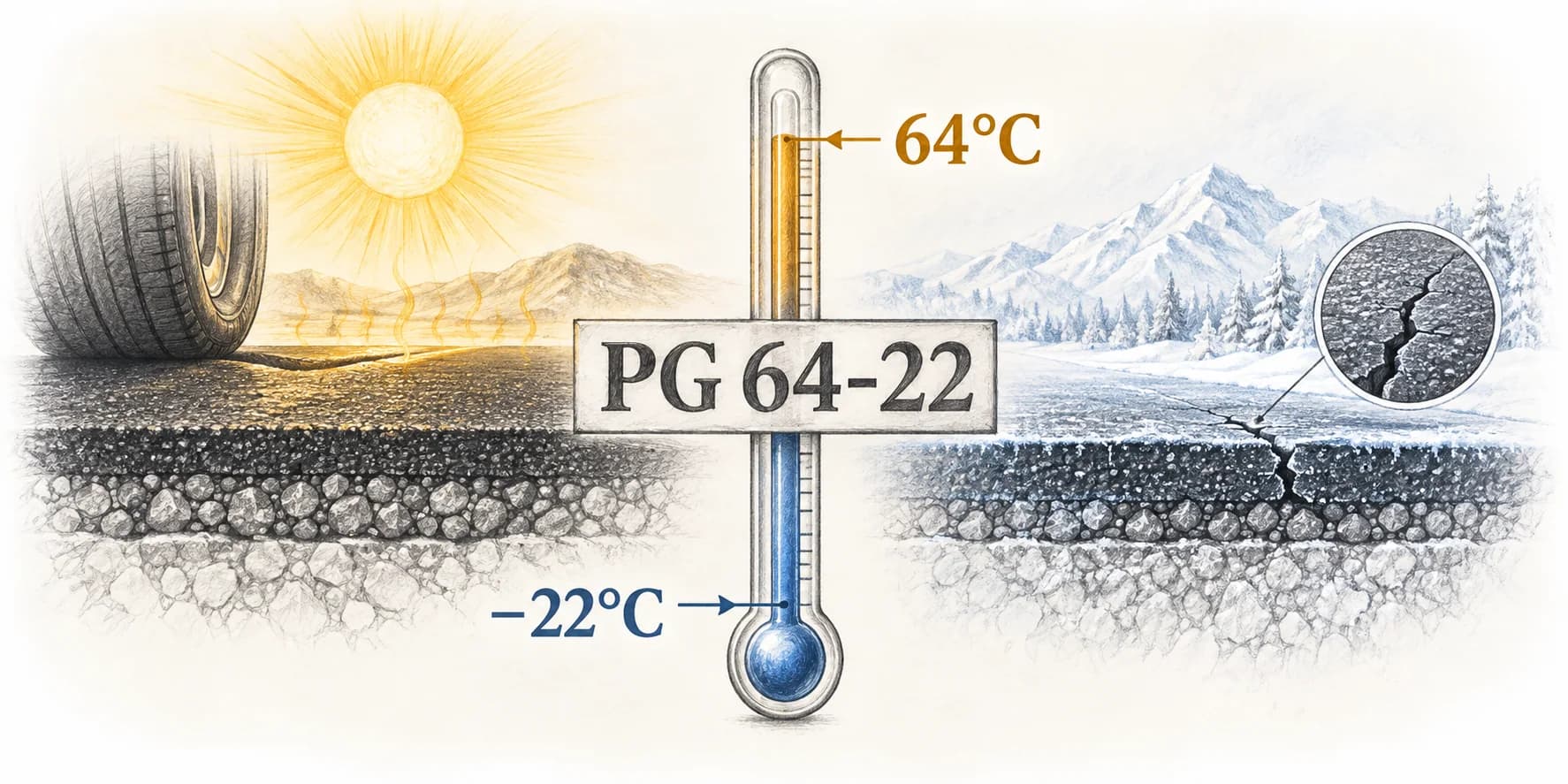
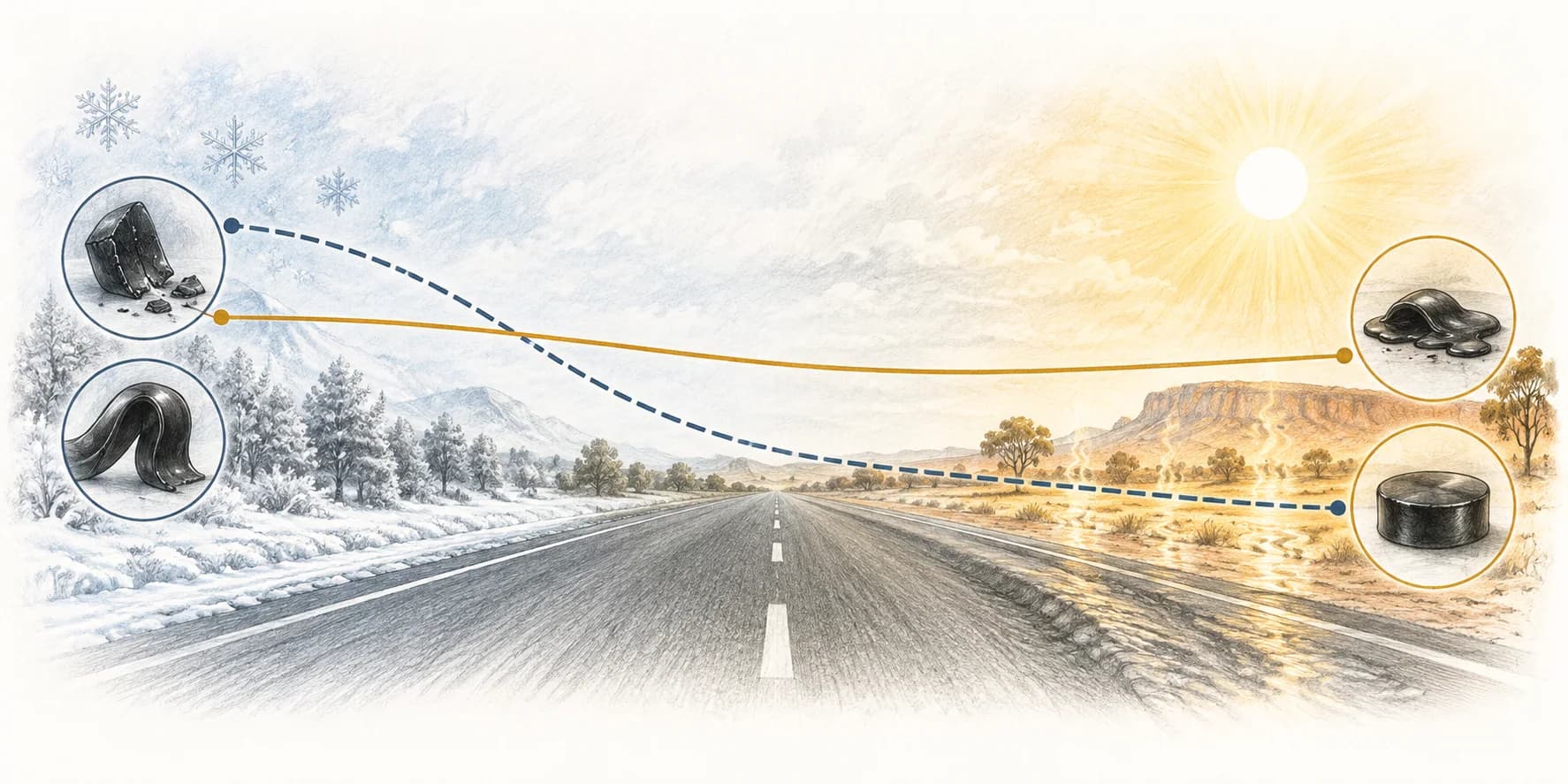
Engineered to remain stiffer at high pavement temperature and more flexible at low temperature than a standard binder of similar nominal viscosity.
04 / STRENGTHS & LIMITS
Strengths and limits of AS 2008 classes.
What it tells you
Each class is defined by viscosity at 60°C, the property each batch is tested for and reported on its Certificate of Analysis.
AS 2008 has its own class boundaries and test methods, set for Australian road-authority specifications.
Multigrade addresses service where summer rutting and winter cracking are both concerns.
Penetration equivalents give an approximate reference to other grading systems.
What it does not tell you
A class is not the same as an international grade: do not assume direct interchangeability.
Standard AS 2008 classes and Multigrade are not interchangeable.
Multigrade is not automatically a better substitute for standard classes; it solves a specific climate problem.
Penetration equivalents are not specifications: confirm the required AS 2008 class directly.
05 / FULL COMPARISON
Catalogue specifications.
Published values from each class's specification. The Class 320 and 600 tables state their viscosities in P and cSt with Pa.s values; they are shown in Pa.s. The batch Certificate of Analysis decides.
Technical data sheet · Typical values
Class 50
NUR-BT-01Australian standard bitumen · AS 2008
Standard
AS 2008-1997
Viscosity at 60 °C (ASTM D2171)
40–60 Pa.s
Viscosity at 135 °C (ASTM D2170)
0.20–0.30 Pa.s
Penetration at 25 °C (ASTM D5)
130 (0.1 mm) min
Flash point (ASTM D92)
250 °C min
Matter insoluble in toluene (ASTM D4072)
1.0% wt max
Typical use
Road bases, chip seals and binders
Typical values from each class's published specification. The test certificate for the offered batch decides.
Match the product to the crop, equipment or process and confirm the specification before you order.
01
General road paving
AS 2008 classes support construction and maintenance selected for traffic and climate.
02
Sprayed sealing
Class 170 is the most commonly used class for sprayed sealing in Australia; Class 50 is the softer sealing binder.
03
Heavy-duty pavement
Class 600 and higher-viscosity binders support heavy traffic and hot conditions.
04
Extreme temperature regions
Multigrade supports regions where summer rutting and winter cracking are both concerns.
08 / HOW IT IS MADE
What multigrade bitumen does.
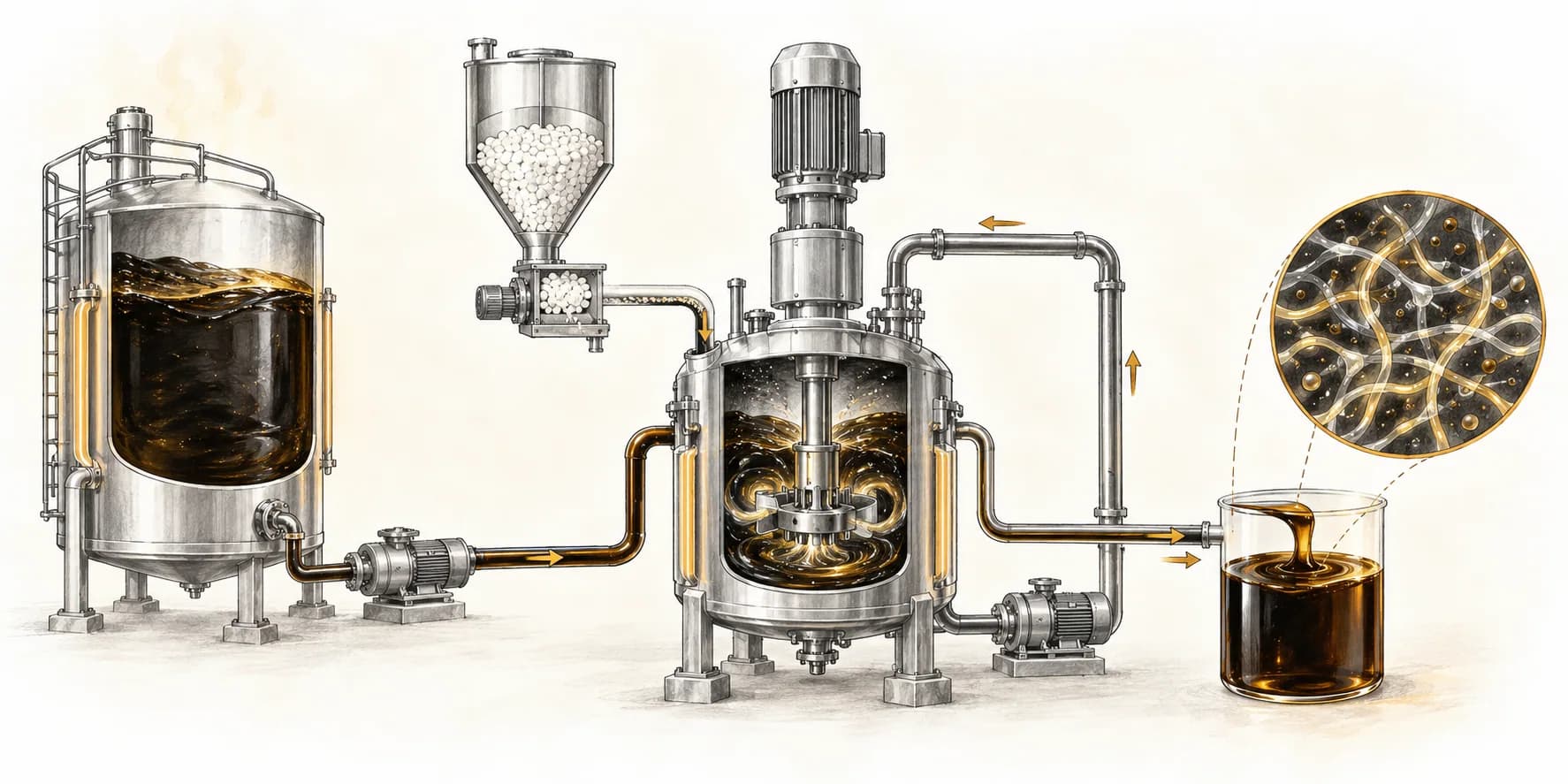
Multigrade is engineered to resist rutting at high pavement temperatures while retaining greater flexibility in cold conditions. It is particularly suited to inland regions with hot summers and cold winters.
01
Cold conditions
Retains flexibility to help resist thermal cracking.
02
Wide range
Maintains more stable behaviour across seasonal change.
03
Hot conditions
Stays stiffer to help resist rutting.
04
Specified use
M500 or M600 must be named by the project.
09 / COMPATIBILITY & HANDLING
Plan heating and handling.
Confirm heating, storage and handling requirements for your class and packing format before shipment arrives.
01
Class temperature
Use the storage and application range appropriate to the selected class.
02
Confirm product type
Standard AS 2008 classes and Multigrade are not interchangeable.
03
Avoid overheating
Prolonged excessive heat accelerates ageing before application.
04
Receiving facilities
Bulk supply requires suitable heated tanks, pumps and transfer equipment.
10 / REFERENCE METHODS
Standards and test methods.
Not exhaustive: confirm the exact standard, class and edition named in the project documents.
Trade and safety codes
For customs declarations, shipping documents and safety data sheets.
HS code2713.20Petroleum bitumen
Transport, coldSolid stateSolid below 100 °C; may be transported in the solid state, per SDS
Transport, hotUN 3257Elevated temperature liquid, n.o.s., Class 9, when shipped hot, per SDS
01
AS 2008
Australian standard for residual pavement bitumen
02
AS/NZS viscosity test methods
Methods supporting AS 2008 viscosity classification
03
ASTM D2171 / ASTM D2170
Viscosity at 60 °C and 135 °C, as the grade data sheets cite them
04
State and territory road specifications
May add local requirements to AS 2008
11 / PACKING & DELIVERY
Packing formats.
Availability depends on the product, quantity and receiving facilities. Confirm the arrangement for your order.
01 / CONTAINERISED · 200 / 180 / 156 KG
Drums
New steel drums for containerised supply; approximately 80 drums per 20 ft container, palletised.
It identifies nominal viscosity of 320 Pa·s at 60°C. It is roughly comparable to 40/50 penetration bitumen, but should always be specified directly as its AS 2008 class.
02What is Multigrade bitumen?
It is engineered to remain stiffer at high pavement temperature and more flexible at low temperature than a standard binder of similar nominal viscosity.
03Is Class 320 the same as an international grade?
It may be broadly comparable, but AS 2008 has its own boundaries and test methods. Do not assume direct interchangeability.
04Do I need Multigrade for my project?
Only where the project specification or climate calls for it. Standard AS 2008 classes remain appropriate and more cost-effective for many projects.
05What documents come with each shipment?
Every shipment includes a Certificate of Analysis. Certificate of Origin, MSDS and third-party inspection are available on request.
06What packing formats are available?
Drums, jumbo bags and bulk supply are available depending on grade, quantity and destination facilities.
07What Incoterms do you offer?
FOB is commonly quoted from UAE ports; CFR and CIF destination-port offers are available.
08How is Australian Standard bitumen tested?
Each batch is tested for viscosity at 60°C against the specified AS 2008 class, with results reported on its Certificate of Analysis.