AS 2008, Bitumen for pavements, is the Australian Standard for conventional and multigrade paving bitumen. Instead of grading by penetration, it grades by viscosity at 60°C in pascal-seconds. This guide summarises the classes, the bands published by suppliers against the standard, and how each class is normally used. Always check the edition of AS 2008 named in your contract, because limits and test lists are revised from time to time.
The classes and their viscosity bands
| Class | Graded on | Viscosity at 60°C (Pa·s, approx.) | Typical use |
|---|---|---|---|
| Class 170 | Original bitumen | 140 to 200 | Sprayed sealing; light-traffic asphalt; base for cutbacks and emulsions |
| Class 240 | Original bitumen | 190 to 280 | Sprayed sealing where an agency wants a slightly stiffer binder |
| Class 320 | Original bitumen | 260 to 380 | Dense-graded asphalt; heavy-duty and hot-climate seals |
| Class 450 | RTFO residue | 750 to 1150 (aged) | Asphalt wearing and base courses where specified |
| Class 600 | Original bitumen | 500 to 700 | High-stiffness asphalt base layers |
| M500 | Original bitumen | 400 to 600 | Multigrade sprayed seal binder |
| M1000 | RTFO residue | 3500 to 6500 (aged) | Multigrade asphalt binder for rut resistance |
The bands above come from producer data published against AS 2008 and are given for orientation. The standard itself is the authority for compliance.
Other properties checked under AS 2008
Viscosity at 60°C sets the class, but a compliant bitumen must pass a set of further tests. Producer data sheets list items such as:
- Viscosity at 135°C, which relates to pumping, mixing and spraying. One Class 320 data sheet gives a typical value of about 0.5 Pa·s.
- Penetration at 25°C, as a check on consistency at moderate temperature. The same Class 320 sheet shows a minimum of 40 dmm.
- Flash point, a safety parameter; a minimum of 250°C appears on Class 320 data.
- Rolling thin film oven residue, used either to limit hardening (for example a maximum of 300 per cent of original viscosity) or as the grading basis for Class 450 and M1000.
- Durability for sealing binders. Australia has traditionally used the durability test in AS/NZS 2341.13 to rank resistance of unmodified binders to premature ageing in thin seal films.
Test methods are drawn from the AS 2341 series, for example AS 2341.2 for viscosity, AS 2341.12 for penetration and AS 2341.14 for flash point.
How the classes relate to each other
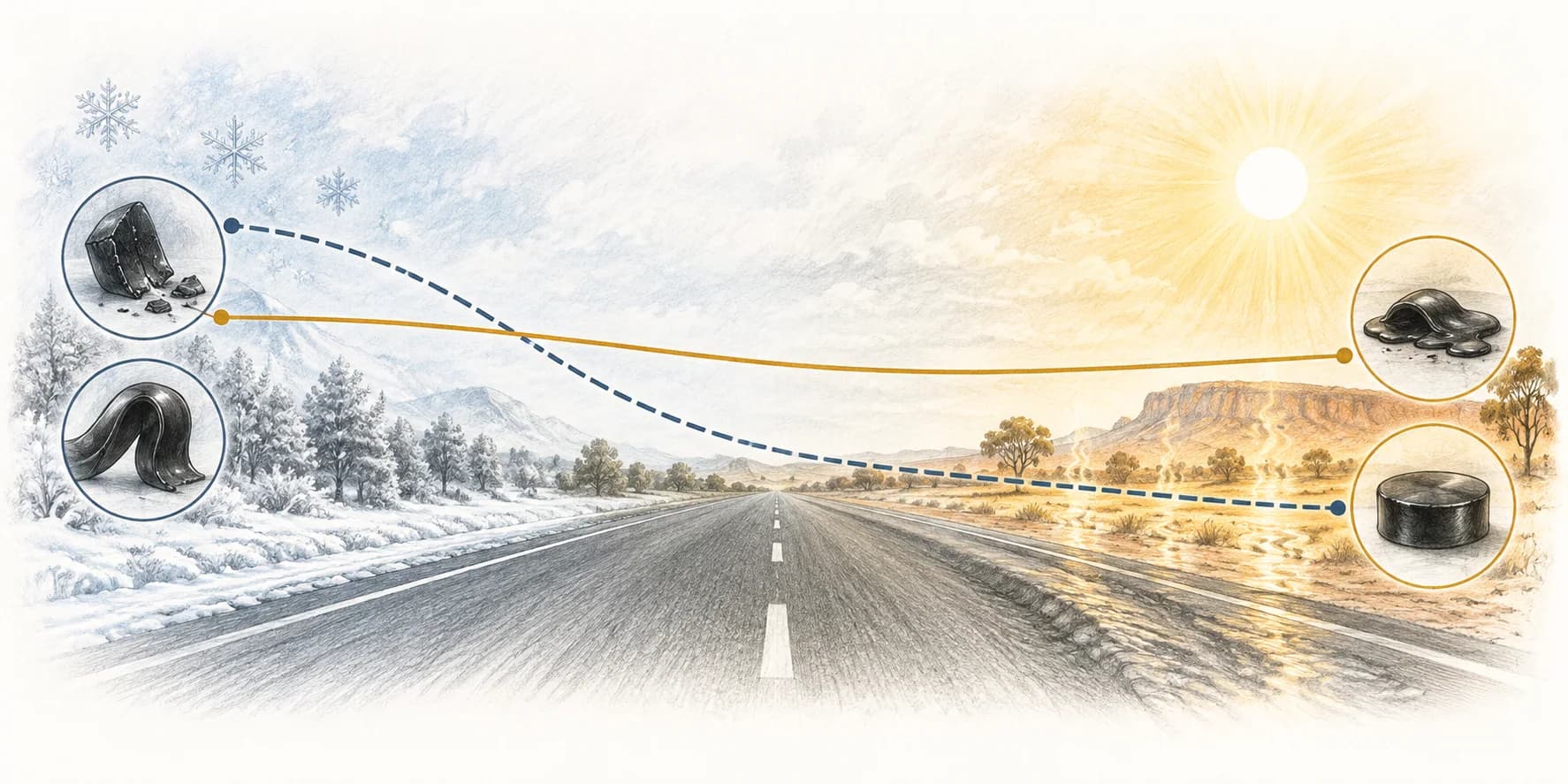
Moving up the scale from Class 170 to Class 600 gives a progressively stiffer binder at high pavement temperatures. Stiffer binders resist rutting and bleeding better, while softer ones are easier to spray and more tolerant of pavement movement and cold weather. Class 240 and Class 450 exist mainly because some road agencies prefer a step between the more common classes. The multigrades sit to one side, offering high-temperature stiffness with handling closer to the conventional classes.
Comparing AS 2008 with other systems
Penetration grades, ASTM viscosity grades and performance grades are all used in other markets. Because AS 2008 also uses 60°C viscosity, it is often loosely compared with viscosity-graded bitumen, but limits, units, residue tests and durability requirements differ. A bitumen meeting one system should not be assumed to meet another; the only safe route is to test against every clause of the specification that applies.
The class number sets the stiffness at 60°C, but compliance depends on every test in the standard, including the residue checks.
Using this guide in an enquiry
Quote the class and the edition of AS 2008, state the quantity and packing, and list the tests you want on the certificate of analysis. If your client or road agency adds its own requirements, attach them. Nuroil supplies a certificate of analysis with each delivery and can arrange third-party inspection on request. Start from the Australian Standard bitumen page or the quote request form.