Technical document

· PDF

Tell us who you are and the document downloads straight away. We use these details only to follow up on your requirement.

Samples & documents

What can we send you?

Tick what you need
Request a quote
NUROIL / BITUMEN / CUTBACK

Cutback bitumen.Controlled cure.

Bitumen thinned with solvent for cold application: rapid, medium and slow curing grades for prime coats and patching.

Cutback bitumen13 grades
CuringRapid · medium · slowRC · MC · SC
RangeRC / MC / SC 30–300013 grades
StandardsASTM D2028 · D2027 · D2026AASHTO M 81 · M 82
QualityBatch CoAon every shipment
01 / YOUR SUPPLY PARTNER

Why source
cutback bitumen from Nuroil.

Grade, specification and delivery confirmed for your requirement, from Nuroil Trading in Sharjah.

  • Pencil sketch of cutback bitumen curing

    Rapid, medium and slow curing

    RC, MC and SC grades from 30 to 3000, so the solvent evaporation speed can be matched to the application and site conditions.

  • Pencil sketch of bitumen and solvent being blended with three sample jars

    Batch Certificate of Analysis

    Each batch is reported against the specified grade limits, including viscosity at 60°C, flash point and distillation.

  • Pencil sketch of cutback bitumen drums on a pallet

    Packed for your site

    New steel drums for containerised supply, or tanker and vessel bulk supply for high-volume receivers.

02 / THE MATERIAL

What is
cutback bitumen?

IN SHORT

Cutback bitumen is straight-run bitumen dissolved in volatile petroleum solvent to temporarily reduce viscosity, allowing application cold or at low temperature.

Pencil sketch of bitumen and solvent being blended with three sample jars
Material
Bitumen cut with petroleum solvent
Classification
Curing speed and viscosity at 60 °C
Standards
ASTM D2028 · D2027 · D2026
Range
RC / MC / SC 30–3000
03 / READING THE GRADES

Reading a
cutback grade.

Two parts make the name: the letters give the curing speed, the number the viscosity at 60 °C.

  1. 01

    RC, MC or SC

    The letters identify solvent evaporation speed: rapid curing is fastest, medium curing is moderate and slow curing is slowest.

  2. 02

    The number

    It identifies the kinematic viscosity range at 60 °C, in mm²/s. The grade number is the lower limit of its range: MC-250 is 250–500 mm²/s.

  3. 03

    Higher numbers

    Higher numbers indicate thicker material for heavier applications; lower numbers spray more easily.

  4. 04

    Site conditions

    Temperature, humidity and surface porosity also affect curing time. Share expected site conditions with your enquiry.

04 / STRENGTHS & LIMITS

What the grade name
does and does not tell you.

What it tells you

  • How quickly the solvent evaporates: rapid, medium or slow curing
  • The kinematic viscosity range at 60 °C, from the grade number
  • Which grade table sets its limits for viscosity, flash point, distillation and the residue
  • Which ASTM specification applies: D2028 for RC, D2027 for MC and D2026 for SC

What it does not tell you

  • Fix the curing time on site: ambient temperature, humidity and surface porosity affect evaporation
  • Confirm the destination’s VOC rules; some jurisdictions restrict cutbacks in favour of lower-emission emulsions
  • Replace the SDS for flammability, storage and emergency guidance
  • Confirm current stock, origin or price
05 / FULL COMPARISON

Catalogue
specifications.

Published values from each grade's specification; kinematic viscosity follows the grade number. The batch Certificate of Analysis decides.

Technical data sheet · Typical values

Cutback RC-250

NUR-BT-01Cutback bitumen · ASTM D2028 · D2027 · D2026
Standard
ASTM D2028 · AASHTO M 81
Curing
Rapid curing
Kinematic viscosity at 60 °C
250–500 mm²/s
Flash point
27 °C min (Tag open cup)
Residue
65% vol min to 360 °C
Typical use
Prime coats, surface dressing and cold mix

Typical values from each grade's published specification. The test certificate for the offered batch decides.

Issued for every batchRequest the Certificate of Analysis
06 / SELECTION

Choosing the right type
and grade.

Temperature, humidity and surface porosity also affect curing time. Share expected site conditions with your enquiry.

  1. 01
    Requirement

    Dry weather · tight schedule

    Rapid curing (RC)

    Naphtha or gasoline solvent evaporates fastest.

  2. 02
    Requirement

    Prime or tack coat · moderate working time

    Medium curing (MC)

    Kerosene solvent provides moderate working time.

  3. 03
    Requirement

    Highly absorptive base · deep penetration

    Slow curing (SC)

    Diesel or gas oil evaporates slowest for deeper penetration.

  4. 04
    Requirement

    Within each series

    Lower or higher number

    Lower numbers spray more easily; higher numbers suit heavier applications.

Open a product page.

RAPID CURING · RC

Cutback RC-70

Prime coats, surface dressing and dust control

70–140 mm²/s · flash point Not specifiedView product ↗
RAPID CURING · RC

Cutback RC-250

Prime coats, surface dressing and cold mix

250–500 mm²/s · flash point 27 °C minView product ↗
RAPID CURING · RC

Cutback RC-800

Surface dressing, cold mix and crack sealing

800–1600 mm²/s · flash point 27 °C minView product ↗
RAPID CURING · RC

Cutback RC-3000

Surface dressing and heavy-duty cold mix

3000–6000 mm²/s · flash point 27 °C minView product ↗
MEDIUM CURING · MC

Cutback MC-30

Prime coats on tight, dense bases

30–60 mm²/s · flash point 38 °C minView product ↗
MEDIUM CURING · MC

Cutback MC-70

Prime coats, tack coats and surface dressing

70–140 mm²/s · flash point 38 °C minView product ↗
MEDIUM CURING · MC

Cutback MC-250

Prime and tack coats, surface dressing and cold mix

250–500 mm²/s · flash point 66 °C minView product ↗
MEDIUM CURING · MC

Cutback MC-800

Heavy-duty prime coats and base sealing

800–1600 mm²/s · flash point 66 °C minView product ↗
MEDIUM CURING · MC

Cutback MC-3000

Surface dressing and cold mix for heavy traffic

3000–6000 mm²/s · flash point 66 °C minView product ↗
SLOW CURING · SC

Cutback SC-70

Prime coats and gravel road stabilisation

70–140 mm²/s · flash point 66 °C minView product ↗
SLOW CURING · SC

Cutback SC-250

Prime coats and gravel road stabilisation

250–500 mm²/s · flash point 79 °C minView product ↗
SLOW CURING · SC

Cutback SC-800

Gravel road and base course stabilisation

800–1600 mm²/s · flash point 93 °C minView product ↗
SLOW CURING · SC

Cutback SC-3000

Stabilisation of heavy-duty roads

3000–6000 mm²/s · flash point 93 °C minView product ↗
07 / APPLICATIONS

Made for the work
your operation does.

Match the product to the crop, equipment or process and confirm the specification before you order.

Pencil sketch illustrating prime coats01

Prime coats

Bind loose granular base and prepare adhesion for the surface layer.

Pencil sketch illustrating tack coats02

Tack coats

Create a fast-curing bond between an existing surface and new asphalt.

Pencil sketch illustrating surface treatments03

Surface treatments

Support surface dressing where quick curing reduces traffic disruption.

Pencil sketch illustrating patching and maintenance04

Patching and maintenance

Enable pothole and cold-weather repair where heating equipment is impractical.

08 / HOW IT IS MADE

How cutback
bitumen cures.

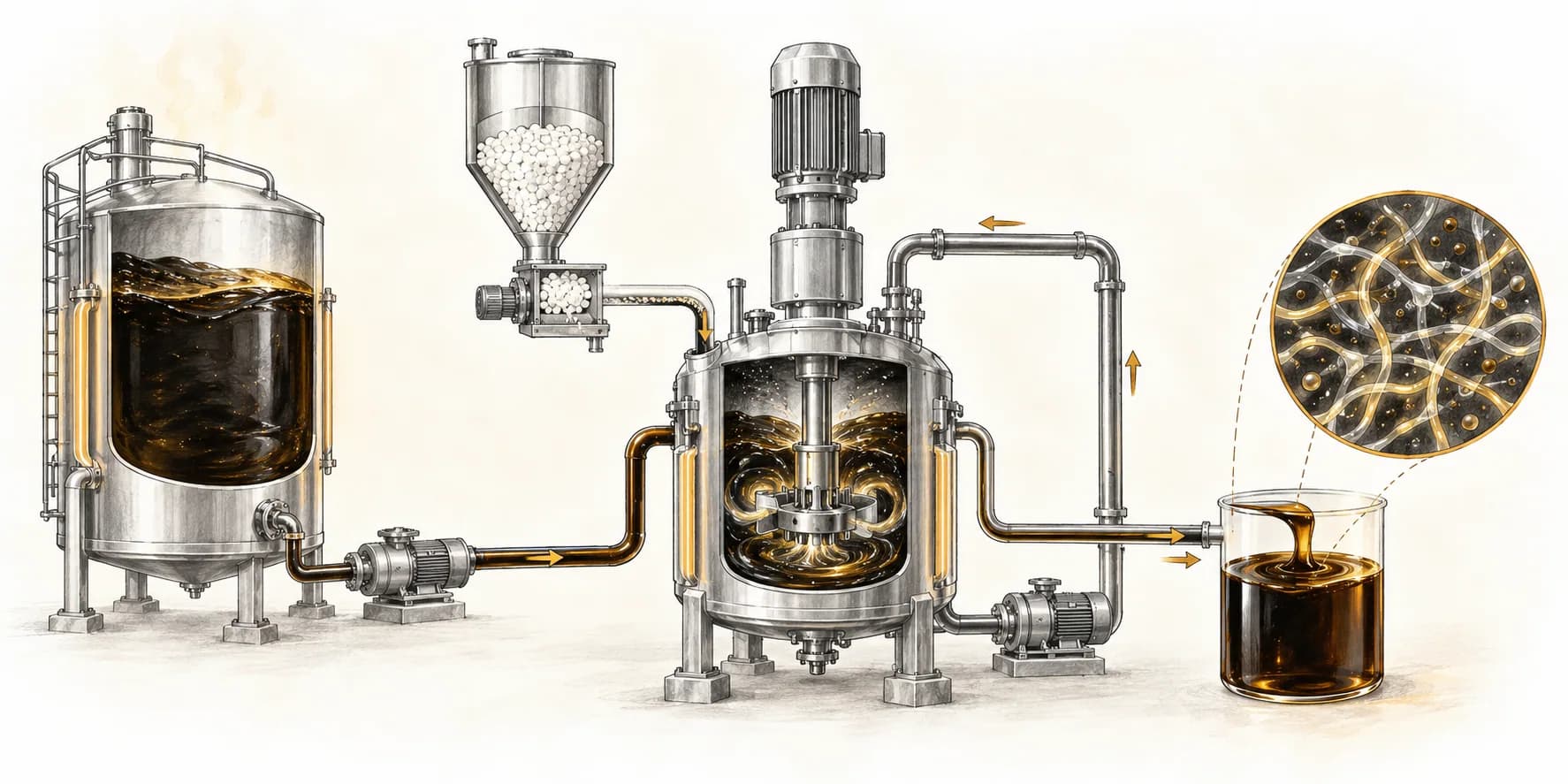
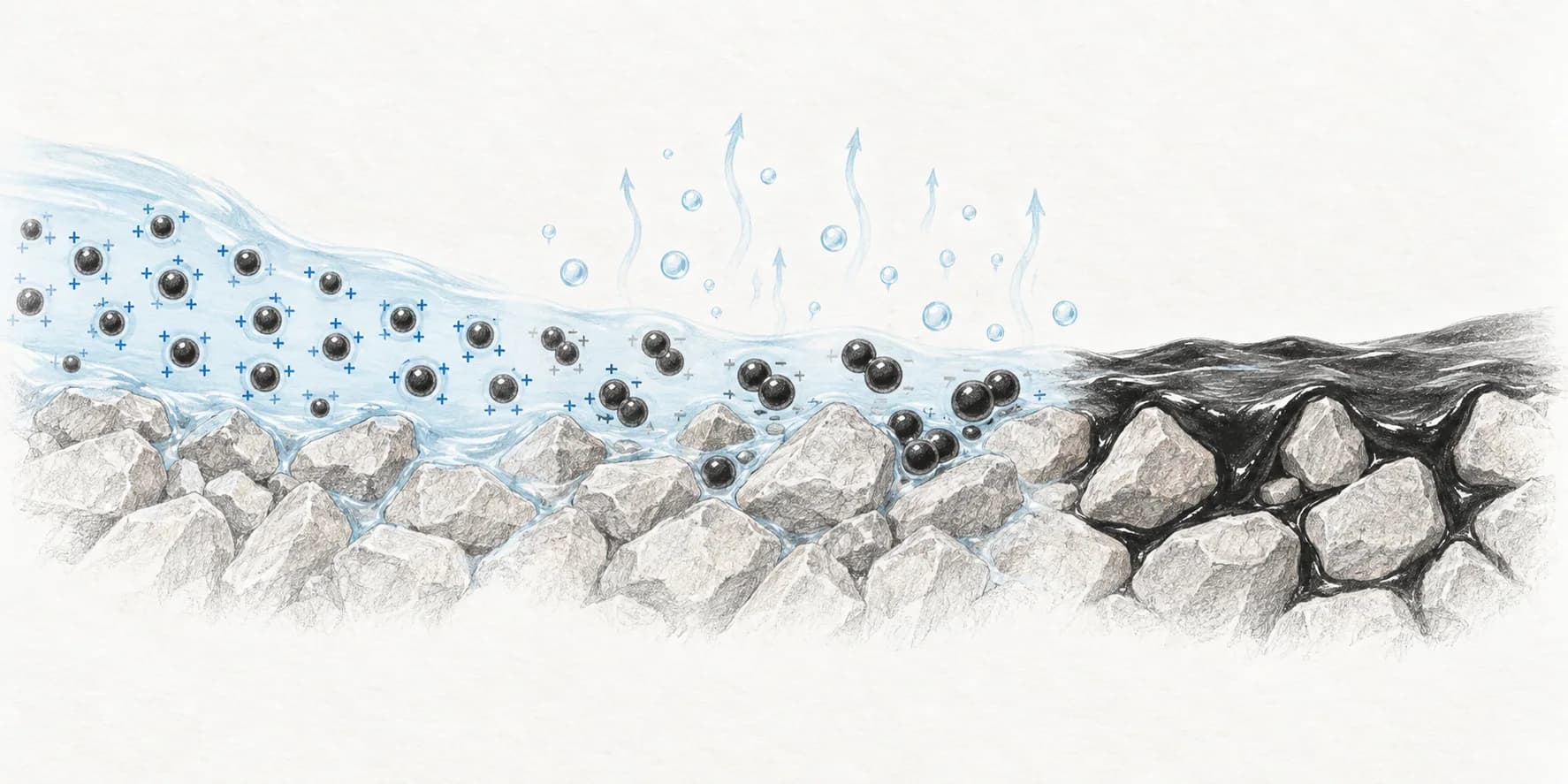
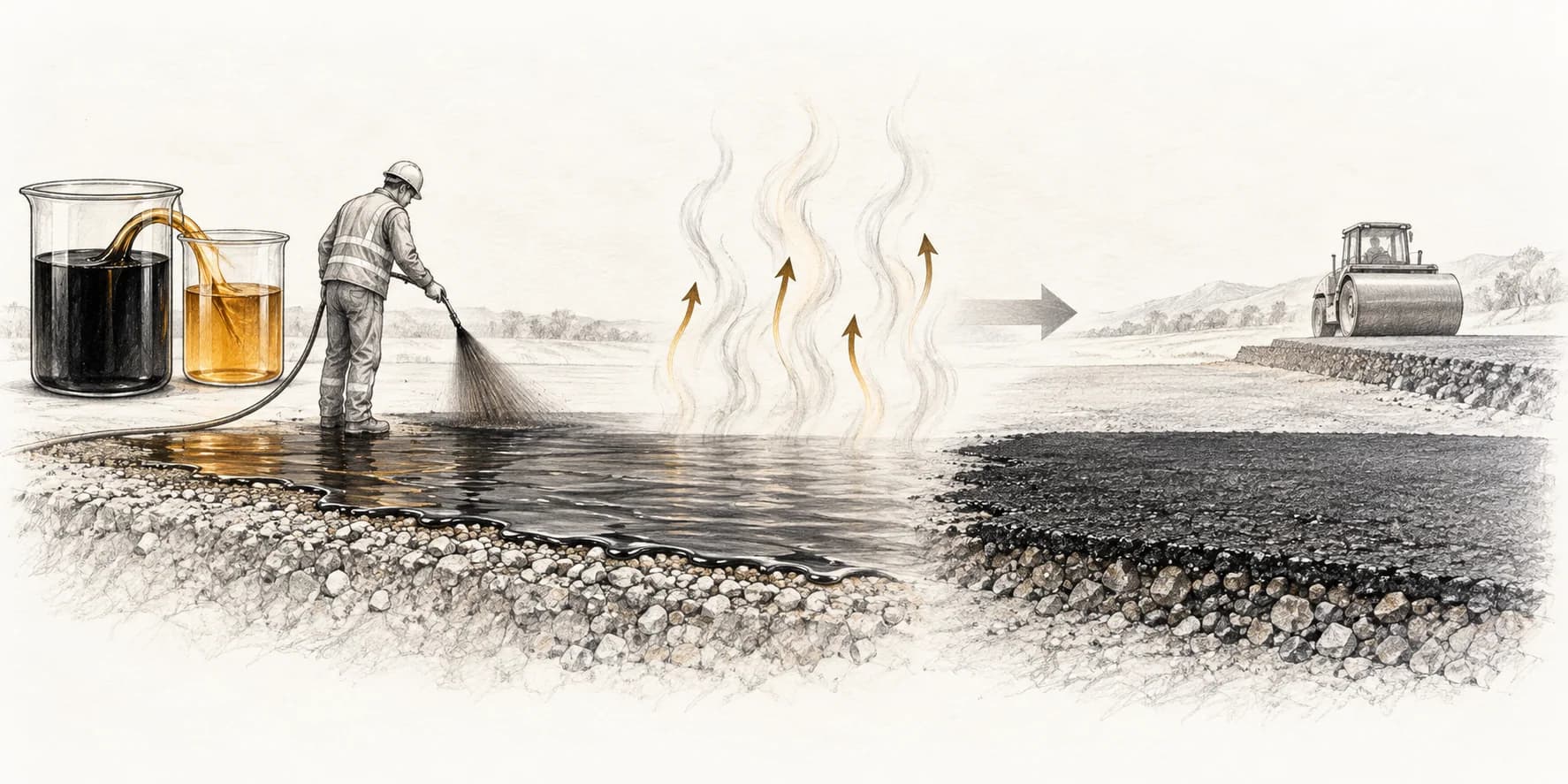
Solvent is added to make the binder sprayable without extensive heating. After application it evaporates, leaving a continuous bitumen residue bonded to the prepared surface.

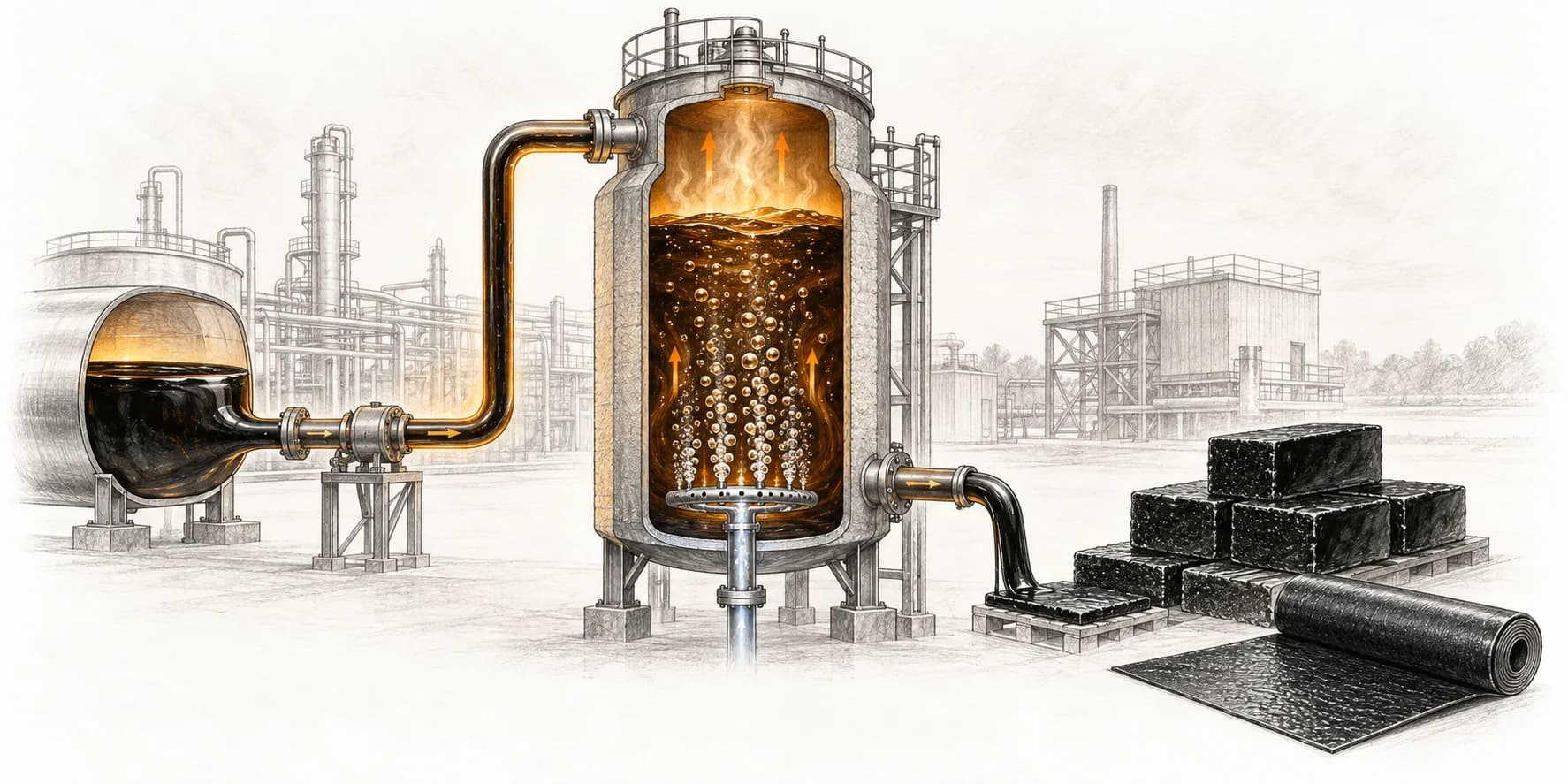
Crude oilFurnaceVacuumSolventCutbackDrums · bulk01Blend02Apply03Evaporate04Bond
  1. 01

    Blend

    Petroleum solvent temporarily reduces viscosity, so the binder can be sprayed without extensive heating.

  2. 02

    Apply

    The fluid binder is sprayed at cold or low temperature onto the prepared surface.

  3. 03

    Evaporate

    Solvent leaves at a grade-dependent curing speed: rapid, medium or slow.

  4. 04

    Bond

    The residual bitumen binds and seals the prepared surface as a continuous film.

09 / COMPATIBILITY & HANDLING

Plan safe storage
and application.

Cutback contains volatile petroleum solvent. Confirm storage, transfer and ventilation for your grade before shipment arrives.

  1. 01

    Control ignition

    Store away from open flame and ignition sources; volatile solvents require ventilation.

  2. 02

    Plan the cure

    Ambient temperature, humidity and surface porosity affect evaporation time.

  3. 03

    Check VOC rules

    Some jurisdictions restrict cutbacks in favour of lower-emission emulsions.

  4. 04

    Use the SDS

    Follow grade-specific storage, transfer, PPE and emergency guidance.

10 / REFERENCE METHODS

Standards and
test methods.

Not exhaustive: confirm the exact standard, grade and edition named in the project documents.

Trade and safety codes

For customs declarations, shipping documents and safety data sheets.

  • HS code2715.00Bituminous mixtures, as the grade pages state
  • UN numberUN 1999Tars, liquid, including cutback bitumens, Class 3, where the flash point requires; per SDS
01
ASTM D2028 · AASHTO M 81
Rapid curing (RC) grades
02
ASTM D2027 · AASHTO M 82
Medium curing (MC) grades
03
ASTM D2026
Slow curing (SC) grades
04
Local environmental / VOC regulations
May restrict solvent-based cutback use
05
National road authority specification
May reference an alternative national standard
11 / PACKING & DELIVERY

Packing
formats.

Availability depends on the product, quantity and receiving facilities. Confirm the arrangement for your order.

  • 01 / CONTAINERISED SUPPLY

    Drums

    New steel drums for containerised supply; 190 kg net, 80 drums per 20 ft container.

    Discuss this format
  • 50%
    02 / IBC, DRUM OR SMALLER PACKS

    Other formats

    IBC tanks of 950 kg, 20 per 20 ft container. Confirm the container, grade and receiving facilities for your destination.

    Discuss this format
  • 03 / TANKER OR VESSEL

    Bulk supply

    Tanker or vessel supply for high-volume receivers.

    Discuss this format
13 / PRICE ON THE DAY

Get today’s price.

Prices follow the market, so we quote each order on the day. Share your product, quantity and delivery point and we send a firm offer within 24 hours.

Request today’s price
14 / BUYING THIS RANGE

Frequently asked questions.

Product, documentation, delivery and terms for this range.

Question not listed?

Share your grade, destination and packing and we will answer with the offer.

Discuss your requirement ↗
01What does “cutback” mean in cutback bitumen?
It means reducing bitumen viscosity by dissolving it in petroleum solvent so it can be applied cold. The solvent evaporates after application, leaving the original bitumen behind.
02What is the difference between RC, MC and SC?
They identify solvent evaporation speed: Rapid Curing is fastest, Medium Curing is moderate and Slow Curing is slowest.
03Why choose cutback bitumen instead of emulsion?
Both allow cold application, but cutback uses evaporating solvent while emulsion disperses bitumen in water. Cutback can offer deep penetration into absorptive surfaces; emulsions are often preferred where VOC rules restrict solvents.
04What does the number in MC-250 mean?
It identifies the material’s kinematic viscosity range at 60°C. Higher numbers indicate thicker material for heavier applications.
05What documents come with each shipment?
Every shipment includes a Certificate of Analysis. Certificate of Origin, MSDS and third-party inspection are available on request.
06What packing formats are available?
Steel drums, IBC tanks and bulk supply by tanker or vessel are available depending on grade, quantity and destination facilities.
07What Incoterms do you offer?
FOB is commonly quoted from UAE ports; CFR and CIF destination-port offers are available.
08Are there environmental restrictions on cutback bitumen?
Some jurisdictions restrict cutback use because curing releases solvent VOCs. Confirm destination regulations before ordering.
THE BITUMEN RANGE

Switch family 07 / 09

  1. Penetration Grade BitumenGraded by needle penetration
  2. Viscosity Grade BitumenGraded by viscosity at 60 °C
  3. Australian Standard BitumenAS 2008 classes and Multigrade
  4. Performance Grade BitumenGraded for the climate
  5. Polymer Modified BitumenElastic, high-stress binders
  6. Bitumen EmulsionsWater-based, cold applied
  7. You’re hereCutback BitumenSolvent-thinned, cold applied
  8. Oxidised BitumenAir-blown for roofing and coatings
  9. Natural Bitumen (Gilsonite)Natural asphaltite
FROM THE KNOWLEDGE CENTRE

Guides & articles

Written by our trade desk to help you specify, compare and buy with confidence.

All guides & articles
ArticleBitumen · 3 minWhat cutback bitumen is and where it is still used

Cutback bitumen explained: rapid, medium and slow curing types, what the grade numbers mean, typical uses and why emulsions often…

Read
ArticleBitumen · 3 minMC-30 or MC-70: choosing a cutback grade for prime coats

How MC-30 and MC-70 medium curing cutbacks differ, how base porosity and weather decide between them, and what to specify for a…

Read
ArticleBitumen · 3 minWhy cutback prime coats fail to cure and how to fix it

Common faults with cutback bitumen prime coats, from tacky surfaces to poor penetration and pickup, with their likely causes and…

Read
GuideBitumen · 3 minMC cutback specification tests explained: flash point, distillation and residue

Reference guide to the tests in medium curing cutback specifications, from viscosity and flash point to distillation fractions…

Read
GuideBitumen · 3 minAustralian AMC cutback grades from AMC00 to AMC7

Reference guide to AS 2157 AMC cutback grades: solvent content, viscosity, primer, primer seal and seal uses, application rates…

Read
GuideBitumen · 3 minPacking, shipping and documents for cutback bitumen

Guide to packing cutback bitumen in drums or bulk, dangerous goods classification, storage on arrival and the documents to…

Read
LET’S TALK ABOUT YOUR REQUIREMENTS

Your next shipment starts here.

Request a quote