In Australia, cutback bitumen is covered by AS 2157 and graded as AMC00 through to AMC7. The grades form a single ladder from very thin primers to heavy sealing binders, all made by blending paving bitumen with a kerosene-type solvent in controlled proportions. Buyers working on projects that reference Australian specifications need to know where each grade sits and what it is for.
The grade ladder
| Grade | Approx. kerosene (% vol) | Viscosity at 60°C (Pa·s) | Class of use | Typical base or climate | Typical rate (L/m²) |
|---|---|---|---|---|---|
| AMC00 | 56 | 0.008 to 0.016 | Primer | Low porosity base | 0.25 to 0.35 |
| AMC0 | 44 | 0.025 to 0.05 | Primer | Medium porosity base | 0.30 to 0.60 |
| AMC1 | 34 | 0.06 to 0.12 | Primer | High porosity base | 0.60 to 1.0 |
| AMC2 | 27 | 0.22 to 0.44 | Primer seal | Low porosity base | 0.7 to 1.2 |
| AMC3 | 21 | 0.55 to 1.1 | Primer seal | Medium porosity base | 0.8 to 1.4 |
| AMC4 | 16 | 2.0 to 4.0 | Primer seal | High porosity base | 0.9 to 1.6 |
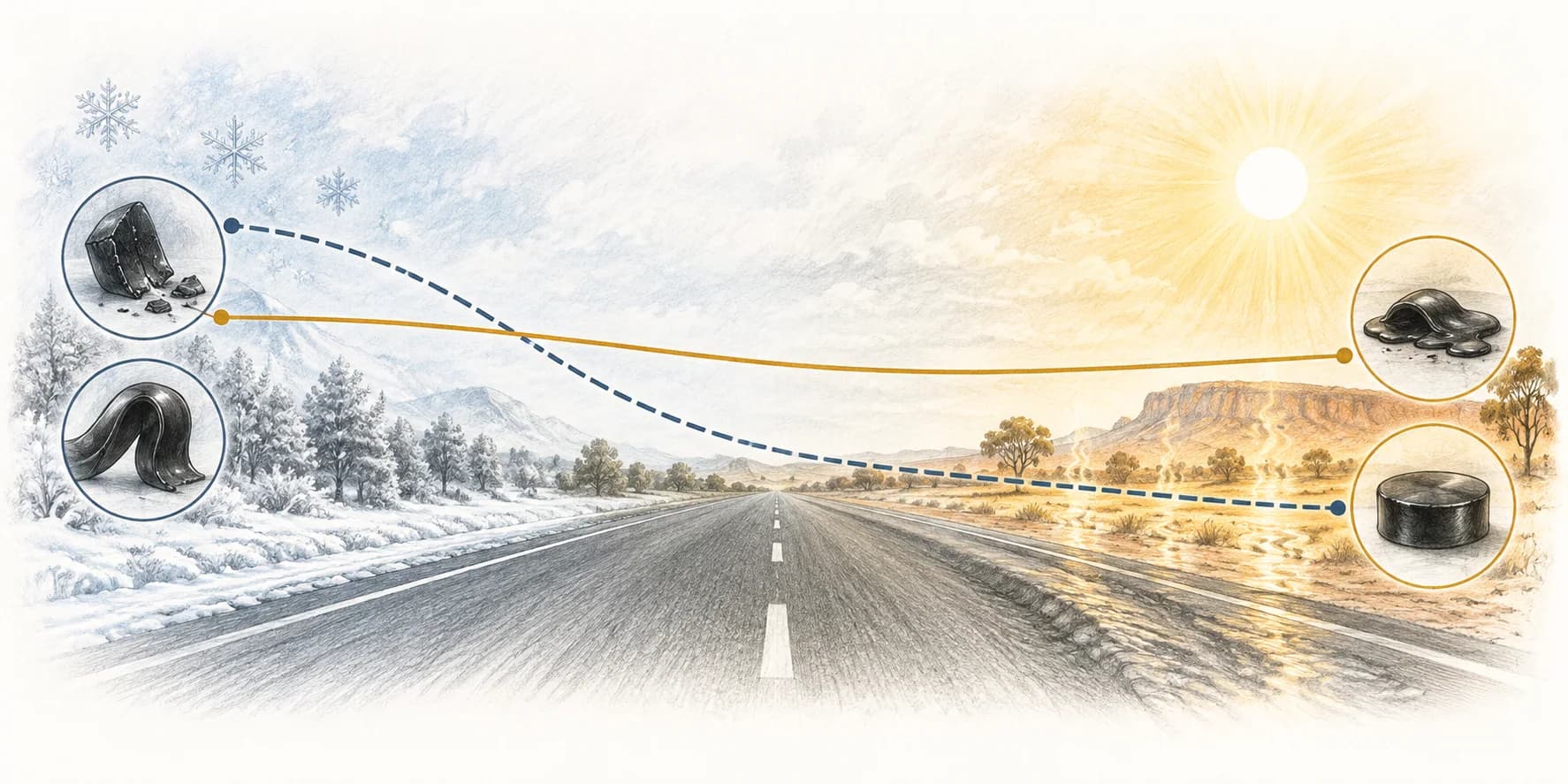
| AMC5 | 11 | 5.5 to 11.0 | Seal | Cool climate | 1.2 to 1.8 |
| AMC6 | 7 | 13.0 to 26.0 | Seal | Medium climate | 1.2 to 1.8 |
| AMC7 | 3 | 43.0 to 86.0 | Seal | Hot climate | 1.2 to 1.8 |
Figures are drawn from producer data sheets for AS 2157 grades and are for orientation; the standard and the project specification govern.
Primers, primer seals and seals
Primers (AMC00 to AMC1)
Primer seals (AMC2 to AMC4)
Seal grades (AMC5 to AMC7)
Temperatures and flash points
Producer data gives application temperatures rising from about 10 to 30°C for AMC00 up to about 150 to 175°C for AMC7, with maximum short-term storage temperatures from about 100°C to 185°C across the range. Minimum flash points are above 38°C for AMC00 to AMC4 and above 50°C for AMC5 to AMC7. Because working temperatures can be well above these flash points, fire precautions are essential.
Choosing between neighbouring grades is mostly about the base: a tight, fine-textured base needs a thinner grade, while an open, coarse base can take a heavier one at a higher rate.
Field blending and additives
Austroads notes that equivalent field-blended grades can be used in place of factory-made AS 2157 grades. Some road agencies add their own requirements; one state specification requires a set dose of approved adhesion agent in all primer binders. Check the local specification before ordering.
Packing
AMC grades are commonly supplied in bulk or in 200-litre steel drums. Drums should be stored upright, closed and out of direct sun, and kept away from drains and stormwater.
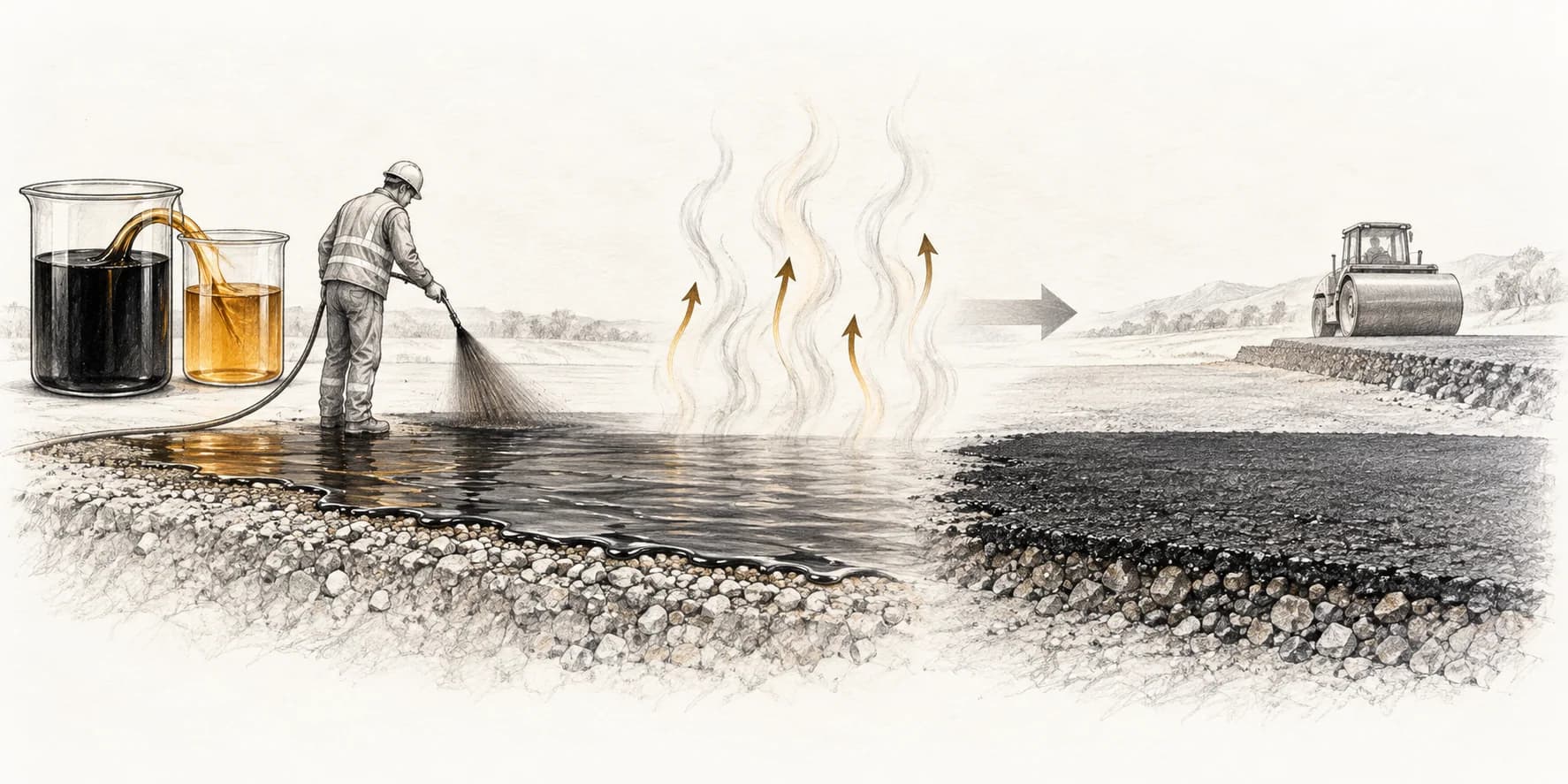
The lower the AMC number, the more solvent it contains and the deeper it is meant to penetrate.
Specifying AMC grades
Name the grade and AS 2157, add any agency requirements such as adhesion agent, and state quantity and packing. Ask for a certificate of analysis showing viscosity and flash point, and the safety data sheet. For conventional AS 2008 classes see the Australian Standard bitumen page; for AMC cutbacks use the cutback bitumen page.