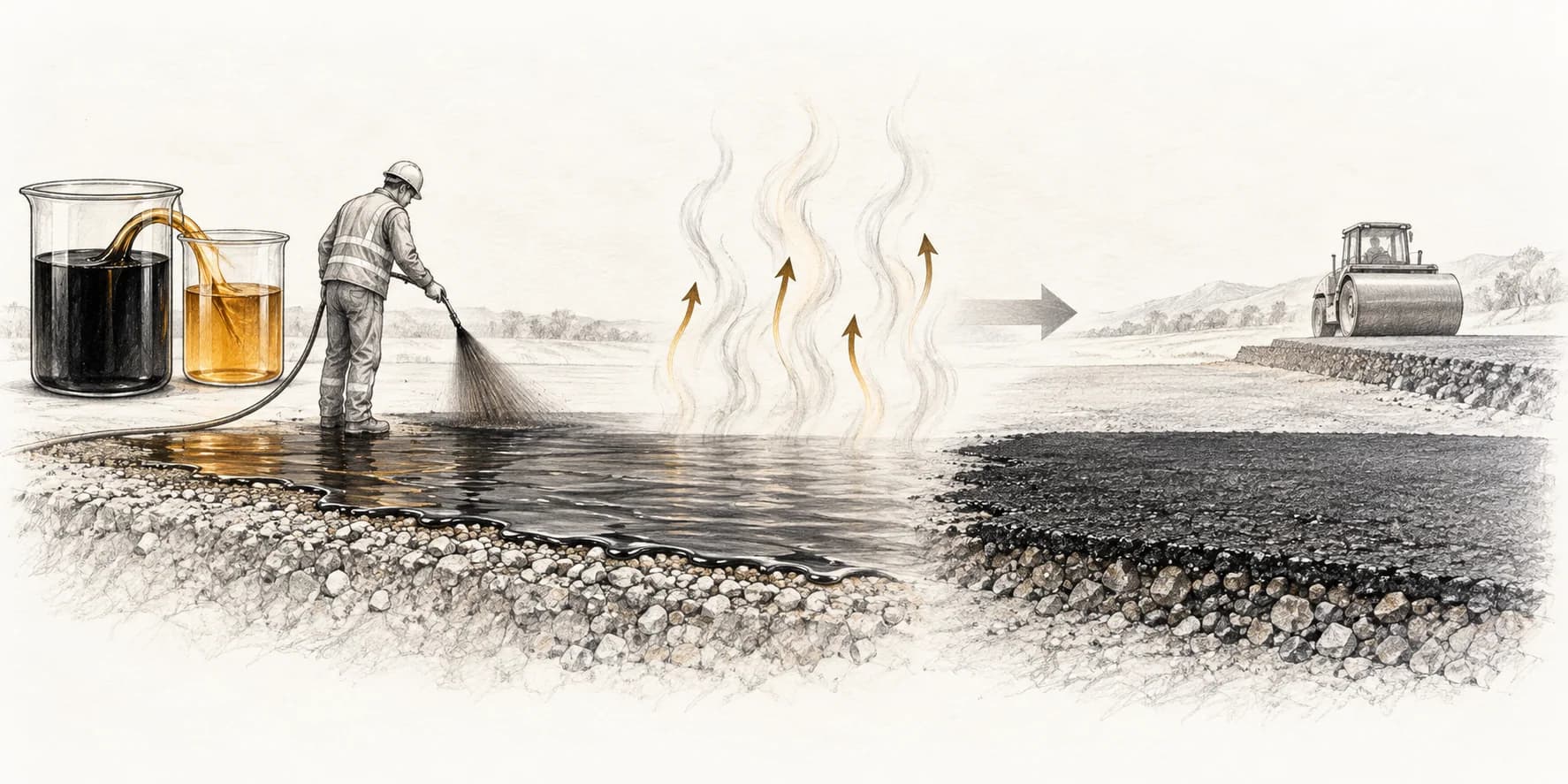
Cutback bitumen is paving bitumen that has been thinned with a petroleum solvent so that it can be sprayed or mixed at much lower temperatures than straight-run bitumen. Once applied, the solvent evaporates and leaves the bitumen behind. This process is called curing. Cutbacks were once the main liquid binder for road work; today they have been largely replaced by emulsions in many regions, but they remain in use for specific jobs.
Rapid, medium and slow curing types
Cutbacks are classified by how quickly the solvent evaporates, which depends on the type of solvent used.
| Type | Solvent | Curing | Typical uses |
|---|---|---|---|
| Rapid curing (RC) | Highly volatile, naphtha or gasoline type | Fast; leaves a relatively hard bitumen | Tack coats, surface treatments, some patching mixes |
| Medium curing (MC) | Less volatile, kerosene type | Slower; leaves a bitumen of medium hardness | Prime coats, stockpile patching mixes, surface dressing |
| Slow curing (SC) | Low-volatility oils, or made directly by distillation | Very slow; sometimes called road oils | Dust control and light mixes where long workability is wanted |
In ASTM practice the three families are covered by separate specifications: D2028 for rapid curing, D2027 for medium curing and D2026 for slow curing.
What the grade number means
Cutback grades carry a number such as MC-30, MC-70, MC-250, MC-800 or MC-3000. The number is the lower limit of kinematic viscosity at 60°C in centistokes (mm²/s), and the upper limit is twice that figure. MC-250, for example, must fall between 250 and 500 cSt at 60°C. A lower number means a thinner product with more solvent, which penetrates better; a higher number means a thicker product with less solvent.
The thinnest grades, such as MC-30 and MC-70, are typical for prime coats, because they need to soak into a compacted granular base before the surfacing is laid. Heavier grades are used where more binder needs to stay on the surface or in a mix.
Where cutbacks are still used
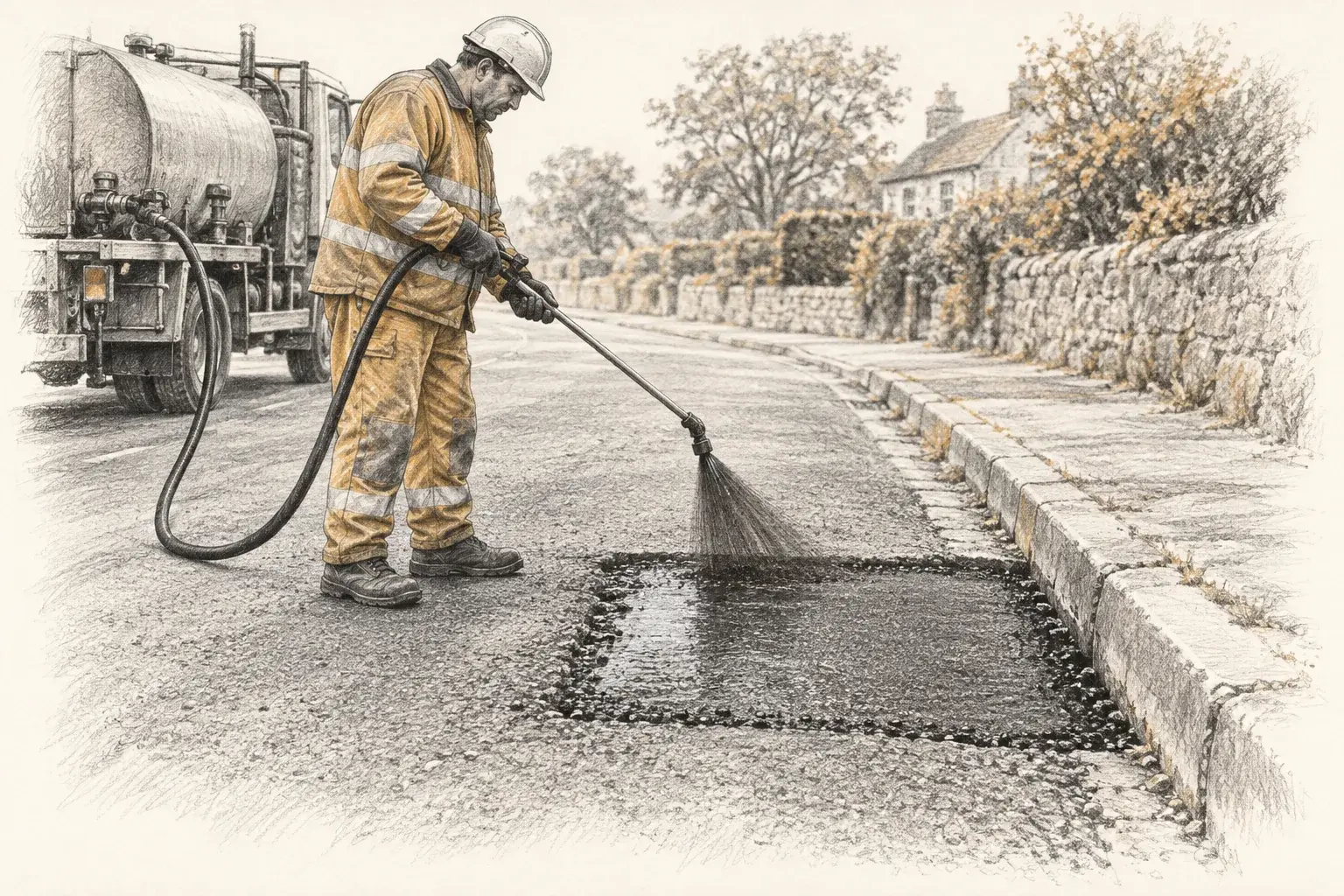
- Prime coats on granular bases, where a thin, penetrating binder is needed to bind loose fines and help the asphalt layer bond.
- Cold patching mixes that must stay workable in a stockpile and still harden after placement, especially in cold or wet weather.
- Industrial and construction primers for concrete and masonry before applying bitumen waterproofing.
Some road authorities still accept cutbacks for prime coats because certain emulsions do not penetrate dense bases as well.
Selection between grades is a matter of local practice, traffic, climate and availability. ASTM D2399 gives general guidance on matching cutback types to construction procedures, but it is a guide only, and the project specification should always take priority.
Why emulsions have replaced cutbacks in many places
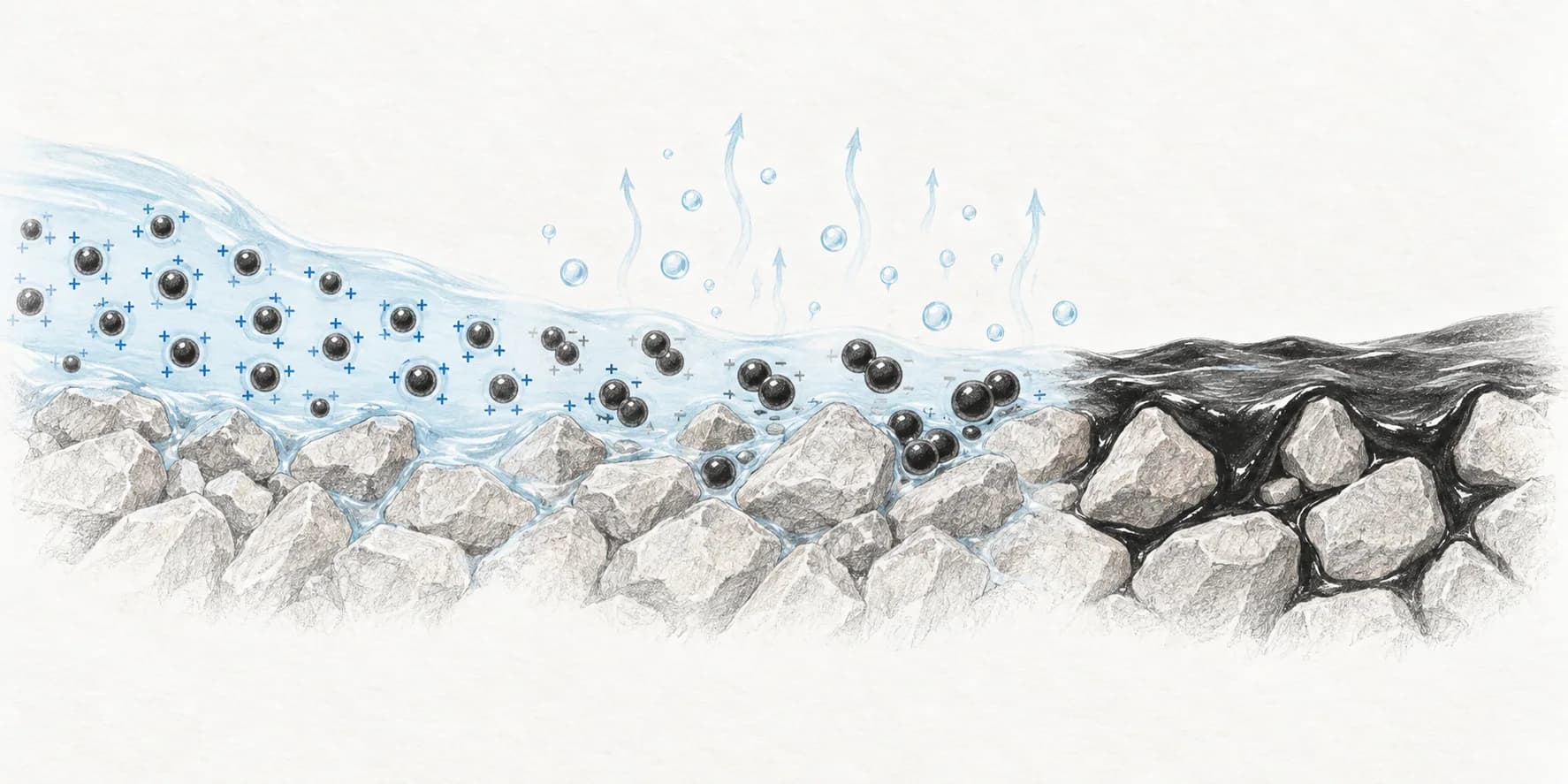
The solvent in a cutback does not disappear: it evaporates into the air. This adds volatile organic compounds to the atmosphere and wastes a refined petroleum product. Several air-quality authorities restrict or prohibit rapid and medium curing cutbacks for paving, tack coats, prime coats and dust control, with limited exemptions. Emulsions use water and a small amount of emulsifier instead, and often cost less to produce.
Cutbacks also carry a higher fire risk. Because they contain volatile solvent, their flash point is much lower than that of paving bitumen, particularly for rapid curing grades. They should be heated only as far as needed to spray them, kept away from open flames, and handled in line with the product SDS.
Before specifying a cutback, check local environmental rules and whether an emulsion can do the same job.
What to specify when buying
State the type and grade (for example MC-30 for priming), the standard, quantities and packing, which is usually steel drums for smaller jobs. Ask for a certificate of analysis with kinematic viscosity, flash point and distillation results, and an MSDS covering flammability. Nuroil supplies cutback bitumen as well as emulsions for projects where a water-based binder is preferred.