Most of a road network's life is spent being maintained rather than built. Treating a sound pavement before it fails is far cheaper than rebuilding it later, and much of this work is done with bitumen emulsions and cold mixes. They can be applied without a hot mix plant nearby, often with simple equipment and small crews.
Why emulsions suit maintenance work
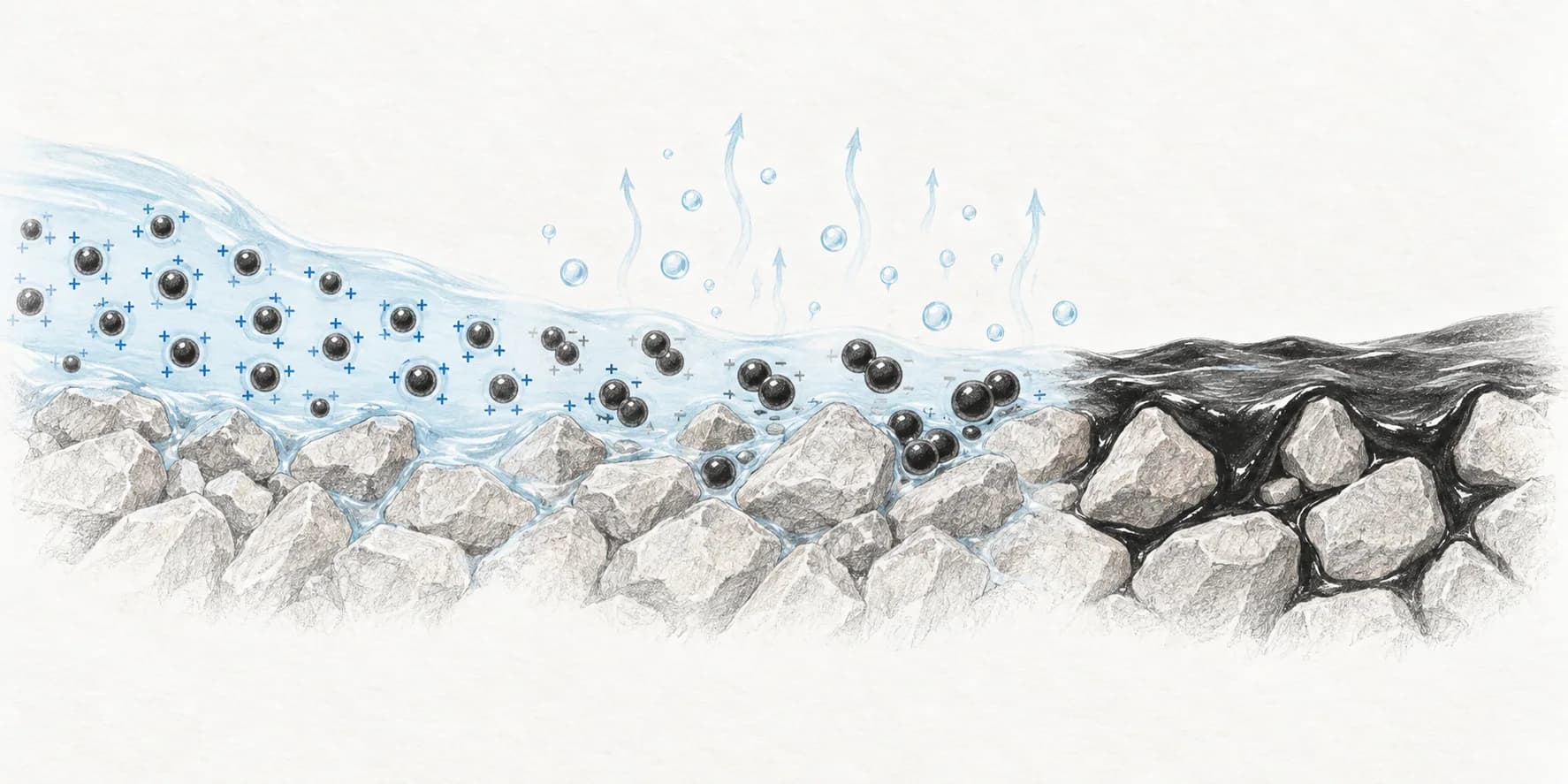
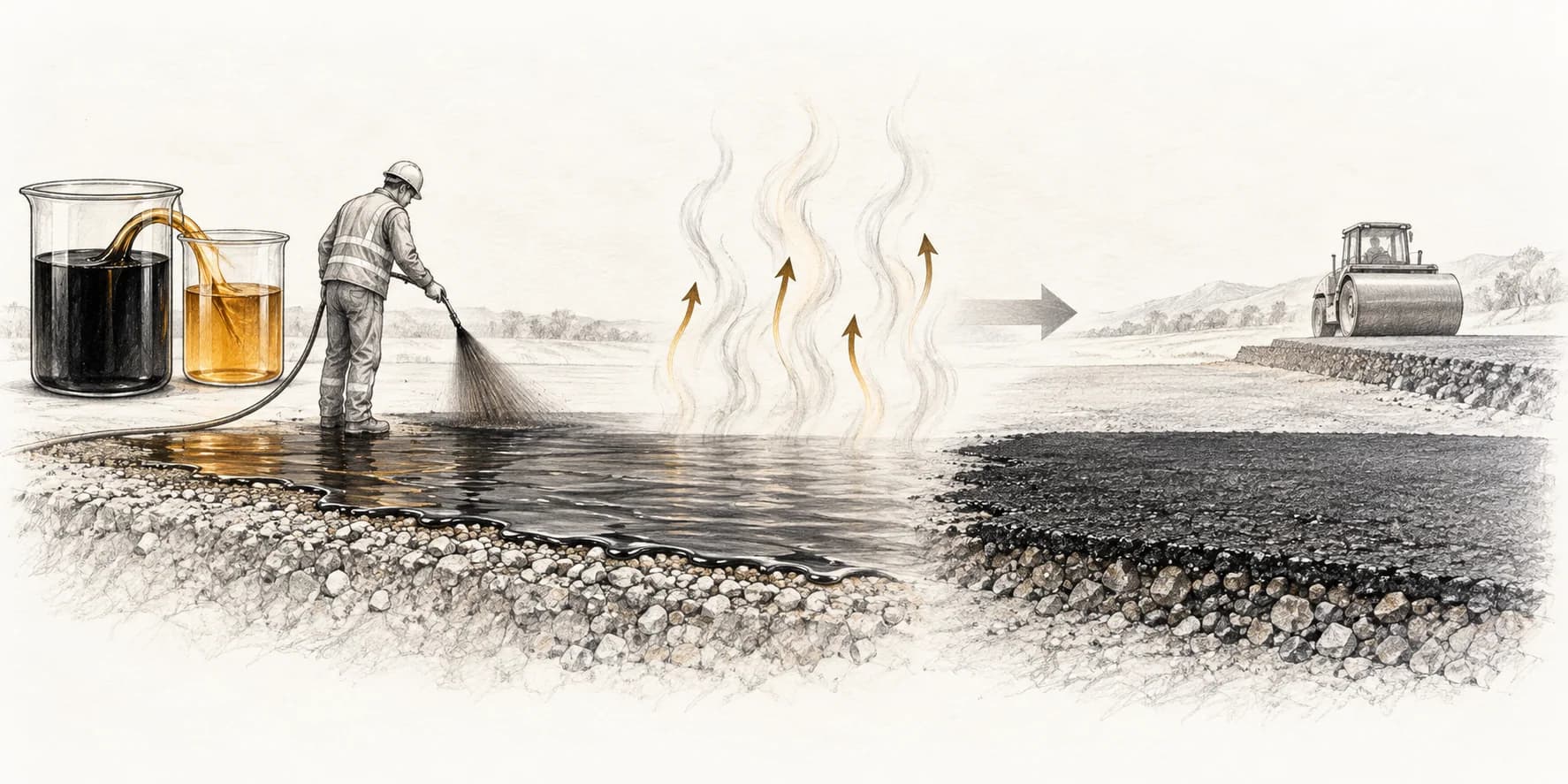
A bitumen emulsion is a suspension of fine bitumen droplets in water, kept apart by an emulsifier. Because it is fluid at ambient or modestly warm temperatures, it can be sprayed or mixed with damp aggregate without heating the bitumen to paving temperatures. After application the emulsion breaks, changing colour from brown to black as the bitumen deposits on the surface, and then sets as the water evaporates. Under typical conditions setting takes roughly one to two hours, but cool, humid weather slows it down.
Common preservation treatments
| Treatment | What it is | Typical emulsion | Purpose |
|---|---|---|---|
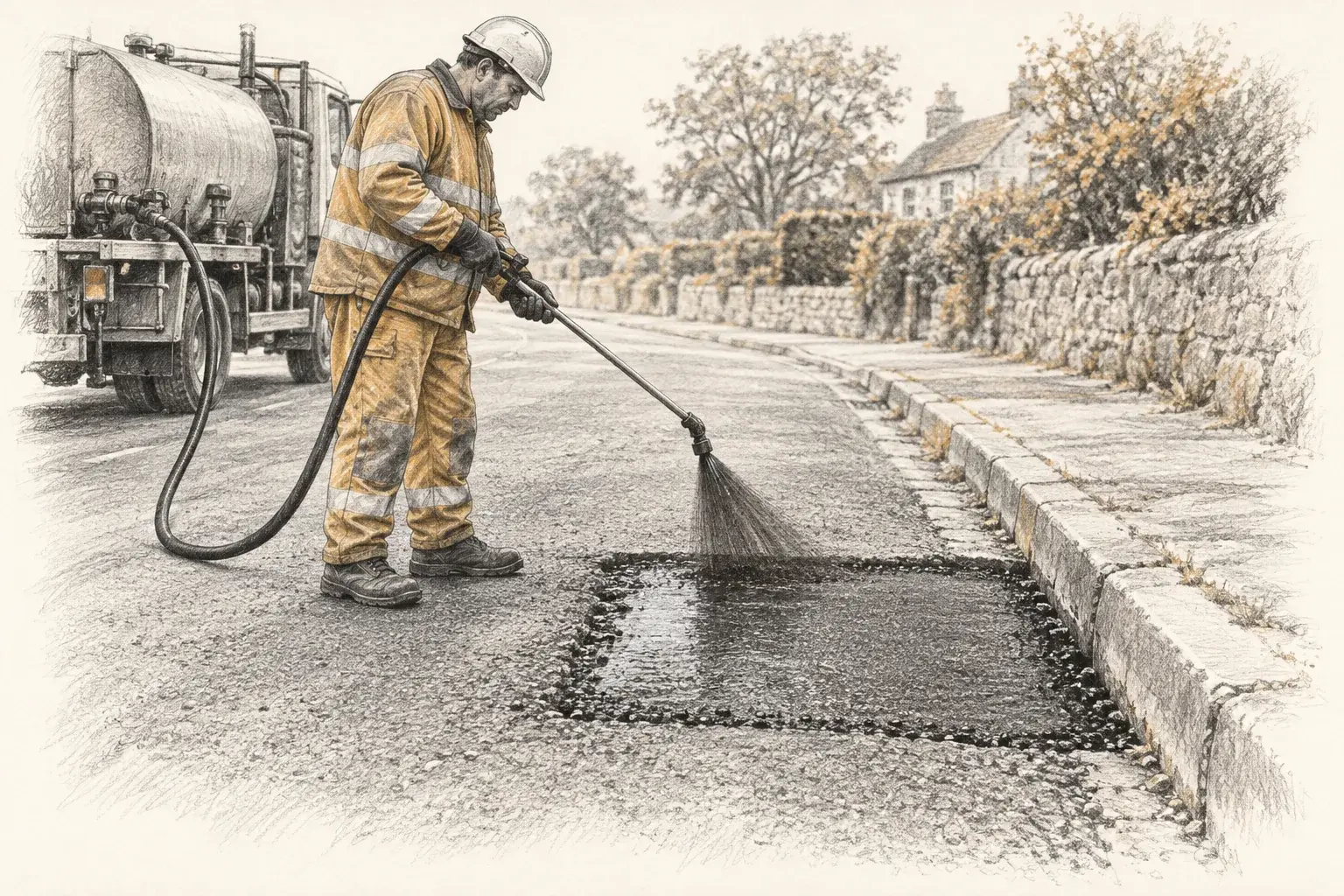
| Fog seal | Light spray of diluted emulsion | Slow or medium setting | Seals fine cracks, slows ravelling, holds chips in place |
| Chip seal (surface dressing) | Emulsion sprayed, then covered with single-sized stone and rolled | Rapid setting | Waterproofs the surface and restores skid resistance |
| Slurry seal | Mix of fine aggregate, emulsion, water and filler spread in a thin layer | Slow or quick setting | Fills minor cracks and renews a worn surface |
| Tack coat | Thin spray between layers | Slow or rapid setting, often diluted | Bonds a new asphalt layer to the one below |
These treatments are for pavements that are still structurally sound. Highway agency guidance is clear that chip seals and fog seals do not repair structural failures such as widespread fatigue cracking or deep rutting; those need patching, overlays or reconstruction.
Timing matters. A fog seal on a road in good condition can add a few years of life, while the same treatment on a badly cracked road achieves little. Agencies typically check traffic volumes, the share of heavy vehicles and the existing distress before choosing a treatment.
Pothole repair with cold mix
Cold mix is a pre-blended mixture of aggregate and an emulsion or cutback binder that stays workable in a stockpile or bag. It is the standard material for emergency and small-scale pothole repair, particularly in wet or cold weather when hot mix is unavailable.
Two field methods are widely used:
- Throw and roll. Material is placed into the hole and compacted with the truck tyres, leaving a slight crown. It is quick and keeps crews off the road for less time.
- Semi-permanent. Water and debris are removed, the edges are cut square to sound pavement, and the patch is compacted with a plate compactor or small roller. It takes longer but gives a neater, better-bonded repair.
Long-term studies of pothole repairs found that throw and roll performed as well as the semi-permanent method in most situations, provided a good quality patching material was used. In other words, the quality of the cold mix often matters more than the repair technique.
Cheap patching material is false economy: a pothole that has to be filled three times costs more than one filled properly with a good mix.
Good practice on site
- Match the emulsion to the aggregate. Cationic emulsions generally suit siliceous stone such as granite, while anionic emulsions work better with limestone.
- Avoid spraying in rain, on very cold surfaces or when rain is expected before the emulsion has set.
- Keep traffic off fresh seals until the binder has set, or use speed control and sweeping on chip seals to limit stone loss.
- Store emulsions according to the supplier's data sheet; do not let them freeze or overheat, and do not mix different types in one tank.
What to specify when buying
For a maintenance programme, list each treatment and the emulsion grade it requires (for example a rapid setting cationic grade for chip seals), the standard, the quantities by season and the packing, such as drums, IBCs or flexitanks. For cold mix, state the intended use and whether bagged or bulk material is needed. Ask for a certificate of analysis covering residue content, viscosity and sieve test. Nuroil supplies bitumen emulsions and cold asphalt with CoA and MSDS documentation.