Bitumen has been used to keep water out of buildings for a very long time, and it remains one of the most common waterproofing materials in construction. It is water-repellent, bonds well to concrete, masonry and felts, stays flexible over a useful temperature range and can be applied hot, as a sheet, or cold as an emulsion or solution. Different forms suit different parts of a building.
Why bitumen works as a waterproofing material
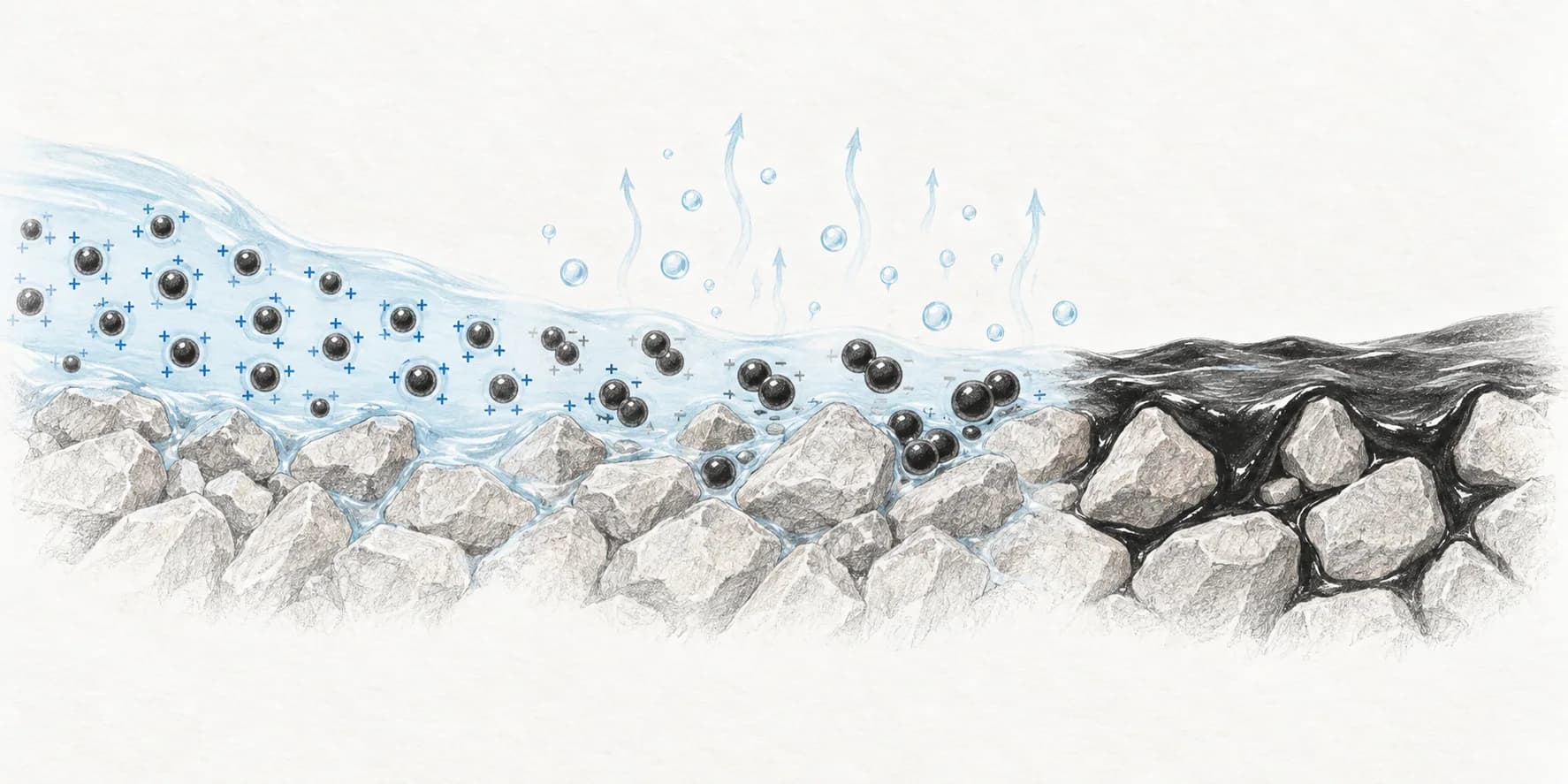
Bitumen is practically insoluble in water and forms a continuous film that blocks moisture. It adheres strongly to most building substrates once they are clean and primed, and it can accommodate small movements in the structure without splitting. Its weakness is sunlight and heat: exposed bitumen oxidises and hardens over time, so roofing systems usually protect it with mineral granules, gravel, reflective coatings or a cap sheet.
Oxidised bitumen and built-up roofs
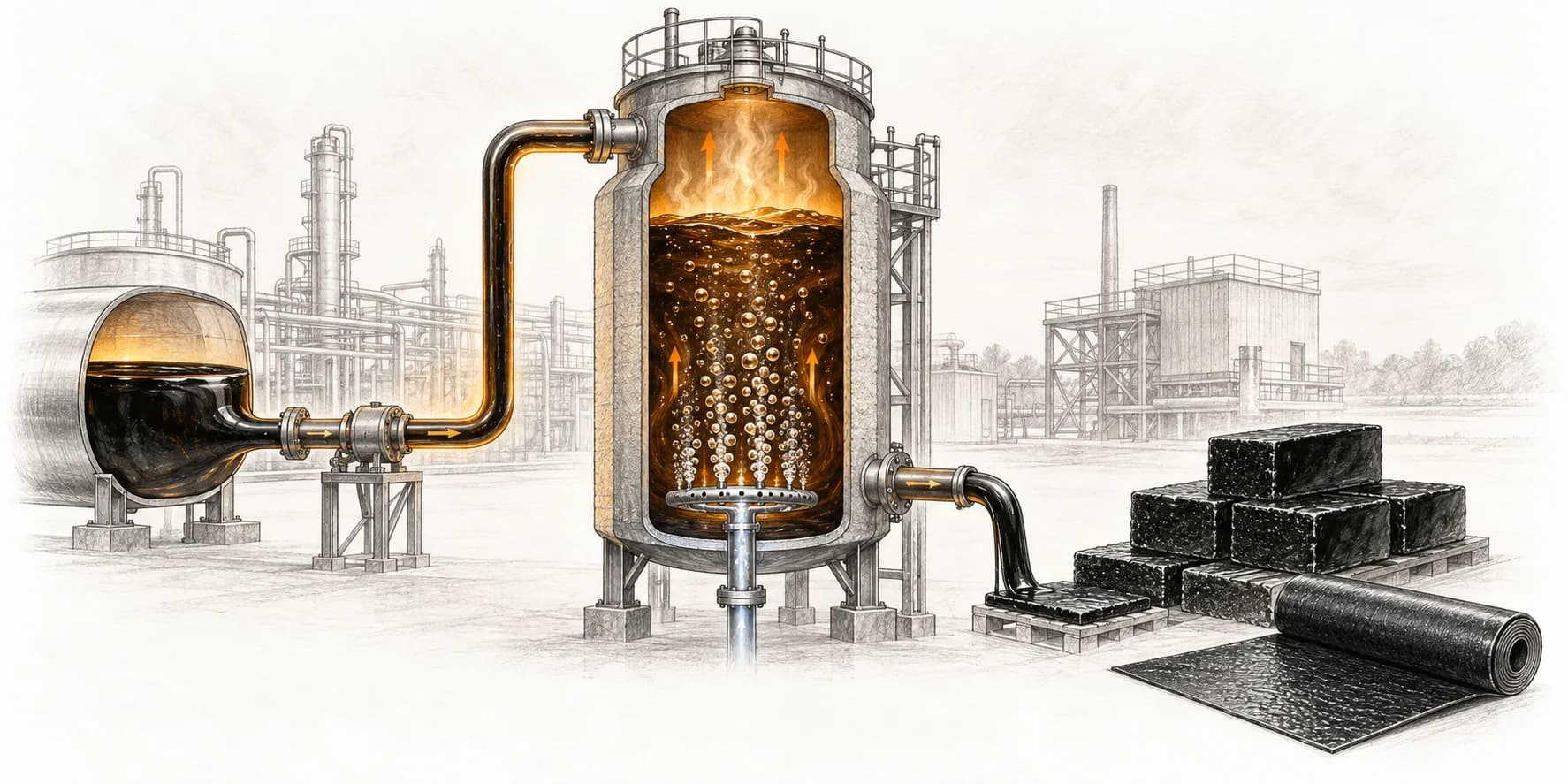
Paving grades are too soft for most roofing work, as they would flow on a sun-heated roof. Roofing and industrial work instead uses oxidised (blown) bitumen, made by blowing air through hot bitumen. The process raises the softening point and makes the material much less sensitive to temperature, so it stays relatively solid at ambient temperatures.
Oxidised grades are usually named with two numbers: the target softening point in °C followed by the target penetration at 25°C. A grade such as 85/25 therefore softens at around 85°C and is quite hard. Higher softening points, such as 95/25 or 115/15, are chosen for hot climates and for roofs that reach high surface temperatures.
In a built-up roof (BUR), layers of hot oxidised bitumen alternate with reinforcing felts or ply sheets, creating a thick, multi-layer membrane. The same hot bitumen is used to bond insulation boards and membranes in many flat roof systems.
Modified bitumen membranes
Factory-made modified bitumen membranes are now widely used on flat and low-slope roofs and below ground. The bitumen in these sheets is modified with a polymer, usually SBS or APP, and reinforced with polyester or glass fibre.
| Feature | SBS-modified | APP-modified |
|---|---|---|
| Type of polymer | Elastomer (rubber-like) | Plastomer (plastic-like) |
| Main strength | Flexibility, elongation and recovery, including at low temperatures | Resistance to heat and UV |
| Typical installation | Torch, hot bitumen, cold adhesive, self-adhesive or mechanical fixing | Usually torch-applied |
Most systems combine a base sheet with a mineral-surfaced cap sheet that protects the bitumen from sunlight. In basements and foundations, membranes are protected with boards or backfill rather than granules.
Primers, emulsions and coatings
Liquid bitumen products do much of the supporting work:
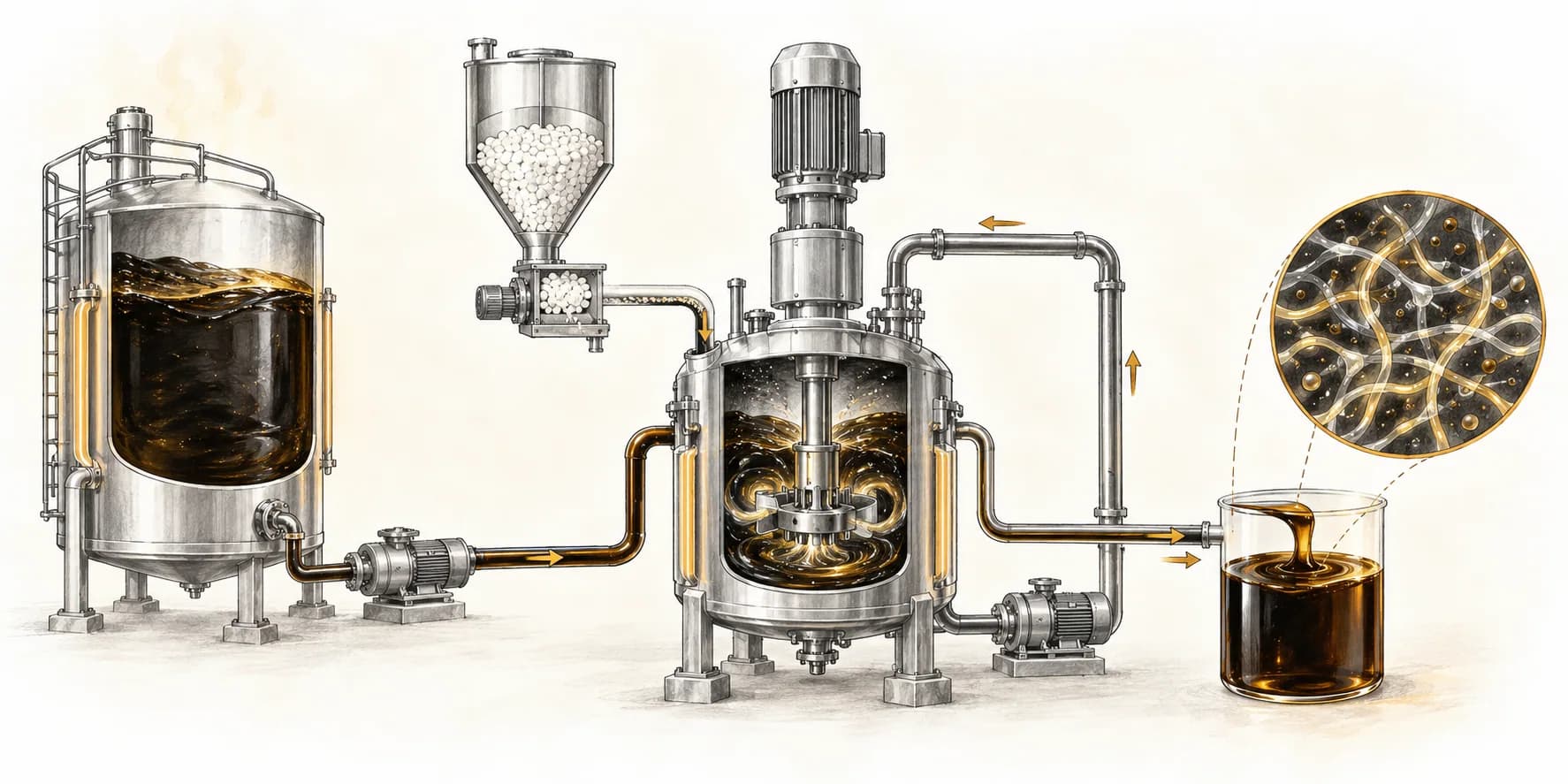
- Primers are thin bitumen solutions or emulsions that soak into dusty or porous concrete and give membranes and hot bitumen a sound surface to bond to.
- Bitumen emulsions and coatings are brushed or sprayed on foundations, retaining walls and below-grade concrete as damp-proofing. Water-based products avoid solvents and can often be applied to slightly damp surfaces, though cure times depend on weather.
- Mastics and sealants based on bitumen fill joints, upstands and penetrations where sheets meet pipes and walls.
Choosing the right material
The choice depends on exposure and movement. An exposed roof in a hot climate needs a high softening point and good UV protection. A podium deck or basement under backfill needs puncture resistance and good adhesion to concrete more than heat resistance. Structures that move, such as lightweight decks, benefit from the elasticity of SBS products. Specifiers should always follow the membrane system manufacturer's instructions, as primers, bonding bitumen and sheets are designed to work together.
Hot application carries real risks. Oxidised bitumen is handled at high temperatures, and heating above the recommended range or close to the flash point damages the product and creates a fire hazard. Kettle temperature should be controlled, and the product SDS consulted for safe working limits.
What to specify when buying
For roofing and waterproofing bitumen, state the grade by softening point and penetration, the standard it must meet, the packing (bags, cartons or drums for oxidised grades; drums or IBCs for emulsions and primers) and the destination climate. Ask for a certificate of analysis with softening point, penetration and flash point, and an MSDS for site use. Nuroil can supply oxidised bitumen and bitumen emulsions on FOB, CFR or CIF terms; send details through a quote request.