In hot regions the binder in an asphalt pavement spends much of the year close to its softening range. Surface temperatures on dark pavement run well above air temperature, and heavy, slow-moving trucks load the road while it is at its softest. The bitumen grade chosen at the design stage therefore has a direct effect on how long the surface stays smooth and sound.
What heat does to a pavement
Three problems dominate in hot climates:
- Rutting. A binder that is too soft at high service temperatures lets the mix deform permanently under wheel loads. Ruts appear in the wheel paths, collect water and make steering harder.
- Bleeding. Soft binder can be squeezed to the surface, leaving a shiny, slippery film that loses skid resistance.
- Accelerated ageing. Bitumen reacts with oxygen, and the reaction speeds up with temperature. Over years the binder stiffens and becomes brittle, which leads to cracking and ravelling.
The aim is a binder stiff enough to resist deformation on the hottest days, but not so hard or so aged that it cracks.
Reading the grade for high-temperature performance
Each grading system describes high-temperature behaviour in a different way. Knowing which property to look at helps when comparing offers or tender specifications.
| Grading system | Main high-temperature indicator | What a stiffer choice looks like |
|---|---|---|
| Penetration grade | Penetration at 25°C and softening point | Lower penetration range, higher softening point (for example 40/50 rather than 80/100) |
| Viscosity grade | Absolute viscosity at 60°C | Higher grade number (VG-40 rather than VG-30) |
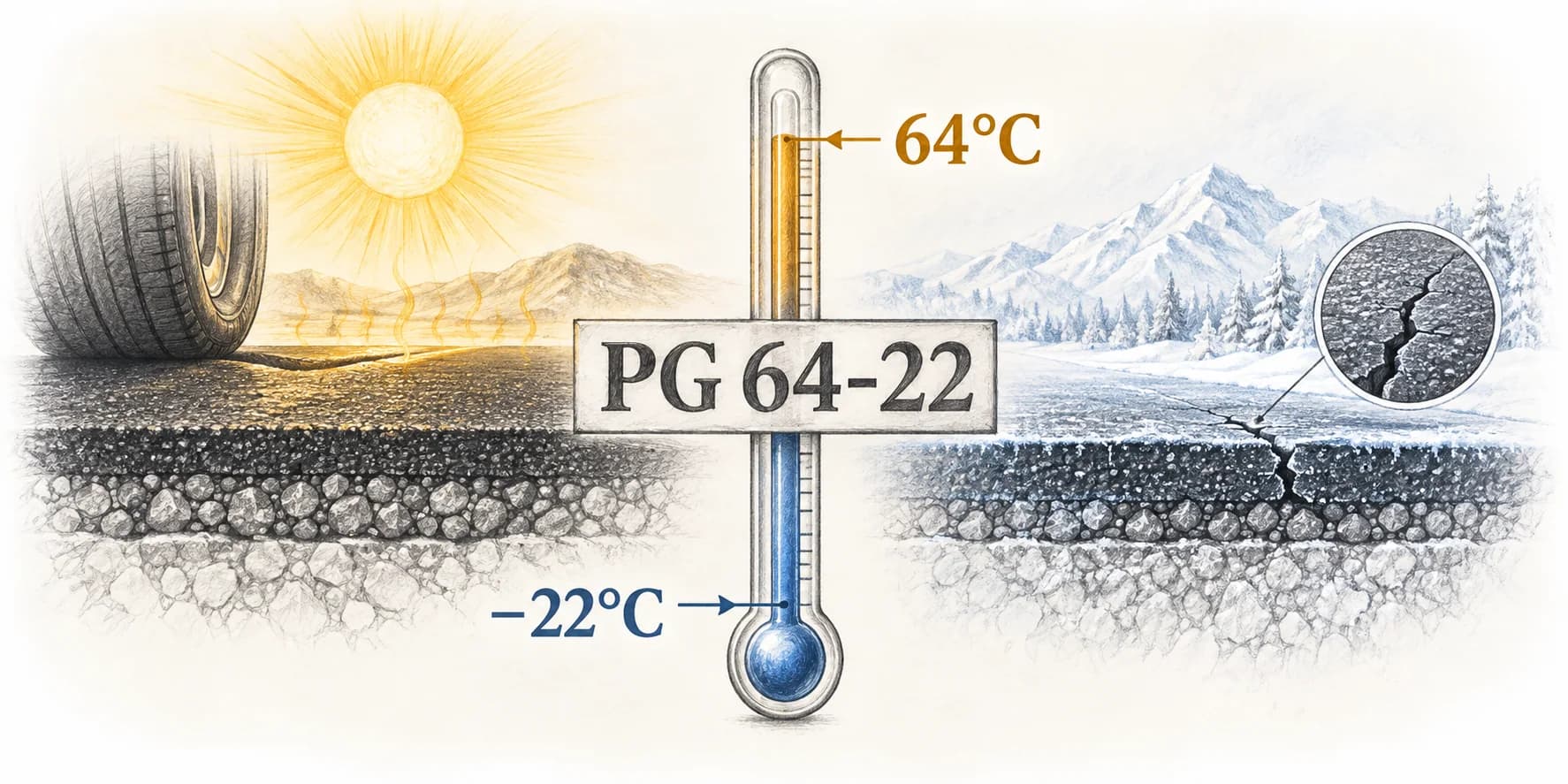
| Performance grade (PG) | High-temperature grade based on pavement temperature | Higher first number (PG 76 rather than PG 70) |
Performance grading is the most climate-specific. The first number is set from the seven-day average maximum pavement temperature the road is expected to see, and grades step up in 6°C increments. Highway agencies often move one grade higher where traffic is heavy or slow, such as at junctions, climbing lanes and bus stops, because longer loading times have a similar effect to higher temperatures.
In viscosity-graded systems, the 60°C viscosity is chosen because it approximates a hot summer pavement. Under the Indian standard IS 73, the minimum softening point also rises with grade, from 40°C for VG-10 to 50°C for VG-40, which is why the stiffer grades are commonly specified for hot, heavily trafficked roads.
Ageing: the slow, hidden cost
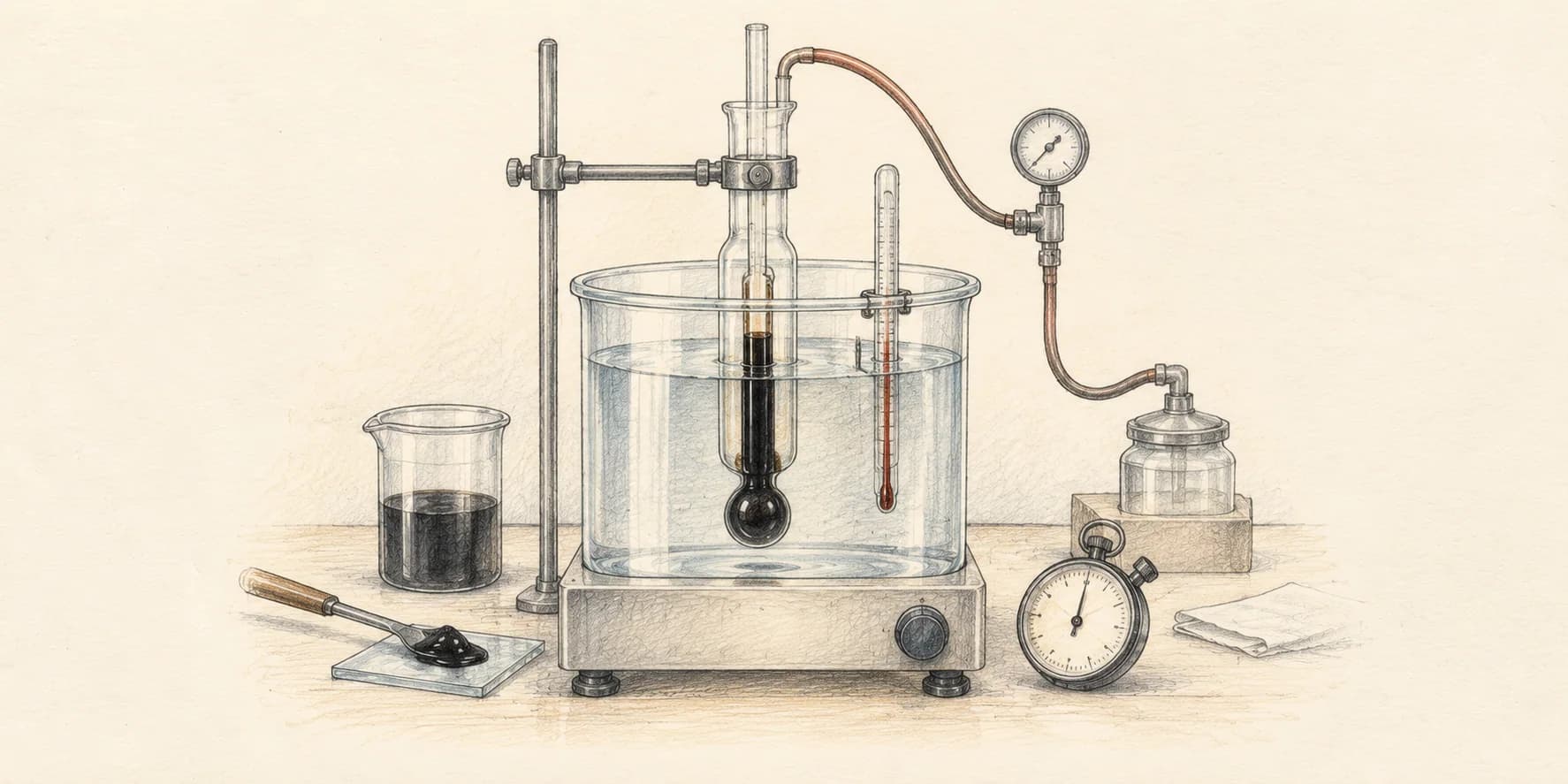
Bitumen starts ageing in the mixing plant, where it is spread in thin films over hot aggregate, and continues for the life of the road. Specifications try to limit this by testing the binder after a laboratory ageing procedure, the rolling thin film oven test, and checking mass loss and the increase in viscosity or loss of penetration. A binder that hardens sharply in this test is likely to crack sooner in a hot, sunny climate.
Site practice matters too. Overheating bitumen in storage or at the plant accelerates hardening before the material ever reaches the road, so heating should stay within the supplier's recommended range.
When modification makes sense
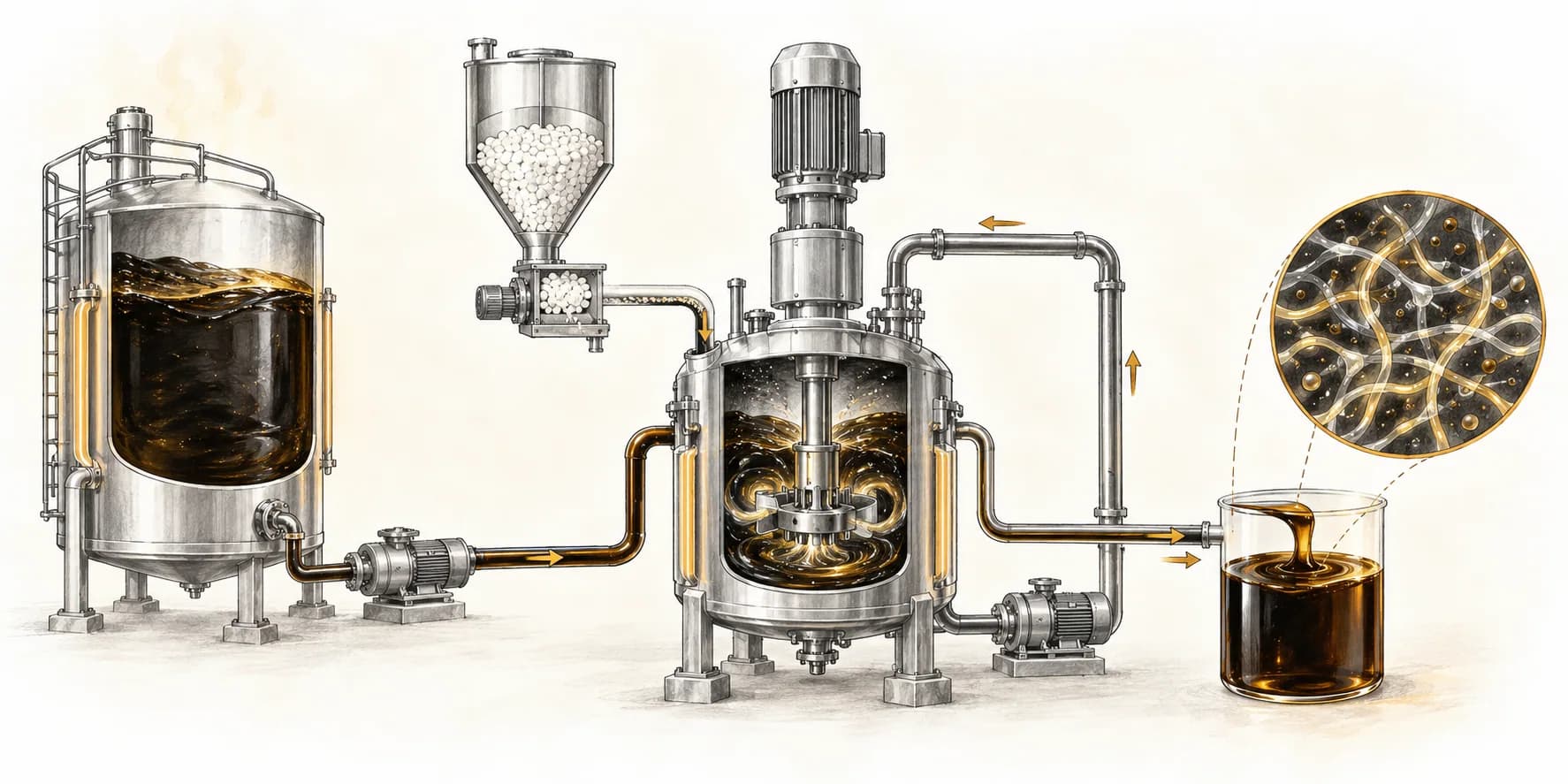
Where conventional grades cannot cover both high summer temperatures and heavy traffic, polymer modified bitumen is the usual next step. Elastomers such as SBS form a network in the binder that raises stiffness at high temperatures and adds elastic recovery, so the mix resists permanent deformation without becoming brittle. Modified binders cost more and need closer control in storage, so they are usually reserved for highways, heavy-duty pavements and wearing courses where the extra life justifies the outlay.
Match the binder to the hottest pavement temperature and the slowest, heaviest traffic the road will carry, not to the average day.
Beyond the binder
Binder choice cannot compensate for a poor mix. Aggregate grading, binder content, air voids after compaction and drainage all influence rut resistance and ageing. Too much binder invites bleeding, while too little leaves thin films that oxidise quickly. The best results come when the binder grade, mix design and construction quality are specified together.
What to specify when buying
For a hot-climate project, state the grading system and grade required by the project specification, the standard it must meet, and the edition. Ask for a certificate of analysis showing softening point, penetration or viscosity, flash point and the results after the rolling thin film oven test. For modified grades, also ask for elastic recovery and storage stability results. Nuroil supplies viscosity grade, performance grade and polymer modified bitumen from established refineries, with a CoA on every delivery and third-party inspection on request.