VG-30 and VG-40 are the two viscosity grades most often requested for highway work. Both are stiff enough for heavy traffic, and the choice between them can look marginal on paper. In practice it affects rutting resistance, plant temperatures and the risk of cracking, so it is worth understanding what separates them.
How the grades are defined
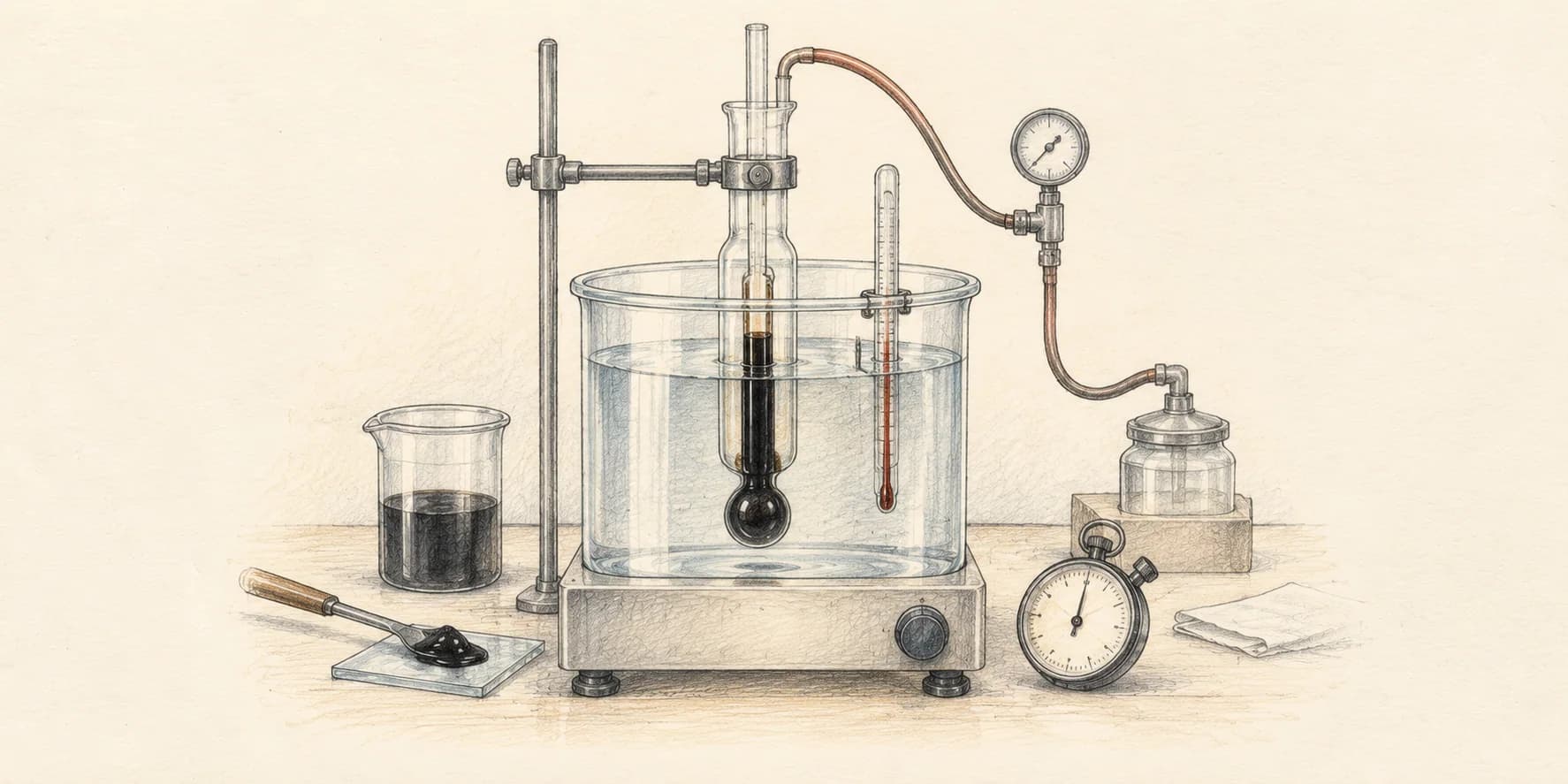
Under the Indian standard IS 73:2013, viscosity grade bitumen is classified mainly by absolute viscosity at 60°C, a temperature chosen to represent a hot road surface. The standard sets these bands and minimums:
| Property | VG-30 | VG-40 |
|---|---|---|
| Absolute viscosity at 60°C, poise | 2400–3600 | 3200–4800 |
| Kinematic viscosity at 135°C, cSt min | 350 | 400 |
| Penetration at 25°C, 0.1 mm min | 45 | 35 |
| Softening point, °C min | 47 | 50 |
| Viscosity ratio after RTFOT, max | 4.0 | 4.0 |
| Ductility after RTFOT at 25°C, cm min | 40 | 25 |
| Suitable 7-day average maximum air temperature | 38–45°C | Above 45°C |
Note that the viscosity bands overlap between 3200 and 3600 poise. A VG-30 at the top of its band and a VG-40 at the bottom of its band can be very similar binders, which is why the actual test values on a certificate matter as much as the grade label.
Climate, traffic and location
IS 73 links each grade to the seven-day average maximum air temperature expected over the design period. VG-30 is recommended for 38–45°C and VG-40 for locations above 45°C. In very hot regions, therefore, VG-40 is the grade the standard itself points to for the hottest sites.
Indian refiners describe VG-30 as the grade for heavy-duty pavements carrying substantial traffic and as a replacement for the old 60/70 penetration grade. VG-40 is positioned for highly stressed areas such as intersections, toll booths and truck parking, replacing the old 30/40 grade. Its higher viscosity produces stiffer mixes that resist shoving and rutting under slow, heavy loads.
A common pattern on major projects is VG-30 along open carriageways with VG-40 at junctions, bus bays and climbing lanes, though the road authority's specification always decides.
Handling and workability
A stiffer binder needs more heat to mix and compact. VG-40 has a higher minimum viscosity at 135°C, a temperature that represents mixing, so plants generally run it at somewhat higher temperatures than VG-30. Asphalt laid with it must also be compacted before it cools too far. Overheating to compensate accelerates ageing, so temperatures should be set from the binder's viscosity data, not raised by habit.
The trade-off: cracking
Stiffness that helps in summer can hurt when the pavement cools or ages. The lower minimum ductility allowed for aged VG-40 reflects that it is a harder, less extensible binder. On thin surfacings, flexible bases or in places with cool nights, a binder that is too stiff can crack. This is where polymer modified binders are often considered, because they aim to add high-temperature stiffness without the same loss of flexibility.
VG-40 buys rutting resistance at the cost of some flexibility and workability. Use it where heat and slow heavy loads demand it.
Storage and supply consistency
Because the two grades overlap, consistency between shipments matters on long projects. Ask for test values from successive lots and check that they sit in a similar part of the band. A contractor who designs a mix with a VG-30 near 3500 poise and then receives one near 2500 poise may see different compaction behaviour and rutting performance, even though both lots are in grade. Store each grade in its own tank, and avoid holding either one hot for longer than necessary, since prolonged heating increases viscosity.
What to include in an enquiry
State the grade and the standard edition (for example IS 73:2013), quantity, packing and delivery terms. Ask for a certificate showing both viscosities, penetration, softening point, flash point, solubility and the RTFOT residue results, so you can see where in the band the lot sits. Nuroil supplies viscosity grade bitumen including VG-30 and VG-40; use request a quote to send your specification.