Ask a bitumen trader which grade moves in the largest volumes and the answer is usually 60/70. The name simply means that a standard needle sinks between 60 and 70 tenths of a millimetre into the binder at 25°C. That middle-of-the-range consistency makes it a reasonable default for asphalt paving in warm regions, and it is the grade many tender documents name when they do not spell out anything more specific.
What the numbers tell you
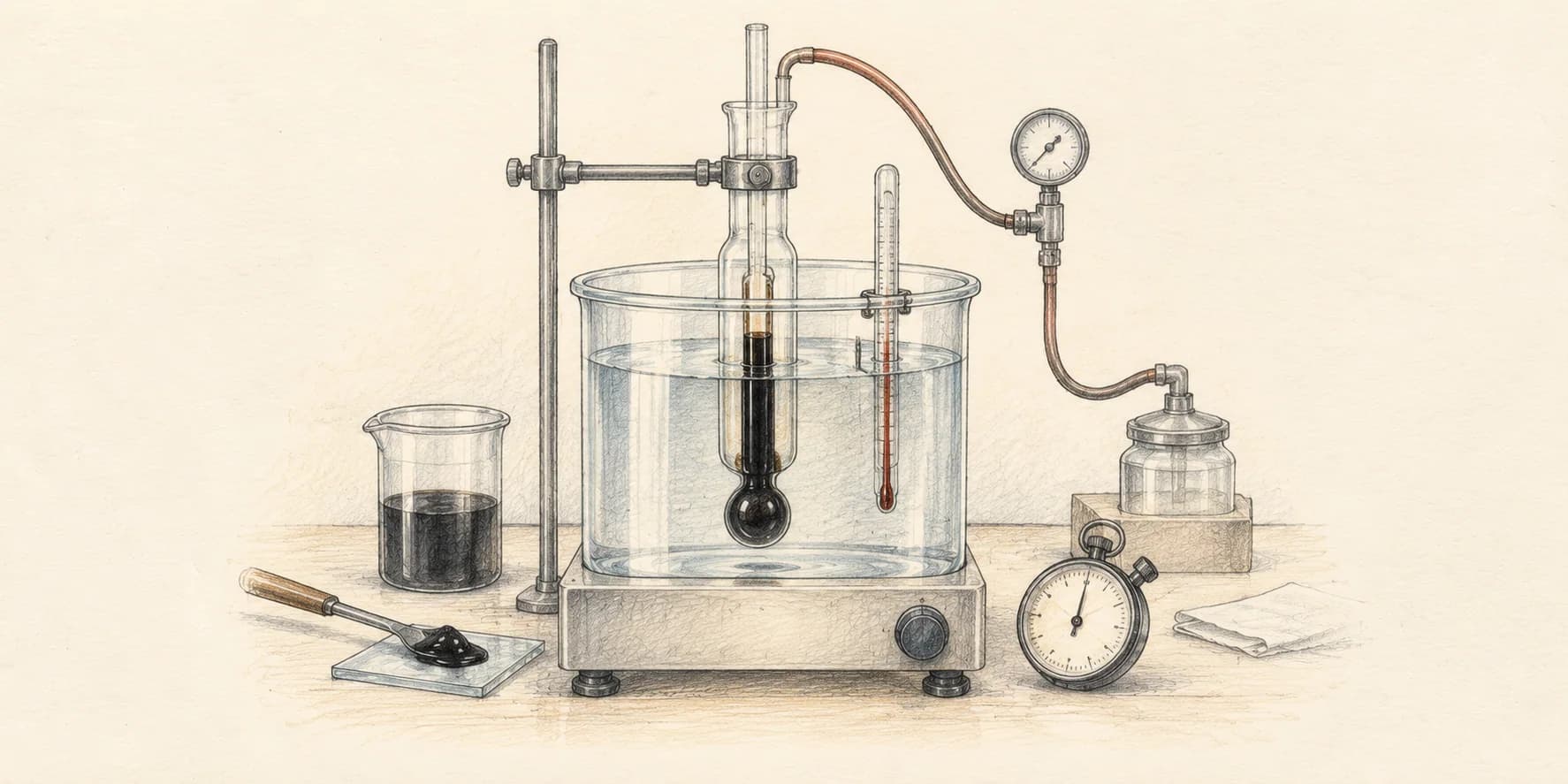
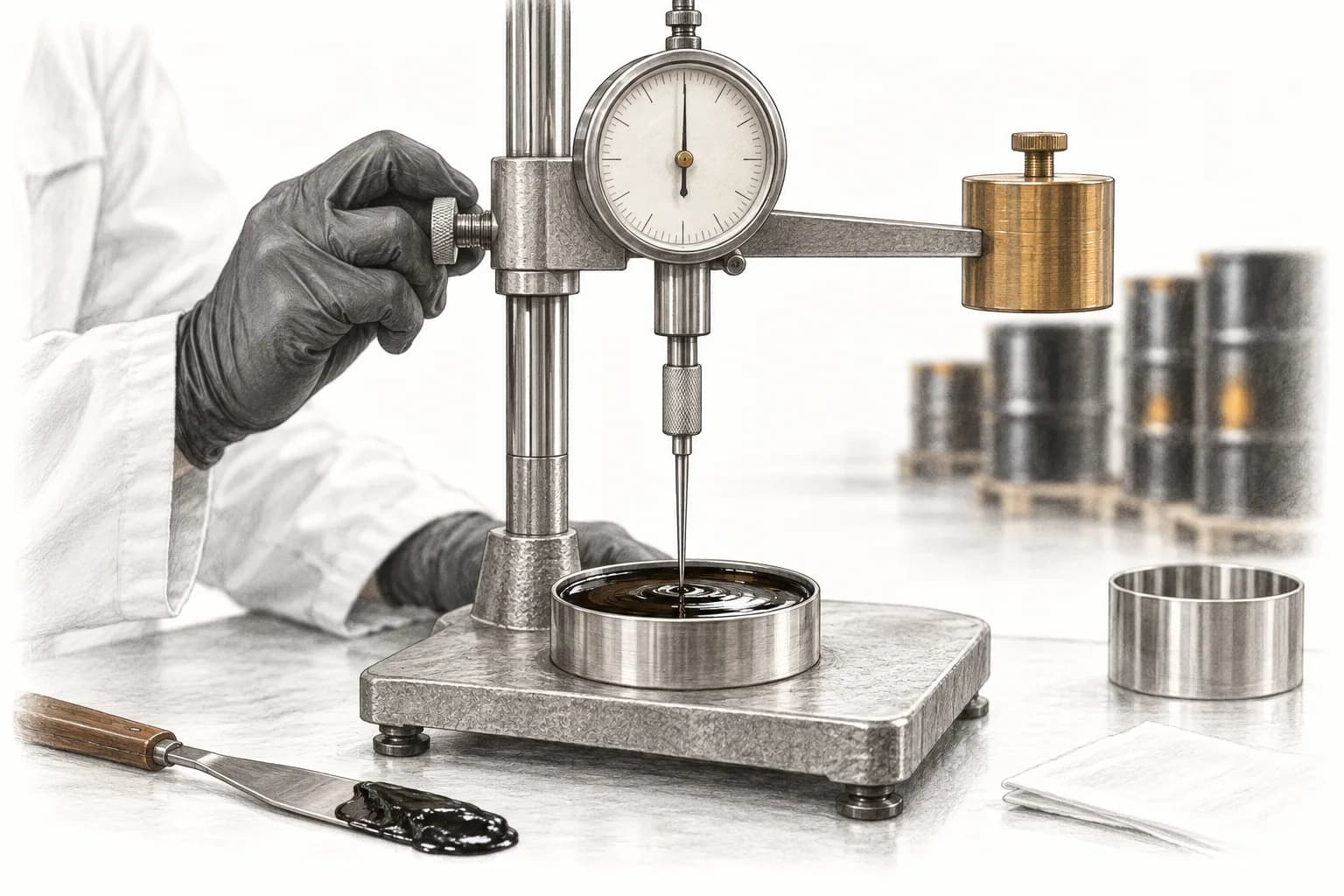
Penetration is measured with a 100 g needle for five seconds at 25°C. A higher number means a softer binder. On that scale 60/70 sits between the harder 40/50 and the softer 80/100 and 85/100 grades. In the United States it has long been described as the typical paving grade within the penetration system, with 40–50 at the hard end and 200–300 at the soft end for very cold regions.
A 60/70 certificate normally reports more than penetration. Softening point, ductility, flash point, solubility and the results of a thin film oven ageing test are all part of the picture, because two binders with the same penetration can soften at different temperatures and harden at different rates during mixing.
Where 60/70 is a good fit
- Dense asphalt wearing and binder courses on roads with moderate to heavy traffic in warm climates.
- Base courses where the specification calls for a general-purpose binder rather than a hard grade.
- Car parks, access roads and industrial yards built to a standard road specification.
- Feedstock for modification, where a producer starts from a paving grade and adds polymer or other modifiers.
Where it may not be enough
On the hottest pavements, at junctions, climbing lanes, bus stops and toll plazas, slow and heavy loads can cause rutting in a 60/70 mix. Designers in those locations often move to a harder grade, a viscosity grade such as VG-40, or a polymer modified binder. In cold regions the opposite problem appears: a 60/70 binder can become brittle in winter, and softer grades are used instead.
It is also worth remembering the limits of the grading itself. The penetration test is empirical and is run at a single, moderate temperature. It says little about how the binder behaves at mixing temperature or on a hot summer road, which is why many authorities have moved to viscosity or performance grading.
Equivalents in other systems
Buyers often need to match a 60/70 enquiry to a product certified under another system. There is no exact conversion, but the following comparisons are commonly used as a starting point.
| System | Nearest grade | Comment |
|---|---|---|
| ASTM D946 / AASHTO M 20 | 60–70 | Same penetration band, with its own limits for flash point, ductility and retained penetration |
| EN 12591 | 50/70 | Wider penetration band that overlaps 60/70; also limits softening point |
| IS 73 viscosity grading | VG-30 | Indian refiners describe VG-30 as usable in place of the old 60/70 grade |
A product that meets one of these does not automatically meet the others. If a tender names a particular standard, the supply should be tested and certified against that standard and edition.
60/70 is a sensible general-purpose grade, but the right binder for a project is the one named in its specification, tested to that specification.
Handling and storage
60/70 is solid at ambient temperature and must be heated to be pumped, sprayed or mixed. Bulk storage guidance from Eurobitume for the comparable 50/70 grade suggests holding it at about 120°C for storage of up to a month and lower, around 80°C, for longer periods, rather than letting it go cold in the tank. Overheating or keeping the binder hot for longer than needed hardens it and can move it out of its penetration band before it reaches the paver. Always follow the product safety data sheet for heating limits and protective equipment.
Buying 60/70
In an enquiry, state the grade, the standard it must meet (for example ASTM D946 or a national specification), quantity, packing (drums, bags or bulk) and the delivery basis. Ask for a certificate of analysis that covers penetration, softening point, ductility, flash point, solubility and the thin film oven results. Nuroil supplies penetration grade bitumen with a CoA for every lot and can arrange third-party inspection at loading on request. For a quotation, use the request a quote form.