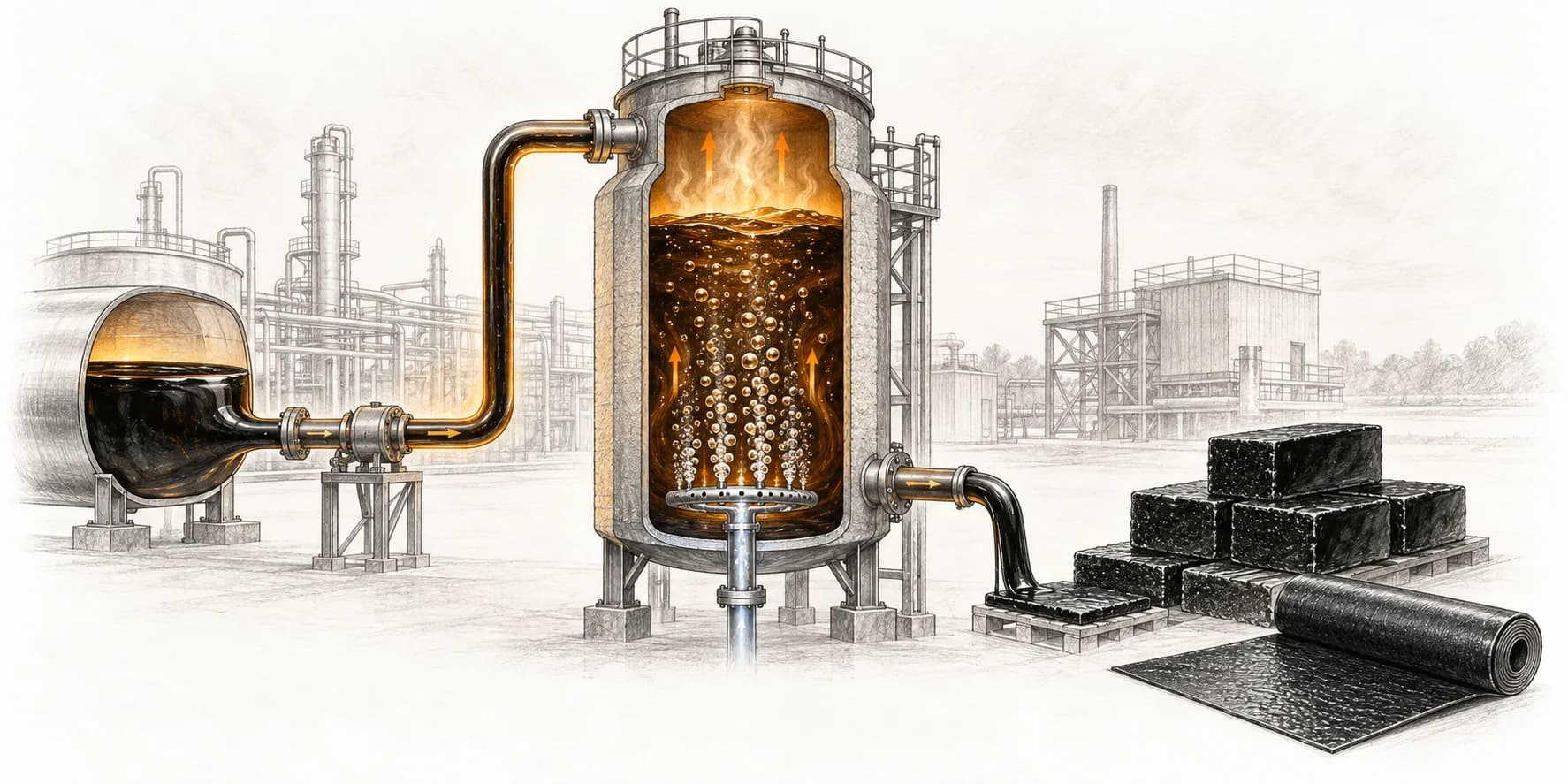
Unlike paving bitumen, which usually moves in heated bulk tanks, oxidised bitumen is mostly shipped and stored as a solid. It is melted at the point of use in kettles or boilers for roofing, waterproofing, coating or compounding. That makes packing choice and on-site melting practice central to both quality and safety.
Packing options
| Packing | Description | Points to consider |
|---|---|---|
| Paper or kraft bags | Bitumen poured hot into lined paper sacks and allowed to set into blocks | Easy to handle and stack; the paper is stripped before melting; keep dry and out of strong sun |
| Cartons or kegs | Card or fibre containers filled hot | Clean, regular blocks suited to roofing kettles |
| Steel drums | Drums filled hot and sealed | Robust for long transits; the drum is usually cut away or heated to remove the bitumen |
| Bulk (heated) | Insulated tankers or tank containers kept hot | Only practical near the source or for large users with heated storage |
Solid packing is palletised and shrink-wrapped or stacked in containers. Because oxidised bitumen has a high softening point it generally holds its shape in warm climates, but bags stacked too high in hot sun can deform and stick together, so shade and sensible stack heights help.
Storing before use
- Store under cover, off the ground and away from heat sources and ignition sources.
- Keep packages dry. Water trapped in packaging or on the surface of blocks is a serious hazard when the bitumen is heated.
- Rotate stock and keep lot numbers with the certificate of analysis for traceability.
Melting safely
Bitumen conducts heat poorly, so the material next to the heating surface can be far hotter than a thermometer a short distance away shows. A producer's guidance for kegged oxidised bitumen highlights several practices:
- Break it up. Breaking blocks into smaller pieces exposes more surface and gives more even heating.
- Heat steadily. Aggressive heating at the base and sides can overheat the bitumen locally, cracking it into low-flash vapours. When that happens the published flash point no longer describes the fire risk.
- Do not reheat from cold. Melted bitumen left to set in a kettle and reheated can trap pockets of vapour near the heater.
- Know the limits. For a 95/25 grade, that guidance gives a minimum pumping temperature of about 170°C, pouring at about 205 to 215°C, and a maximum safe handling temperature of 230°C. Other grades and products have their own figures on the data sheet.
- Measure correctly. Position temperature probes so that they reflect the hottest bitumen, not just the bulk.
Water and hot bitumen
Water that meets bitumen above 100°C turns to steam instantly and can cause violent frothing or boil-over, throwing hot bitumen out of the kettle. Never add wet material to a hot kettle, keep lids closed in rain, and make sure kettles and tanks are free of water before heating. Eurobitume storage guidance also warns that condensation in a tank can lead to boil-over when bitumen is reheated.
Hot bitumen and water must never meet. Most serious kettle incidents start with a small amount of moisture.
Personal protection and first aid
Hot bitumen causes severe burns. Workers should wear heat-resistant gloves, face shields or goggles, long sleeves and safety boots, and work with good ventilation to limit exposure to fumes. Burns should be cooled with plenty of cool running water; bitumen stuck to the skin should not be pulled off, and medical attention should be sought. The SDS for the specific product sets out the full precautions and first aid steps and must be available on site.
What to agree when ordering
Specify the grade and specification, the packing and pallet configuration, the number of units per container, and any marking requirements. Ask for the product's handling temperatures, the SDS and a CoA tied to the lot numbers on the packages. Nuroil supplies oxidised bitumen in bags, cartons or drums on FOB, CFR or CIF terms, with a CoA for every delivery; send details through the quote form or contact us for packing advice.