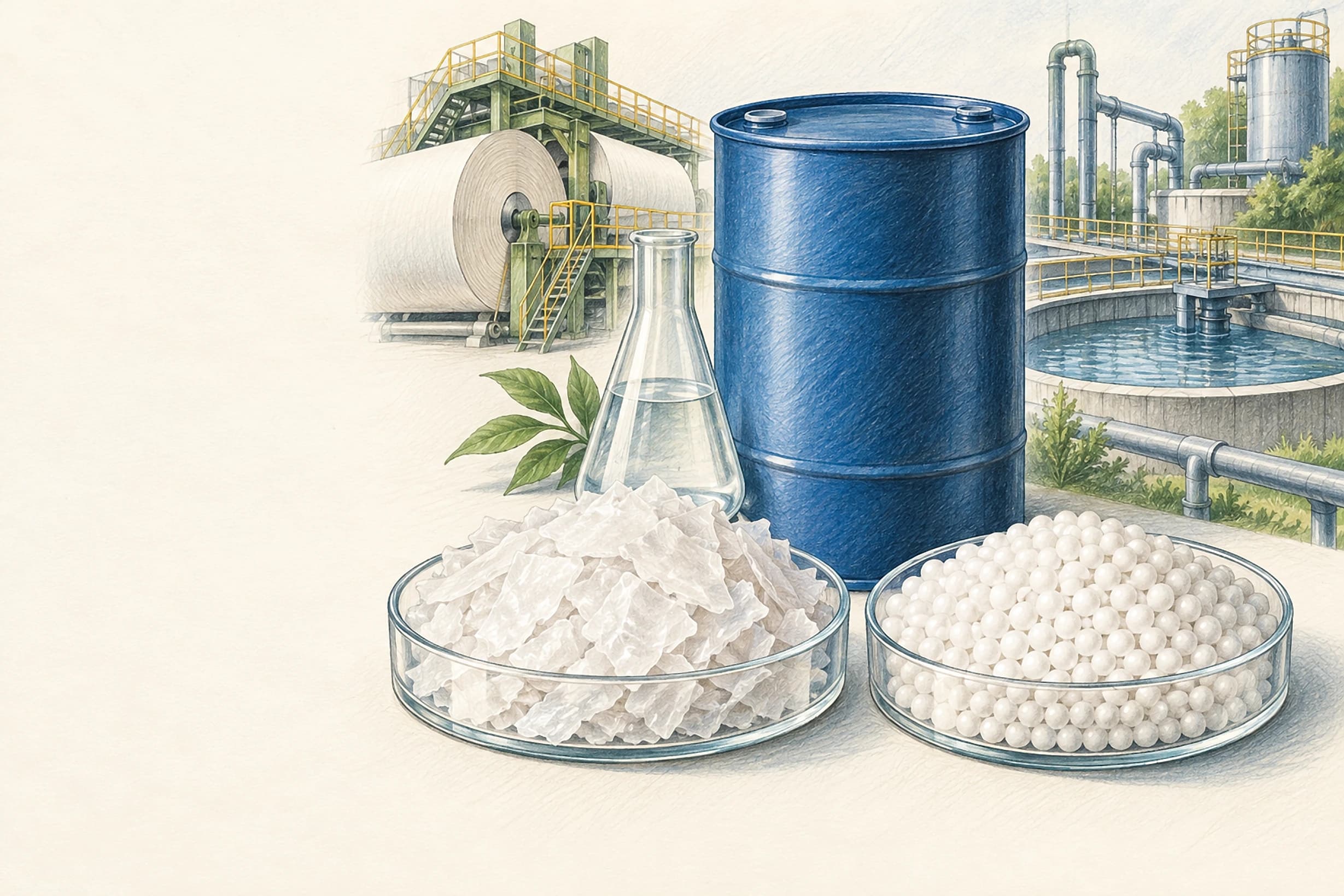
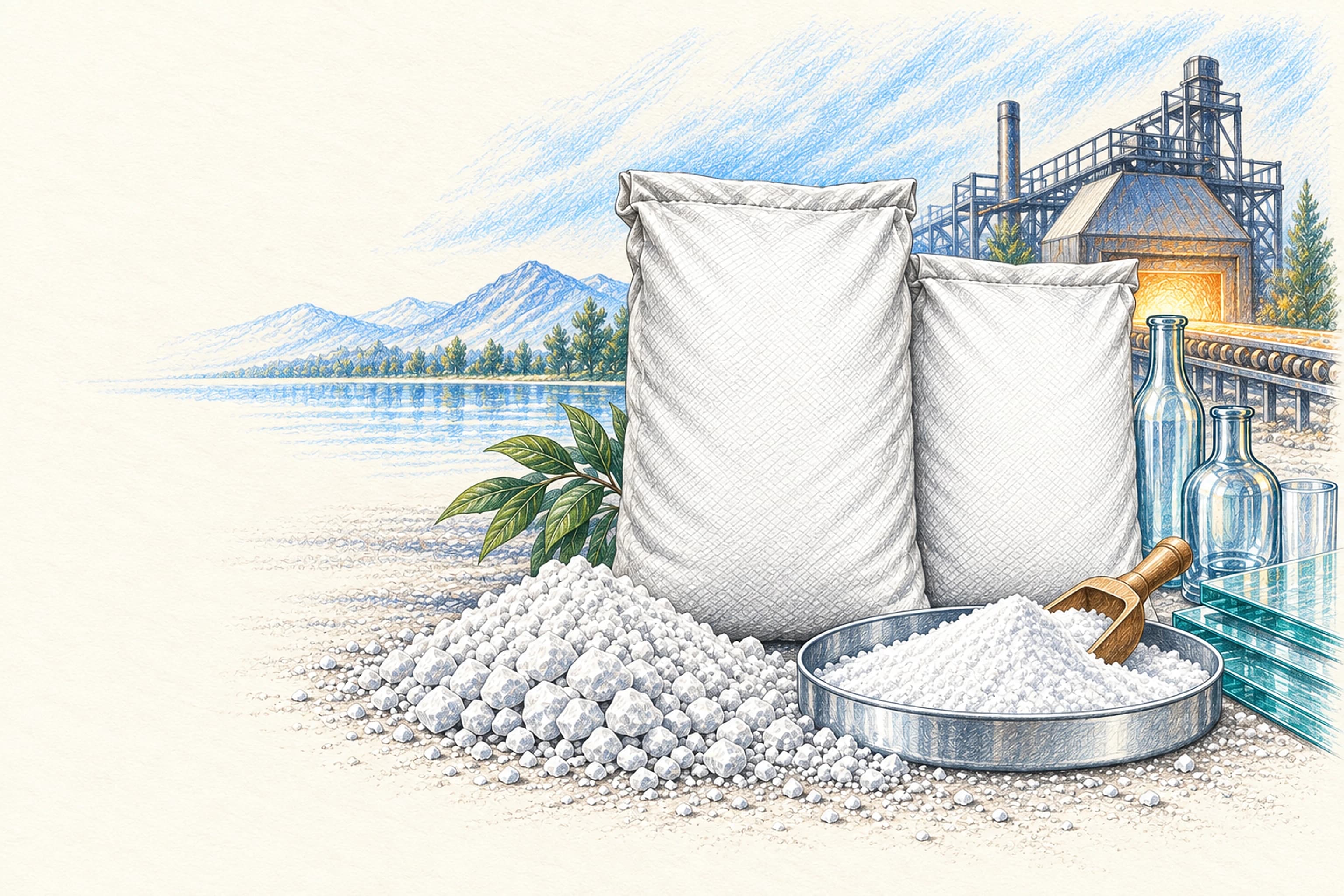
High-purity urea for chemical manufacturing: resins, adhesives, melamine and diesel exhaust fluid (DEF), supplied to the purity profile your process requires.
Technical or industrial grade urea is CO(NH₂)₂ with 46% nitrogen, supplied as a chemical feedstock rather than a fertilizer or feed ingredient. Its certified purity profile is matched to the buyer’s manufacturing process.
It is not certified for fertilizer or feed use. Agriculture and animal feed use separate grades, specifications and documents.
Identity
Formula
CO(NH₂)₂
Molar mass
60.06 g/mol
CAS
57-13-6
Urea · CO(NH₂)₂Why Technical grade urea
Supplied to your specificationBiuret, iron and impurity tolerances checked against your manufacturing requirement.
DEF-ready sourcingMaterial can be sourced and certified to ISO 22241-1.
Documented qualityEvery batch is backed by a Certificate of Analysis.
Flexible formPrilled, granular or solution, to suit the production line.
Flexible packingBulk, drums, IBCs, big bags and smaller bags, subject to form and availability.
What Nuroil does on every order
Why choose technical grade urea from Nuroil?
Checked against the batch CoA
Nitrogen, biuret and moisture, with heavy metals for feed grade, are reviewed on the batch certificate before loading.
Grade matched to the use
Agriculture, feed or technical grade, prilled, granular, coated or solution, confirmed against your crop, ration or process.
From bulk to field-ready bags
Bulk, 1 MT big bags or 50 kg bags, planned around your receiving facilities and order volume.
One desk, firm offers
FOB, CFR or CIF from our Sharjah trade desk, usually within 24 hours.
02 TECHNICAL DATA
Technical specification.
Nitrogen (N) content
46% minASTM E1518 / ISO 18227
Grade
Technical / industrial
Form
Prilled, granular or solutionVisual / sieve inspection
Appearance
White free-flowing solid or clear solutionVisual
Biuret content
Process-specificISO 17318
Moisture content
0.5% max (solid form)ISO 760 / Karl Fischer
Iron (Fe) content
Process-specific; relevant to resin colourAAS / ICP
Insoluble matter
Process-specificGravimetric
Solubility
Fully soluble in water
Country of origin
Confirmed at enquiry stage
01RESINS & ADHESIVES
Biuret and iron first
Biuret and iron limits influence resin colour, cure and bond quality.
02DEF / ADBLUE
ISO 22241-1 exactly
Trace metals, aldehyde and insoluble matter are tightly controlled to protect the SCR catalyst.
03MELAMINE
Process-specific
Confirm the purity and particle-size requirements of the melamine line.
04DE-ICING & BULK USE
Wider tolerance
A general industrial specification may suit where impurity tolerance is wider.
Selection guidance Send the process, end application and referenced specification with your enquiry. We will confirm supply against those requirements.
The same 46% nitrogen in three grades. Each is made and certified for one use, so the grades are not interchangeable.
Property
Agriculture
Feed
TechnicalThis page
Nitrogen
46% min
46% min
46% min
Biuret
1.0% max
0.3% max
Process-specific
Heavy metals tested
Not specified
Arsenic and lead
Iron, trace metals as agreed
Forms
Prilled or granular
Prilled, granular or coated
Prilled, granular or solution
Size
2–4 mm
1–3 mm
To the process
Governing specification
Fertilizer standard
Feed-additive standard
Buyer process spec or ISO 22241-1
Best suited to
Field crops, pasture, turf, NPK blends
Ruminant rations, feed blocks, roughage
Resins, melamine, DEF, de-icing
03 HOW IT IS MADE
From ammonia to process grade.
Ammonia and carbon dioxide react under pressure to form urea, supplied as prills or granules, or dissolved in water as a solution. Each batch is tested against the purity profile agreed at enquiry.
01
Ammonia and CO₂
Anhydrous ammonia and carbon dioxide feed the reactor
02
Synthesis
They react under pressure to form urea solution
03
Solid or solution
Prilled or granulated, or supplied as a solution
04
Testing to spec
Checked against the process specification or ISO 22241-1
04 APPLICATIONS
Where purity matters.
01
UF resins and adhesives
Feedstock for particleboard, MDF and plywood adhesives, where biuret and iron affect cure and colour.
02
Melamine
Feedstock for melamine-formaldehyde resins in laminates, coatings and tableware.
03
DEF / AdBlue
A 32.5% urea solution that SCR systems use to turn NOx into nitrogen and water.
04
De-icing
A less corrosive de-icing option where impurity tolerance is wider.
05
Specialty chemicals
Raw material for selected specialty chemical processes.
05 SAFETY & HANDLING
Low hazard. Protect its purity.
This summary does not replace the Safety Data Sheet. Review the SDS and site procedure before first handling.
Not classified
GHS Not classified as hazardous by most producers. Keep dust from the eyes; store apart from strong oxidisers and hypochlorites.
UN
Not regulated
Transport
Not dangerous goods
01
Keep solid urea dry
Store under cover to prevent moisture uptake and caking.
02
Use suitable solution tanks
Confirm corrosion resistance and the required storage temperature for liquid product.
03
Prevent trace contamination
Keep it from metals and materials that can upset DEF or resin impurity limits.
04
Check the facility first
Review receiving, transfer and storage systems before ordering solution-form product.
05
Follow the SDS
Avoid dust in the eyes and keep it from strong oxidisers and hypochlorites.
Keep it dry, keep it covered.
Shelf lifeAbout 12 months
From production, stored dry and covered. Urea draws moisture from humid air and cakes when left uncovered.
Keep bags closedReseal opened bags at once; humid air causes caking.
Dry, covered storeCool and ventilated, on pallets and off direct ground contact.
Away from alkaline materialsLime and strongly alkaline products speed up nitrogen loss as ammonia.
Each grade on its ownStore and label agriculture, feed and technical grades apart; they are not interchangeable.
Confirm the end-use requirement.
HS code3102.10
CAS number57-13-6
EC number200-315-5
TransportNot regulated
ISO 22241-1
Required specification for urea used in DEF / AdBlue production
REACH (EU)
Chemical registration required for import into the EU
Labelling
“Technical/Industrial Grade — Not for Fertilizer or Feed Use”, product name, net weight, batch or lot number and production date
National regulations
Chemical import requirements vary by destination and declared end use
06 PACKING OPTIONS
Choose your packing format.
Figures are for solid urea and indicative. Solution loads depend on the drum, IBC or tank; confirm availability for solid or solution form.
Large volumes
Bulk supply
Solid or solution supply for processors with dedicated receiving and storage.
Typical loads used for planning. Your offer confirms the exact packing and load for the product and source.
420 ft containers
bags
2,000
Last 20 ft container
100% full
Minimum orderOne 20 ft containerAbout 24–25 t in 50 kg bags or big bags
Shelf lifeAbout 12 monthsFrom production, stored dry and covered
DocumentsCoA with every batchSDS and Certificate of Origin on request
07 BEFORE YOU ORDER
Frequently asked questions.
01How is technical grade different from agriculture or feed grade urea?
It is a chemical feedstock whose biuret, iron and trace-metal tolerances are set by the manufacturing process. It is not certified for fertilizer or feed use.
02What is DEF/AdBlue, and how is it related to urea?
DEF, also sold as AdBlue or AUS32, is a 32.5% urea-in-water solution injected into diesel exhausts to cut NOx emissions through selective catalytic reduction.
03Can I use standard industrial urea for DEF production?
No. DEF needs material certified to ISO 22241-1, with tight limits on biuret, aldehyde, trace metals and insoluble matter.
04What form is technical grade urea supplied in?
Solid prills or granules, or solution, subject to the process and the packing required.
05Is it suitable for cosmetic or pharmaceutical use?
Those uses need separate purity certification. Tell us at enquiry so sourcing is checked against the right specification.
06What documents come with each shipment?
Every shipment includes a Certificate of Analysis against the confirmed specification. Certificate of Origin, SDS and REACH or other chemical import documents are available on request.
07What Incoterms do you offer?
FOB is standard; CFR and CIF offers to your destination port are available on request.
08What is the minimum order quantity?
It depends on solid or solution form and the packing. Share your requirement and we will confirm feasibility with the quotation.
Include the quantity, destination, solid or solution form, process specification or ISO 22241-1 requirement and packing preference. We reply with a firm FOB, CFR or CIF offer, usually within 24 hours.