Technical document

· PDF

Tell us who you are and the document downloads straight away. We use these details only to follow up on your requirement.

Samples & documents

What can we send you?

Tick what you need
Request a quote
NUROIL / UREA

Urea.Compare the range.

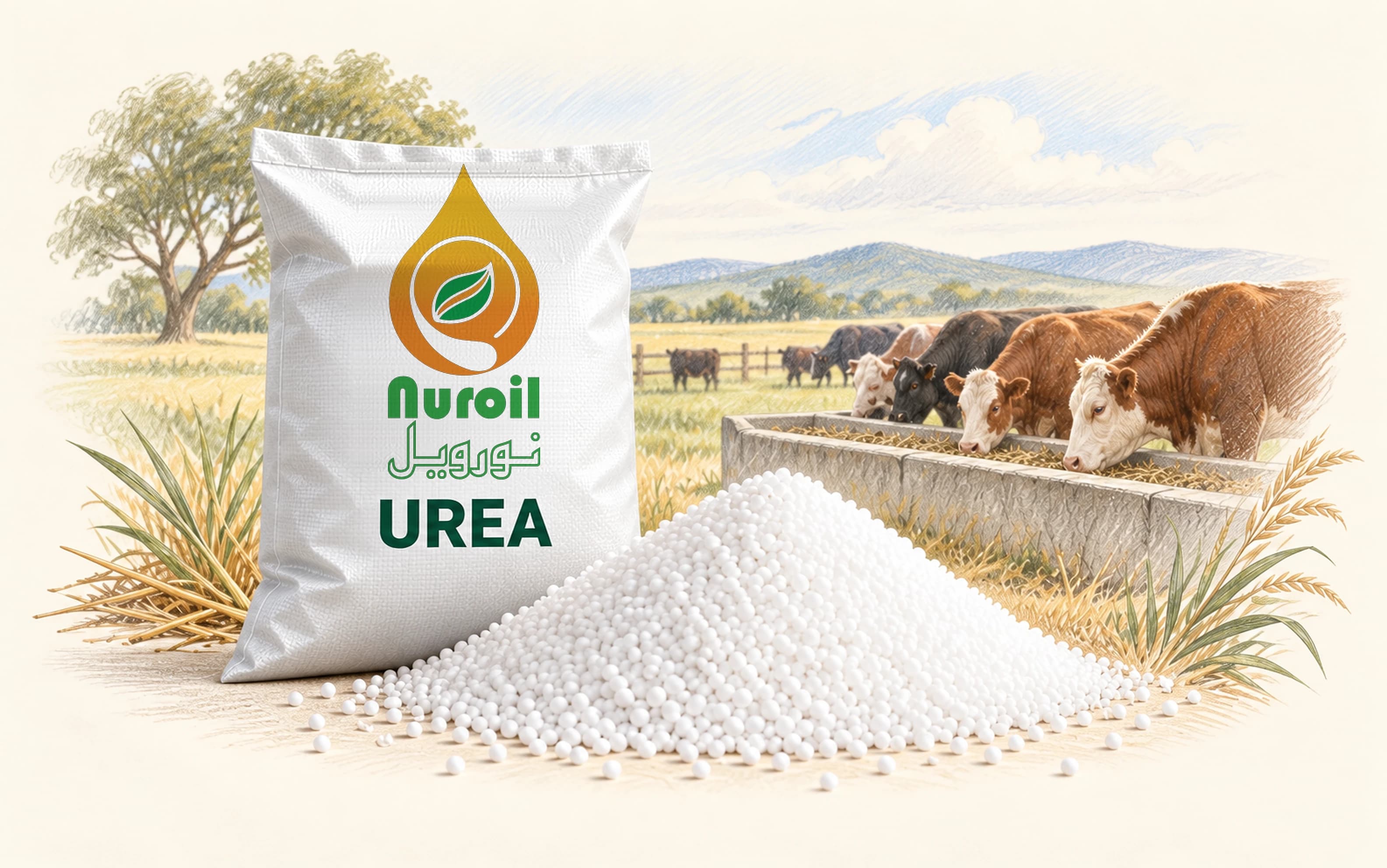
Agriculture, feed and technical grade urea, 46% nitrogen, supplied to the grade, form and packing your farm, feed mill or plant requires.

Urea3 grades
Grades3Agriculture · Feed · Technical
Nitrogen46% Nminimum, all grades
Packing50 kg · big bag · bulkFOB · CFR · CIF
QualityBatch CoAon every shipment
01 / YOUR SUPPLY PARTNER

Why source
urea from Nuroil.

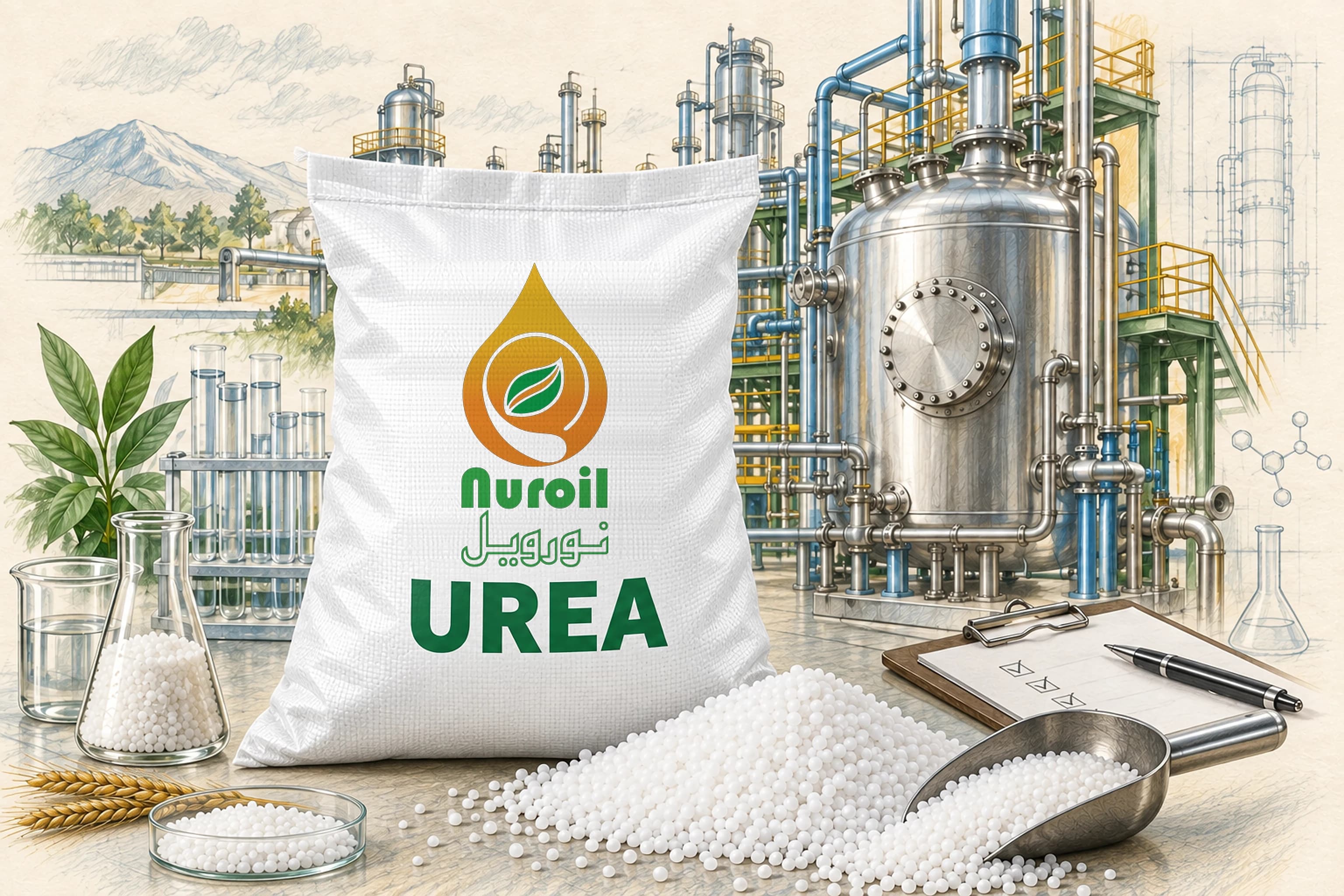
Grade, specification and delivery confirmed for your requirement, from Nuroil Trading in Sharjah.

  • Drawing of one urea molecule branching to agriculture, feed and industrial uses

    Every grade, one supplier

    Agriculture, feed and technical grade urea from a single point of contact for every part of your business.

  • Drawing comparing prilled and granular urea

    Every batch verified

    A Certificate of Analysis with every shipment, confirming nitrogen, biuret and moisture against the grade ordered.

  • Drawing of urea in big bags

    Bulk to bag, any grade

    Bulk vessel, big bags or 50 kg bags, matched to the grade and volume you need.

02 / THE MATERIAL

What is
urea?

IN SHORT

Urea is a white crystalline solid made from ammonia and carbon dioxide. At 46% nitrogen it has the highest nitrogen content of any common solid fertilizer.

Drawing of one urea molecule branching to agriculture, feed and industrial uses
Formula
CO(NH₂)₂
Nitrogen
46% N
Forms
Prilled or granular
Grades
Agriculture · Feed · Technical
03 / READING THE GRADES

Reading
the grades.

All three grades carry 46% nitrogen. Choose by end use and certification.

  1. 01

    Nitrogen

    Every grade declares 46% nitrogen minimum. It is not what separates them.

  2. 02

    Biuret

    A by-product of manufacture. Feed grade needs tighter biuret control; foliar use also prefers low biuret.

  3. 03

    Certification

    Fertilizer registration, feed-additive registration or a process specification, depending on the grade.

04 / STRENGTHS & LIMITS

What the grade
does and does not tell you.

What it tells you

  • States the end use the urea is made and certified for
  • Sets the biuret and impurity limits that matter for that use
  • Gives you and your supplier a shared reference

What it does not tell you

  • Make one grade a substitute for another
  • Replace destination registration or import rules
  • Confirm current stock, origin or price
05 / FULL COMPARISON

Catalogue
specifications.

Typical commercial values. Confirm the batch Certificate of Analysis and destination registration. Do not substitute one grade for another.

Technical data sheet · Typical values

Urea agriculture

NUR-UR-01Urea · CO(NH₂)₂
Nitrogen (N)
46% min
Biuret
1.0% max, typical
Form
Prilled or granular
Primary use
Soil and foliar fertilizer
Registration
Fertilizer, where required

Typical catalogue values. The Certificate of Analysis for the offered batch is the controlling document.

Issued for every batchRequest the Certificate of Analysis
06 / SELECTION

Choosing the right grade
for your use.

Start with the end use. Each grade is made and certified for a different application.

  1. 01
    Requirement

    Farm, agri-distributor or fertilizer blender

    Agriculture grade

    Soil and foliar nitrogen for field crops, pasture and turf.

  2. 02
    Requirement

    Feed mill or livestock nutrition formulator

    Feed grade

    Non-protein nitrogen for ruminant feed, with tighter biuret control.

  3. 03
    Requirement

    Resin, adhesive or chemical manufacturer

    Technical grade

    Feedstock for urea-formaldehyde resin, AdBlue and chemical processing.

Open a product page.

07 / APPLICATIONS

Made for the work
your operation does.

Match the product to the crop, equipment or process and confirm the specification before you order.

Field crops, pasture and turf01

Field crops, pasture and turf

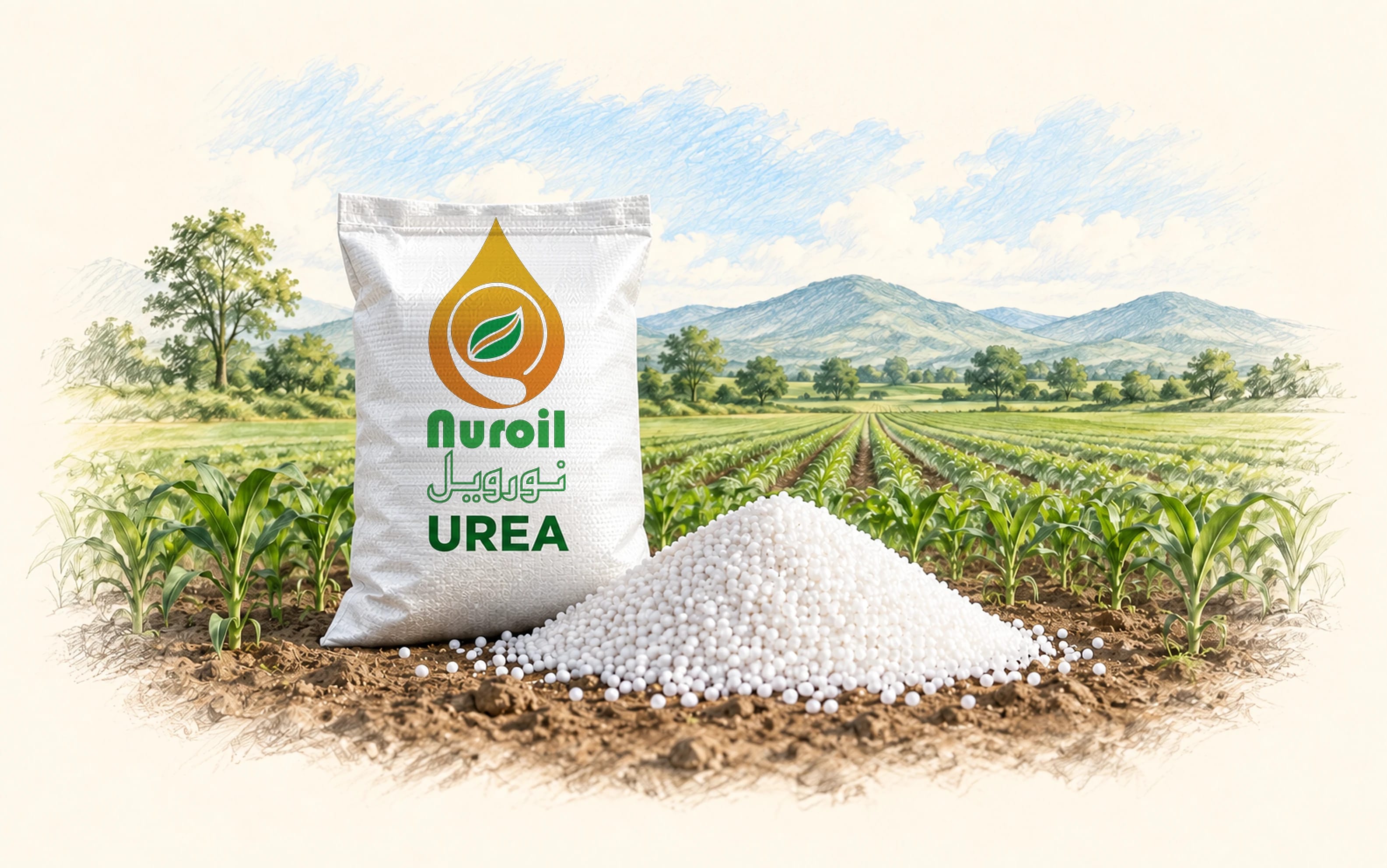
Agriculture grade urea for soil and foliar nitrogen across farming and turf management.

Ruminant feed02

Ruminant feed

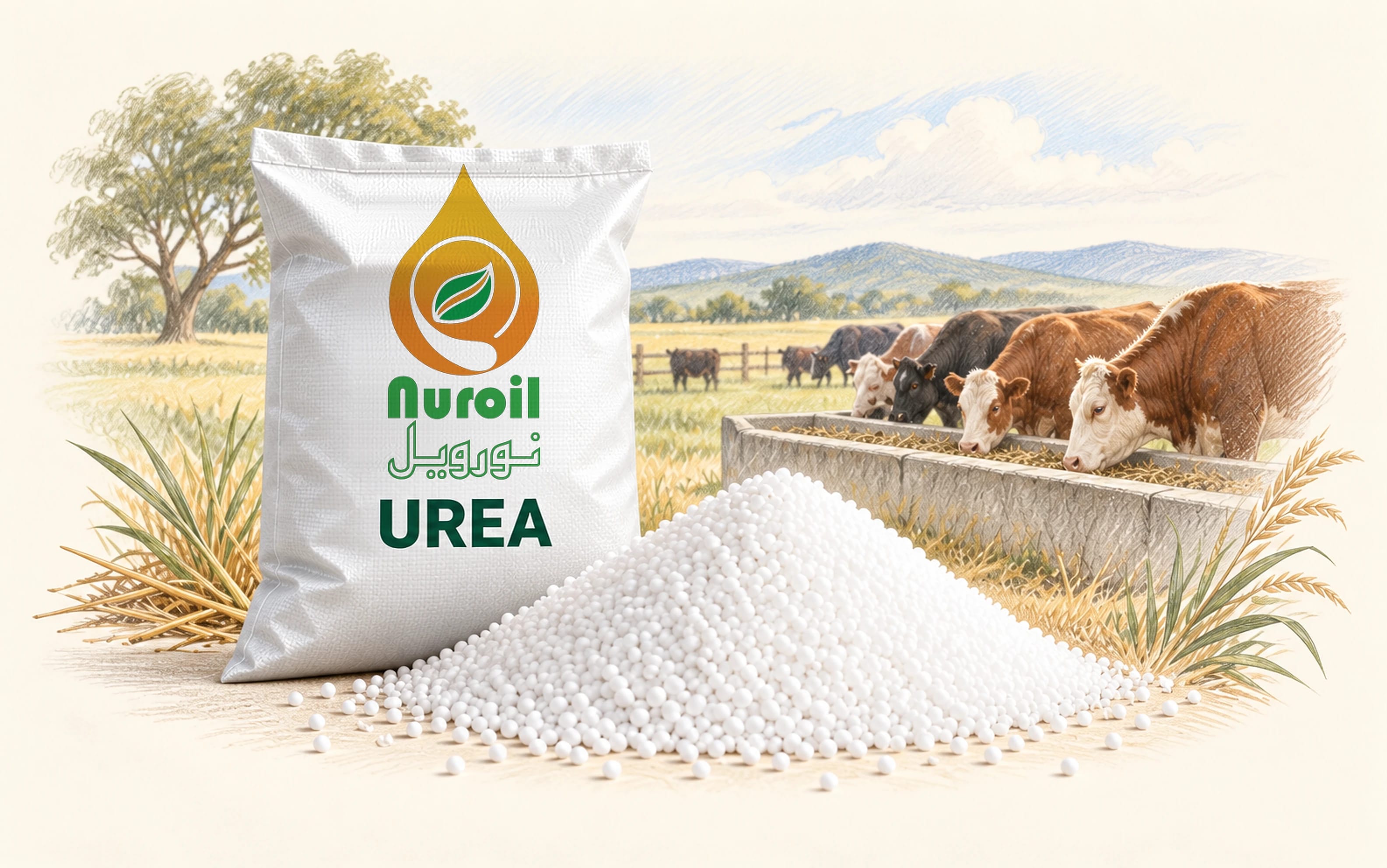
Feed grade urea as a non-protein nitrogen source, made to feed-safety biuret limits.

Resins, adhesives and chemicals03

Resins, adhesives and chemicals

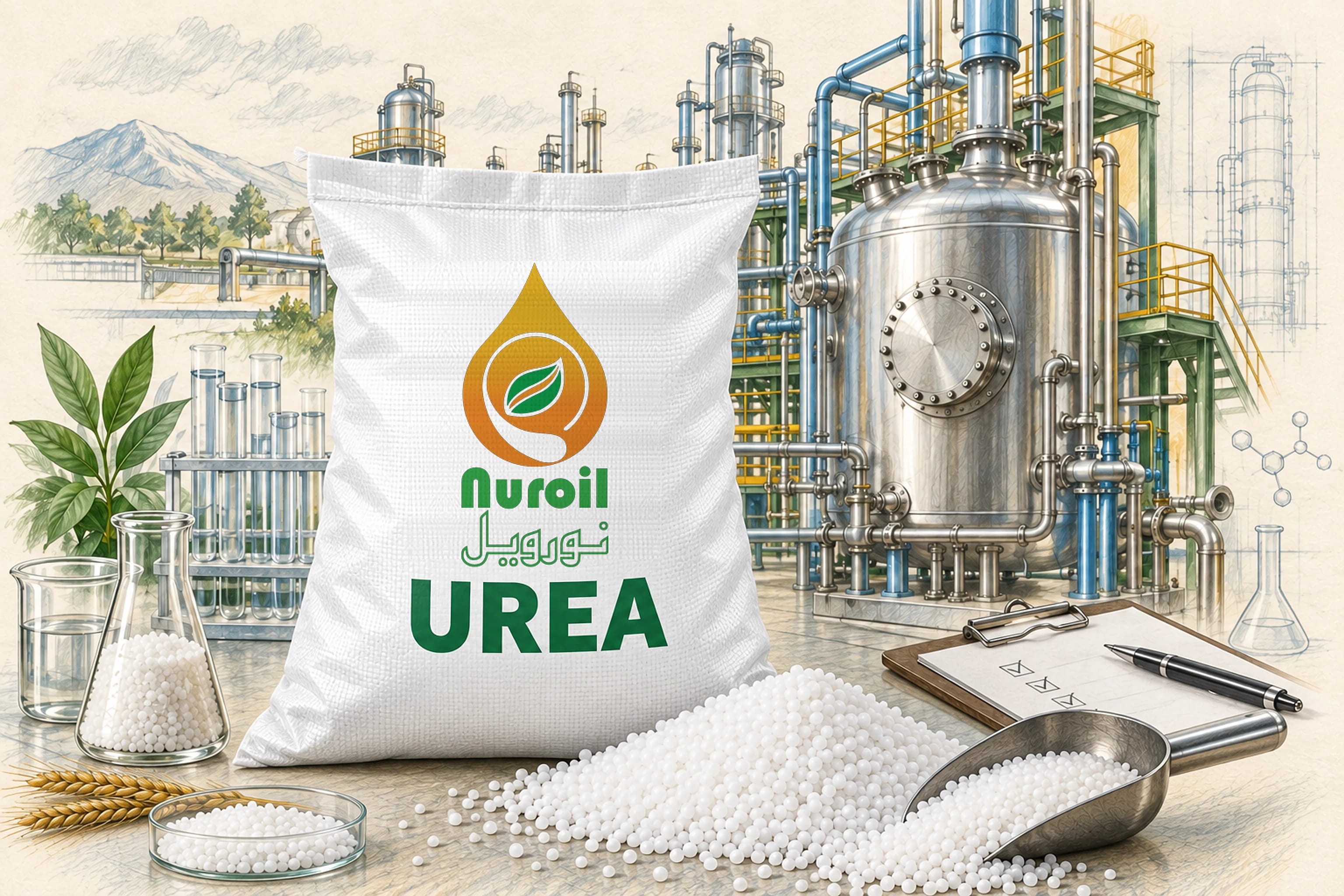
Technical grade urea as feedstock for urea-formaldehyde resin, adhesives and chemical manufacturing.

Emissions control04

Emissions control

Technical grade urea for AdBlue / DEF and for NOx reduction in boilers and kilns.

08 / HOW IT IS MADE

From natural gas
to your site.

Urea is made from ammonia and carbon dioxide, formed into prills or granules, tested and shipped.

Natural gasAirCO₂Prills · granules01Ammonia02Synthesis03Prilling or granulation04Testing and shipment
  1. 01

    Ammonia

    Natural gas is reformed to hydrogen, which is combined with nitrogen from the air to make ammonia.

  2. 02

    Synthesis

    Ammonia reacts with carbon dioxide under pressure to form urea solution.

  3. 03

    Prilling or granulation

    The concentrated melt is formed into prills or granules and screened to size.

  4. 04

    Testing and shipment

    Each batch is tested for nitrogen, biuret and moisture, then packed for bulk, big bag or 50 kg bag delivery.

09 / COMPATIBILITY & HANDLING

Keep it dry
and in condition.

Urea takes up moisture. Good storage protects its flow and quality.

  1. 01

    Keep it dry

    Store covered, in a dry and ventilated area, with bags off the floor.

  2. 02

    Limit stacking

    High stacks compact the lower bags and cause caking.

  3. 03

    Store apart

    Keep away from strong oxidisers, acids and nitrates.

  4. 04

    Follow the SDS

    Read the safety data sheet for handling, spillage and personal protection.

10 / REFERENCE METHODS

Documents and
registration.

Each shipment travels with the documents needed to verify and import it.

Trade and safety codes

For customs declarations, shipping documents and safety data sheets.

  • HS code3102.10Urea, whether or not in aqueous solution
  • CAS number57-13-6Urea
  • EC number200-315-5EU substance identity
  • TransportNot regulatedNot dangerous goods by road, sea or air
01
Certificate of Analysis
Confirms nitrogen, biuret and moisture of the shipped batch.
02
Certificate of Origin and SDS
Available on request with every order.
03
Destination registration
Fertilizer registration, feed-additive registration or commercial import, depending on the grade.
11 / PACKING & DELIVERY

Packing
formats.

Availability depends on the product, quantity and receiving facilities. Confirm the arrangement for your order.

  • 50 kg
    01 / DISTRIBUTION

    50 kg bags

    Moisture-resistant bags for agricultural distribution, palletised for handling.

    Discuss this format
  • 1,000kg
    02 / CONTAINERISED

    Big bags

    1 t big bags for mid-volume orders and feed-mill intake.

    Discuss this format
  • 03 / LARGE VOLUMES

    Bulk supply

    Bulk vessel cargo for large agriculture and industrial orders. Confirm receiving facilities.

    Discuss this format
13 / PRICE ON THE DAY

Get today’s price.

Prices follow the market, so we quote each order on the day. Share your product, quantity and delivery point and we send a firm offer within 24 hours.

Request today’s price
14 / BUYING THIS RANGE

Frequently asked questions.

Product, documentation, delivery and terms for this range.

Question not listed?

Share your grade, destination and packing and we will answer with the offer.

Discuss your requirement ↗
01What's the difference between agriculture, feed and technical grade urea?
All three carry 46% nitrogen but differ in biuret control and certification. Agriculture grade is certified for fertilizer use, feed grade is made to tighter biuret limits for ruminant feed, and technical grade is supplied to the buyer's process specification.
02Can I use agriculture grade urea as a feed additive, or the other way round?
No. The grades are made and certified separately. Using the wrong grade can create compliance and safety problems, particularly in feed.
03Do feed and industrial grade need separate import documents?
Often, yes. Feed grade may need feed-additive registration, agriculture grade fertilizer registration, and industrial grade usually follows standard commercial import documentation.
04What form does each grade come in?
Agriculture and feed grade are usually prilled or granular. Technical grade may be prilled, granular or a solution, depending on the process.
05What documents come with each shipment?
A Certificate of Analysis. Certificate of Origin, SDS and grade-specific registration documents are available on request.
06What is the minimum order quantity?
Usually one 20 ft container, about 25 t. Share your requirement and we will confirm with your quote.
07I'm not sure which grade I need. What should I do?
Tell us the crop, feed formulation or industrial process. Our team will confirm the correct grade and certification before quoting.

THE UREA RANGE

Choose a grade

  1. Agriculture Grade Urea46% nitrogen for crops
  2. Feed Grade UreaNon-protein nitrogen for ruminants
  3. Technical / Industrial Grade UreaResins, adhesives and chemicals
FROM THE KNOWLEDGE CENTRE

Guides & articles

Written by our trade desk to help you specify, compare and buy with confidence.

All guides & articles
ArticleFertilizers · 3 minPrilled vs granular urea: what is the difference?

Prilled and granular urea share the same chemistry but differ in size, strength and handling. Here is how to choose between them.

Read
ArticleFertilizers · 3 minHow granule size and hardness affect fertilizer spreading and blending

Why size guide number, uniformity, particle density and crushing strength decide how evenly a granular fertilizer spreads and…

Read
ArticleFertilizers · 3 minAmmonium nitrate as a nitrogen fertilizer

How ammonium nitrate supplies nitrogen to crops, how it compares with urea and CAN, and the general storage and handling rules…

Read
GuideFertilizers · 3 minUrea specifications explained

A reference to the parameters on a urea certificate of analysis: nitrogen, biuret, moisture, size, conditioner, free ammonia and…

Read
GuideFertilizers · 3 minStoring urea and preventing caking

How humidity, temperature and pressure cause urea to cake, and the warehouse, bagging and stacking practices that keep it…

Read
GuideFertilizers · 3 minReading a fertilizer specification sheet

A line-by-line guide to fertilizer specs: N-P-K grade, nutrient solubility, moisture, biuret, size range and what each limit…

Read
LET’S TALK ABOUT YOUR REQUIREMENTS

Your next shipment starts here.

Request a quote