Technical document

· PDF

Tell us who you are and the document downloads straight away. We use these details only to follow up on your requirement.

Samples & documents

What can we send you?

Tick what you need
Request a quote
NUROIL / SODA ASH

Soda ash.Compare the range.

Dense and light soda ash (sodium carbonate) for glass, detergents, water treatment and chemicals, supplied in bags, jumbo bags and bulk.

Soda AshDense · Light
Grades2Dense · Light
Na₂CO₃ content99% minsodium carbonate
Bulk density550 – 1,200g/L, light to dense
PackingBags · jumbo bags · bulkFOB · CFR · CIF
01 / YOUR SUPPLY PARTNER

Why source
soda ash from Nuroil.

Grade, specification and delivery confirmed for your requirement, from Nuroil Trading in Sharjah.

  • Pencil sketch comparing dense and light soda ash

    Two grades, one contact

    Dense and light soda ash through one commercial relationship, matched to your process.

  • Pencil sketch of soda ash production

    Every batch verified

    Sodium carbonate content, bulk density, chloride and iron are checked and reported on a Certificate of Analysis.

  • Pencil sketch of soda ash jumbo bags

    Bags to bulk

    25 or 50 kg bags, 750 to 1,250 kg jumbo bags and bulk, planned around your receiving facilities.

02 / THE MATERIAL

What is
soda ash?

IN SHORT

Soda ash is sodium carbonate, Na₂CO₃, a white, water-soluble alkaline powder. It is produced from natural trona ore or synthetically from limestone and brine by the Solvay process.

Pencil sketch of natural and synthetic soda ash production routes
Chemical
Sodium carbonate, Na₂CO₃
Purity
99% minimum
Source
Natural trona or Solvay process
Main uses
Glass, detergents, chemicals
03 / READING THE GRADES

Reading
the grades.

Dense and light soda ash share their chemistry. Choose by physical form.

  1. 01

    Bulk density

    Dense is about 900 to 1,200 g/L, light about 550 to 720 g/L. Density sets storage volume and flow.

  2. 02

    Particle size

    Dense is granular and free flowing. Light is a fine powder that dissolves quickly.

  3. 03

    Dust and dissolution

    Dense produces less dust, which suits glass batch handling. Light dissolves faster for detergents and water treatment.

04 / STRENGTHS & LIMITS

What the grade
does and does not tell you.

What it tells you

  • Shows the density and particle size, so you can plan storage and dosing
  • Lets you compare dense and light on the same basis
  • Points to the processes each grade suits

What it does not tell you

  • Change the chemistry, which is the same sodium carbonate
  • Guarantee interchangeability in your process
  • Confirm current stock, origin or price
05 / FULL COMPARISON

Catalogue
specifications.

Typical values for the two grades. Confirm the specification of the offered batch before ordering.

Technical data sheet · Typical values

Soda ash dense

NUR-SA-01Sodium carbonate · Na₂CO₃
Na₂CO₃ content
99% min
Bulk density
900 to 1,200 g/L
Appearance
White, granular, free-flowing
Volatile matter
0.8% max
Chloride (as NaCl)
1.00% max
Typical use
Glass, metal cleaning, steel
Dust
Lower

Typical catalogue values. The Certificate of Analysis for the offered batch is the controlling document.

Issued for every batchRequest the Certificate of Analysis
06 / SELECTION

Choosing the right grade
for your process.

Start with how you handle and use the material.

  1. 01
    Requirement

    Flat and container glass

    Dense

    Granular form with low dust suits glass-batch handling.

  2. 02
    Requirement

    Detergents and household products

    Light

    Fine powder dissolves quickly in formulations.

  3. 03
    Requirement

    Water treatment and chemicals

    Either

    Used for pH adjustment, softening and other sodium chemicals.

  4. 04
    Requirement

    Metal cleaning and steel

    Dense

    Used for cleaning and as a flux in selected steel processes.

Open a product page.

07 / APPLICATIONS

Made for the work
your operation does.

Match the product to the crop, equipment or process and confirm the specification before you order.

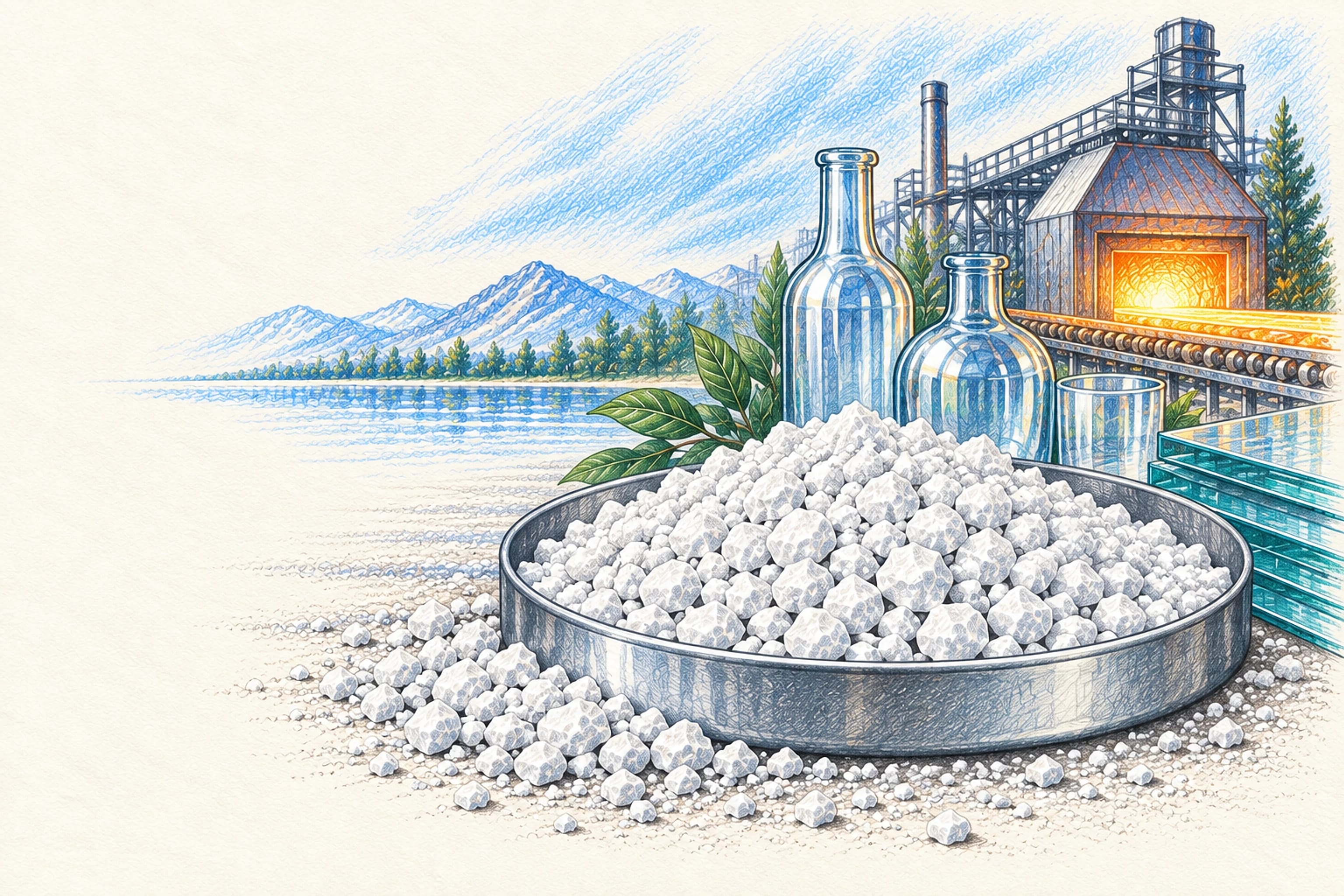
Pencil drawing of a glass works with float glass and bottles01

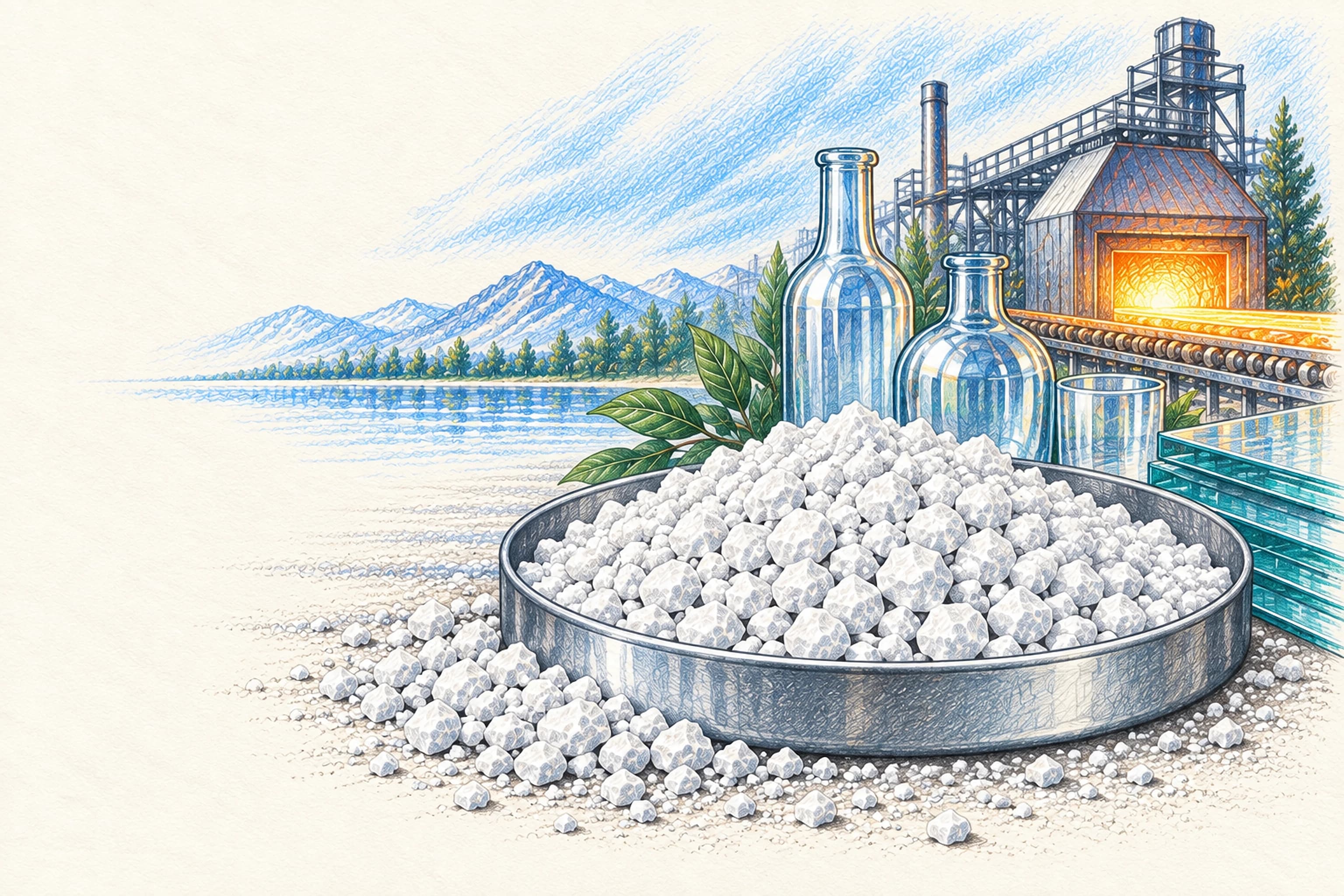
Flat and container glass

Soda ash lowers the melting point of silica in float, flat and container glass.

Detergents and domestic use02

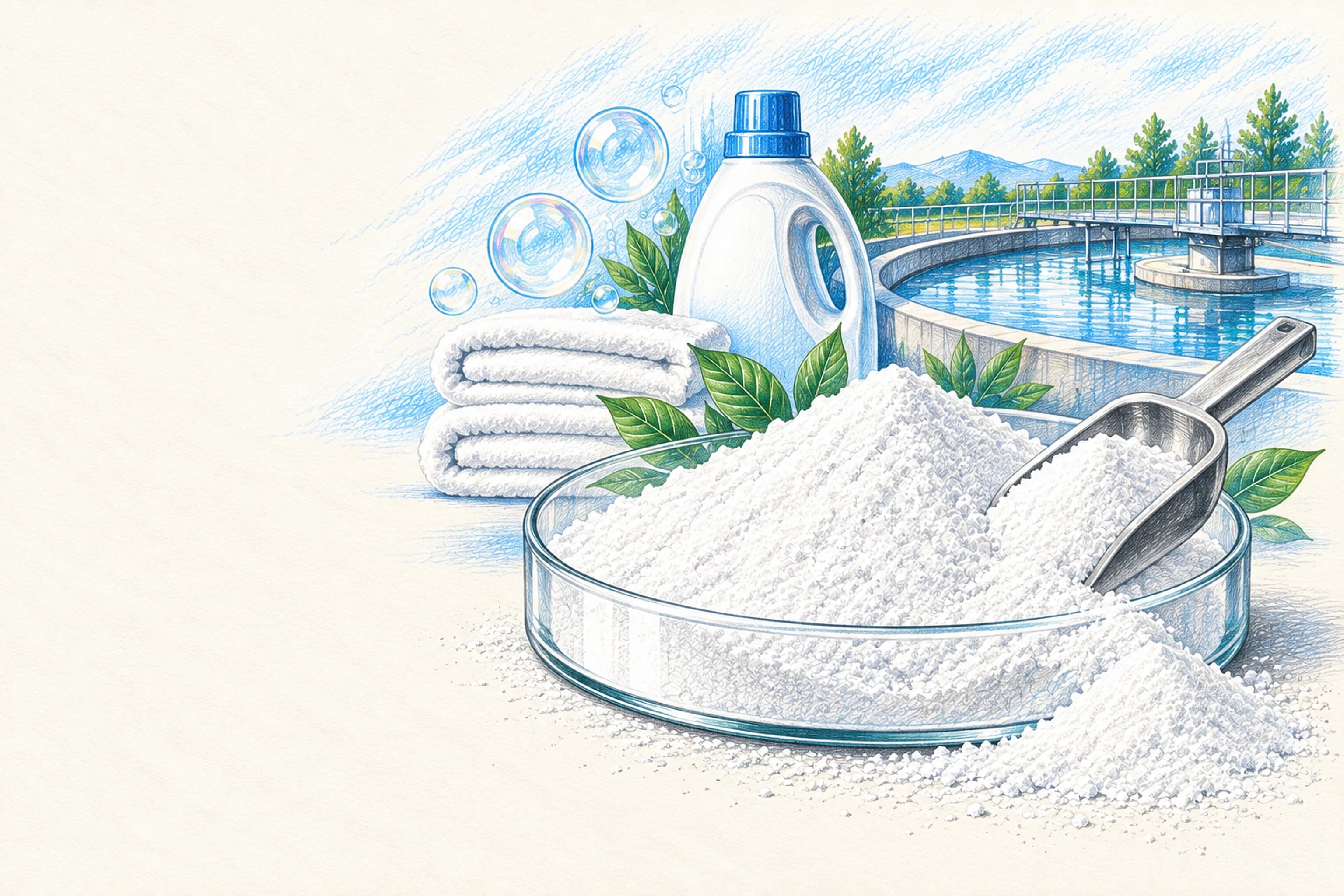
Detergents and domestic use

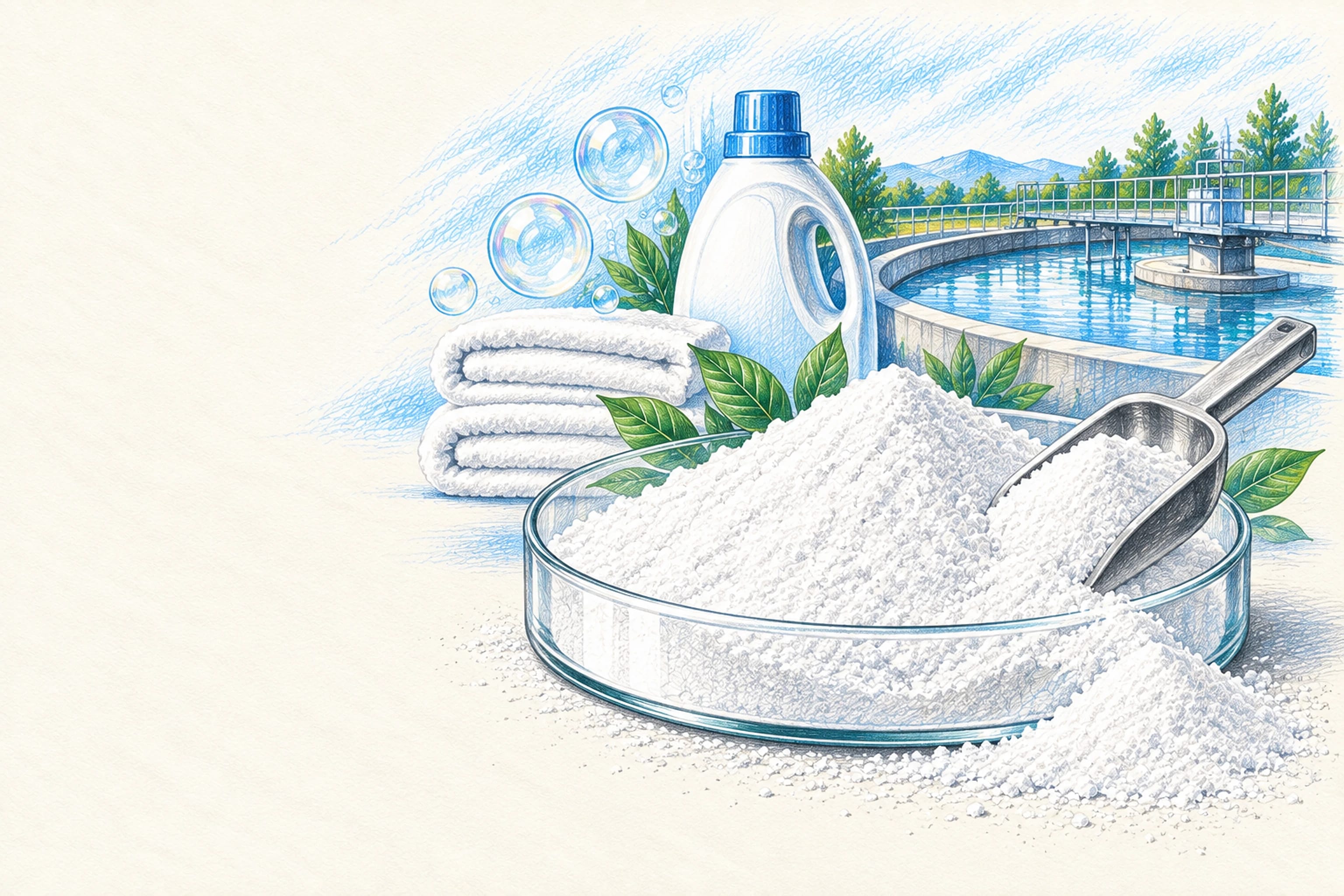
Light soda ash supports detergent, laundry and household cleaning products.

Water treatment and chemicals03

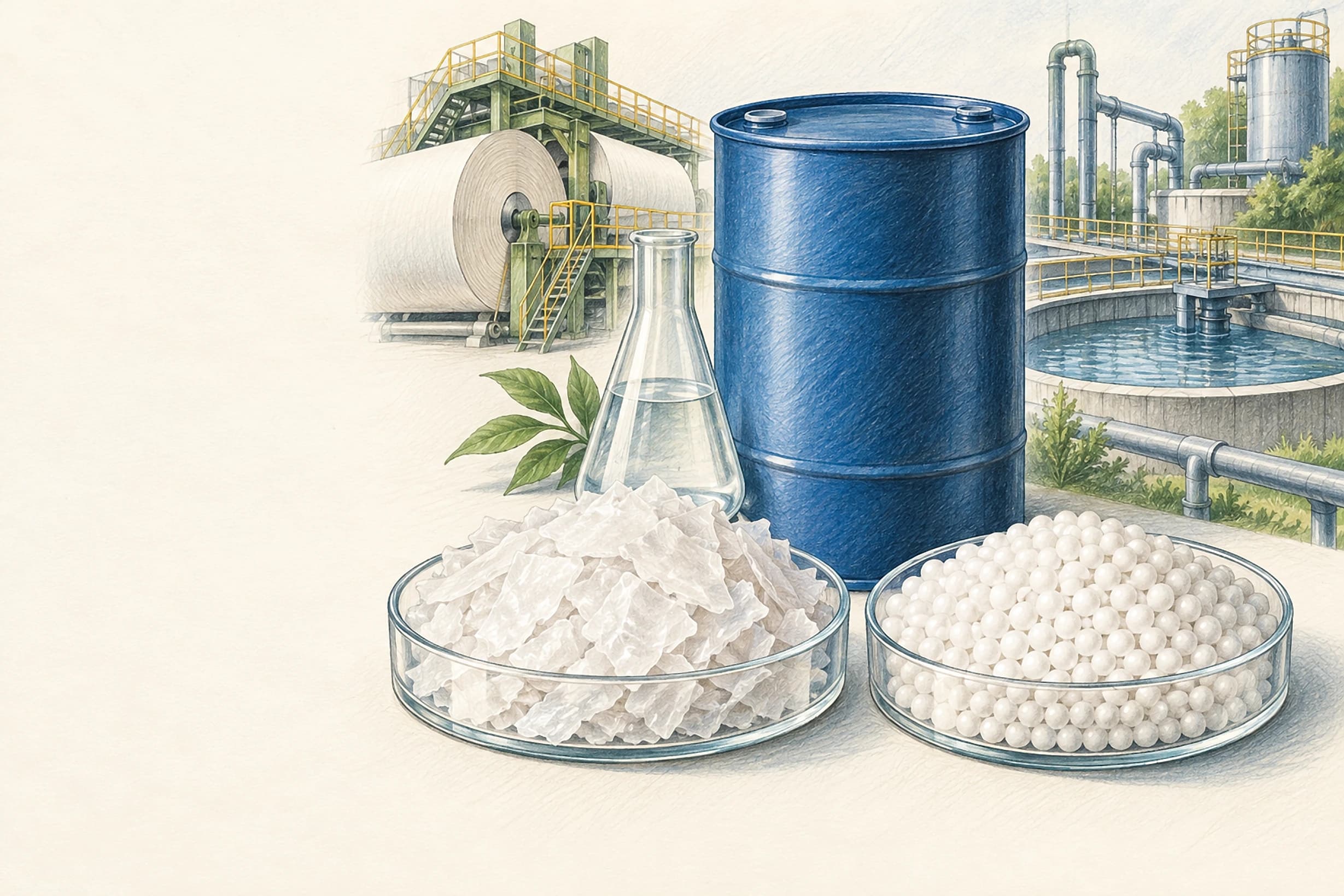
Water treatment and chemicals

pH adjustment, water softening and production of other sodium chemicals.

Pencil drawing of steel coils on a cleaning line04

Metal cleaning and steel

Dense soda ash is used in metal cleaning and as a flux in some steelmaking.

08 / HOW IT IS MADE

From trona and brine
to your site.

Soda ash is made by two routes, then dried, screened and packed to grade.

TronaBrineCO₂Light · Dense01Raw material02Conversion03Grading04Testing and packing
  1. 01

    Raw material

    Trona ore is mined, or limestone and brine are prepared for the Solvay process.

  2. 02

    Conversion

    The raw material is processed into sodium carbonate.

  3. 03

    Grading

    Light ash is calcined; dense ash is further processed to a higher bulk density.

  4. 04

    Testing and packing

    Each batch is tested and packed in bags, jumbo bags or bulk with a Certificate of Analysis.

09 / COMPATIBILITY & HANDLING

Keep it dry
and handle with care.

Soda ash is simple to handle, but it absorbs moisture and irritates skin and eyes.

Warning
  • H319 Causes serious eye irritation.
UN
Not regulated
Transport
Not dangerous goods
  1. 01

    Keep it dry

    Store covered and moisture-free. Shelf life is about 1.5 years from production when kept dry.

  2. 02

    Control dust

    Light grade dusts more. Use ventilation and dust control when transferring.

  3. 03

    Protect people

    Dust and solutions are irritating. Wear gloves, eye protection and a dust mask.

  4. 04

    Follow the MSDS

    Read the safety data sheet for handling, spillage and first aid.

TOOL / SOLUTION CALCULATOR

How much soda ash
for your solution?

Choose the grade, the strength and the volume you need. Soda ash dissolves up to about 17% at 20 °C; the amounts update as you go.

Start from
Light to dissolve203 kg

About 9 bags of 25 kg

Water
977 L
Solution weight
1.18 t
Density at 20 °C
1.179 kg/L
Heat released
51 MJ
Slight warmingup to about 12 °C warmer without cooling

Add it to the water with stirring; it dissolves with little heat.

A planning guide from typical purity and published densities. Your batch Certificate of Analysis and plant procedure decide the final amounts.

10 / REFERENCE METHODS

Documents and
reference.

Each shipment travels with the documents needed to verify and import it.

Trade and safety codes

For customs declarations, shipping documents and safety data sheets.

  • HS code2836.20Disodium carbonate
  • CAS number497-19-8Sodium carbonate
  • EC number207-838-8EU substance identity
  • TransportNot regulatedNot dangerous goods by road, sea or air
01
Certificate of Analysis
Confirms sodium carbonate content and key impurities for the shipped batch.
02
Certificate of Origin and MSDS
Available on request with every order.
03
Test methods
ASTM E359 and C110 are cited beside each property on the grade pages.
11 / PACKING & DELIVERY

Packing
formats.

Availability depends on the product, quantity and receiving facilities. Confirm the arrangement for your order.

  • 25 kg
    01 / SMALLER ORDERS AND RESALE

    25 kg / 50 kg bags

    PP bags suited to smaller orders, retail and distributor resale.

    Discuss this format
  • 1,000kg
    02 / CONTAINERISED SUPPLY

    Jumbo bags

    750 kg, 1,000 kg or 1,250 kg PP jumbo bags for containerised supply.

    Discuss this format
  • 03 / LARGE VOLUMES

    Bulk supply

    Large-volume supply for buyers with suitable receiving and storage infrastructure.

    Discuss this format
12 / ORIGIN & AVAILABILITY

Your destination.
Your next source.

Shipped from producers in China. The origin is named in each offer, with the producer’s Certificate of Analysis.

ChinaChina: Dense and light
Nuroil commercial contact · Sharjah, UAE● Confirmed sourcing origins shown

Shipped from producers in China. The origin is named in each offer, with the producer’s Certificate of Analysis. Country markers indicate sourcing origins, not individual refineries or live stock availability.

  • China — Dense and light
13 / PRICE ON THE DAY

Get today’s price.

Prices follow the market, so we quote each order on the day. Share your product, quantity and delivery point and we send a firm offer within 24 hours.

Request today’s price
14 / BUYING THIS RANGE

Frequently asked questions.

Product, documentation, delivery and terms for this range.

Question not listed?

Share your grade, destination and packing and we will answer with the offer.

Discuss your requirement ↗
01What is the difference between soda ash dense and light?
Both are sodium carbonate. Dense has higher bulk density and larger particles; light has lower density and a finer particle. Choose by handling, dissolution and dust-control needs.
02Which grade is used for glass?
Dense soda ash is the standard choice for flat, float and container glass because its granular, lower-dust form suits glass-batch handling.
03Can light and dense be used interchangeably?
Some processes can use either, but density and particle size affect dosing, dissolution and dust. Confirm the grade your process is designed around before substituting.
04Is soda ash natural or synthetic?
Both. Natural soda ash comes from trona ore; synthetic soda ash is made from limestone and brine by the Solvay process. Both yield sodium carbonate.
05What documents come with each shipment?
A Certificate of Analysis. Certificate of Origin and MSDS are available on request.
06What is the shelf life?
About 1.5 years from production when stored moisture-free. Material may be retested and used beyond that date if it meets specification.
07What packing formats are available?
25 and 50 kg PP bags, PP jumbo bags of 750, 1,000 or 1,250 kg, and bulk supply, subject to the offered source.
08What is the HS code for soda ash?
Disodium carbonate is classified under HS 2836.20. Its CAS number is 497-19-8. It is not classed as dangerous goods for transport.
09How much soda ash fits in a 20 ft container?
About 24 to 25 tonnes, in 25 or 50 kg bags on pallets or in 1,000 kg jumbo bags. The offer confirms the exact load for the source.
THE SODA ASH RANGE

Choose a grade

  1. Soda Ash DenseFor glass and furnace use
  2. Soda Ash LightFor detergents and chemicals
FROM THE KNOWLEDGE CENTRE

Guides & articles

Written by our trade desk to help you specify, compare and buy with confidence.

All guides & articles
ArticleAlkalis · 3 minDense vs light soda ash: what the difference means for users

Dense and light soda ash are the same chemical in different physical forms. How that affects flow, dust, storage space and choice…

Read
ArticleAlkalis · 3 minWhy soda ash matters in glass making

Soda ash is the flux that makes soda-lime glass practical to melt. Its role in the batch, why glassmakers want dense grade and…

Read
ArticleAlkalis · 3 minUsing soda ash to raise pH and alkalinity in pools and water treatment

How soda ash raises pH and alkalinity in pool and process water, how it differs from bicarbonate, and how to dose it safely…

Read
GuideAlkalis · 3 minSoda ash specification parameters explained

What each line on a soda ash specification means: Na2CO3, Na2O, chloride, iron, sulphate, insolubles, moisture, bulk density and…

Read
GuideAlkalis · 3 minHow soda ash is produced: synthetic and natural routes

A technical overview of the ammonia-soda (Solvay) process and natural soda ash refined from trona, and what the production route…

Read
GuideAlkalis · 3 minStoring and handling soda ash: moisture, caking and dust

Keeping soda ash dry and free-flowing in bags and silos, controlling dust, dissolving it safely and protecting the people who…

Read
LET’S TALK ABOUT YOUR REQUIREMENTS

Your next shipment starts here.

Request a quote