Soda ash is one of the easier industrial chemicals to handle. It is not flammable, its dust is not explosive, and it is not classed as highly toxic. Most of the problems users meet are physical: lumps, bridging in bins, dust and solutions that crystallise in pipes. This guide covers the practical points. Always read it alongside the product SDS.
Why soda ash cakes
Anhydrous soda ash is slightly hygroscopic. It picks up moisture and carbon dioxide from humid air, and the surface of the grains partly hydrates. When there is not enough water to dissolve the surface, neighbouring grains bond together and form lumps. Dry soda ash generally stays free-flowing below about 85% relative humidity, and the risk of caking rises above that.
Caked soda ash is not spoiled. The lumps are usually soft and break up easily, and they dissolve readily. They do cause trouble in feeders and weighers, however, and absorbed moisture lowers the measured purity. Dense soda ash resists caking better than light grades.
Storing bagged product
- Store on a firm, dry, smooth floor under cover, away from damp areas and doorways where humid air circulates.
- Keep bags and jumbo bags on pallets, never directly on concrete. Limit stacking to what the pallets and bags can safely carry. Some producers recommend no more than two pallet layers.
- For long storage in poor conditions, cover stacks with an impermeable sheet.
- Use stock first in, first out. Producers commonly guarantee specification for around a year from production. Older stock should be retested before use rather than discarded.
- Handle bags with forklifts or slings that lift evenly. Do not drag or drop them, since torn bags let moisture in.
Bulk storage in silos
Silos and bins should have a sealed roof that sheds water, and should be designed for first-in, first-out flow. Mass-flow designs, where all the contents move together, prevent bridging and ratholing. They cost more but suit light ash in particular. Discharge hoppers are best sloped at about 60° from horizontal and never less than about 45°.
Watch for bin sweating. If warm, humid air cools inside a silo, moisture condenses on the walls and forms scale and lumps. Avoid running vibrators on material that is not flowing, since this compacts it further. Vibrators and live-bottom devices can also break dense grains where particle size matters.
Controlling dust
Soda ash dust is fine and irritating to the eyes and airways. Keep free-fall heights short and use inclined chutes. Enclose transfer points and run them under slight negative pressure where possible, and fit bag filters to silo vents and tipping stations. Where the soda ash is going into solution anyway, wet scrubbers work well because the dust dissolves easily. Choosing dense rather than light ash also reduces dust significantly.
Dissolving and solution handling
| Point | Practical guidance |
|---|---|
| Heat | Anhydrous soda ash gives off heat as it dissolves. Add solid to water gradually with stirring. |
| Concentration | Working solutions are commonly made at 20% or less to reduce the risk of crystallisation. |
| Temperature | Concentrated solutions can deposit crystals when they cool, so keep lines and tanks warm or use weaker solutions. |
| Hard water | Very hard make-up water forms calcium carbonate scale in tanks and lines, which needs periodic removal. |
Protecting people
Soda ash can seriously irritate the eyes and can irritate the skin, especially when damp or in solution. Typical protective equipment is chemical safety goggles, gloves, long sleeves and, where dust is generated, an approved dust respirator. Contact lenses should not be worn when handling it. Keep soda ash away from acids, which release carbon dioxide on contact. Avoid getting soda ash and lime dust on damp skin together, because they can form caustic soda. Anyone entering a silo needs a confined-space procedure.
If dust gets into the eyes, flush with plenty of water for at least 15 minutes and seek medical attention. If dust is inhaled, move to fresh air. Follow the first-aid and spill sections of the supplier's SDS.
Keep it dry, keep it moving and keep the dust in. Most soda ash handling problems come back to those three points.
Packing and documents to agree with your supplier
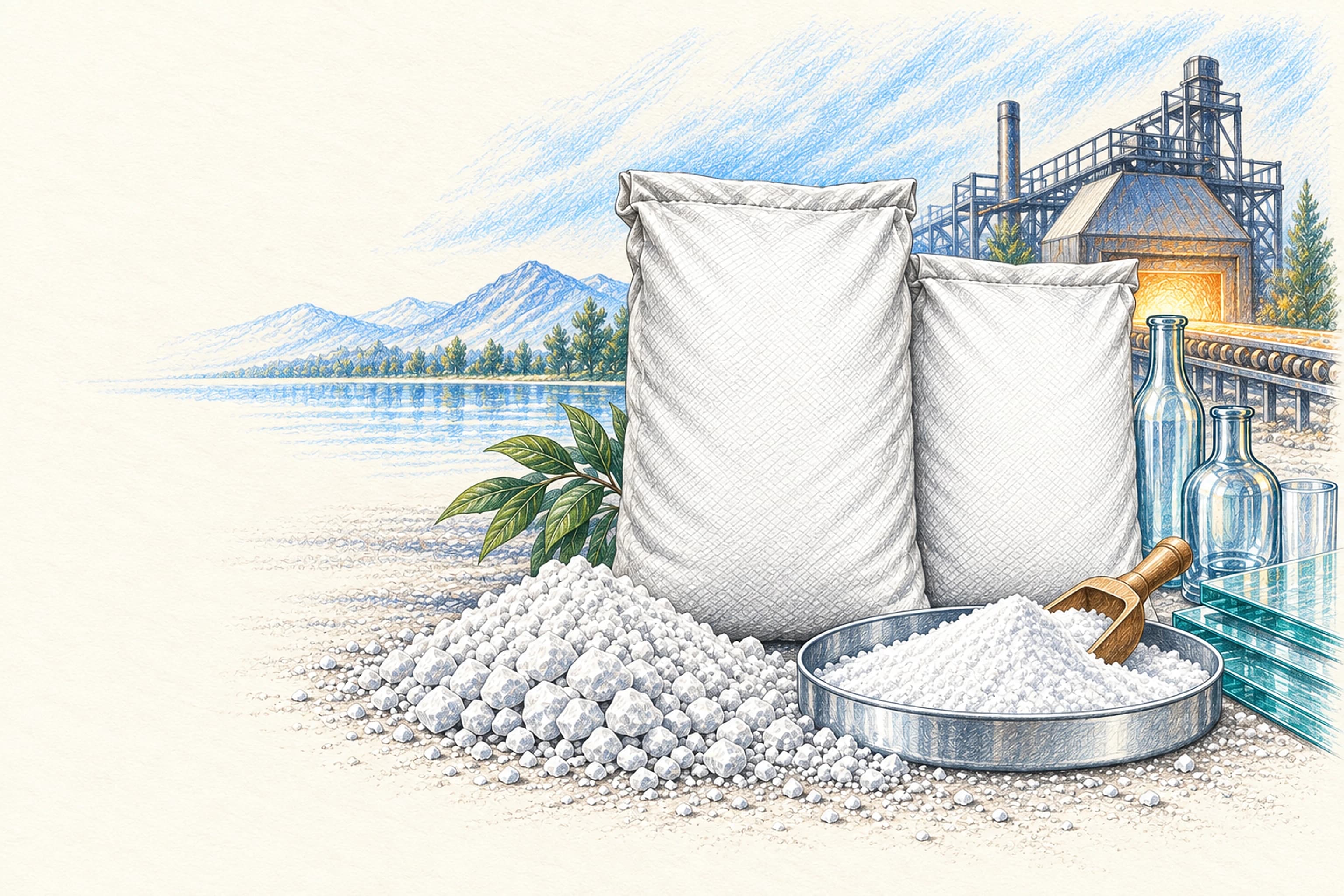
Choose packing to suit your storage. Bags suit covered warehouses with manual handling, jumbo bags suit forklift sites, and bulk suits plants with silos. State any need for moisture-resistant liners or stretch-hooded pallets, especially for humid destinations or long voyages. Ask for the SDS before the first delivery and a CoA with each lot. Nuroil can supply soda ash in the packing that suits your site. Send your requirements through the contact page.