Almost all commercial sulphur leaves the refinery or gas plant as a hot liquid. What the buyer receives depends on how that liquid was solidified. The chemistry is the same in every case, but the physical form decides how much dust you will deal with, how the cargo is classified for shipping, how well it flows through your equipment and how fast it melts or reacts. Choosing the right form is therefore a practical decision, not a cosmetic one.
How each form is made
- Granular sulphur is built up in a rotating drum. Small seed particles are repeatedly sprayed with molten sulphur, growing layer by layer into hard, rounded granules, typically in the 2 to 6 mm range.
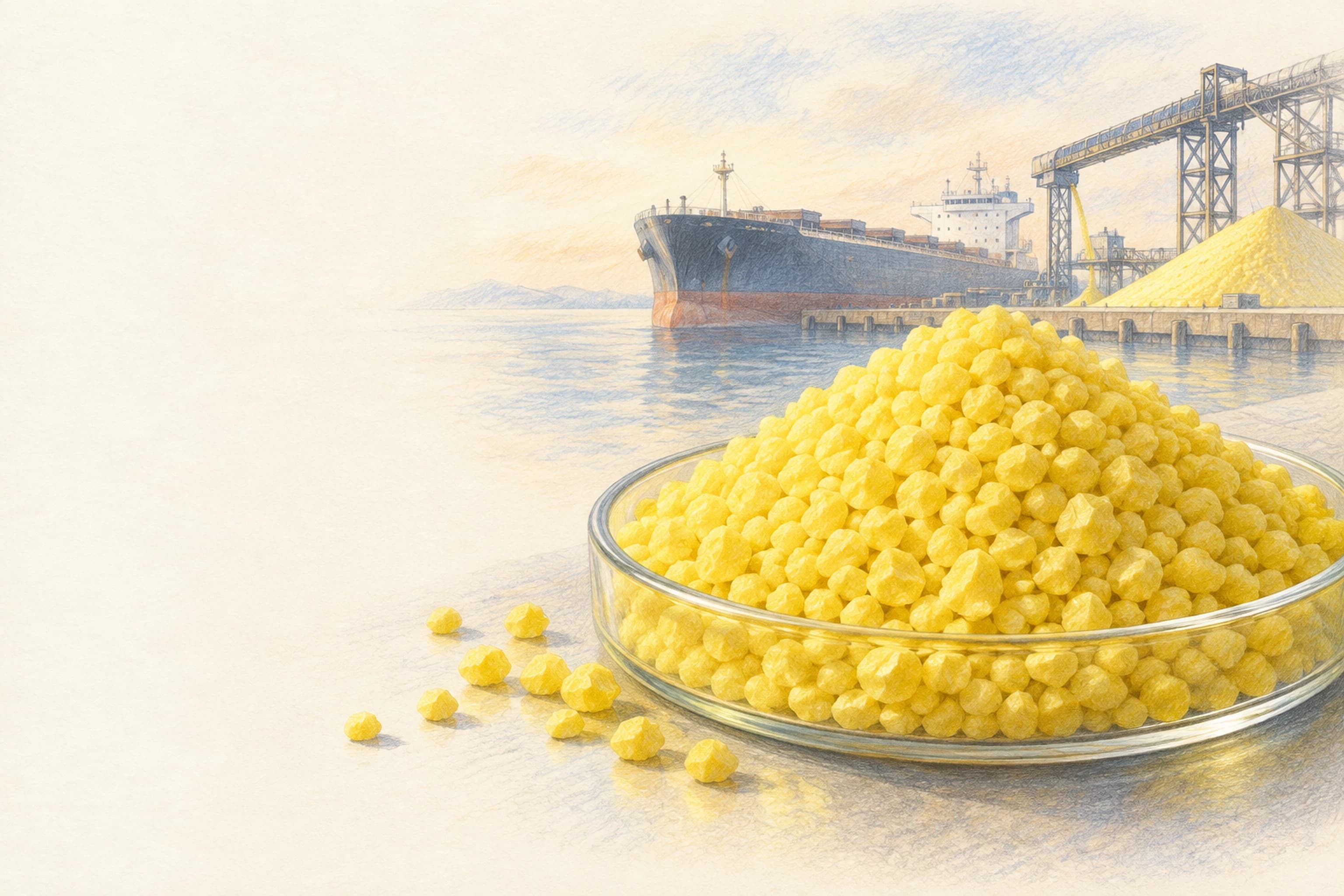
- Pastillated sulphur is made by dropping molten sulphur onto a moving steel belt that is cooled from underneath. Each drop sets into a flat-bottomed, domed pastille, often compared to a split pea.
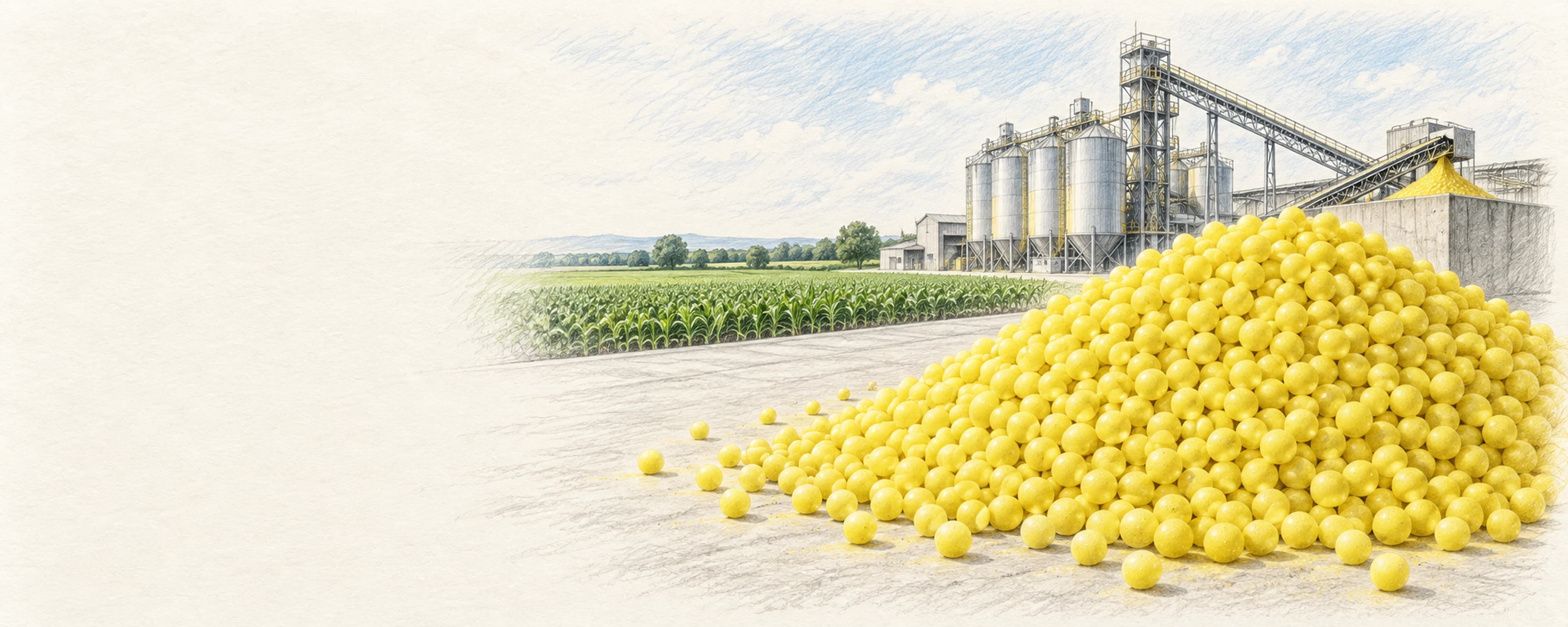
- Prilled sulphur is formed by letting molten droplets fall into a bath of cooling water, where they solidify into small beads. Because the process uses water, prills usually carry more surface moisture than other formed products.
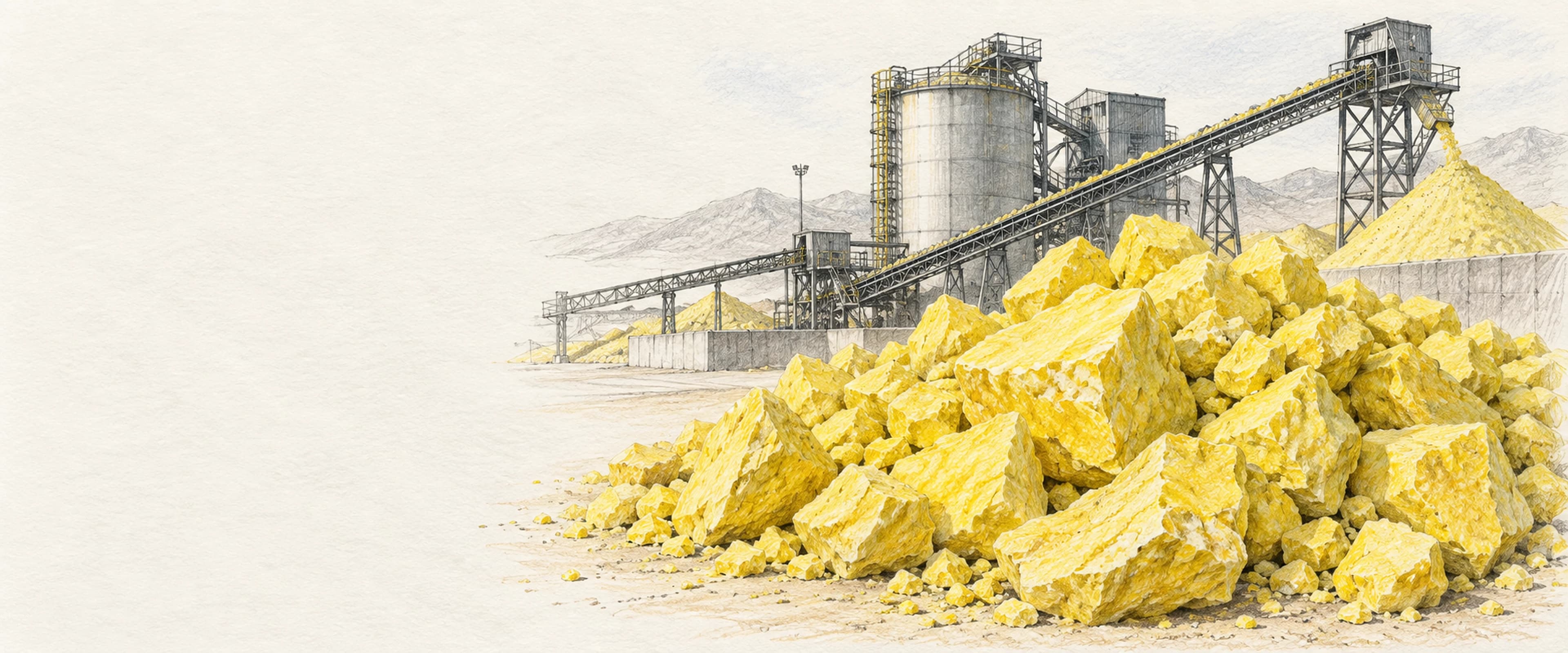
- Lump sulphur comes from pouring molten sulphur into large blocks or pads, letting it set and then breaking it up. The result is irregular pieces of mixed size with a significant share of fines.
- Powder sulphur is produced by grinding solid sulphur, sometimes down to micronised grades where most particles are below about 80 microns.
Formed versus lump: why it matters
Granules, pastilles and prills are collectively called formed sulphur. Industry criteria developed in sulphur-producing regions grade formed products on shape, size distribution, moisture and friability (how easily a particle breaks into dust). Granules and pastilles generally meet the premium grade; wet prills tend to fall into the standard grade because of their higher moisture.
The distinction also follows the cargo onto the ship. Under the international code for solid bulk cargoes, formed sulphur is treated as a Group C cargo, while crushed, lump and coarse-grained sulphur is listed as UN 1350, a Class 4.1 flammable solid with additional precautions for dust and fire. That difference can affect vessel acceptance, terminal procedures and freight.
| Form | Shape and size | Dust tendency | Typical uses |
|---|---|---|---|
| Granular | Hard rounded granules, about 2–6 mm | Low | Sulphuric acid plants, fertilizer blending, long-haul bulk trade |
| Pastillated | Domed pastilles, a few millimetres across | Low | Bagged supply, chemical processing, fertilizer and rubber compounding after grinding |
| Prilled | Small beads, higher moisture | Low to moderate | Acid production and melting where some moisture is tolerated |
| Lump | Irregular pieces with fines | High | Local melting, smaller users with crushing or melting equipment |
| Powder | Ground or micronised | Very high | Rubber vulcanisation, agricultural dusting and wettable formulations, specialty chemicals |
Matching form to use
If you melt the sulphur
If you blend or apply it to soil
If you compound it into a product
If you handle it manually or in small quantities
Handling trade-offs to keep in mind
- Every handling step creates some fines. Even premium formed sulphur degrades if it is dropped from height, re-handled several times or crushed under vehicles.
- Fines are a dust explosion and fire hazard, and they also hold moisture, which encourages acid formation and corrosion.
- Lump and powder demand stricter dust control, earthing of equipment and housekeeping than formed products.
For most bulk industrial buyers, formed granular sulphur offers the best balance of low dust, good flow and straightforward shipping. Lump and powder have their place, but bring extra handling obligations.
What to specify when you enquire
State the form you need and, where it matters, the size range and maximum fines content. Add purity and moisture limits, the end use, your packing preference (bulk or bags) and the delivery port. Ask for the certificate of analysis and the safety data sheet with the offer. Nuroil supplies granular, lump, prilled, pastillated and powder sulphur from established producers, and you can send your requirements through the quote request form.