Sulphur is often listed as a secondary nutrient, behind nitrogen, phosphorus and potassium. In practice it behaves like a primary one: crops take up sulphur in amounts comparable to phosphorus, and when it runs short, yields and quality fall even if every other nutrient is supplied. For fertilizer blenders and distributors, understanding why sulphur matters helps explain growing demand for sulphur-containing products.
What sulphur does in the plant
- Protein building. Sulphur is part of key amino acids that plants use to make proteins. Without it, the plant cannot make full use of the nitrogen it has taken up.
- Chlorophyll. Sulphur is involved in forming chlorophyll, so deficient plants turn pale and photosynthesise less efficiently.
- Quality. Oil content in oilseeds, protein in cereals and the flavour compounds in crops such as onions and brassicas all depend on adequate sulphur.
Because nitrogen and sulphur work together in protein formation, agronomists pay attention to the balance between the two. Adding more nitrogen to a sulphur-deficient crop often gives a disappointing response.
Recognising deficiency
Sulphur moves poorly inside the plant, so it cannot easily be shifted from older leaves to new growth. As a result, deficiency usually shows first as a general yellowing of the youngest leaves. Nitrogen deficiency is the opposite: it starts on older, lower leaves. In cereals such as maize, sulphur shortage may appear as pale striping on upper leaves; in severe cases the whole plant is stunted and pale.
Visual symptoms can be confused with other problems, so extension services recommend confirming suspected deficiency with plant tissue analysis. Soil tests for sulphur are less reliable than for other nutrients, which is why application rates are usually based on the crop, soil texture, organic matter and field history.
Why deficiency is more common now
- Cleaner air. Industrial emissions once deposited significant sulphur on farmland through rain. Lower emissions have greatly reduced this free supply.
- Higher-analysis fertilizers. Many modern high-concentration products contain little or no sulphur, unlike older formulations.
- Higher yields remove more sulphur from the field each season.
- Lower soil organic matter and less use of manure reduce the natural reserve.
- Sandy, coarse soils lose sulphate by leaching.
Elemental sulphur versus sulphate
Plants take up sulphur as sulphate. Fertilizers supply it in two broad ways.
Sulphate sources
Elemental sulphur
The oxidation of elemental sulphur also produces acidity. This is used deliberately to lower the pH of alkaline or calcareous soils, which can improve the availability of micronutrients such as iron, manganese and zinc. On already acidic soils, this effect needs to be managed.
Sulphate feeds the crop now; elemental sulphur feeds it later. Many programmes combine both to cover early demand and the rest of the season.
Where traded sulphur fits
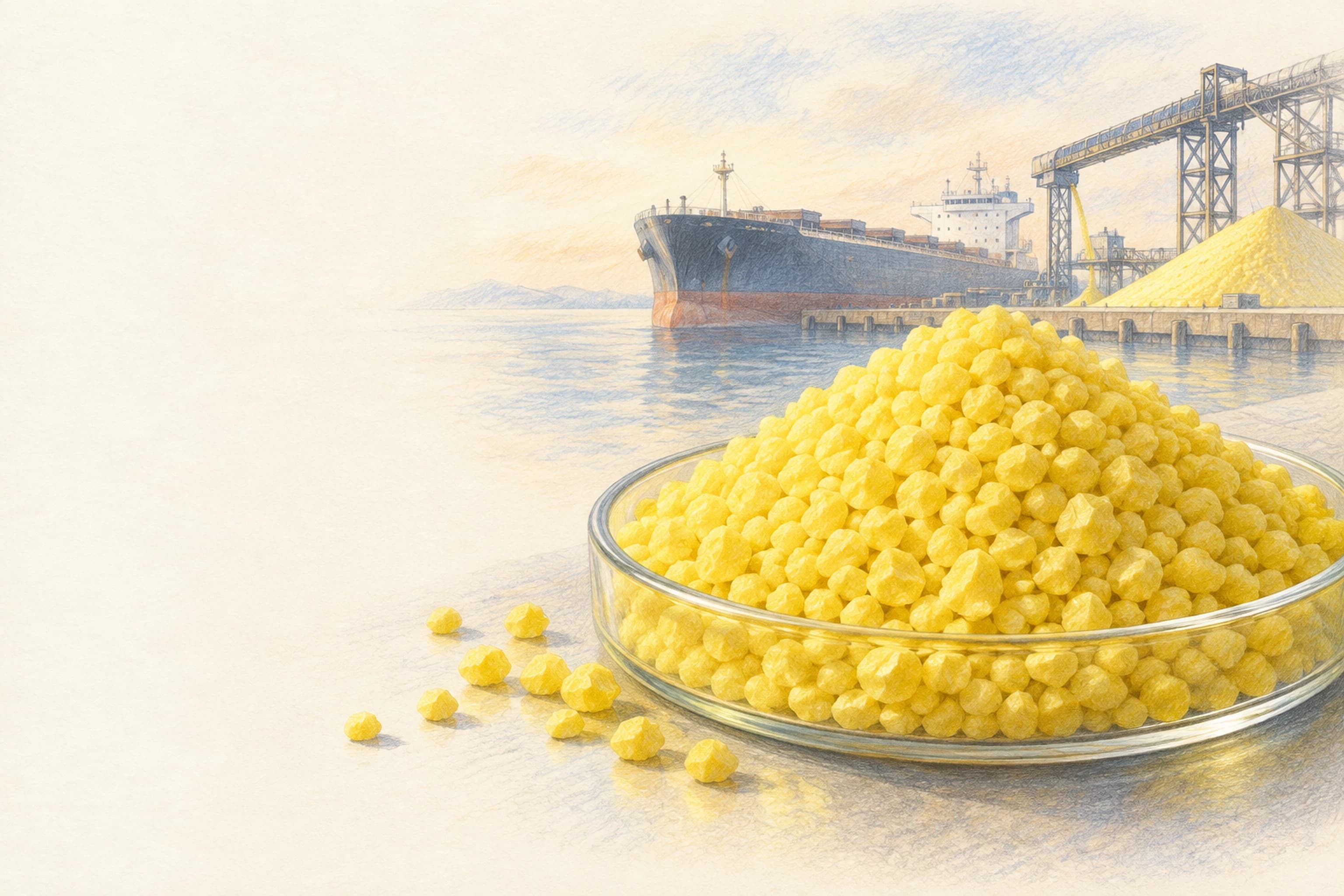
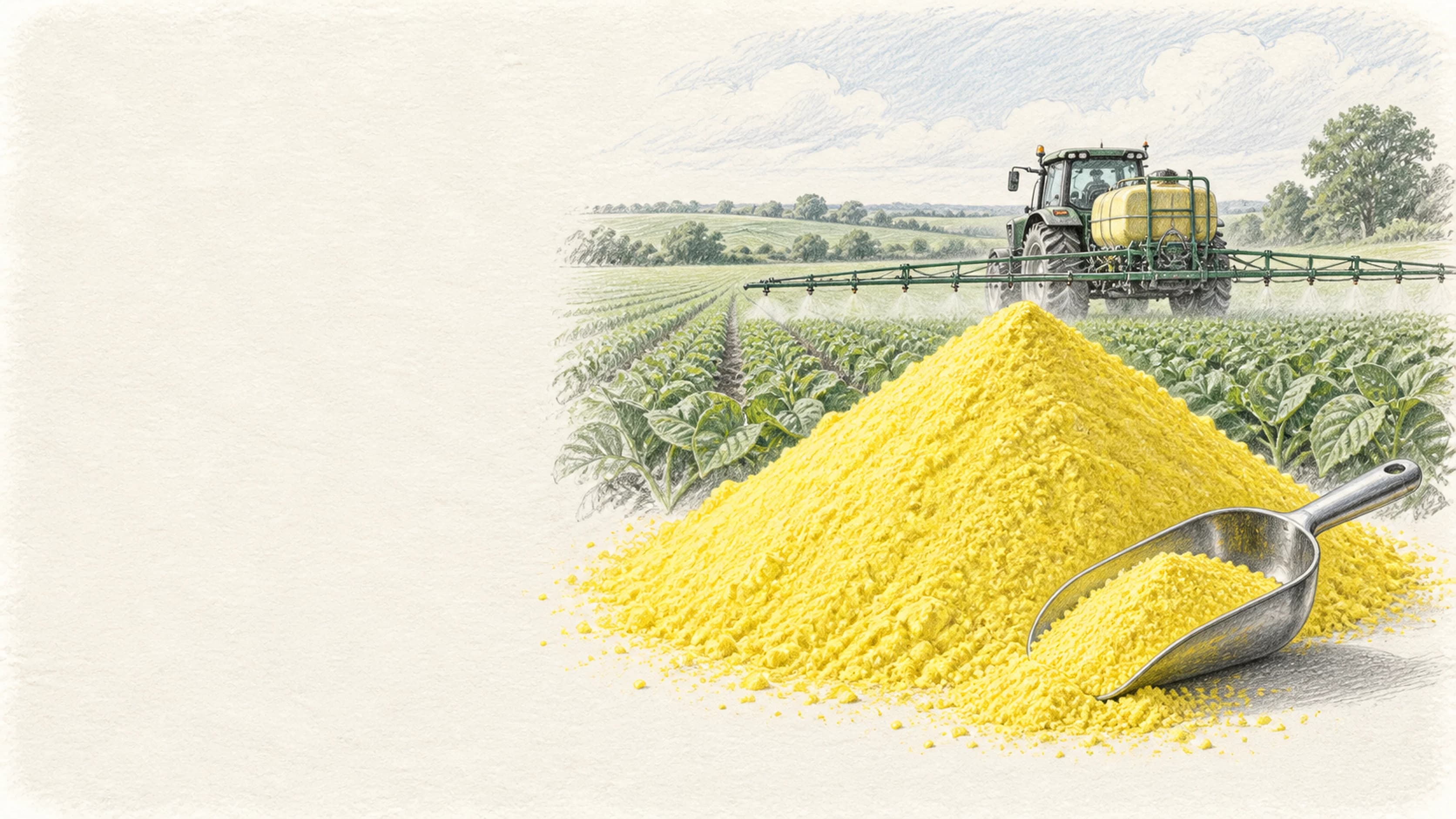
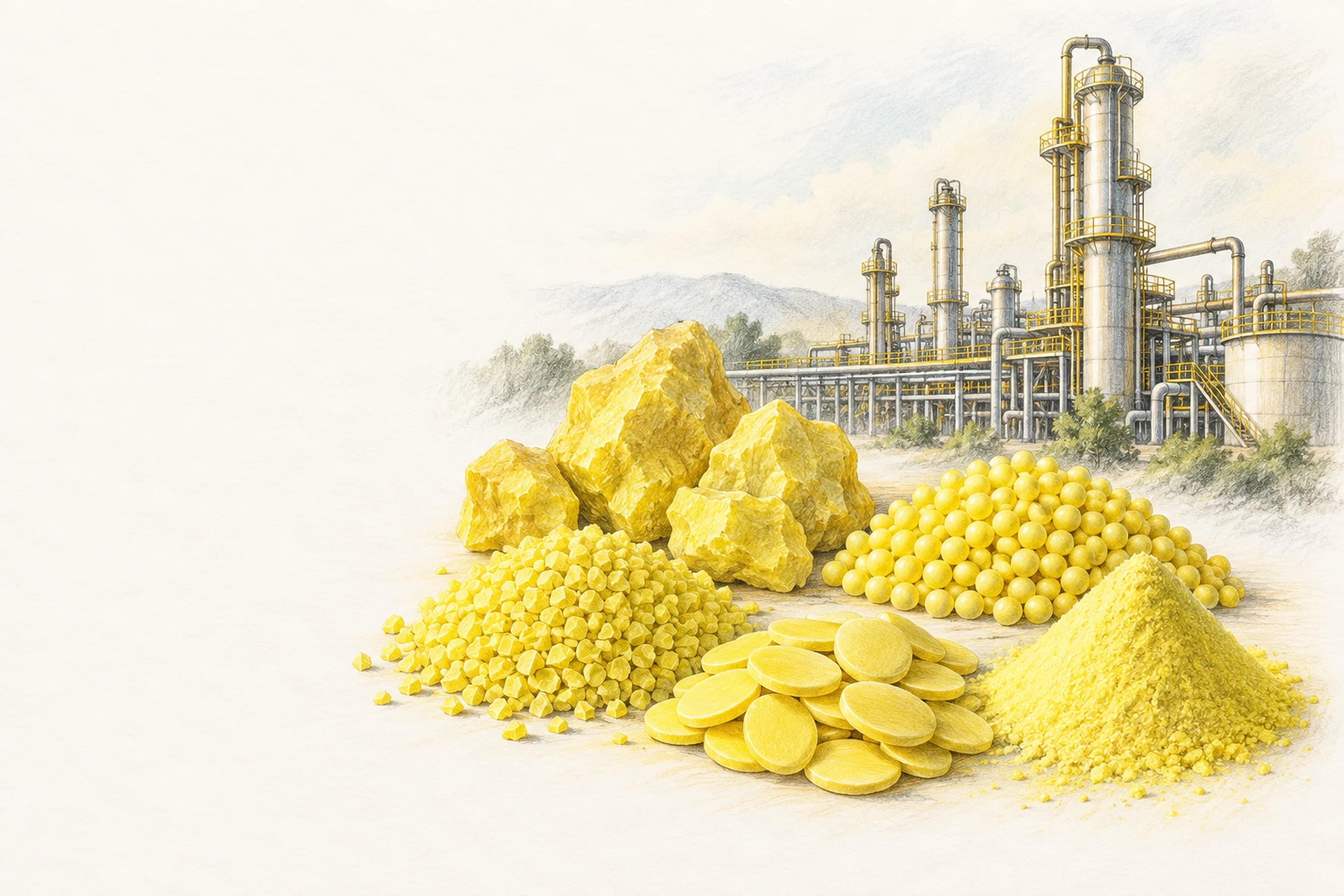
Most sulphur used in agriculture reaches the field indirectly. Large volumes are burned to make sulphuric acid, which is then used to produce phosphate fertilizers and ammonium sulphate. A smaller but important share is processed directly into elemental sulphur fertilizers, bentonite-sulphur pastilles, sulphur-coated products and soil amendments. Fine powder is also used in crop protection as a fungicide.
What to specify when buying sulphur for fertilizer use
Tell the supplier whether the sulphur will be melted, ground or blended, because that determines the most suitable form. Typical enquiry points are purity (dry basis), moisture, ash, acidity, particle size or form, and packing. For fertilizer blending, granular or powder grades are common; for acid-based fertilizer production, bulk granular sulphur is the usual choice. Ask for a certificate of analysis for each lot and the safety data sheet. Nuroil can supply sulphur on FOB, CFR or CIF terms; details can be sent through the quote request form.