Technical document

· PDF

Tell us who you are and the document downloads straight away. We use these details only to follow up on your requirement.

Samples & documents

What can we send you?

Tick what you need
Request a quote
NUROIL / SULPHUR

Sulphur.Compare the range.

Granular, lump, prilled, pastillated and powder sulphur, supplied to the form, purity and volume your acid, fertilizer or chemical process requires.

Sulphur5 forms
Forms5Granular · Lump · Prilled · Pastillated · Powder
Purity99.5% Sminimum, typical
PackingJumbo bags · bulkFOB · CFR · CIF
QualityBatch CoAon every shipment
01 / YOUR SUPPLY PARTNER

Why source
sulphur from Nuroil.

Grade, specification and delivery confirmed for your requirement, from Nuroil Trading in Sharjah.

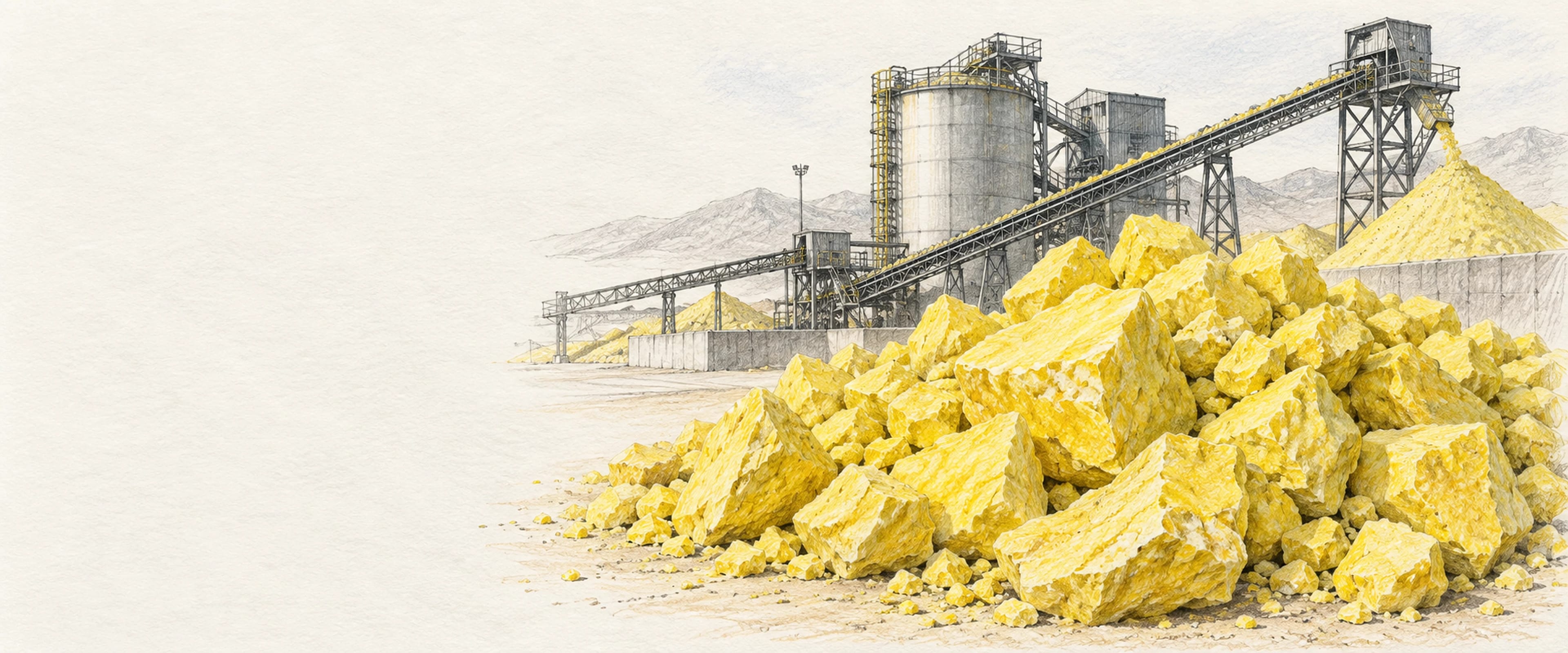
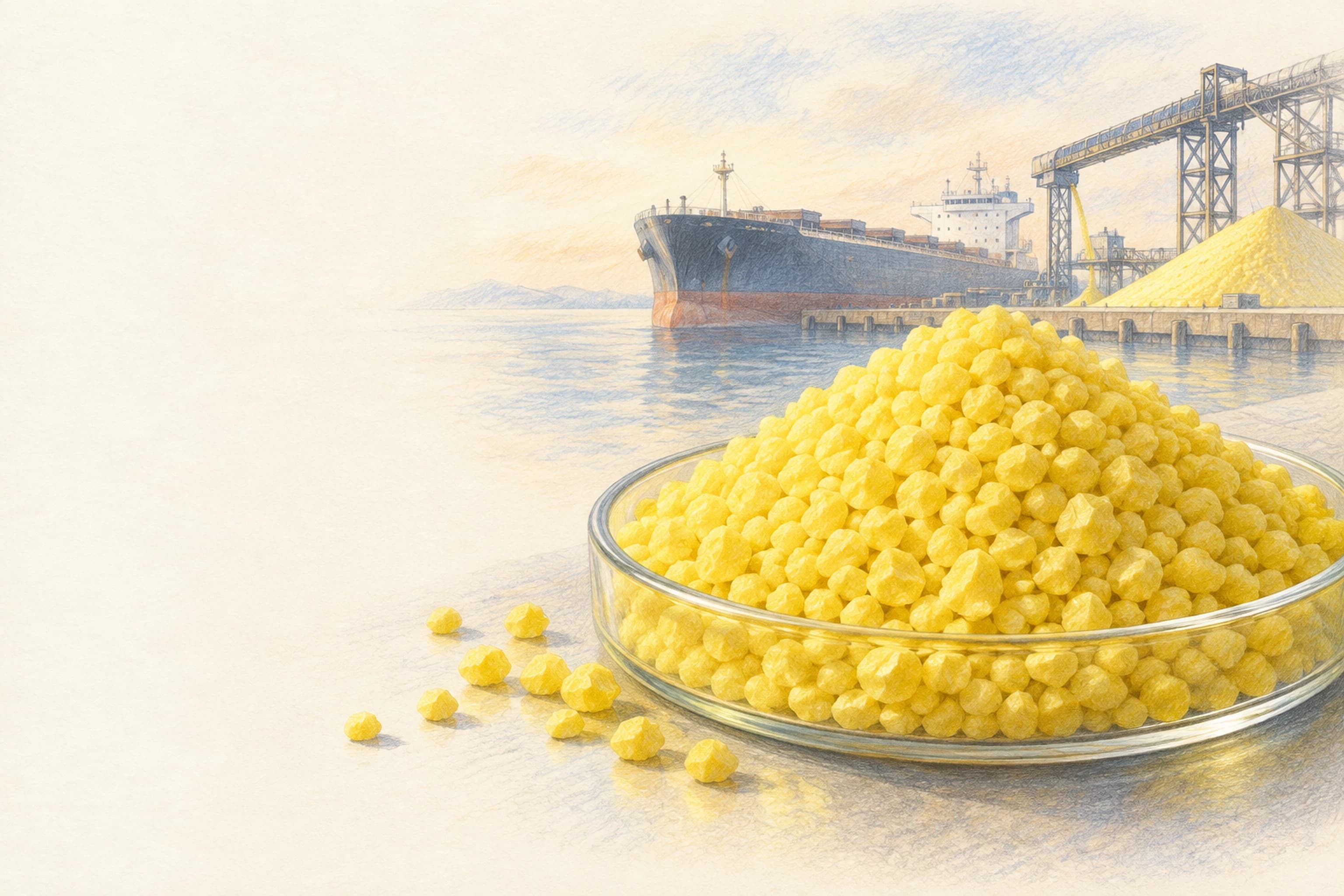
  • Pencil sketch of granular sulphur

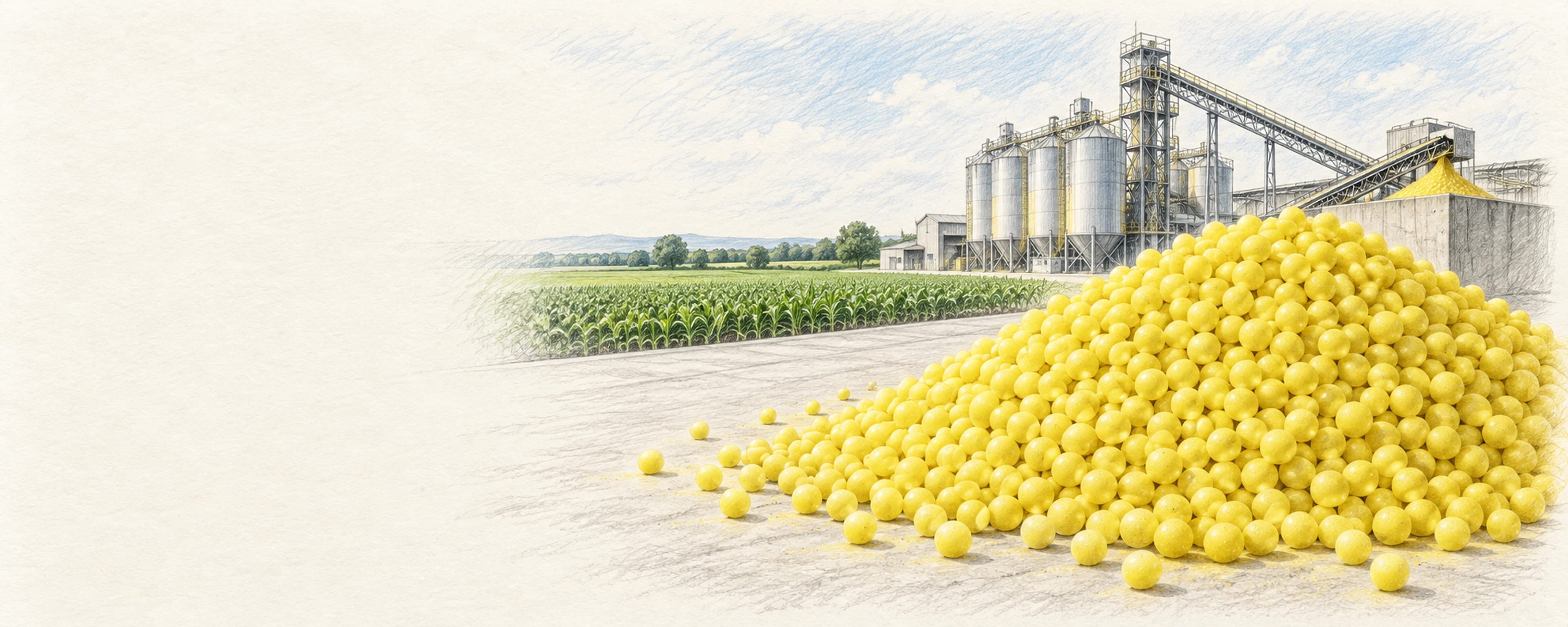
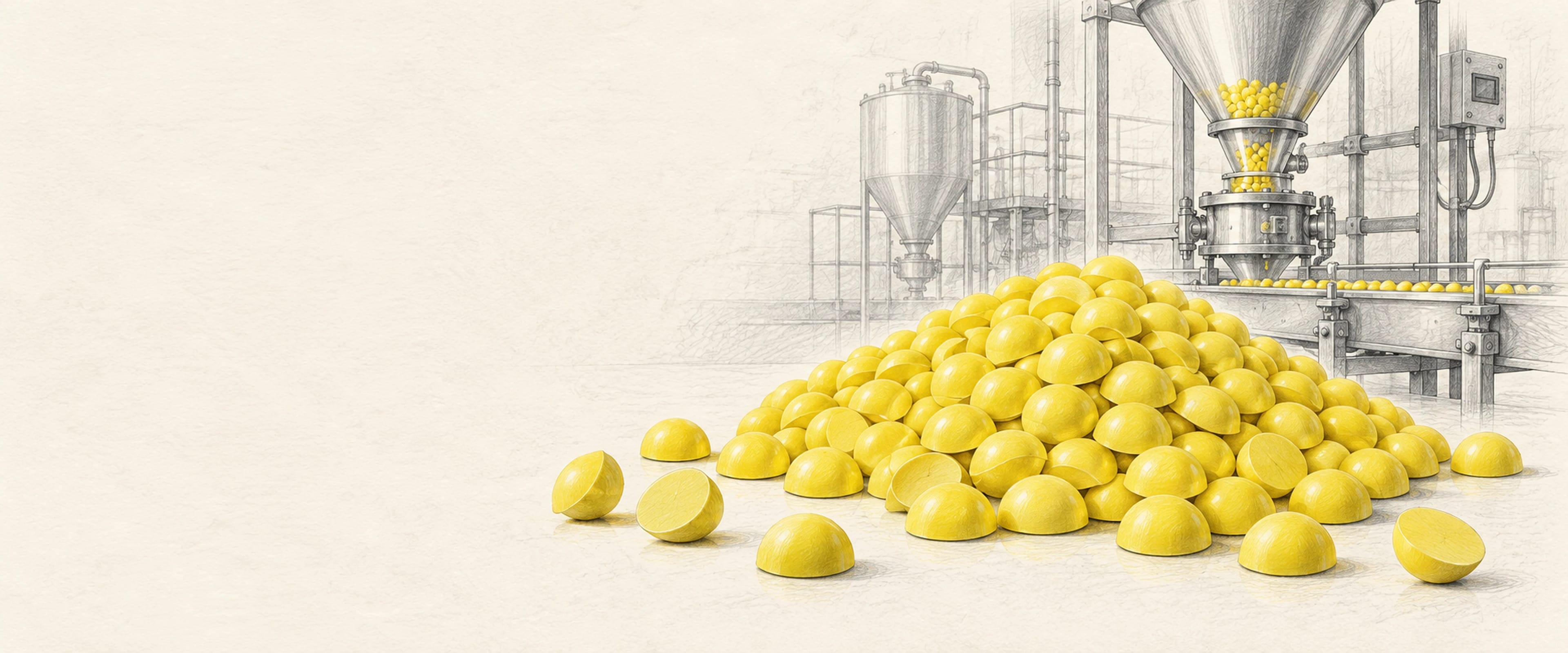
    Five forms, one contact

    Granular, lump, prilled, pastillated or powder through one commercial relationship.

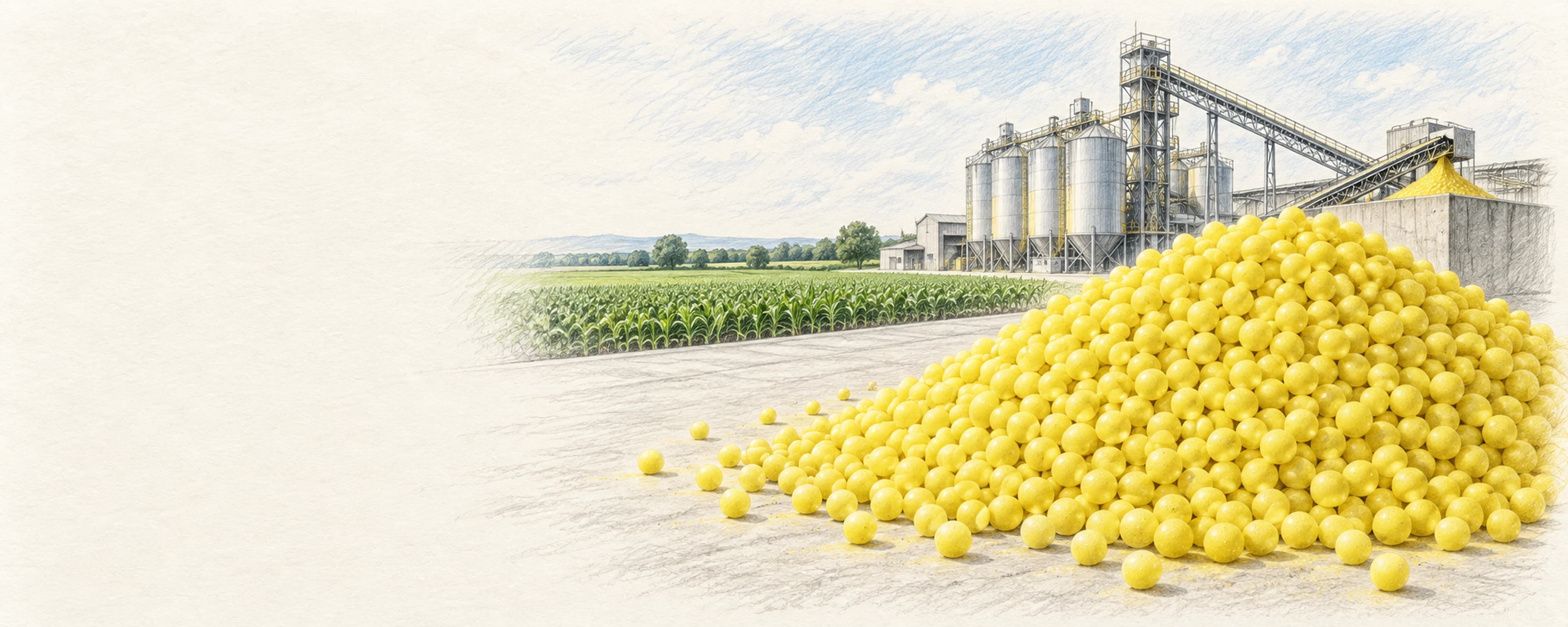
  • Pencil sketch of prilled sulphur

    Every batch verified

    Sulphur content, ash, moisture and acidity are checked against the ordered specification and reported on a Certificate of Analysis.

  • Pencil drawing of sulphur in jumbo bags on pallets

    Jumbo bag to bulk vessel

    Containerised FIBC bags or bulk cargo, planned around your receiving facilities and volume.

02 / THE MATERIAL

What is
sulphur?

IN SHORT

Sulphur is a naturally occurring non-metallic element, atomic number 16, and an essential component of living cells. Its native form is a bright yellow crystalline solid.

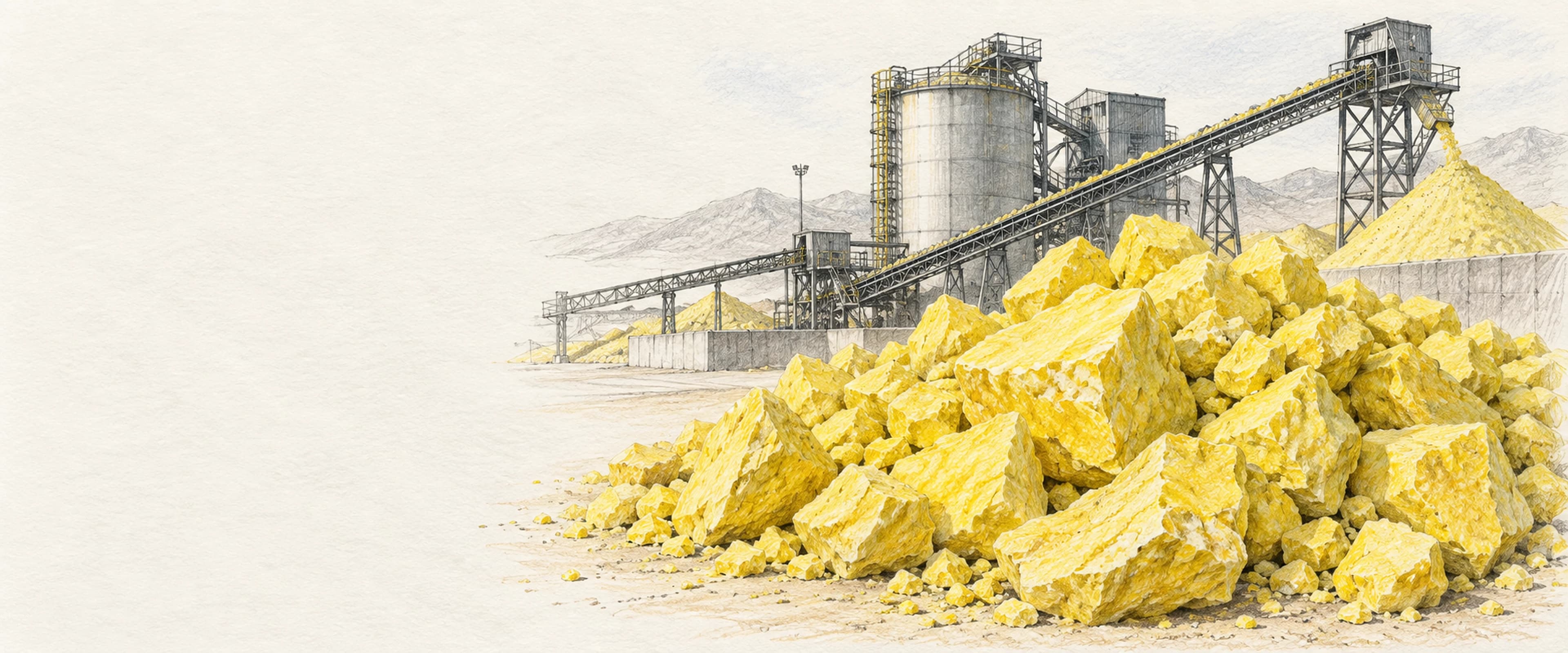
Pencil sketch comparing oil and gas sulphur recovery with metal smelting
Element
S, atomic number 16
Typical purity
99.5% S minimum
Source
Oil and gas recovery
Main uses
Sulphuric acid, fertilizer, chemicals
03 / READING THE GRADES

Reading
the forms.

The forms are the same element. Choose by how you handle and process it.

  1. 01

    Size and shape

    Granular and prilled are uniform particles, pastilles are precisely formed, lump is irregular and powder is finely ground.

  2. 02

    Dust and handling

    Larger, harder particles produce less dust. Fine powder needs dust and ignition controls.

  3. 03

    Reaction rate

    Smaller particles dissolve and react faster, which matters for agriculture and fast chemical processes.

04 / STRENGTHS & LIMITS

What the form
does and does not tell you.

What it tells you

  • Shows the particle size, shape and typical handling behaviour
  • Lets you compare forms on the same basis
  • Points to the process each form suits best

What it does not tell you

  • Change the purity, which is similar across forms
  • Confirm the specification of the offered batch
  • Confirm current stock, origin or price
05 / FULL COMPARISON

Catalogue
specifications.

All five are elemental sulphur at broadly similar purity. Open a form page for its full specification.

Technical data sheet · Typical values

Sulphur granular

NUR-SU-01Elemental sulphur · S
Sulphur content
99.5% min
Particle size
2.4 to 4.4 mm
Dust
Low
Typical cost
Moderate
Best for
International trade, sulphuric acid

Typical catalogue values. The Certificate of Analysis for the offered batch is the controlling document.

Issued for every batchRequest the Certificate of Analysis
06 / SELECTION

Choosing the right form
for your process.

Start with the handling need, then confirm the specification.

  1. 01
    Requirement

    International shipping, low dust

    Granular or Pastillated

    Hard, uniform particles that handle well in bulk and bags.

  2. 02
    Requirement

    On-site crushing, lowest form cost

    Lump

    Irregular pieces for facilities with their own processing.

  3. 03
    Requirement

    Fertilizer manufacturing

    Prilled

    Uniform spherical pellets with low dust.

  4. 04
    Requirement

    Precise dosing

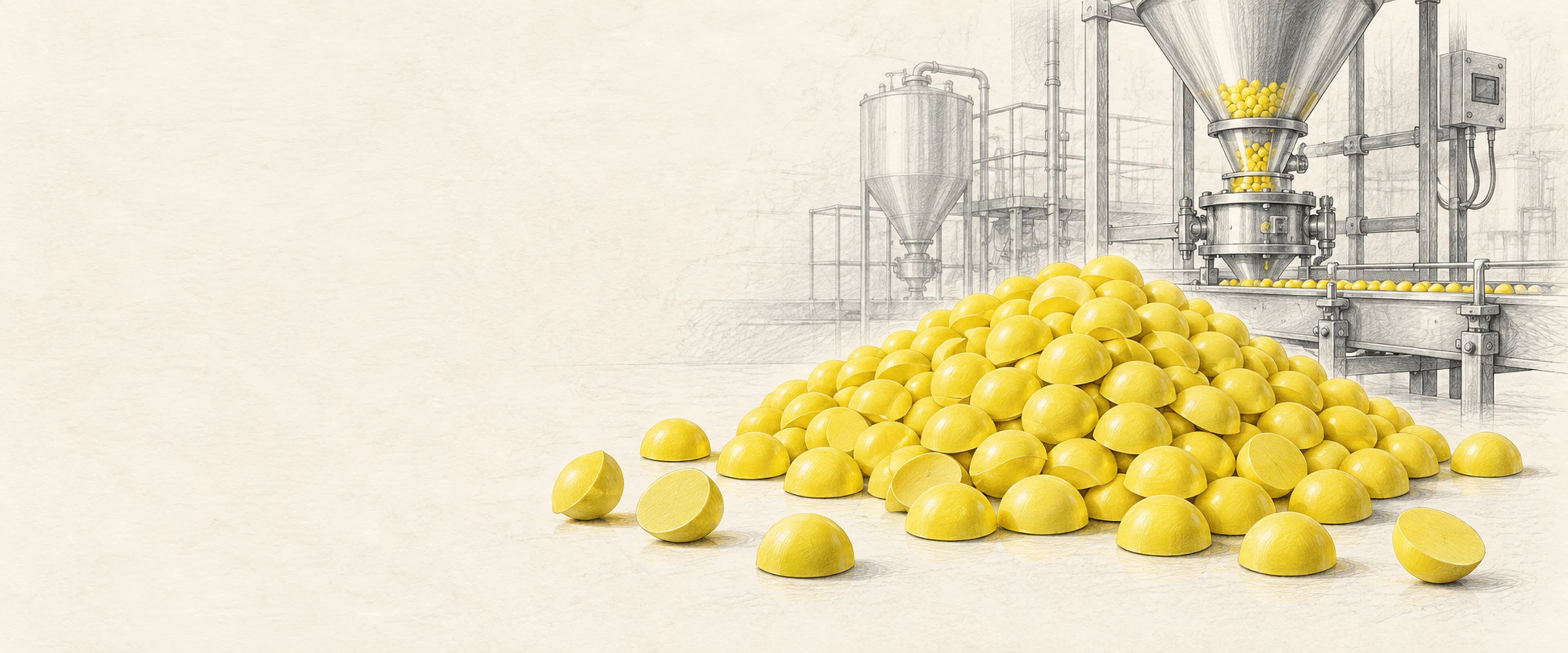
    Pastillated

    Very consistent geometry for dosing systems.

  5. 05
    Requirement

    Agriculture or fast reaction

    Powder

    Fine particles react quickly; use dust controls.

Open a product page.

07 / APPLICATIONS

Made for the work
your operation does.

Match the product to the crop, equipment or process and confirm the specification before you order.

Pencil drawing of a sulphuric acid plant fed with sulphur01

Sulphuric acid production

The largest use of sulphur. Granular and lump forms are melted and burned to make sulphur dioxide.

Fertilizer manufacturing02

Fertilizer manufacturing

Prilled and granular sulphur feed fertilizer plants and sulphur-enriched products.

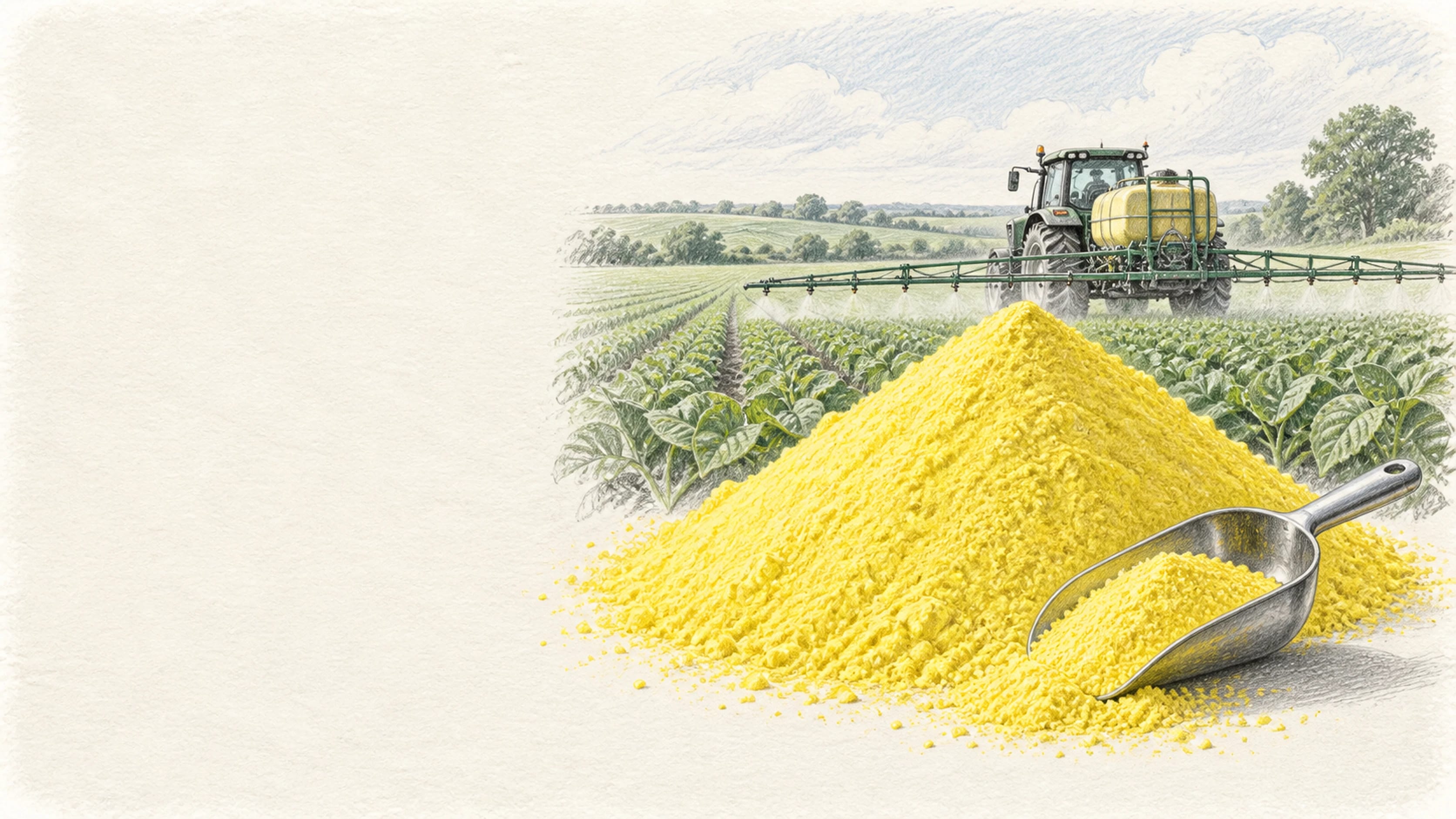
Pencil drawing of sulphur fertilizer being spread over a field03

Agriculture

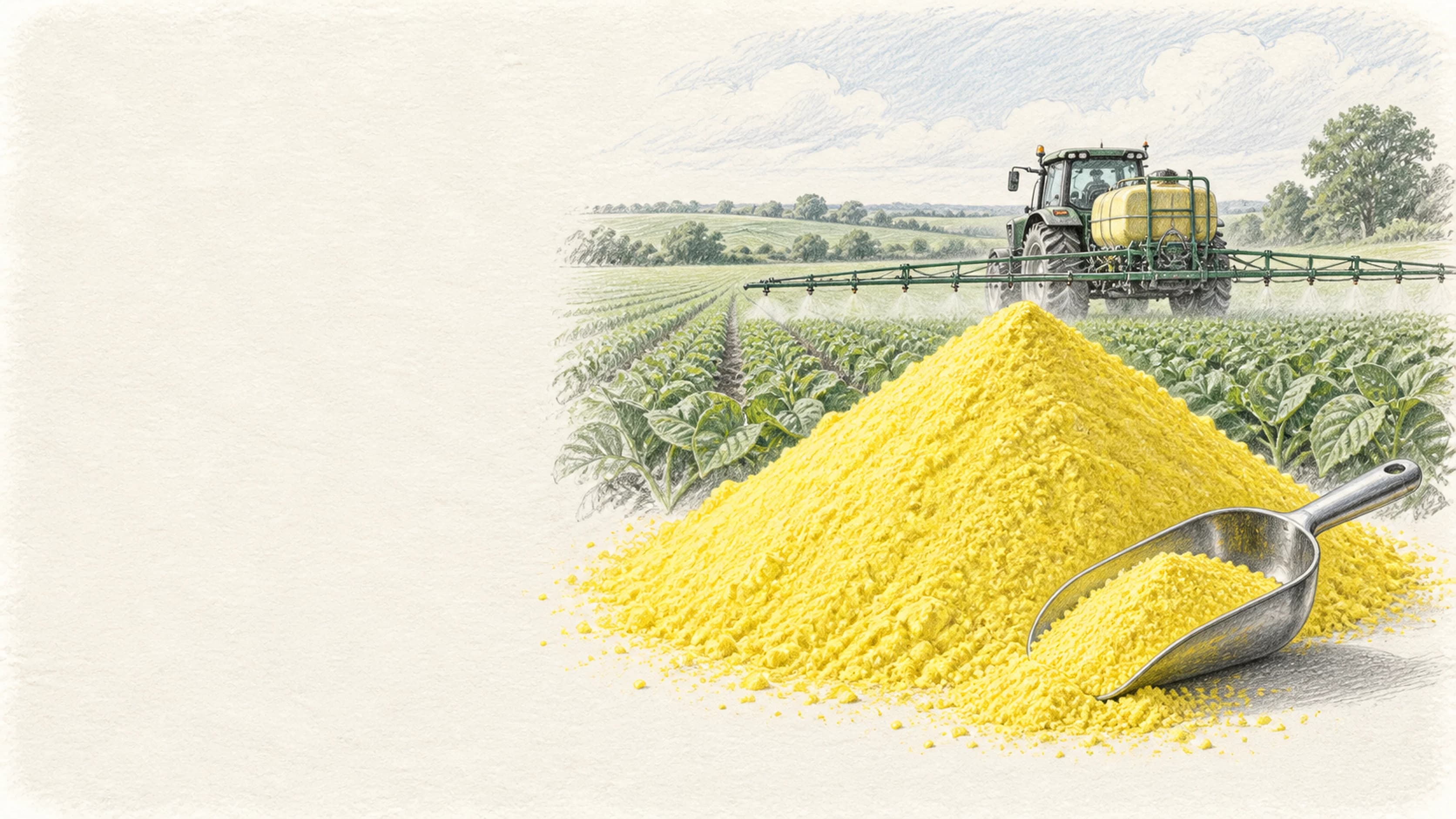
Fine powder is applied directly to correct sulphur deficiency and adjust soil conditions.

Pencil drawing of sulphur being added to a rubber mixing mill beside new tyres04

Chemicals and rubber

A raw material for carbon disulphide, rubber vulcanisation and other chemical processes.

08 / HOW IT IS MADE

From gas processing
to your site.

Sulphur is recovered at refineries and gas plants, formed, tested and shipped.

Sour gasCrudeH₂SFormed sulphur01Recovery02Forming03Testing04Delivery
  1. 01

    Recovery

    Hydrogen sulphide is removed from oil and gas streams and converted to liquid elemental sulphur.

  2. 02

    Forming

    The liquid is solidified as lump, granules, prills or pastilles, or ground to powder.

  3. 03

    Testing

    Each batch is tested for sulphur content, ash, moisture and acidity.

  4. 04

    Delivery

    Shipped in jumbo bags or bulk with a Certificate of Analysis.

09 / COMPATIBILITY & HANDLING

Plan dust control
and safe handling.

Solid sulphur is generally low risk, but fine dust needs care.

Warning
  • H315 Causes skin irritation.
  • Dust Fine dust can form an explosive cloud; keep it from ignition sources.
UN
1350 powder and lump
Formed shapes
Not regulated (SP 242)
  1. 01

    Control dust

    Fine sulphur dust can be combustible and can build static charge. Ventilate and control dust.

  2. 02

    Remove ignition sources

    Keep sparks, flames and hot surfaces away from storage and transfer.

  3. 03

    Keep it dry

    Store covered. Moisture lowers quality and can form acidity over time.

  4. 04

    Follow the SDS

    Read the safety data sheet for handling, spillage and protective equipment.

10 / REFERENCE METHODS

Documents and
reference.

Each shipment travels with the documents needed to verify and import it.

Trade and safety codes

For customs declarations, shipping documents and safety data sheets.

  • HS code2503.00Sulphur of all kinds
  • CAS number7704-34-9Sulphur
  • EC number231-722-6EU substance identity
  • UN numberUN 1350Class 4.1 · PG III; formed shapes exempt (SP 242)
01
Certificate of Analysis
Confirms sulphur content, ash, moisture and acidity of the shipped batch.
02
Certificate of Origin and SDS
Available on request with every order.
03
Destination requirements
Import and dangerous-goods rules vary by country; confirm them before ordering.
11 / PACKING & DELIVERY

Packing
formats.

Availability depends on the product, quantity and receiving facilities. Confirm the arrangement for your order.

  • 1,000kg
    01 / CONTAINERISED SHIPMENT

    Jumbo bags

    Dust- and moisture-resistant PP/PE FIBC bags for containerised ocean shipment.

    Discuss this format
  • 02 / VESSEL CARGO

    Bulk

    Bulk cargo loaded into the vessel hold. Confirm receiving and discharge facilities.

    Discuss this format
  • 25 kg
    03 / PLAN YOUR SHIPMENT

    Packing overview

    Share the form and quantity. Packing availability is confirmed for the selected form.

    Discuss this format
13 / PRICE ON THE DAY

Get today’s price.

Prices follow the market, so we quote each order on the day. Share your product, quantity and delivery point and we send a firm offer within 24 hours.

Request today’s price
14 / BUYING THIS RANGE

Frequently asked questions.

Product, documentation, delivery and terms for this range.

Question not listed?

Share your grade, destination and packing and we will answer with the offer.

Discuss your requirement ↗
01What is the difference between sulphur forms?
They are the same elemental sulphur at broadly similar purity. Particle size, shape and hardness affect dust, handling, dosing and reaction rate.
02Which form should I choose?
Granular for international trade, lump for low-cost on-site processing, prilled for fertilizer, pastillated for precision dosing and powder for agriculture or fast reaction.
03Where does sulphur come from?
Most elemental sulphur is recovered as a co-product of oil and gas processing.
04What documents come with a shipment?
A Certificate of Analysis. Certificate of Origin and Safety Data Sheet are available on request.
05What packing formats are available?
Dust- and moisture-resistant PP/PE jumbo bags and bulk supply, subject to form and shipment.
06Is sulphur dangerous to handle?
Bulk solid sulphur is generally lower risk, but fine dust can be combustible and build static charge. Control dust and ignition sources and follow the SDS.
07What Incoterms are available?
FOB, CFR and CIF offers can be prepared around origin, destination and volume.
THE SULPHUR RANGE

Choose a form

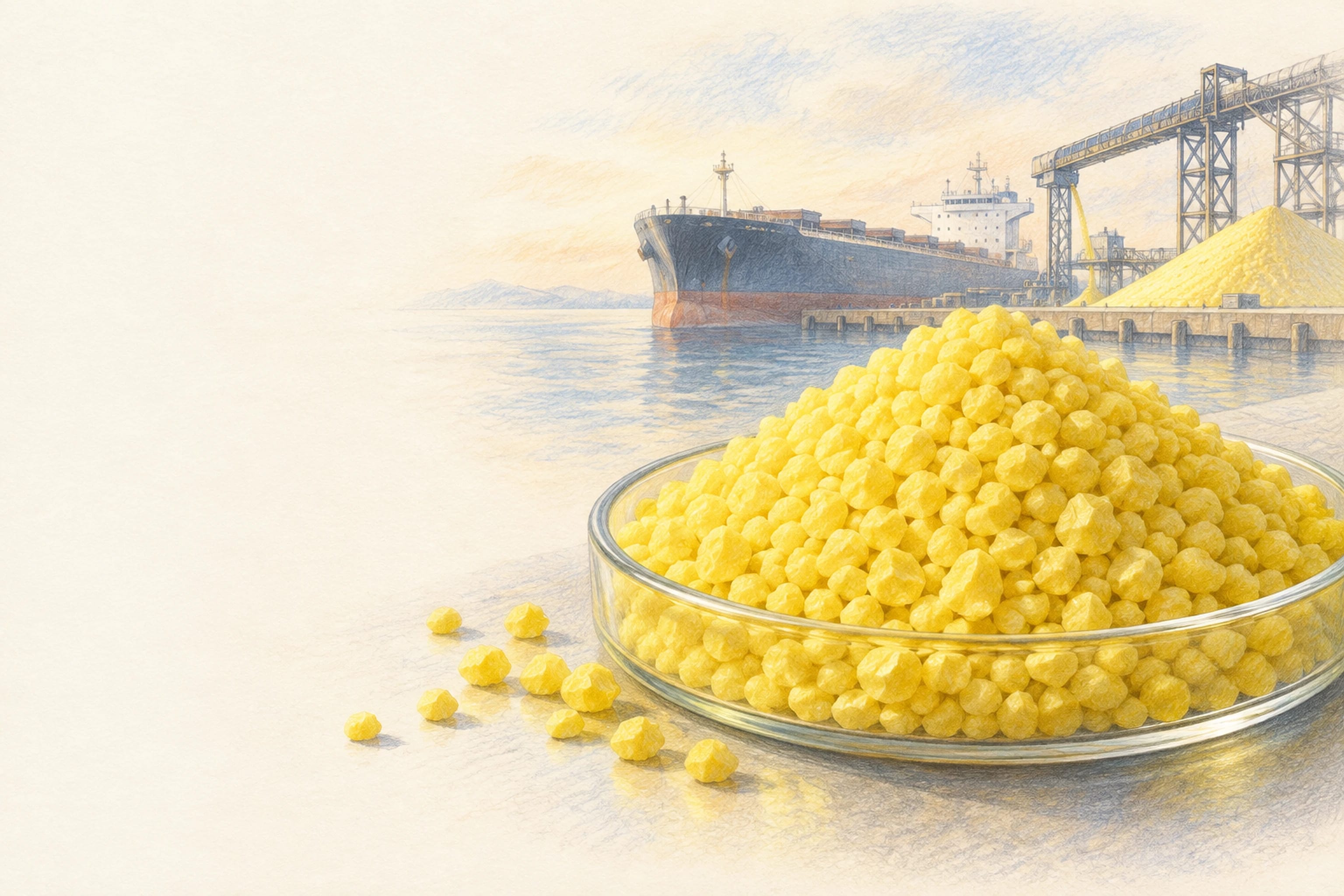
  1. Granular SulphurTrade standard, lower dust
  2. Sulphur LumpLowest-cost, on-site processing
  3. Prilled SulphurFertilizer-manufacturing standard
  4. Pastillated SulphurUniform pastilles, low dust
  5. Sulphur PowderFine powder for processing
FROM THE KNOWLEDGE CENTRE

Guides & articles

Written by our trade desk to help you specify, compare and buy with confidence.

All guides & articles
ArticleSulphur · 3 minWhy crops need sulphur and how it reaches the soil

Sulphur is a core crop nutrient. Learn what it does in plants, why deficiency is more common today and how elemental and sulphate…

Read
ArticleSulphur · 3 minSulphur for sulphuric acid production

How sulphur-burning acid plants turn elemental sulphur into sulphuric acid, and which sulphur quality parameters matter most to…

Read
ArticleSulphur · 3 minGranular sulphur in soil: why particle size controls the result

Why plain granular sulphur releases plant-available sulphate slowly, how soil conditions change the rate, and when it is the…

Read
GuideSulphur · 3 minSulphur purity and specification parameters explained

A reference to the parameters on a sulphur certificate of analysis: purity, ash, carbon, acidity, moisture and trace elements,…

Read
GuideSulphur · 3 minSafe storage of solid sulphur: dust and fire control

Practical guidance on storing solid sulphur safely: dust explosion risk, static, fire response, moisture and corrosion, for…

Read
GuideSulphur · 3 minShipping sulphur in bulk and bags

A guide to moving solid sulphur by sea: bulk cargo classes, hold preparation, moisture and corrosion control, bagged and…

Read
LET’S TALK ABOUT YOUR REQUIREMENTS

Your next shipment starts here.

Request a quote