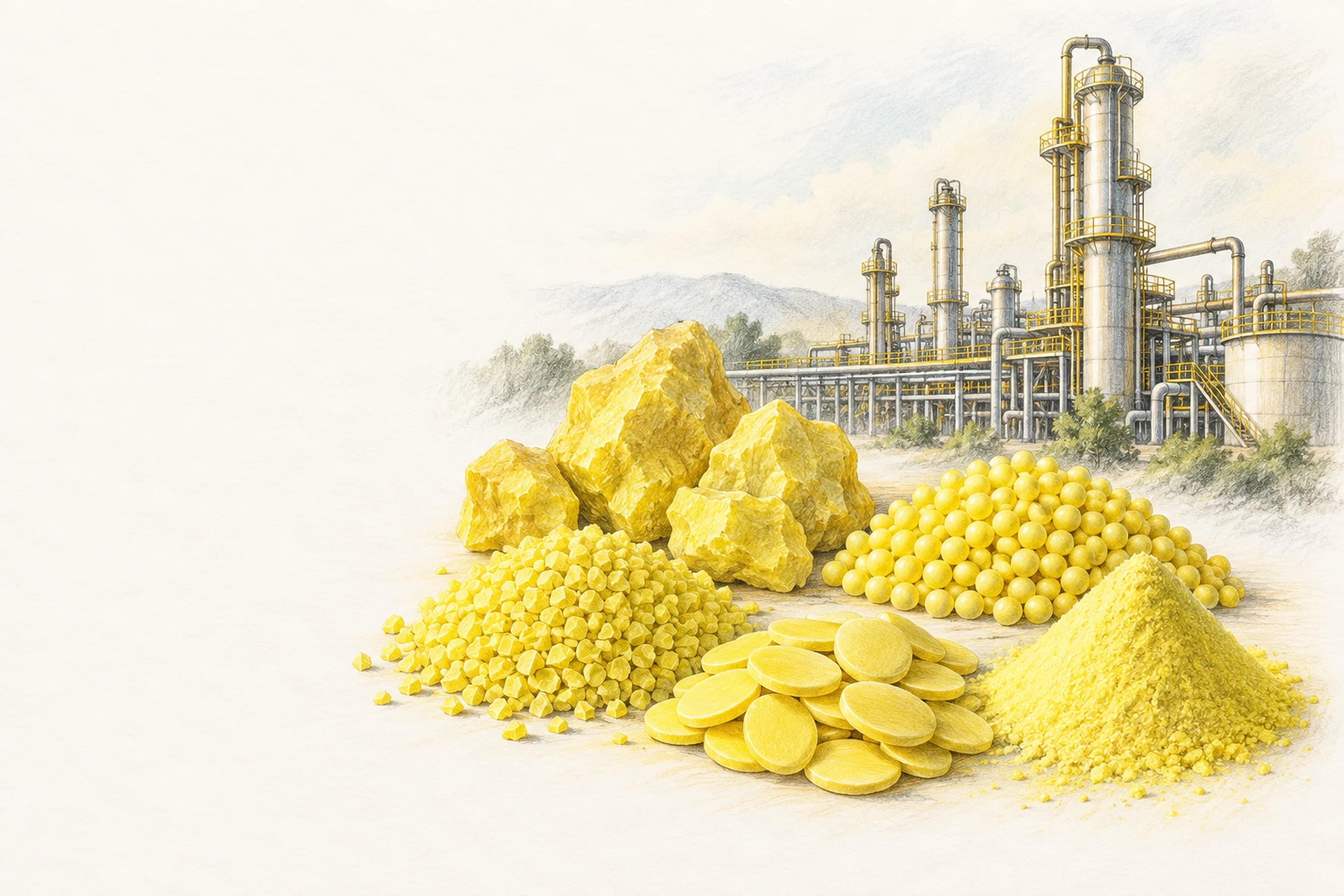
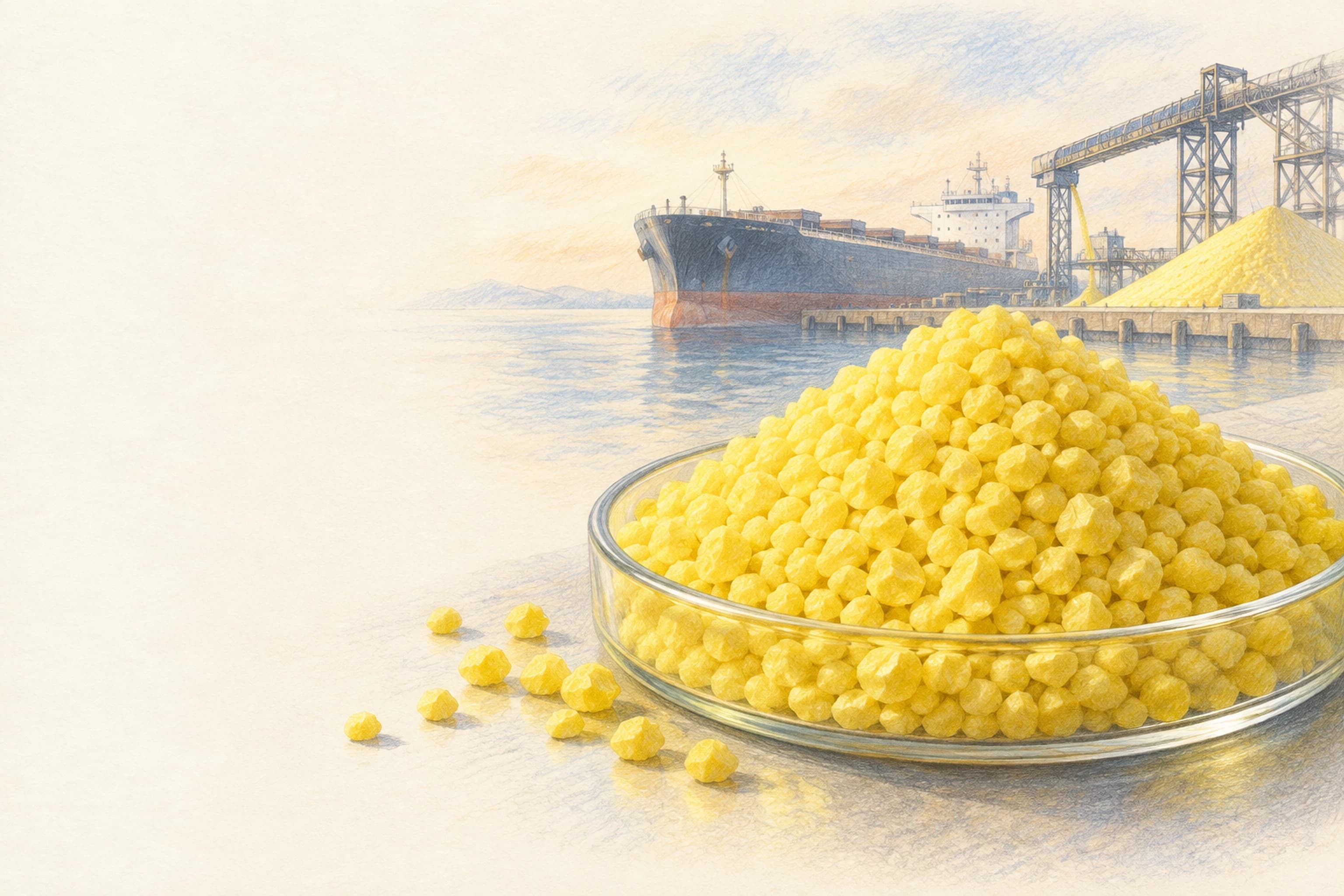
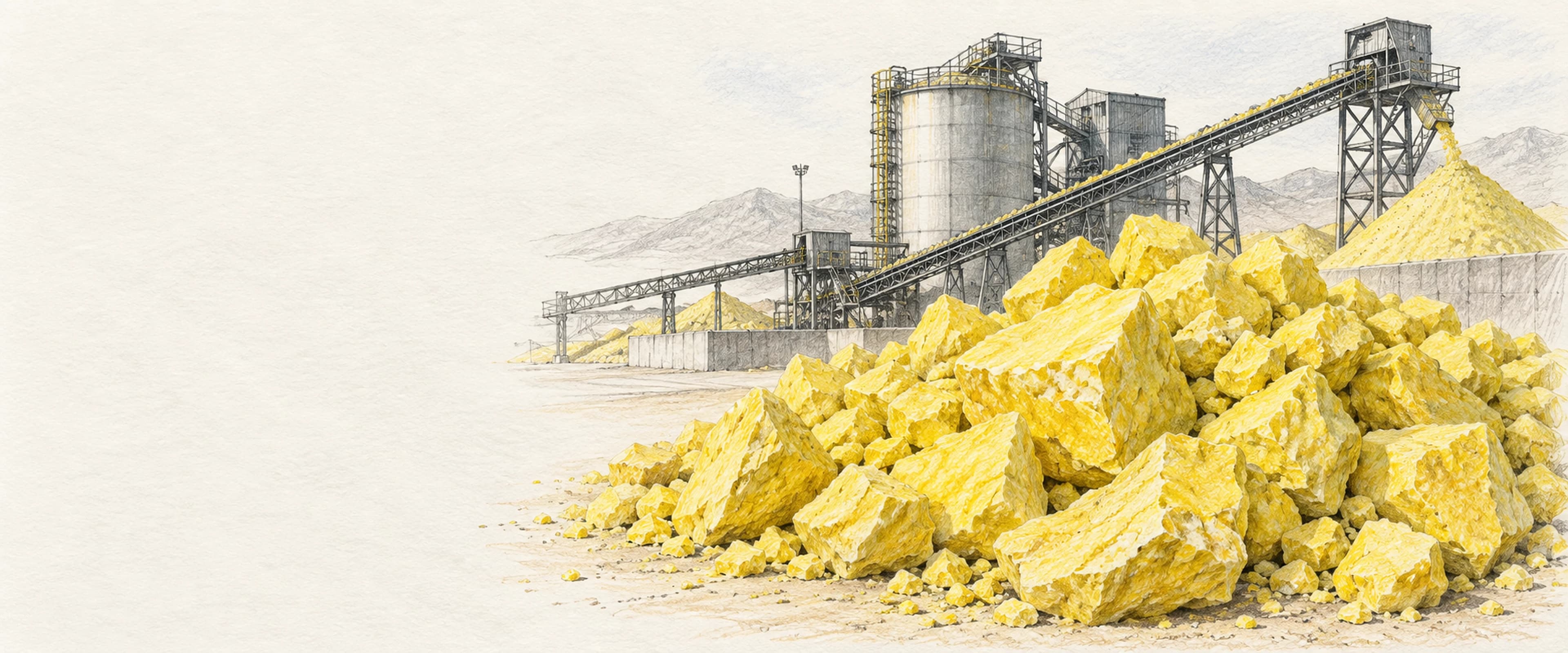
Solid sulphur moves around the world in large volumes, mostly in bulk carriers but also in bags and containers for smaller buyers. It is not a difficult cargo when handled properly, but it has three characteristics that shape every shipment: it can corrode steel when wet, it creates combustible dust, and it is flammable. This guide covers the practical points for buyers arranging bulk or bagged supply.
How sulphur is classified for sea transport
The international code for solid bulk cargoes treats the two main physical types differently.
- Formed sulphur (granules, prills, pastilles and similar shapes) is listed as a Group C cargo, meaning it is not considered to liquefy or to carry a chemical hazard requiring dangerous goods treatment in bulk. It is dense, with a bulk density of roughly 900 to 1,350 kg/m³.
- Crushed, lump and coarse-grained sulphur is listed as UN 1350, a Class 4.1 flammable solid and a Group B cargo, with specific requirements for hold cleanliness, dust and ignition control.
The seller must provide cargo information to the vessel before loading, and the master will check which schedule applies. Fine powder is generally not shipped loose in bulk; it travels in bags.
Moisture and corrosion
Dry sulphur does not attack bare steel. Wet sulphur does. Water in contact with sulphur and steel produces acidic and electrochemical corrosion, which can pit hold plating quickly. Marine surveyors have reported pitting several millimetres deep in unprotected steel within weeks, particularly on tank tops and where grabs have damaged coatings.
Water enters the cargo in several ways: rain at the stockpile, water spray used to suppress dust during loading, and condensation. During the voyage free water drains to the bottom of the holds and mixes with fines into an acidic sludge.
Hold preparation for bulk
- Holds should be thoroughly clean, dry and free from previous cargo residues, loose rust and scale.
- Where holds have been washed with seawater, a fresh water rinse is advisable, as chloride residues worsen corrosion.
- A protective coating, traditionally a lime wash or an equivalent block coating, is applied to separate sulphur from steel. Its protective life is limited, so it suits normal voyage times rather than long delays.
- Bilge wells should be clean and covered to keep fines out while still allowing drainage.
- Remove or protect ignition sources near the holds, and check that electrical fittings in cargo spaces are safe for dusty conditions.
Loading, voyage and discharge
- Limit drop heights and control dust at the loader, especially for lump sulphur.
- Keep accommodation and machinery spaces closed against dust during loading and discharge.
- Close hatches in rain; wet cargo means more corrosion and a higher moisture figure at discharge.
- Test hold atmospheres before entry. Sulphur cargoes can release hydrogen sulphide, and corrosion consumes oxygen, so holds should be treated as confined spaces.
- After discharge, remove residues and wash holds promptly with fresh water to stop ongoing corrosion.
Bags and containers
Smaller parcels and powder grades are commonly shipped in bags inside containers.
| Packing | Typical use | Points to check |
|---|---|---|
| Bulk vessel | Large formed or lump cargoes | Hold preparation, coating, sampling during loading |
| Jumbo bags (FIBCs) | Granular, pastilles, lump | UV-stabilised, lined if moisture-sensitive, antistatic type where required |
| Small woven or paper bags | Powder and retail-size pastilles | Inner liner, seal quality, palletisation |
| Containers | Bagged cargo | Dry, clean box; dunnage or liner; desiccants on long routes |
Bags should be stored and stuffed dry, on pallets where possible, because damp sulphur slowly forms acid that degrades woven bags. Containers should be inspected for holes and residues before stuffing. Check whether the form and packing require dangerous goods documentation under the sea transport rules for packaged goods; this depends on the product and should be confirmed with the shipping line.
Most sulphur shipping problems come from water. A dry stockpile, dry holds or containers and closed hatches in rain protect both the cargo and the ship.
Documents and terms to agree
For a bulk or bagged enquiry, state the form and quantity, packing type, load and discharge ports, and preferred Incoterm. Documents normally include the commercial invoice, bill of lading, certificate of analysis, safety data sheet and cargo information for the vessel, with certificates of origin and independent inspection where required. Nuroil supplies sulphur on FOB UAE ports, or CFR and CIF on request; you can send details through the quote request form or contact us to discuss packing options.