Solid sulphur is stable and not toxic in normal handling, but it is a flammable solid, and its dust ignites more easily than most combustible dusts. Most serious incidents in sulphur storage involve dust clouds, static electricity or fires that were tackled the wrong way. This guide sets out the main hazards and the controls that warehouses, stockyards and plants commonly apply. Always follow the safety data sheet (SDS) for the specific product and your local regulations.
Know the hazards
- Dust explosion. Sulphur dust clouds can ignite at around 190 °C and need only a small spark. Mixing sulphur with inert dust does not reliably raise this ignition temperature. In confined spaces the pressure wave from a dust explosion can cause severe damage, and dust shaken loose by a first explosion can feed a second, larger one.
- Static electricity. Moving sulphur particles become charged. A discharge within a dust cloud can be enough to ignite it.
- Fire. Sulphur burns with a pale blue flame that is hard to see in daylight, and it melts and flows as it burns. Burning sulphur produces sulphur dioxide, a toxic and irritating gas.
- Corrosion. Wet sulphur slowly forms weak acids that attack steel, concrete and packaging.
- Incompatibilities. Sulphur reacts violently with strong oxidisers such as chlorates and nitrates and must be kept well away from them.
Designing the store
- Store sulphur in a dry, well-ventilated area, on a clean, hard, drained base. Covered storage reduces moisture, acidity and ash pick-up.
- Use non-combustible construction. Doors and panels that vent easily in an explosion reduce structural damage.
- Keep sulphur away from oxidisers, fuels and other combustibles, and from heat sources and hot work.
- Choose electrical equipment rated for combustible dust areas, and earth and bond conveyors, hoppers, chutes and metal structures.
- Where sulphur contacts equipment, stainless steel, aluminium or suitable plastics resist corrosion better than mild steel.
- For bagged product, stack on pallets or skids, never directly on damp floors, and protect from rain and condensation.
Controlling dust
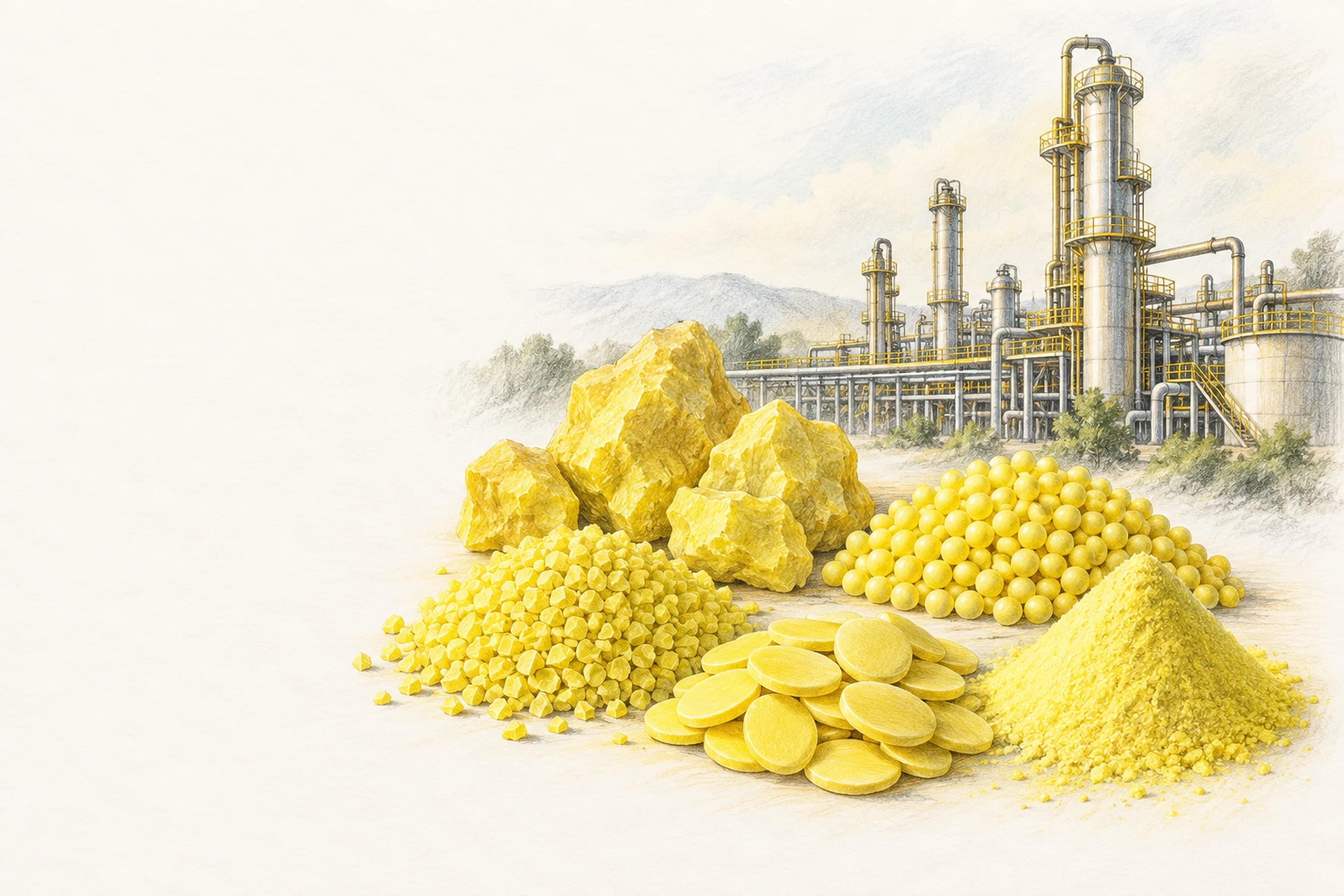
Dust is generated whenever sulphur is dropped, conveyed, crushed or reclaimed. Formed products such as granules and pastilles generate far less than lump or powder, but every transfer point is a source.
- Minimise drop heights and enclose transfer points.
- Use dust extraction designed for combustible dust where powder or lump is handled indoors.
- Clean up regularly so that dust does not settle on beams, ledges and equipment. Use vacuum systems suitable for combustible dust or wet methods, and never blow dust down with compressed air.
- Use non-sparking tools and wet down large spills before cleaning.
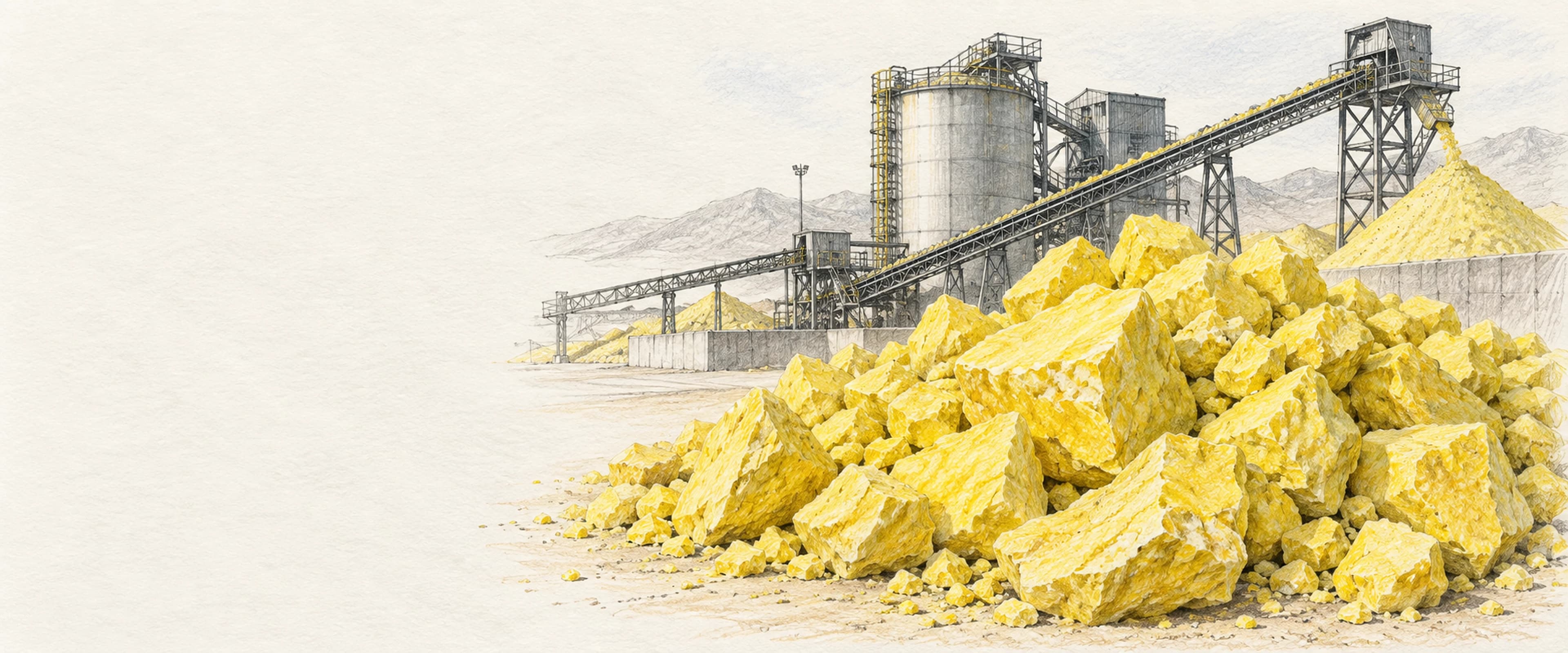
- Control vehicle movements on stockpiles, since tyres crush formed sulphur into fines.
Fire response basics
Fire plans should be agreed with the site safety team and local fire service, but common principles include:
- Use a fine water spray or fog to cool and extinguish burning sulphur. Avoid high-pressure jets, which can scatter burning material and raise dust clouds, and can cause steam bursts with molten sulphur.
- Small fires on a stockpile can often be smothered by covering with more sulphur, sand or earth.
- For enclosed tanks or bins, shutting off air can extinguish a fire.
- Responders should wear self-contained breathing apparatus because of sulphur dioxide. Keep people upwind.
- After a fire, check for smouldering pockets; sulphur can re-ignite.
Health and personal protection
Sulphur dust can irritate eyes, skin and the respiratory tract. Typical protection includes safety glasses or goggles, gloves, work clothing that sheds dust and, in dusty operations, a suitable particulate respirator. Some sulphur, particularly material recently produced from sour gas or stored molten, can release hydrogen sulphide, which is highly toxic. Enclosed spaces such as bins, tanks and ship holds should be tested before entry and treated as confined spaces.
Keep it dry, keep it clean, keep it earthed and keep dust off surfaces. Those four habits prevent most sulphur storage incidents.
Inspection checklist
| Area | What to check | Frequency |
|---|---|---|
| Housekeeping | Dust on ledges, beams, equipment | Every shift |
| Earthing | Bonding straps, continuity of conveyors and chutes | Periodic, per site rules |
| Storage condition | Roof leaks, standing water, damaged bags | Daily |
| Segregation | No oxidisers or fuels near sulphur | Weekly |
| Fire equipment | Fog nozzles, hoses, breathing apparatus | Monthly |
Supply considerations
Choosing a low-dust form reduces risk from the outset. Where your process allows, consider granular or pastillated sulphur rather than lump, and buy powder in sealed bags sized for your handling. Ask your supplier for the current SDS with every order and confirm packing details in advance. Nuroil provides the SDS on request and a CoA with each delivery.