The group 6A elements are listed in the Table on the side here. This goup of elements are intimately related to our lives. We need oxygen all the time through out our lives. Did you know that sulfur is also one of the essential elements of life. It is responsible for some of the protein structures in all living organisms. Many industries utilize sulfur, but emission of sulfur compounds is often seen more as a problem than the natural phenomenon. The matallic properties increase as the atomic number increases. The element polonium has no stable isotopes, and the isotope with mass number 209 has the longest half life of 103 years.
Properties of oxygen are very different from other elements of the group, but they all have 2 electons in the outer s orbital, and 4 electrons in the p orbitals, usually written as s2p4
The trends of their properties in this group are interesting. Knowing the trend allows us to predict their reactions with other elements. Most trends are true for all groups of elements, and the group trends are due mostly to the size of the atoms and number of electrons per atom.
How the group 6A elements compare
The trends are described below:
- The metallic properties increase in the order oxygen, sulfur, selenium, tellurium, or polonium. Polonium is essentially a metal. It was discovered by M. Curie, who name it after her native country Poland.
- Electronegativity, ionization energy (or ionization potential IP), and electron affinity decrease for the group as atomic weight increases.
- The atomic radii and melting point increase.
- Oxygen differs from sulfur in chemical properties due to its small size. The differences between O and S are more than the differences between other members.
Properties of sulphur
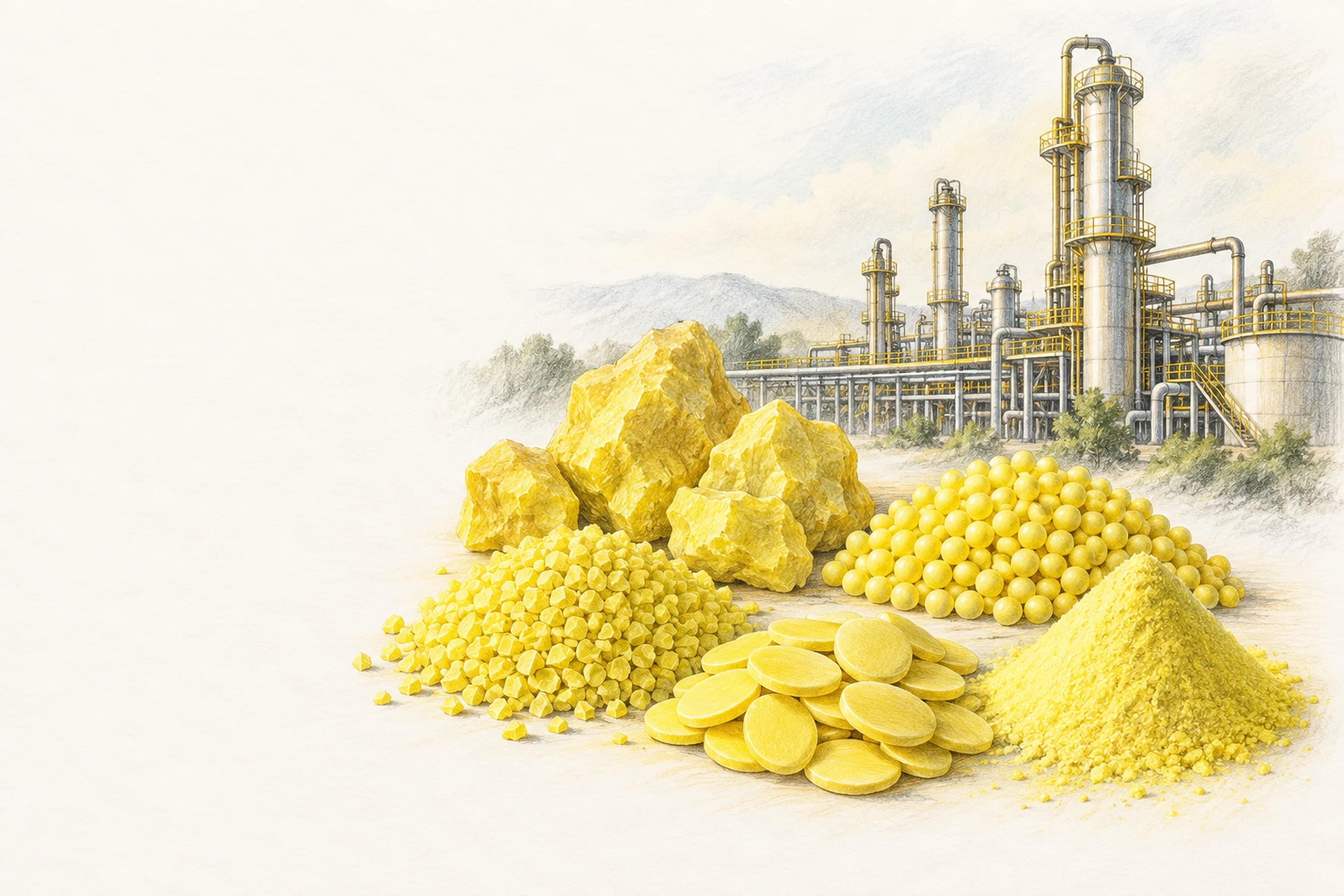
Sulphur is a pale yellow, odourless, brittle solid, which is insoluble in water but soluble in carbon disulphide. Sulphur is essential to life. It is a minor constituent of fats, body fluids, and skeletal minerals.
Sulphur through history
In 1839, Charles Goodyear accidentally dropped a mixture of rubber and Sulphur into a fire. Goodyear called his rubber materials "vulcanized" after Vulcan the Roman god of fire.
In the 1800s, mothers in Britain often gave their children a spoonful of Sulphur and molasses as a spring tonic. Today, Sulfa drugs fight the bacteria that cause meningitis. Sulphur ointments treat skin infections.
Sulphur dates back thousands of years. Ancient Egyptians made paints with it and bleached their linens with it (as SO2). Early Chinese first used it to make gunpowder. Ancient Greeks used it as a disinfectant and medicine.
What sulphur is used for
Most of the sulfur that is produced is used in the manufacture of sulfuric acid (H2SO4). Large amounts of sulfuric acid, nearly 40 million tons, are used each year to make fertilizers, lead-acid batteries, and in many industrial processes. Smaller amounts of sulfur are used to vulcanize natural rubbers, as an insecticide (the Greek poet Homer mentioned "pest-averting sulphur" nearly 2,800 years ago!), in the manufacture of gun powder and as a dying agent.
In addition to sulfuric acid, sulfur forms other interesting compounds. Hydrogen sulfide (H2S) is a gas that smells like rotten eggs. Sulfur dioxide (SO2), formed by burning sulfur in air, is used as a bleaching agent, solvent, disinfectant and as a refrigerant. When combined with water (H2O), sulfur dioxide forms sulfurous acid (H2SO3), a weak acid that is a major component of acid rain.
The element Sulphur is a non-metal and will not dissolve in water. The pure element Sulphur has very little smell. The smell you might associate with Sulphur bad eggs is actually a compound of Sulphur, the gas known as hydrogen sulphide. Sulphur compounds are also responsible for the smell in garlic, mustard, onions and cabbage. A Sulphur compound even gives skunks their ferociously powerful and long-lasting smell. Indeed, Sulphur is a part of all living tissues. Sulphur is fixed into proteins in plants, and acquired by animals who eat the plant materials.