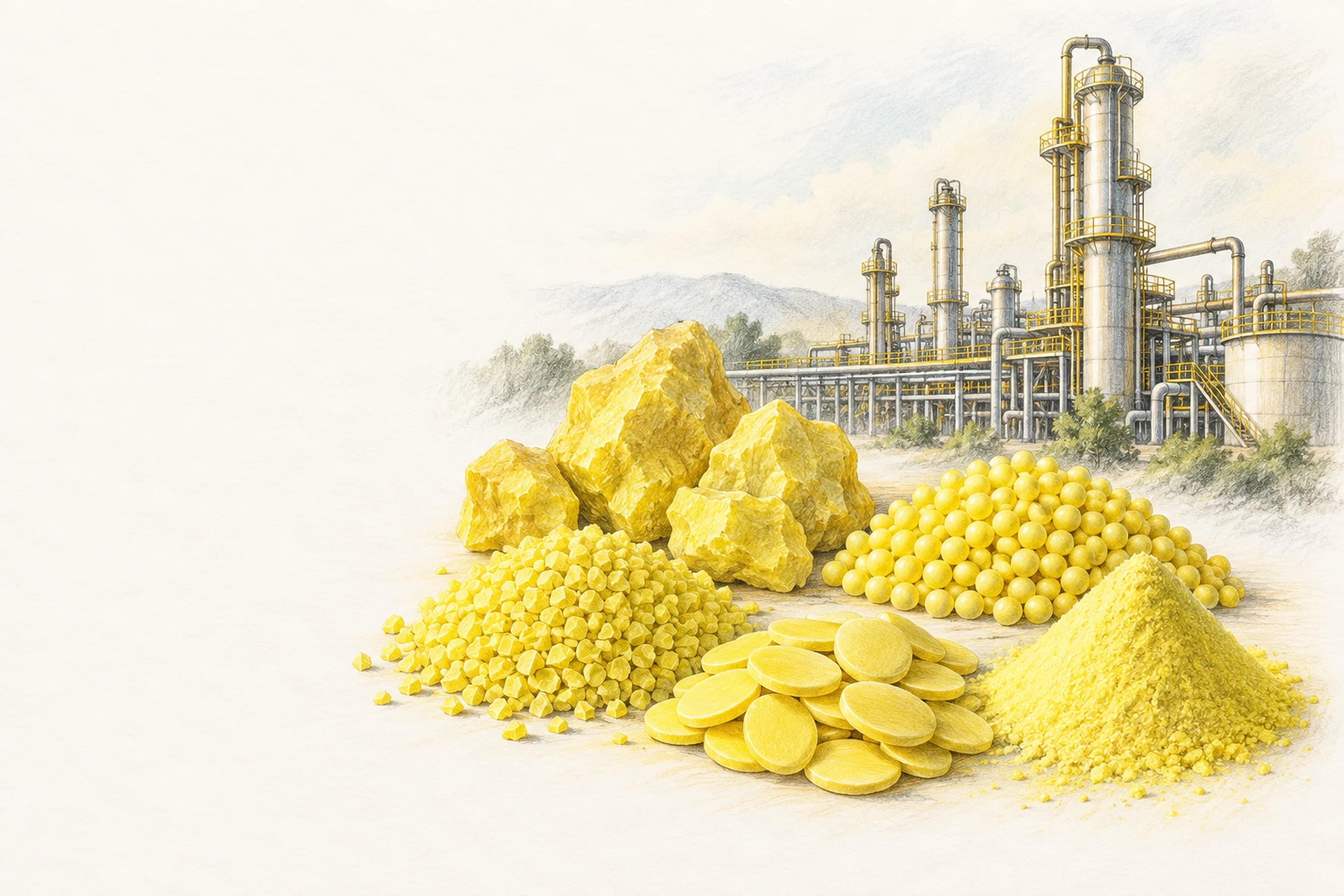
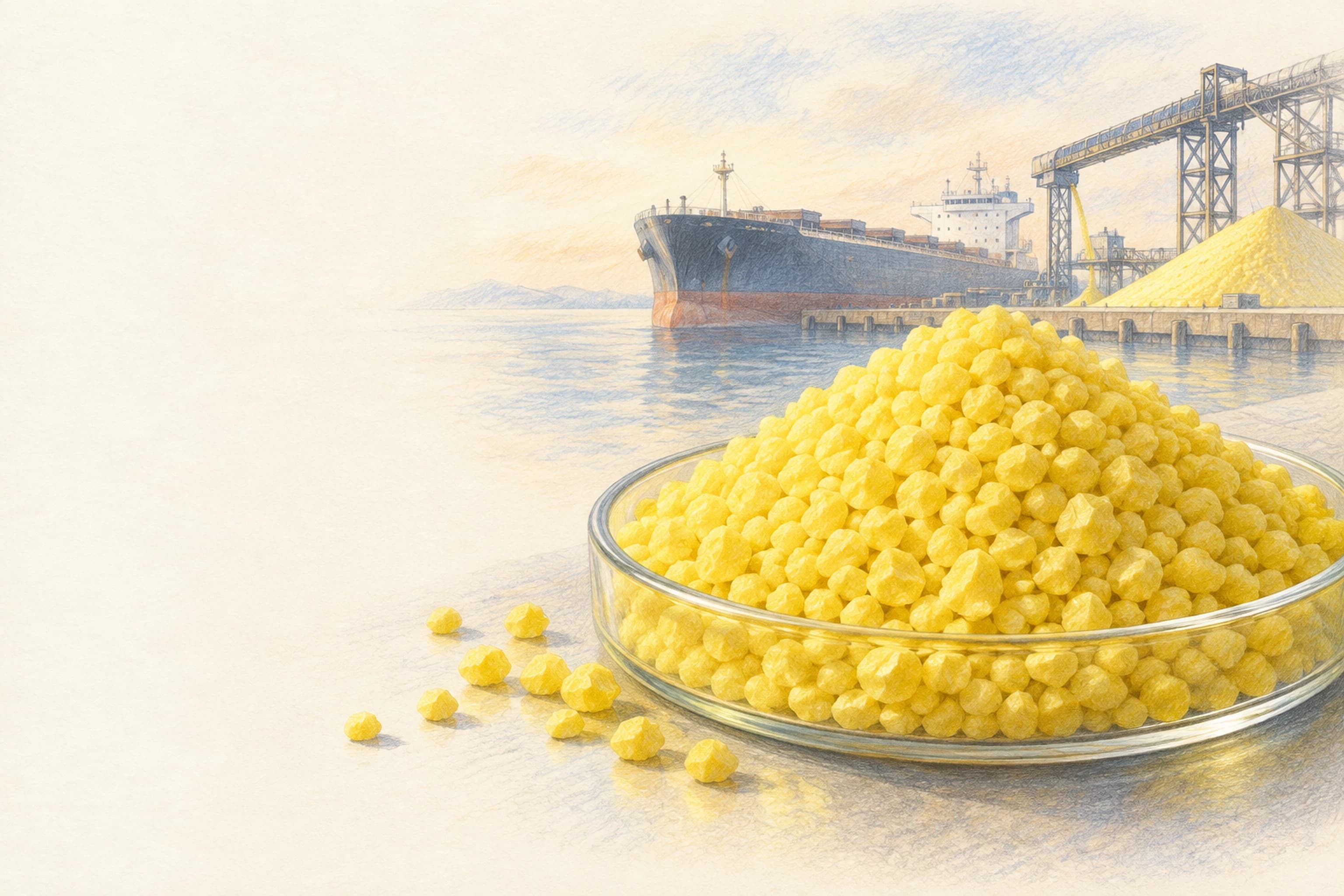
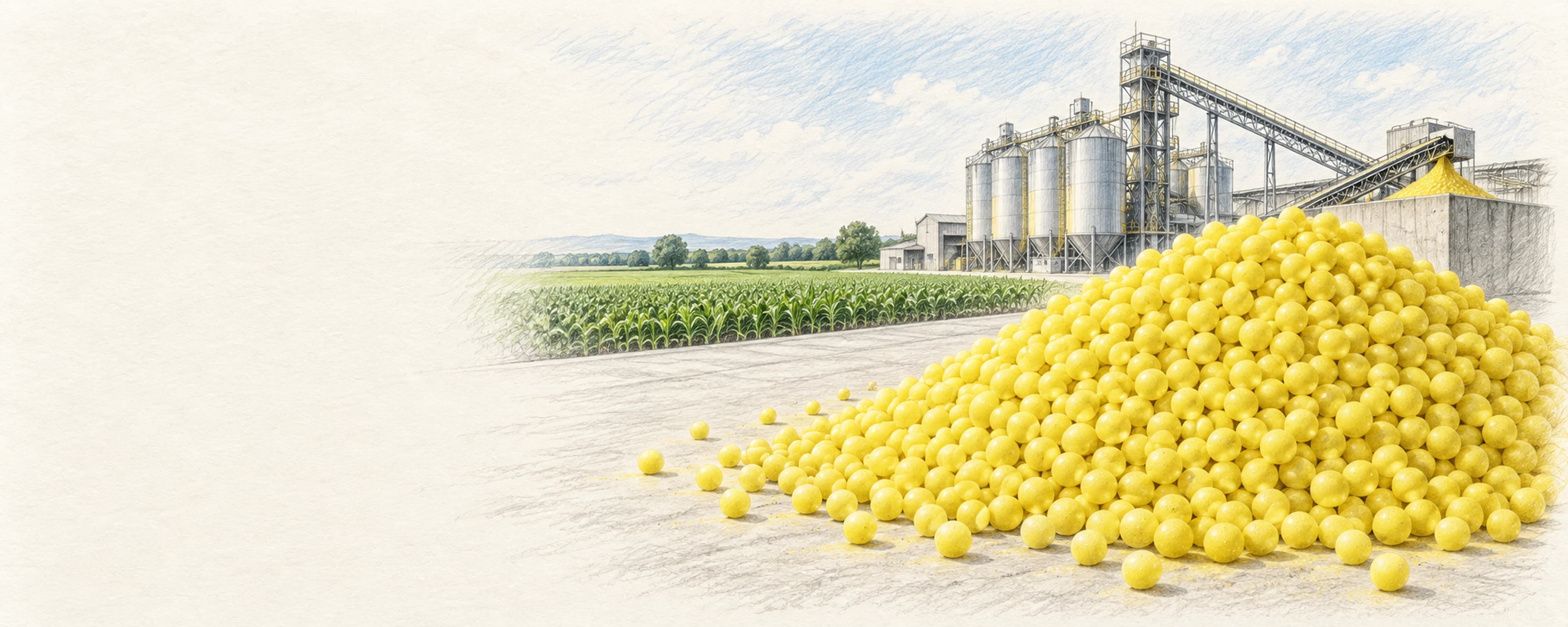
The largest single use of elemental sulphur is the manufacture of sulphuric acid, which in turn feeds phosphate fertilizers, metal leaching, chemicals and many other industries. For an acid plant, sulphur is the main raw material and its quality directly affects uptime, catalyst life and acid quality. This article explains the process in outline and what an acid producer should look for when buying sulphur.
The contact process in brief
- Melting and filtering. Solid sulphur is melted in steam-heated pits or tanks and kept liquid in heated storage. The molten sulphur is filtered to remove ash and other solids.
- Burning. The clean liquid sulphur is sprayed into a furnace with dried air and burns to form sulphur dioxide. The air is dried beforehand by contact with strong sulphuric acid, because moisture in the gas causes corrosion and acid mist further downstream.
- Heat recovery. Burning sulphur releases a great deal of heat, which is recovered in a waste heat boiler to raise steam. Many acid plants are significant steam and power producers for their site.
- Conversion. The cooled gas passes through several beds of vanadium-based catalyst, where sulphur dioxide is oxidised to sulphur trioxide. The reaction releases heat and is reversible, so the gas is cooled between beds to keep it in the effective temperature window, roughly 400 to 600 °C.
- Absorption. Sulphur trioxide is absorbed into circulating strong sulphuric acid rather than water, since direct contact with water forms a persistent mist. Water is added to the circulating acid to hold its strength, and product acid is drawn off.
Modern plants commonly use double contact, double absorption: gas is passed through an intermediate absorption tower part-way through conversion, which pushes the remaining sulphur dioxide to react in the later catalyst beds. Overall conversion of around 99.7% is achievable, compared with roughly 97–98% for older single absorption designs, which helps plants meet emission limits.
Why sulphur quality matters
Impurities in sulphur do not disappear in the furnace. They either stay in the melter and filters, pass through as dust onto the catalyst, or end up in the acid. The main concerns are:
- Ash. Inorganic solids such as sand, rust and salts. Ash loads the sulphur filters, can block burner nozzles and, if it gets through, deposits on the first catalyst bed, raising pressure drop and shortening the time between catalyst screenings.
- Carbon (hydrocarbons). Carbonaceous matter burns to carbon dioxide and water. The extra water in the gas can form acid mist and contribute to corrosion, and organic matter can darken the product acid.
- Acidity. Free acid in the sulphur, usually from moisture reacting with sulphur during storage, attacks steel in melters, tanks and pipework.
- Moisture. Water adds to acidity, foams in the melter and consumes heat. Wet sulphur needs more careful melting.
- Arsenic, selenium and tellurium. These can carry into the acid and matter for food-grade, fertilizer or high-purity acid customers. Refinery and gas-plant sulphur is usually very low in these elements.
Which form suits an acid plant
Many large plants receive sulphur as a liquid by pipeline, rail or ship. Where sulphur arrives as a solid, formed granular or prilled sulphur is preferred over lump. Formed sulphur flows well on conveyors and into melting pits, generates less dust and picks up less dirt in open storage. Every load of fines and contamination swept from a stockyard floor eventually appears as ash in the melter, so clean stockpile management at the receiving end is as important as the quality shipped.
For an acid producer, low ash and low carbon in the sulphur translate directly into longer runs between filter cleaning and catalyst screening.
Receiving and melting good practice
- Store solid sulphur on a clean, hard, drained surface, ideally covered, to limit contamination and moisture pick-up.
- Use reclaim equipment that does not scrape up the base of the stockpile.
- Control dust at conveyor transfer points and at the melter, and earth equipment to avoid static ignition.
- Monitor filter performance and ash in the filtered sulphur, and track it against supplier lots.
What to put in your enquiry
Specify purity on a dry basis, maximum ash, carbon, acidity and moisture, and limits for arsenic and selenium if your acid goes into sensitive applications. State the form (for example granular or prilled), annual and per-shipment volumes, discharge port and preferred Incoterm. Ask for a certificate of analysis per lot and, for bulk cargoes, independent sampling and inspection at loading. Nuroil provides a CoA with every delivery and can arrange third-party inspection on request; contact us through the quote request form.