Caustic soda is one of the most common alkalis in water and wastewater treatment. It is strong, highly soluble, easy to meter as a liquid and adds nothing to the water except sodium and hydroxide. This article explains where it is dosed and what operators need to watch.
Raising pH to control corrosion
Water that is slightly acidic or poorly buffered attacks pipes and fittings. Raising its pH makes it less aggressive and reduces how much lead, copper and other metals dissolve from plumbing into the supply. Drinking-water utilities therefore often dose caustic soda after treatment to bring finished water to a target pH set by their corrosion control programme.
The target is site specific. It depends on the water's alkalinity, hardness and the pipe materials in the network, and is normally confirmed by pilot testing and tap sampling rather than chosen from a table.
Restoring alkalinity after coagulation
Metal-salt coagulants such as aluminium sulphate and ferric chloride are acidic. As they form floc, they consume the water's natural alkalinity and pull pH down. In soft, low-alkalinity water this can push pH below the range where coagulation works well. Plants then add an alkali, commonly caustic soda, lime or soda ash, either before coagulation to support it or afterwards to correct the final pH. The dose is normally set by jar testing.
Caustic soda differs from soda ash in one useful respect: it raises pH and alkalinity without adding carbonate. That gives operators more direct control of pH but also means that in very poorly buffered water small changes in dose produce large pH swings, so good mixing and reliable metering matter.
Other uses around a treatment plant
- Ion exchange regeneration. Anion exchange resins in demineralisation plants are typically regenerated with a dilute sodium hydroxide solution, often in the region of 1 to 4% NaOH.
- Neutralising acidic effluent. Industrial wastewater from pickling, plating or chemical processes is brought back towards neutral before discharge or biological treatment.
- Cleaning. Hot caustic solutions are used to clean membranes, heat exchangers and tanks, within the limits set by equipment manufacturers.
Dosing and handling points
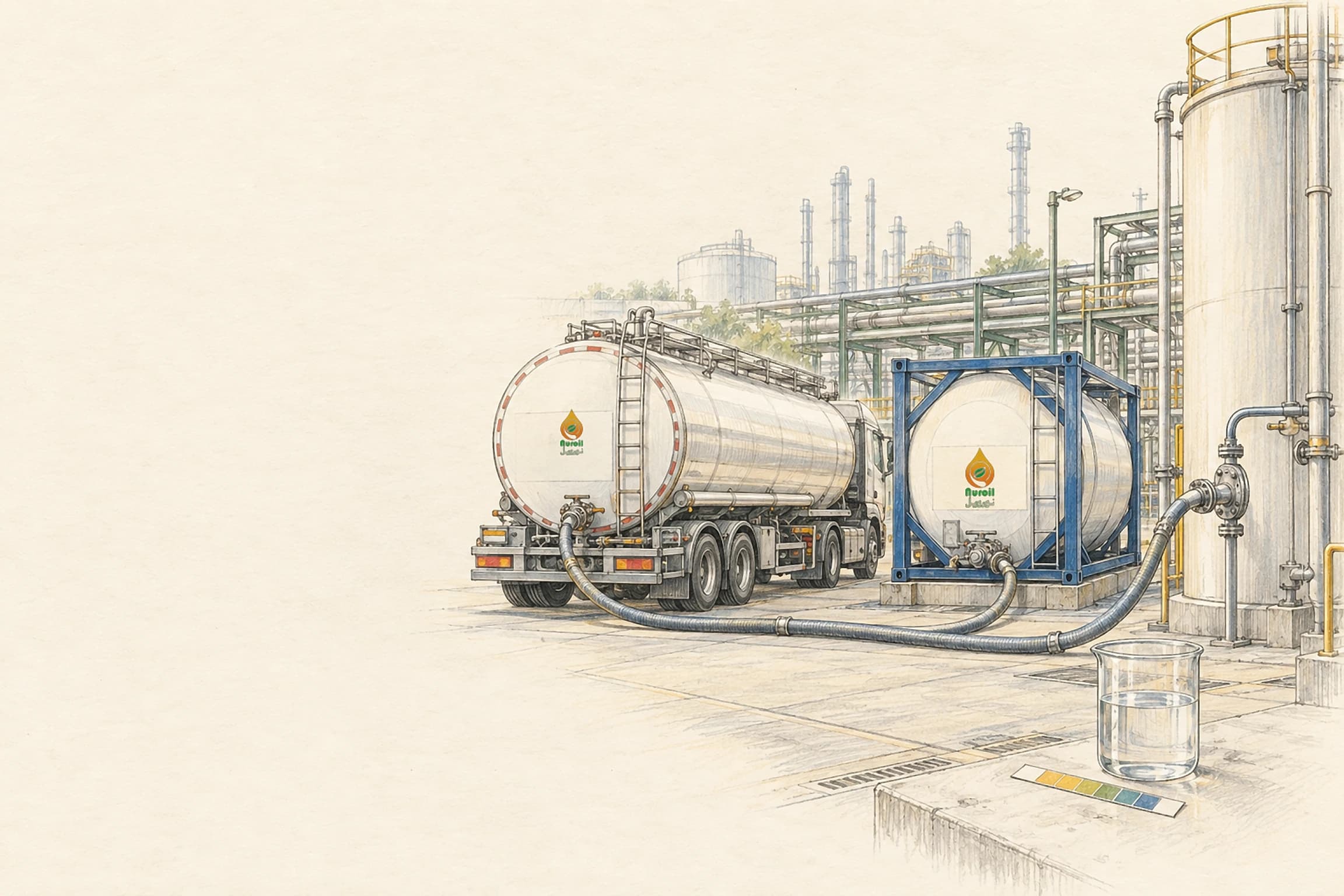
Most plants buy caustic as a 50% solution, or dilute it to a weaker strength on site. A few practical points recur:
- 50% caustic starts to crystallise at about 12 °C. In cooler locations tanks and lines need insulation and trace heating, or a lower-strength solution is stored instead.
- Solution is viscous at 50% and becomes thinner as it warms, which affects pump sizing.
- Storage tanks and pipework are usually carbon steel, stainless steel or suitable plastics. Aluminium, zinc, copper and their alloys such as brass are attacked and must not be used.
- When diluting, always add caustic to water slowly with mixing, never water to caustic, because the heat released can cause boiling and spattering.
Operators should have eyewash stations and safety showers at the dosing area and follow the product safety data sheet for protective equipment.
Grades for drinking water
Caustic used in water intended for human consumption is normally bought against a recognised product standard. In Europe this is EN 896, which sets purity requirements and limits for impurities that can arise from raw materials and manufacture. Elsewhere, buyers commonly cite the AWWA B501 standard together with NSF/ANSI 60 certification for drinking-water chemicals. For industrial wastewater neutralisation, a technical grade is often adequate.
Caustic soda gives clean, fast pH correction. The skill lies in matching the dose to the water's buffering and keeping the solution from freezing in the lines.
What to include in a supply enquiry
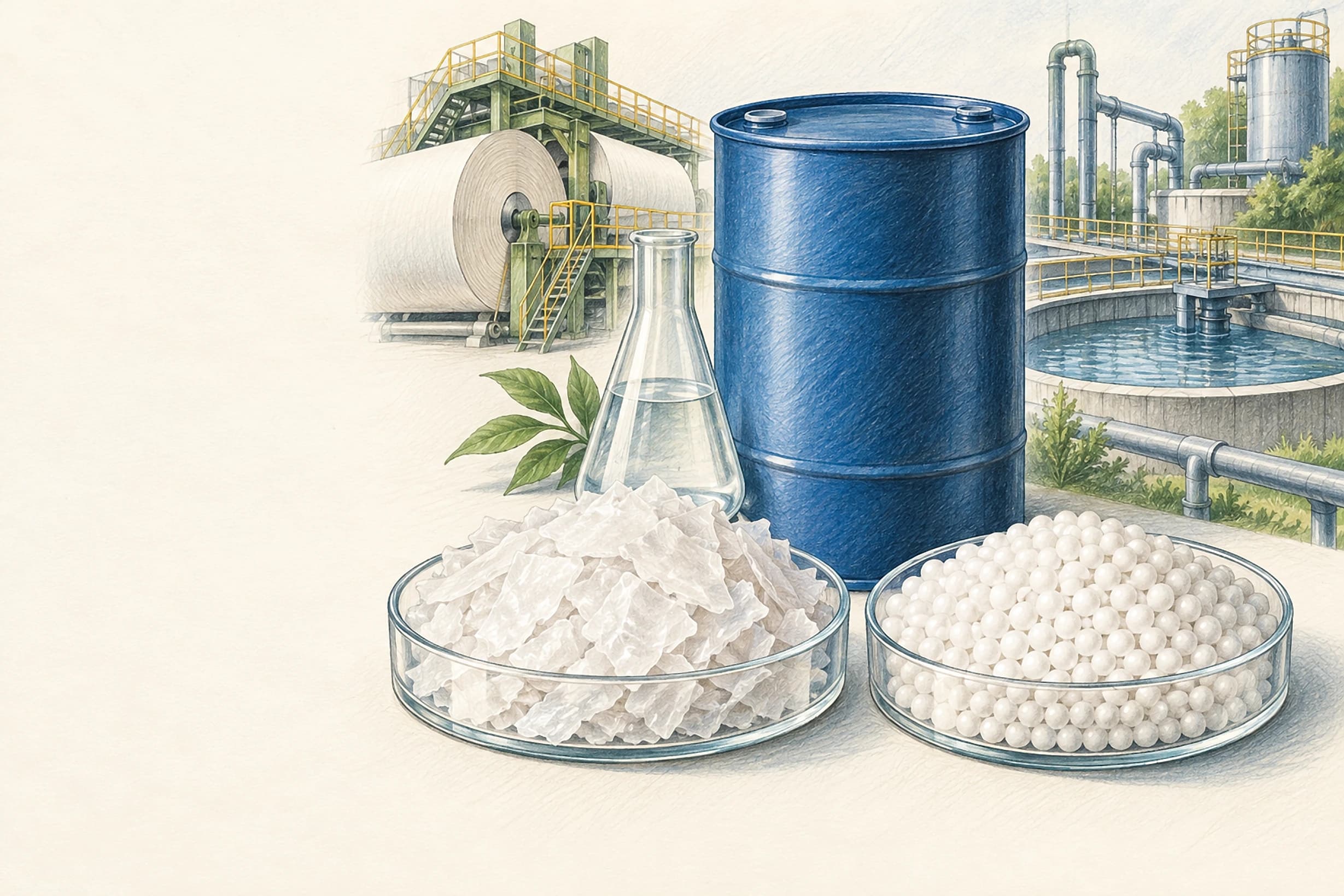
Specify the form and strength (50% lye, a diluted solution, or flakes or pearls for on-site make-up), the standard the product must meet, and the annual volume and delivery packing your site can receive. For drinking water, ask for evidence of compliance with the relevant standard as well as a certificate of analysis for each lot. Nuroil can supply caustic soda lye and solid grades for water treatment, with the safety data sheet and lot certificate provided.