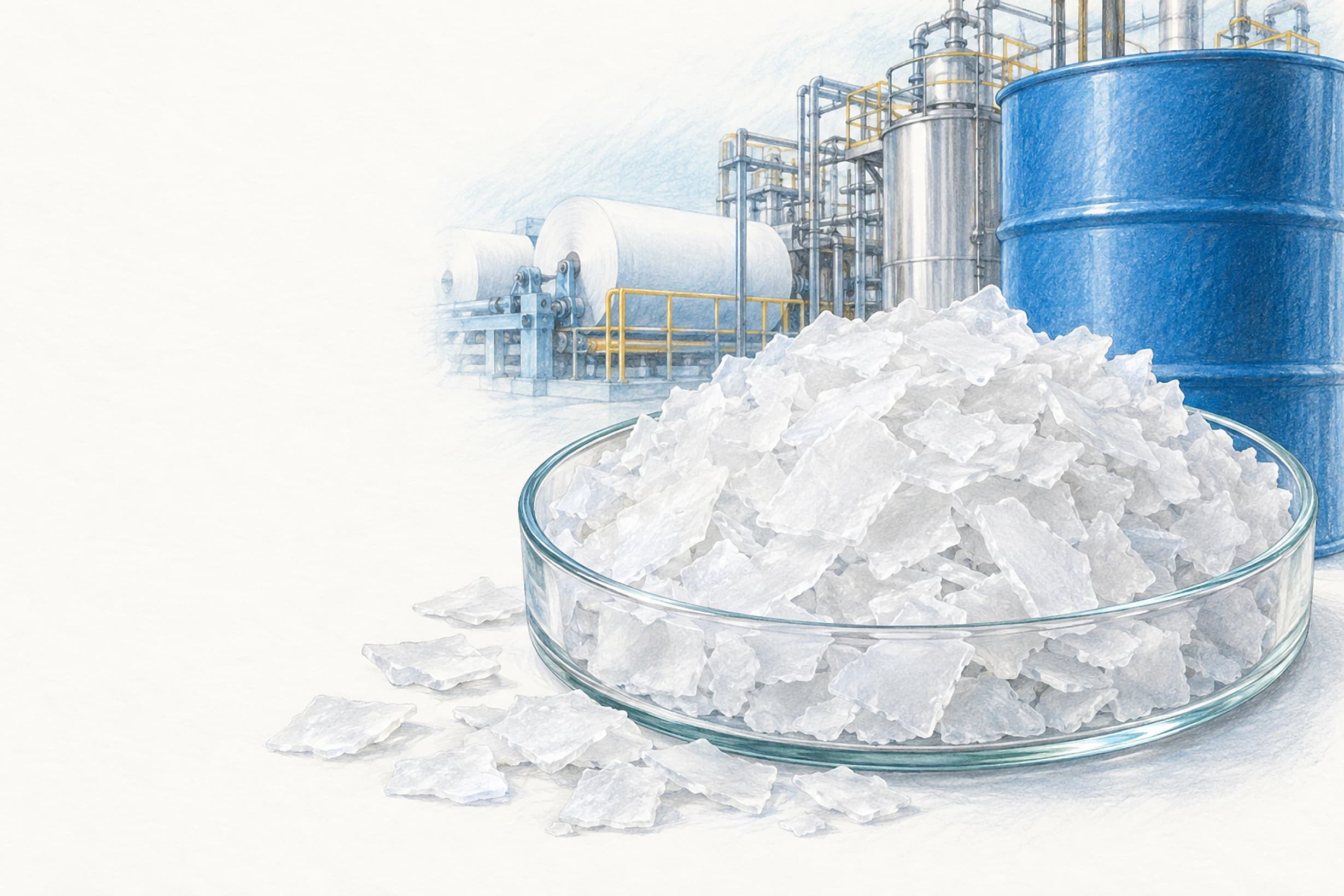
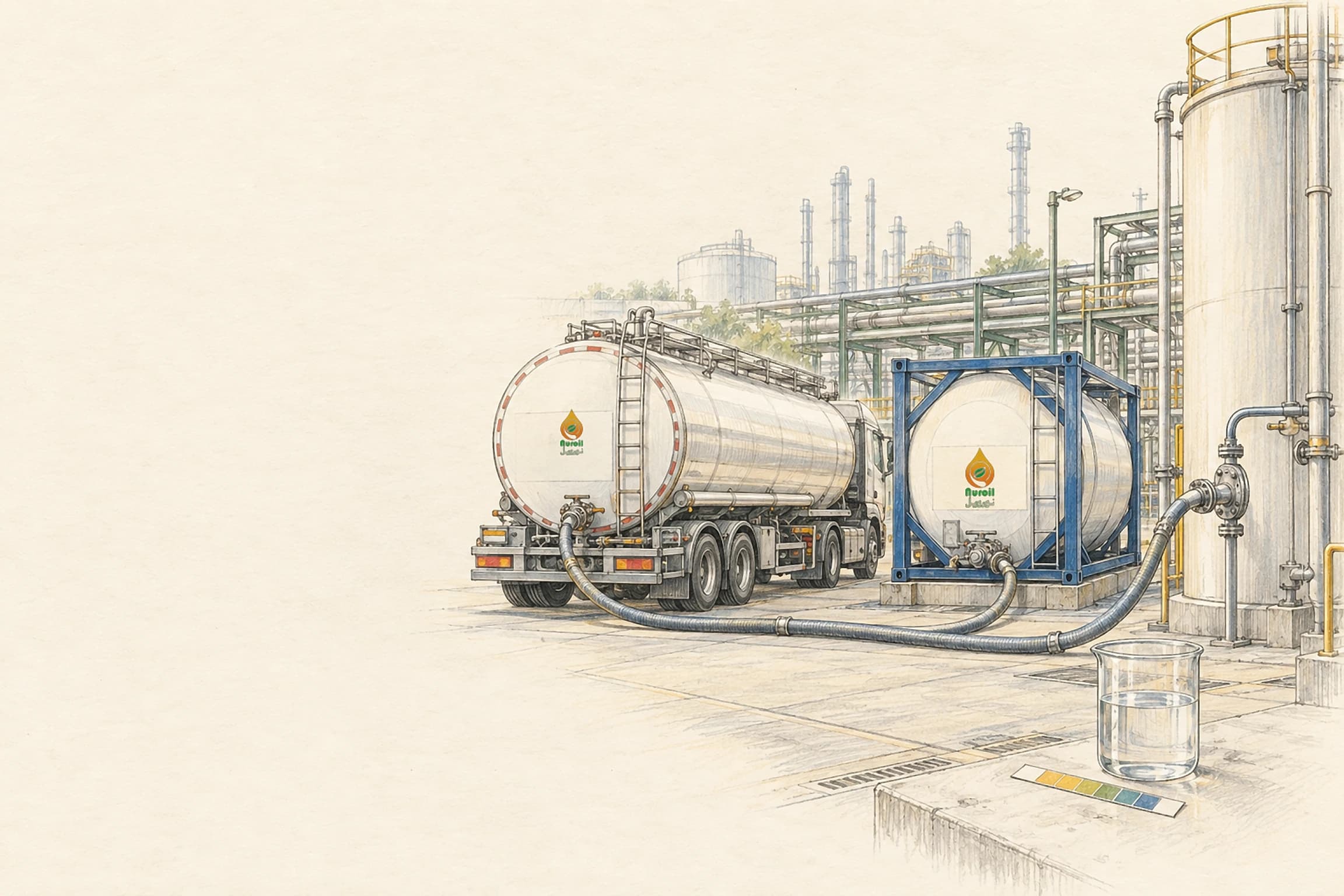
Caustic soda keeps well if it is stored properly. Solid flakes and pearls need protection from moist air, while liquid caustic needs compatible materials and protection from cold. This guide covers the common packing formats and how to store each one.
Packing formats
| Form | Common packing | Typical use |
|---|---|---|
| Flakes | 25 kg multi-layer bags with a polyethylene liner; jumbo bags of around 1 tonne; steel drums | Manual dosing, export by container, smaller sites |
| Pearls | 25 kg lined bags; jumbo bags; bulk for pneumatic systems | Automated feeders, fast make-up |
| Lye (about 50%) | HDPE drums and IBCs; road tankers; ISO tank containers; ship parcels for bulk terminals | Pumped, continuous dosing |
Solid caustic is classed for transport as a corrosive solid (UN 1823) and solutions as a corrosive liquid (UN 1824), both in hazard class 8. Packaging must be approved for this class and correctly labelled.
Storing flakes and pearls
Solid caustic soda is strongly hygroscopic. It readily absorbs moisture and carbon dioxide from air. Moisture makes flakes and pearls stick and cake; carbon dioxide slowly converts part of the NaOH to sodium carbonate, lowering the effective strength.
- Store in a dry, covered and ventilated warehouse, off the floor on pallets and away from rain and condensation.
- Keep bags and drums closed until use, and reseal part-used bags tightly or transfer the contents to an airtight container.
- Rotate stock first in, first out so that bags do not sit for long periods.
- Do not stack beyond the height recommended by the packer, and protect bags from forklift damage; a punctured liner admits moisture.
- Keep caustic separate from acids, aluminium and zinc materials, and combustible products.
Bulk pearl systems use sealed silos filled with dried air so that the product stays free flowing. As a guide to warehouse loading, flake caustic has a bulk density of roughly 960 kg/m³, though this varies with flake size and packing.
Storing liquid caustic soda
Tanks are commonly built from carbon steel, stainless steel or plastics such as polyethylene and polypropylene, with fibre-reinforced plastic used only when built with a caustic-resistant barrier. Aluminium, copper, zinc, lead and their alloys, including brass and bronze, must not be used anywhere in the system.
- Temperature. Producers suggest storing solution at about 27 to 38 °C. Above roughly 49 °C, unlined carbon steel corrodes faster, iron is picked up by the product, and steel that has not been stress-relieved can crack. Stainless steel grades 304L and 316L are generally acceptable to about 93 °C.
- Cold weather. 50% caustic begins to crystallise at about 12 °C. In cool climates, insulate tanks and lines and provide heating, and thaw any frozen equipment gently with low-pressure steam or warm water.
- Air and CO₂. Do not agitate tanks with air, which forms carbonate. Vent tanks appropriately and keep IBC and drum caps closed.
- Containment. Place tanks and IBCs in bunded areas sized for a full failure, with overflow lines routed into the bund.
- Layout. Draw product off above the tank floor and fit a drain at the lowest point to allow cleaning.
Shelf life and quality
Caustic soda does not degrade on its own. Changes in quality come from the surroundings: carbonate and moisture pickup in solids, iron pickup in liquid held hot in steel, and contamination from poorly cleaned containers. Good packing and storage therefore protect the specification you paid for.
Keep solids dry and sealed, keep liquids warm but not hot, and keep both away from aluminium, zinc and acids.
Agreeing packing with your supplier
State the form, the packing you can receive and store (for example 25 kg bags on pallets, jumbo bags, IBCs or ISO tanks), any palletising and shrink-wrapping needs, and the destination climate. Ask for the SDS, a certificate of analysis per lot and packing marked to transport regulations. Nuroil ships flakes, pearls and lye on FOB, CFR or CIF terms, with inspection available on request.