Buyers new to soda ash are often surprised that two products with the same chemical name, the same formula (Na2CO3) and almost identical purity are sold as separate grades. Light and dense soda ash differ in their physical form, not their chemistry. That physical difference still matters a great deal once the material reaches a silo, a feeder or a mixing tank.
Same chemical, different particles
Both grades are anhydrous sodium carbonate, normally above 99% pure. Water-treatment standards describe light soda ash as a powder and dense soda ash as granular. The grades differ in bulk density, particle size and shape, and the way the material flows.
The difference comes from how each grade is made. Light ash is the direct product of calcining (heating) sodium bicarbonate, which is the end of the synthetic ammonia-soda route. Its fine, porous particles keep the shape of the bicarbonate crystals they came from. Dense ash is usually made by crystallising sodium carbonate monohydrate from solution and drying it. This gives harder, heavier and more compact grains. Plants making light ash can convert it to dense by hydrating it to monohydrate and drying it again.
How the grades compare
| Property | Light soda ash | Dense soda ash |
|---|---|---|
| Appearance | Fine white powder | White free-flowing granules |
| Loose bulk density (typical) | About 0.5–0.65 t/m³ | About 0.95–1.1 t/m³ |
| Storage volume per tonne (approx.) | 1.6–1.9 m³ | 0.9–1.0 m³ |
| Flow | Can arch and bridge in bins | Free-flowing |
| Dust | Higher | Lower |
| Resistance to caking | Lower | Better |
| Dissolving | Fast, fine particles | Slightly slower, larger grains |
Bulk density figures vary between producers and depend on whether the material is loosely poured or settled by vibration, so use the supplier's data sheet for design work.
What the difference means in practice
- Storage and freight. A tonne of dense ash takes up roughly half the volume of a tonne of light ash. Silos, warehouses and containers hold more product, and a container is more likely to reach its weight limit before it runs out of space.
- Flow and metering. Dense grains flow evenly out of hoppers and through screw or belt feeders. Light ash can bridge or rathole in bins, particularly in humid conditions, so it needs well-designed hoppers and sometimes flow aids.
- Dust. Light ash creates noticeably more airborne dust during tipping and conveying. This affects housekeeping, product losses and the dust-control equipment needed at transfer points.
- Mixing with other solids. When soda ash is blended with granular materials such as sand, a grain size close to that of the other ingredients helps stop the mix separating. Dense ash is generally the better match.
- Dissolving. Where soda ash is dissolved before use, the finer light grade goes into solution a little faster. In most stirred tanks either grade dissolves readily.
Which grade suits which use
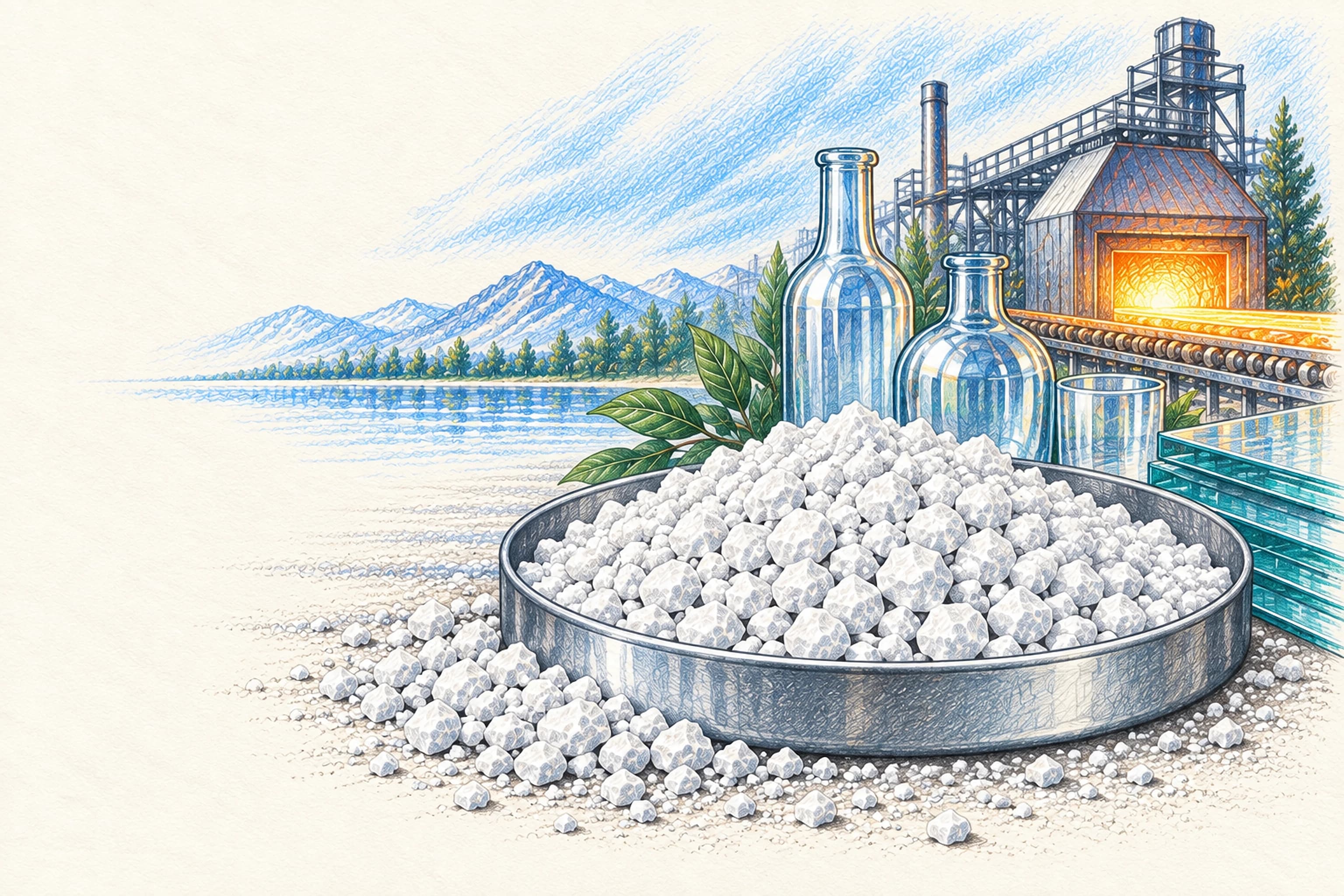
Glass making is the largest use of soda ash, and glassmakers almost always specify dense ash. It flows well in automated batch plants, makes less dust and keeps the batch mixed. Bulk users who handle the product mechanically, such as chemical plants with silos and dry feeders, also tend to prefer dense ash.
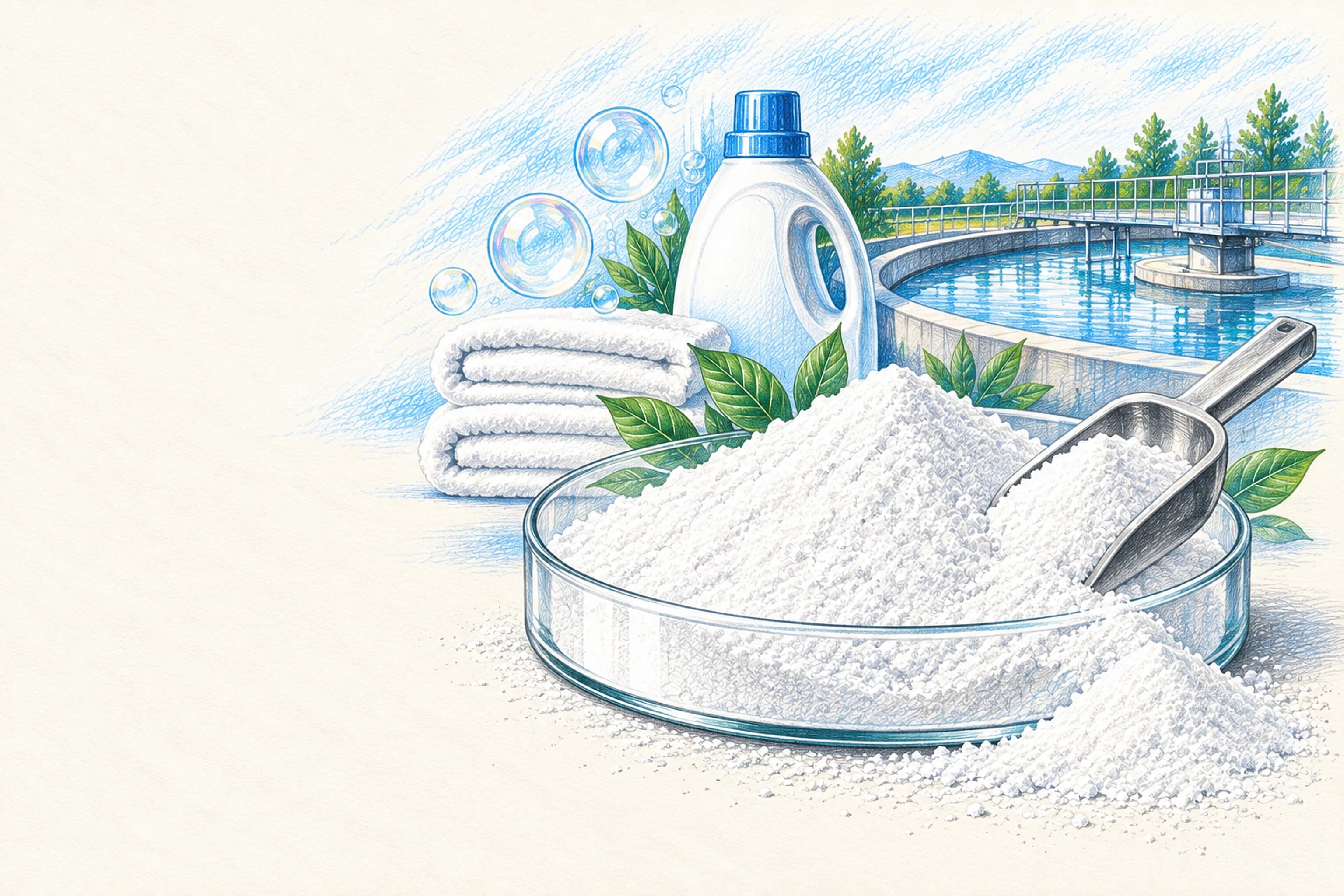
Light ash is common where fine particle size or fast dissolving matters more than handling. Examples include some detergent and powder-blending processes and smaller users who dissolve soda ash in batches. Water treatment and swimming pool applications use both grades. The choice usually depends on the feeding equipment and how much dust the site can accept.
If you are unsure, start with your equipment. A plant designed around one grade's bulk density and flow will often struggle with the other, even though the chemistry is the same.
Light and dense soda ash are chemically interchangeable. Your handling system, not the chemistry, usually decides which one you should buy.
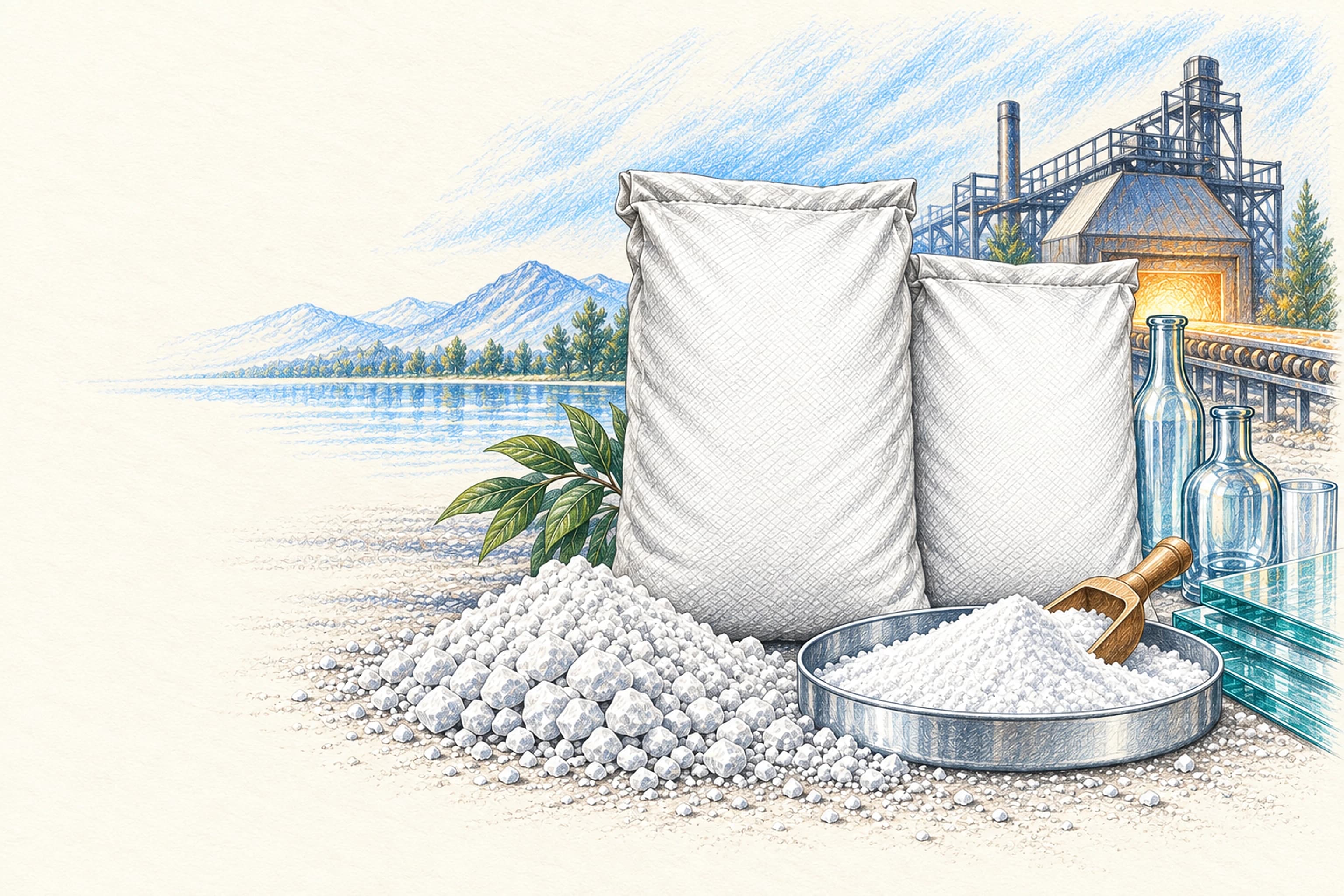
Specifying the grade in an enquiry
When asking for soda ash, state the grade (light or dense) along with the minimum Na2CO3 content, the bulk density range and, for dense ash, any particle size limits your process needs. Mention the packing you can receive, such as 25 kg or 50 kg bags, jumbo bags or bulk, and the destination port. Nuroil supplies both grades on dense and light product pages, with a certificate of analysis for every delivery. Certificate of origin, SDS and third-party inspection can be arranged on request through the quote form.