Black bitumen paint is an everyday construction product, which makes it easy to forget that most grades are solvent-borne and flammable. The bitumen itself is relatively inert at ambient temperature, but the white spirit or similar hydrocarbon solvent that keeps it liquid sets the safety rules for storage, application and shipping. This guide covers the practical points. The product's safety data sheet (SDS) always takes precedence.
Know the hazard from the data sheet
Several published data sheets list white spirit as the solvent, with a flash point in the region of 40 °C. That places the paint in the flammable liquid category for storage and transport purposes in most systems. The SDS will give the exact classification, hazard statements, exposure limits for the solvent and first-aid measures. Read it before the product arrives on site.
Storage
- Store in a cool, dry, well-ventilated area away from heat, sparks, open flames and direct sunlight.
- Keep containers tightly closed and upright to limit solvent loss and skinning.
- Separate from oxidising materials and keep away from areas used for hot work.
- Follow local fire regulations on maximum quantities of flammable liquids in a store, and provide suitable extinguishers.
- Use first in, first out; check the shelf life on the label or data sheet.
Unlike water-based bitumen products, solvent-borne paint is not damaged by frost, but very high temperatures increase vapour pressure and the risk of leaks from damaged lids.
Ventilation during application
Solvent vapour is heavier than air and can collect in low areas such as pits, trenches, basements and tank bottoms. In enclosed spaces, forced ventilation is essential, ignition sources must be excluded and confined-space procedures may apply. In such areas a water-based alternative is often a better choice.
Spraying produces a fine mist that spreads vapour and droplets much further than brushing or rolling. If the paint is sprayed, extend the exclusion zone for ignition sources, protect nearby surfaces and people, and follow the SDS advice on respiratory protection. Electrical equipment used in the work area should be suitable for flammable atmospheres where vapour may accumulate.
Personal protection
| Risk | Typical control |
|---|---|
| Skin contact | Solvent-resistant gloves and long sleeves; remove splashes promptly with a suitable skin cleanser, not solvent |
| Eye splashes | Safety glasses or goggles, especially when working overhead or spraying |
| Vapour inhalation | Ventilation first; respiratory protection as specified in the SDS where ventilation is limited |
| Fire | No smoking or hot work nearby; extinguishers at hand |
Spills, waste and cleaning
Contain spills with sand, earth or a proprietary absorbent, keep them out of drains and watercourses, and collect them into a labelled container for disposal according to local rules. Tools are usually cleaned with white spirit; used solvent and soaked rags are a fire risk and should be kept in closed metal containers until disposal. Empty tins may still contain flammable vapour.
Packing and shipping
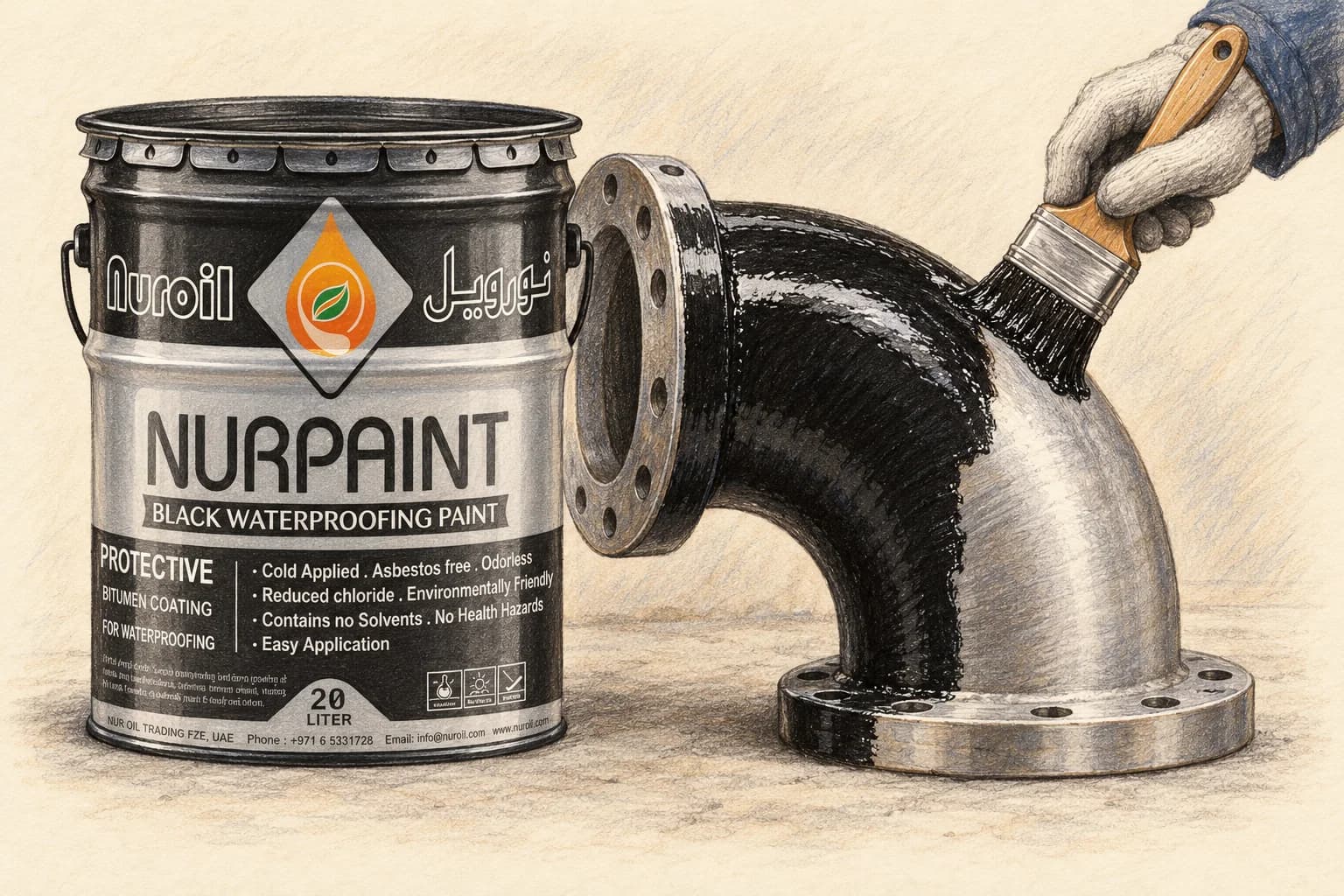
Bitumen paint is typically supplied in steel tins, pails and drums. For export, packaging, labels and transport documents must match the classification given in the SDS. Buyers should check that their importing arrangements and storage facilities can accept flammable liquids, and agree packing that suits handling at destination, for example smaller pails for retail and site use or drums for larger projects.
The bitumen is the coating. The solvent is the hazard. Store, ventilate and ship for the solvent.
Documents to request
For every order, ask for the SDS in the language required at destination, the TDS, the transport classification and a batch CoA. Nuroil supplies bitumen paint with a CoA for every delivery and can provide the MSDS, certificate of origin and third-party inspection on request. Use the quote form to share your pack size and destination.