Bitumen waterproofing comes in two main forms: factory-made sheets that are torched or stuck down, and liquids that are brushed, rolled or sprayed on site and cure into a continuous film. Both rely on bitumen's resistance to water. Choosing between them depends less on which is "better" and more on the shape of the surface, the water load and how much control there is over workmanship.
What liquid bitumen coatings are
The common types are:
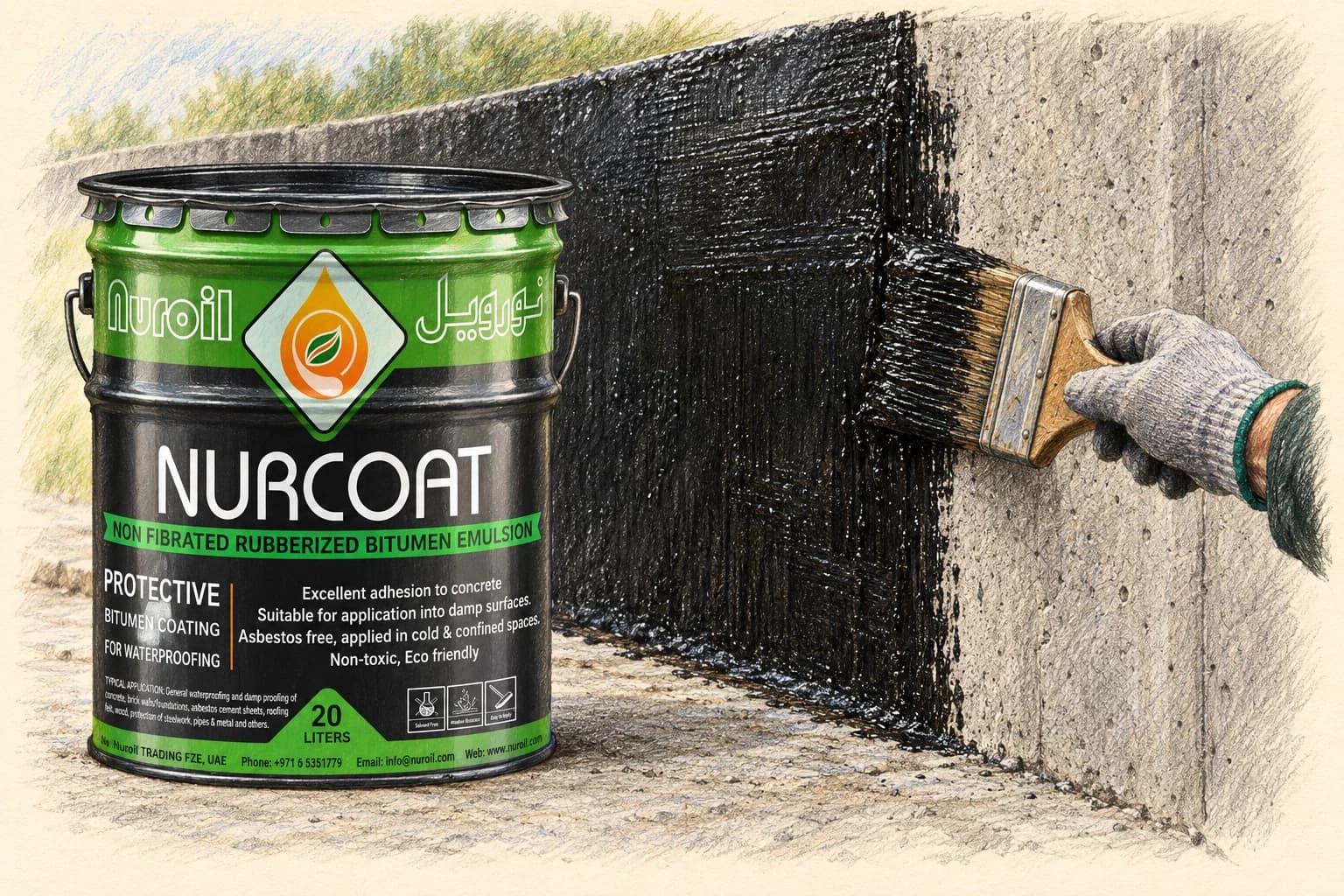
- Rubberised bitumen emulsions: bitumen and synthetic latex dispersed in water. They are applied cold, can go onto slightly damp surfaces, and have little odour, so they suit enclosed spaces.
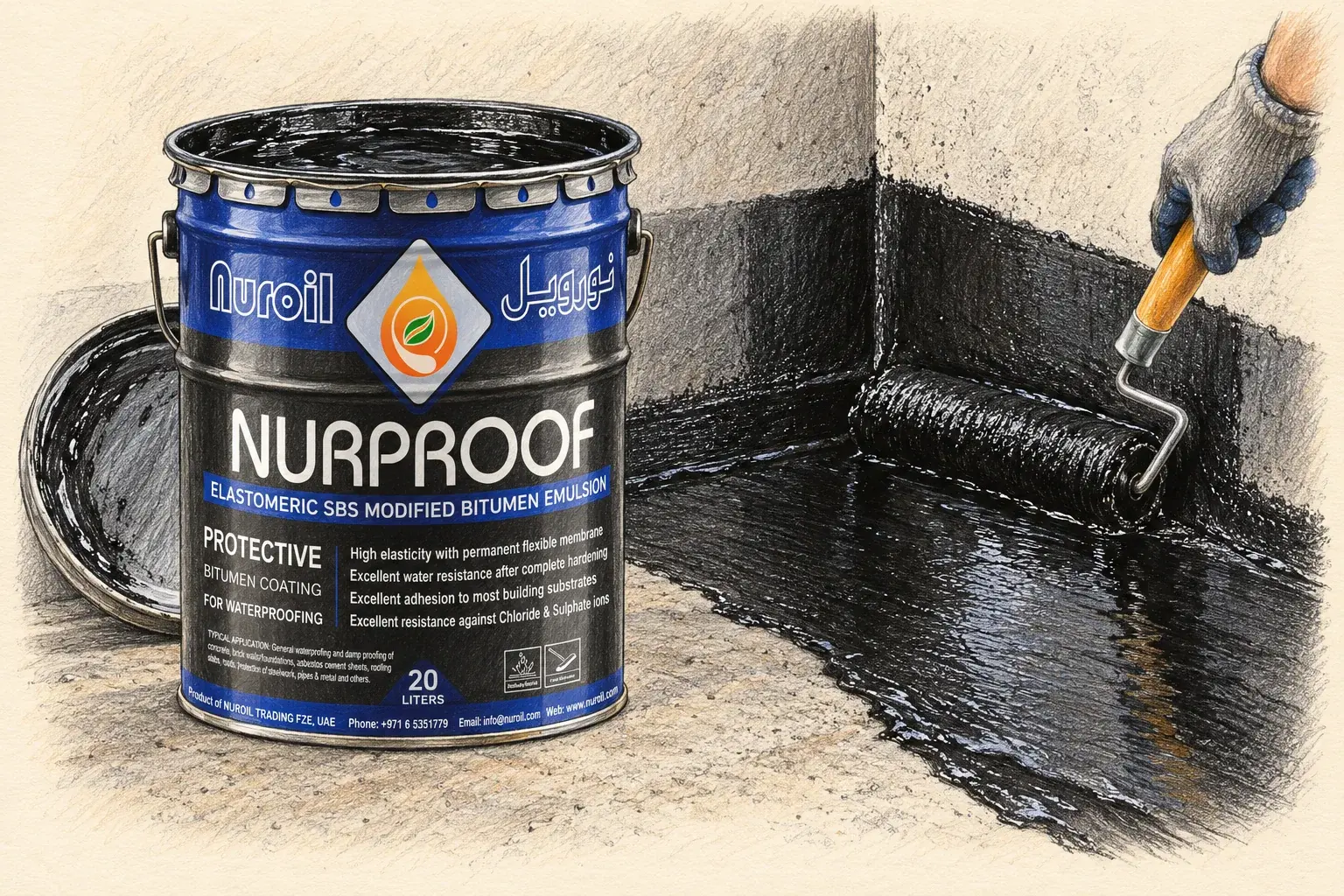
- Elastomeric SBS bitumen coatings: bitumen modified with SBS rubber, often solvent-based, giving a tougher, more elastic film with good crack-bridging.
- Plain bitumen paints and solutions: thinner, mainly for damp-proofing and protection rather than resisting water under pressure.
Manufacturers' data sheets for rubberised emulsions typically call for at least two coats. Coverage per coat is given in square metres per litre and is lower (that is, a thicker coat) for foundation tanking than for a simple damp-proof layer.
Where liquids have the advantage
- Complex shapes: pipe penetrations, pile caps, corners, upstands, drains and planters are slow and risky to detail with sheets. A liquid simply follows the surface.
- No laps: sheet systems rely on every lap being properly fused. A coating cures as one continuous skin.
- Small or awkward areas: balconies, planter boxes, small foundations and repairs where cutting and torching sheets is not practical.
- No open flame: cold-applied coatings avoid torch work near timber, insulation or occupied buildings.
- Detailing alongside sheets: coatings are often used to finish penetrations and junctions on a sheet-membrane job.
Where sheet membranes are stronger
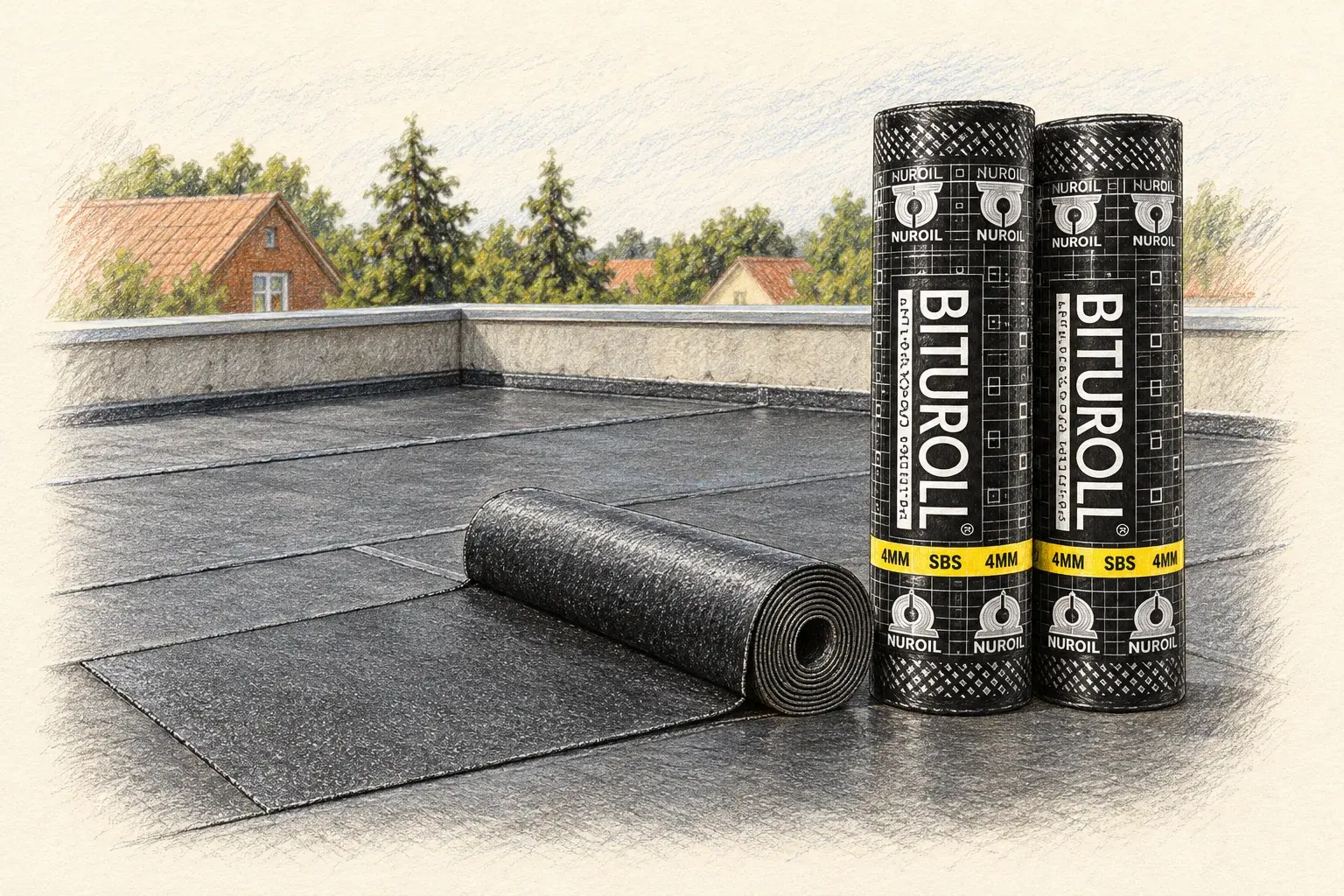
- Guaranteed thickness: a 4 mm sheet is 4 mm everywhere. A coating's thickness depends on the applicator, and thin spots are a known risk.
- Large, simple areas: roofs and big slabs are faster to cover with rolls.
- High water pressure and heavy loads: reinforced sheets resist puncture from backfill and traffic better.
- Weather: water-based coatings must dry before rain, and cannot be applied in cold or very humid conditions.
| Situation | Better fit | Reason |
|---|---|---|
| Large flat roof | Sheet membrane | Speed and uniform thickness |
| Foundation wall with many pipes | Liquid coating, or sheet with liquid detailing | Seamless around penetrations |
| Basement under high water table | Sheet membrane, often in a combined system | Reinforcement and controlled thickness |
| Planters and balconies | Liquid coating | Awkward shapes, small areas |
| Enclosed or fire-sensitive area | Water-based liquid coating | No torch, low odour |
Getting the thickness right
Because the coating's performance depends on its dry film thickness, the application rate matters more than for any sheet. Good practice is to:
- work out the litres needed from the data sheet rate and the measured area, and issue that quantity for each zone
- apply in at least two coats, the second at right angles to the first
- check wet film thickness with a gauge during application
- build up extra thickness or embed a reinforcing fabric at corners and cracks
- protect the cured coating with a board before backfilling
A liquid coating is only as thick as the litres that actually go on the wall. Measure the area, issue the quantity and check the film.
Buying liquid bitumen coatings
An enquiry should state the coating type (rubberised emulsion or elastomeric SBS), whether water-based or solvent-based, the area and intended use, pack size (pails or drums) and quantity. Ask for the data sheet with solids content, coverage per coat and drying times, and the SDS. Nuroil supplies rubberised and elastomeric SBS coatings as well as sheet membranes, so both parts of a combined system can be sourced together.