Waterproofing is not one product applied everywhere. A basement wall holds back groundwater, a flat roof faces sun and rain, and a shower floor sits under tiles and is wetted every day. Each location has its own load, and the right system follows from that load rather than from habit. This article looks at the three areas most contractors deal with and the questions that narrow the choice.
Basements and below-ground structures
Below ground, water can act under pressure. The British code of practice BS 8102 is widely used as a design reference, even outside the UK. It describes three types of protection:
- Type A, barrier protection: a membrane or coating applied to the structure, such as bonded sheet membranes, liquid-applied coatings or cementitious tanking.
- Type B, structurally integral: the concrete itself is designed to resist water, often with waterproofing admixtures and careful joint detailing.
- Type C, drained protection: water that gets through the wall is collected in a cavity and led to a drain or sump.
The code also sets grades for how dry the finished space must be, from basic utility areas such as car parks up to habitable rooms and archives. The drier the grade and the higher the water table, the more the design leans towards combining two different types. The current edition should be checked for the exact grade definitions.
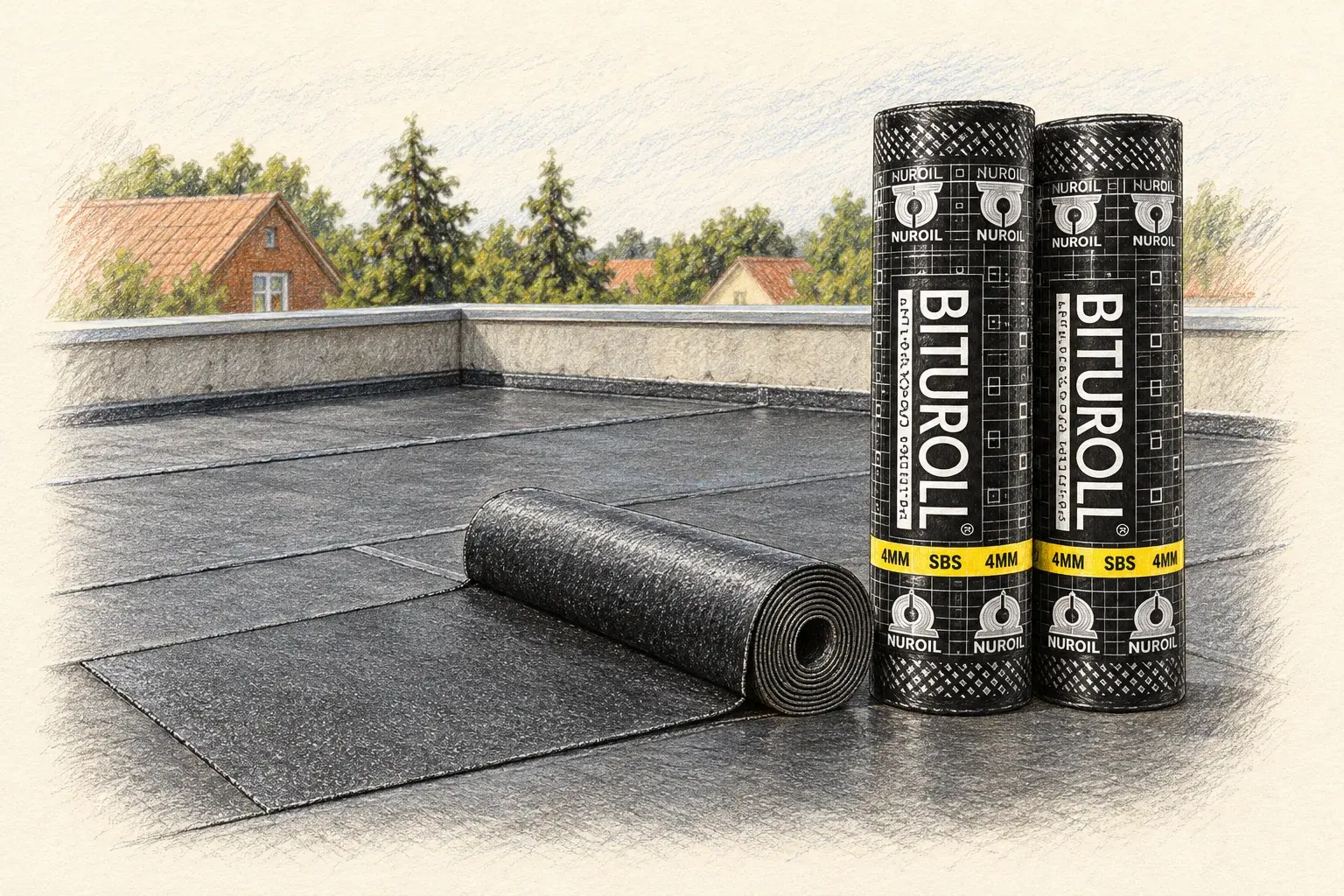
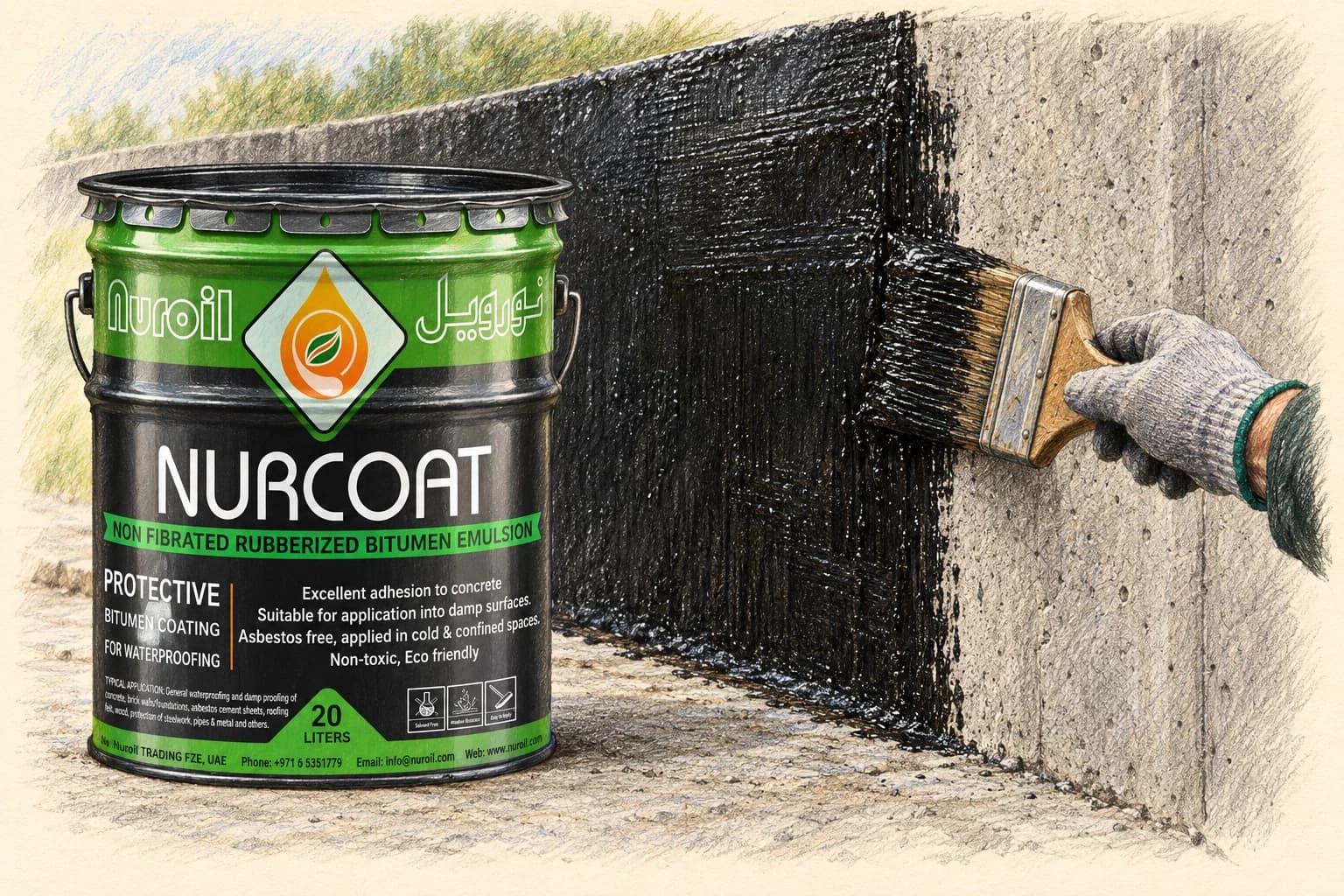
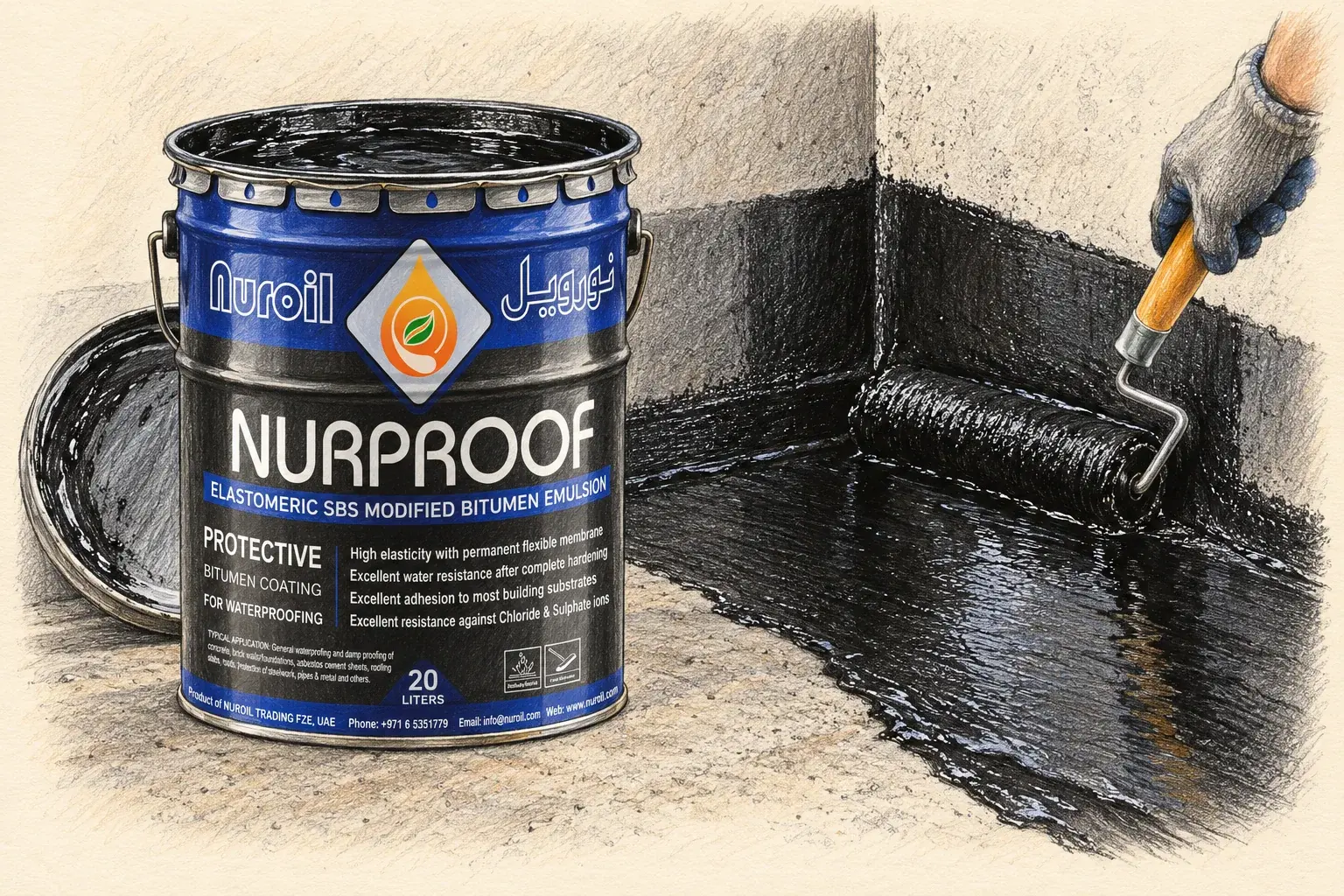
For Type A work, bitumen products are common. Polymer-modified sheet membranes give a controlled thickness and are suited to large, flat areas of external wall or slab. Rubberised or elastomeric bitumen coatings are useful where there are many corners, pipe penetrations and small areas. Either way, the membrane goes on the side facing the water wherever possible and is protected from backfill by a board or screed.
Flat roofs and terraces
On a roof, water pressure is low but exposure is severe. The surface sees ultraviolet light, wide daily temperature swings, foot traffic and ponding water after rain. The main choices are:
- Torch-applied modified bitumen membranes: SBS-modified sheets stay flexible at low temperatures and cope with movement; APP-modified sheets resist higher temperatures and sun. Mineral-surfaced cap sheets protect the bitumen from UV.
- Liquid-applied coatings: seamless, good around complex details and upstands, but thickness depends on how carefully they are applied.
Falls to outlets matter as much as the material. A membrane that stands under water for days ages faster than one that drains.
Bathrooms, showers and other wet areas
Tiles and grout are not waterproof. Water passes through grout joints and into the adhesive bed and substrate behind. The British tiling code BS 5385-1 recommends that substrates in wet areas, such as showers and wet rooms, are protected with a proprietary tanking system. That may be a sheet membrane or a liquid-applied coating. In practice this means:
- a membrane that tile adhesive will bond to, so the system can carry the weight of tiles
- reinforcing tape at wall-to-floor junctions and corners, where movement cracks start
- sealed collars around pipes and drains
Bitumen coatings are not usually used directly under tiles, because cement adhesives do not bond reliably to them. Wet areas normally use cementitious or polymer tanking systems designed for tiling.
Comparing the three areas
| Area | Main threat | Typical system | Key detail |
|---|---|---|---|
| Basement | Groundwater under pressure | Sheet membrane or thick bitumen coating, often with a second type | Protection board before backfill |
| Flat roof | UV, heat, ponding | SBS or APP torch-on membrane, or liquid coating | Falls, upstands and outlets |
| Wet area | Daily wetting under tiles | Tile-compatible tanking membrane | Taped corners and sealed pipes |
Start with where the water comes from and how hard it pushes. The material follows from that.
Questions to settle before ordering
- Is the water under pressure, running off, or splashing?
- Will the surface be exposed to sun or covered by soil, screed or tiles?
- How much structural or thermal movement is expected?
- Can the membrane be applied to the wet side, or only from inside?
- What is the substrate, and can it be properly prepared and primed?
Specifying and sourcing
An enquiry for waterproofing materials should give the application area, product type (for example SBS or APP membrane, thickness and reinforcement, or coating type), quantities in rolls or litres, and the standard or specification the project follows. Ask for technical data sheets, a certificate of analysis or test report per batch, and SDS for coatings and primers. Nuroil trades a range of construction waterproofing products from established producers and can quote FOB UAE or CFR/CIF to your port through a quote request.