Sodium hypochlorite solution with 10–15% available chlorine, for disinfecting drinking water, wastewater, cooling water and pools by simple pump dosing.
Sodium hypochlorite, NaOCl, is the chlorine disinfectant sold as a pale yellow-green alkaline solution, the industrial strength of household bleach. In water it forms hypochlorous acid, free chlorine, which kills bacteria and viruses and leaves a residual in the network.
It is the simplest form of chlorine to dose: a pump from a tank, with no gas handling. Its weakness is stability: it loses strength over weeks, faster in heat and light, so in a hot climate it is bought fresh, stored shaded and used in rotation.
Simple pump dosingA liquid dosed straight from tank or IBC, with no gas cylinders, dissolving or make-up.
Lasting residualLeaves free chlorine in the network to protect water after treatment.
Safer than chlorine gasAvoids the risk management that chlorine gas installations need.
Documented qualityEach offered batch comes with its Certificate of Analysis and safety data sheet.
What Nuroil does on every order
Why choose sodium hypochlorite from Nuroil?
Checked against the batch CoA
Available chlorine, free alkali and production date are reviewed on the batch certificate before dispatch.
Planned for the heat
Supply from producers close to you and short transit, so the solution arrives at strength.
Dangerous-goods paperwork handled
Shipped as UN 1791, class 8 corrosive, with the correct labels and declarations.
One desk, firm offers
Delivered or FOB from our Sharjah trade desk, usually within 24 hours.
02 TECHNICAL DATA
Technical specification.
Available chlorine (as Cl₂)
10–15% w/w at dispatch, by gradeIodometric titration
Free alkali (as NaOH)
0.3–1.5%Titration
Sodium carbonate (Na₂CO₃)
1% maxTitration
Iron (Fe)
1–2 mg/kg maxICP / colorimetric
Chlorate (ClO₃⁻)
Low; limit set for drinking-water gradesIon chromatography
Bromate (BrO₃⁻)
Low; limit set for drinking-water gradesIon chromatography
Density at 20 °C
About 1.17–1.25 g/cm³, by strengthHydrometer
pH
12–13.5pH meter
Appearance
Clear, pale yellow-green liquidVisual
Reference standards
EN 901, AWWA B300
0110% AVAILABLE CHLORINE
Slower to decay
Lower strength loses chlorine more slowly, which suits longer storage and hot sites.
0212.5–15% AVAILABLE CHLORINE
Most chlorine per tonne
The common industrial strength for large plants that use stock quickly.
03DRINKING-WATER GRADE
Potable water
Made to EN 901 or AWWA B300, with limits on chlorate, bromate and metals.
04INDUSTRIAL GRADE
Cooling and effluent
For cooling water, effluent, cleaning and bleaching where drinking-water limits do not apply.
Selection guidance Tell us the use, the monthly volume, your storage and the target chlorine residual, and we will confirm the strength and delivery plan.
Sodium hypochlorite against the solid chlorine sources. The right one depends on the volume, storage and dosing equipment.
Property
Sodium hypochloriteThis page
Calcium hypochlorite
TCCA
Available chlorine
10–15%
65–70%
About 90%
Storage life
Weeks
Long, if cool and dry
Long
Dosing
Pump from tank
Dissolve or feeder
Feeder
Effect on pH
Raises it
Raises it
Lowers it
Best suited to
Large plants, steady pump dosing
Remote sites, shock dosing, stock holding
Pools, slow steady release
03 HOW IT IS MADE
From chlorine and caustic to a stable solution.
Chlorine gas is absorbed into cooled, dilute caustic soda, forming sodium hypochlorite and salt. The reaction is kept cool and slightly alkaline, and the solution is filtered to remove iron and solids that would speed its breakdown.
01
Caustic and water
Caustic soda lye is diluted with softened water and cooled.
02
Chlorination
Chlorine gas is absorbed into the caustic under cooling.
03
Filtering and adjusting
The solution is filtered and set to strength, with a little free alkali.
04
Testing and filling
Each batch is tested for available chlorine and filled into vented containers.
04 APPLICATIONS
Where it disinfects.
01
Drinking water
Disinfection and residual chlorination of municipal and private supplies.
02
Cooling water
Control of slime, algae and marine growth in cooling towers and seawater intakes.
03
Wastewater
Disinfection of treated sewage and effluent before discharge or reuse.
04
Swimming pools
Daily chlorination of pools by dosing pump.
05
Food and hygiene
Sanitising surfaces, equipment and wash water where permitted.
06
Bleaching
Bleaching in textile, laundry and pulp processes.
05 SAFETY & HANDLING
Corrosive. Never mix with acid.
This summary does not replace the Safety Data Sheet. Review the SDS and site procedure before first handling.
Danger
H290 May be corrosive to metals.
H314 Causes severe skin burns and eye damage.
H410 Very toxic to aquatic life with long lasting effects.
EUH031 Contact with acids liberates toxic gas.
UN
1791
Class
8, corrosive · PG III, per SDS
01
Never mix with acids
Acids, including ferric chloride and acid cleaners, release toxic chlorine gas.
02
Never mix with ammonia
Ammonia and ammonium salts form toxic chloramines; dose them only at controlled points.
03
Protect eyes and skin
It causes severe burns and eye damage; wear goggles, face shield, gloves and apron.
04
Vent containers
It gives off oxygen as it decays; use vented caps and never seal it in an unvented vessel.
05
Exposure response
Rinse skin or eyes immediately with plenty of water for at least 15 minutes and seek medical attention.
Cool, dark and fresh.
Use withinWeeks, not months
Sodium hypochlorite loses strength steadily; a 12–15% solution can lose a noticeable share of its chlorine within weeks in summer heat. Order to use, store cool and dark, and check strength before dosing.
Keep it coolEvery 10 °C rise roughly triples the rate of decay; shade tanks and IBCs.
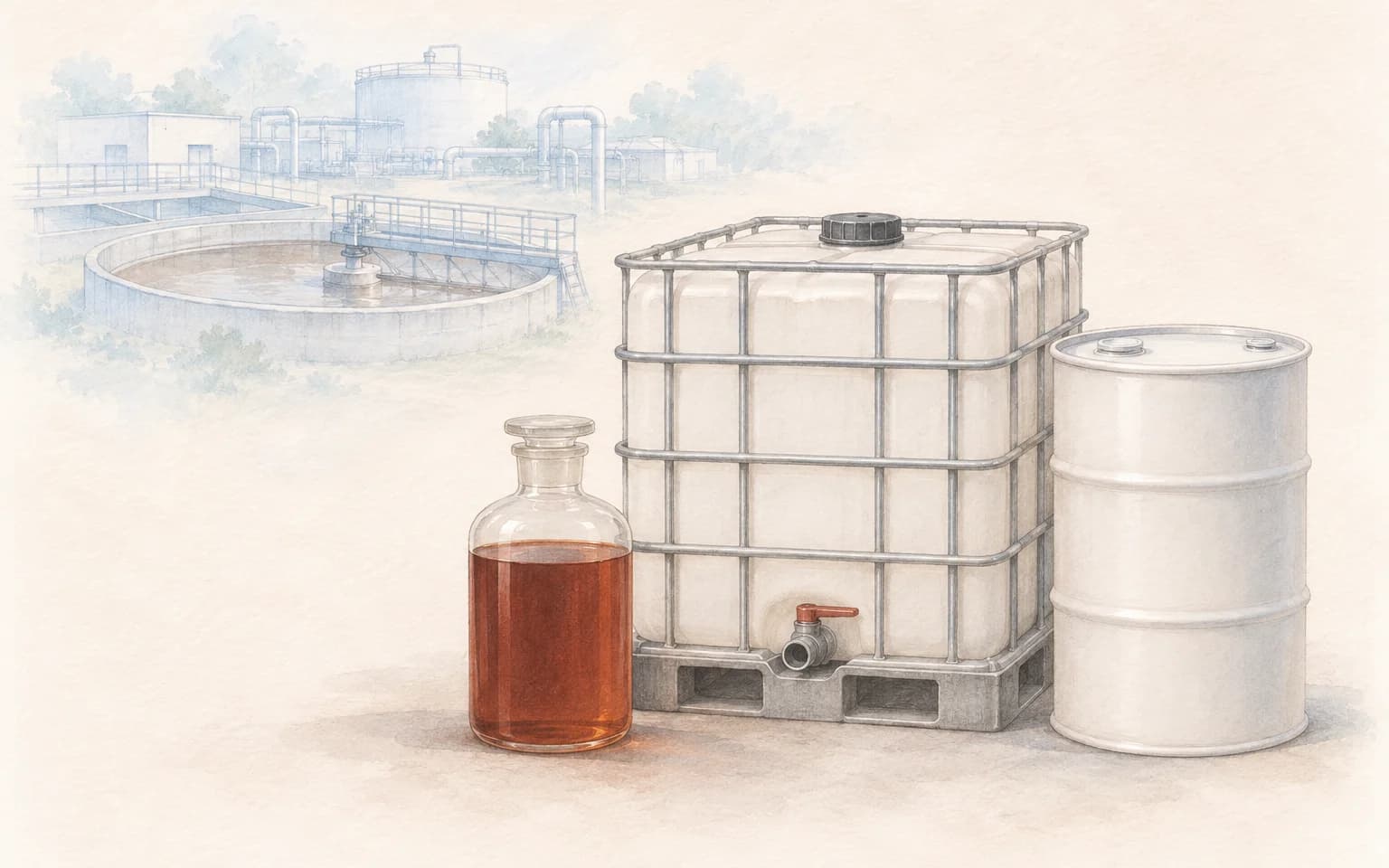
Out of sunlightOpaque, vented tanks of HDPE or FRP, bunded against spills.
SegregateApart from acids, ammonia, metals and organics; keep metal fittings away.
First in, first outUse stock in order of production date and do not hold more than needed.
Plan documentation early.
HS code2828.90
CAS number7681-52-9
EC number231-668-3
UN numberUN 1791
GHS
Corrosive to metals; skin corrosion and eye damage; very toxic to aquatic life; releases toxic gas with acids
Transport
UN 1791, hypochlorite solution: class 8, PG III (some SDSs PG II)
Drinking water use
EN 901 or AWWA B300 grade; confirm local approval (for example NSF/ANSI/CAN 60)
National regulations
Confirm the destination’s import, biocide and dangerous-goods requirements
06 PACKING OPTIONS
Choose your packing.
Because it decays in heat, sodium hypochlorite is usually supplied from regional producers. Pack sizes depend on the producer; the offer confirms them.
Small quantities
Vented drums and cans
HDPE cans of about 20–30 litres and drums of about 200–250 litres with vented caps.
01What strength is industrial sodium hypochlorite?
Usually 10–15% available chlorine at dispatch, several times the strength of household bleach. The strength falls during storage, so the CoA states it at production.
02Why does it lose strength?
Hypochlorite slowly breaks down to chlorate, salt and oxygen. Heat, sunlight, high strength and traces of metals speed this up. Storing it cool, dark and for a short time keeps the loss down.
0310% or 15%?
Stronger solution means less volume to ship, but it decays faster. In hot climates or with slow use, a lower strength often delivers more chlorine at the point of dosing.
04Can it be stored with ferric chloride or acids?
No. Acids, including ferric chloride and acid cleaners, release chlorine gas from hypochlorite. Store and bund them apart and use separate equipment.
05Is it dangerous goods for shipping?
Yes. It ships as UN 1791, hypochlorite solution, class 8, usually packing group III. We prepare the dangerous-goods documents with the shipment.
06What is the HS code?
Sodium hypochlorite is classified under HS 2828.90. Its CAS number is 7681-52-9.
07What documents come with a shipment?
A Certificate of Analysis with the production date and Safety Data Sheet, with the Certificate of Origin and dangerous-goods declaration as required.
Include the strength, the use, your monthly volume, packing and delivery site for a tailored offer. We reply with a firm FOB, CFR or CIF offer, usually within 24 hours.