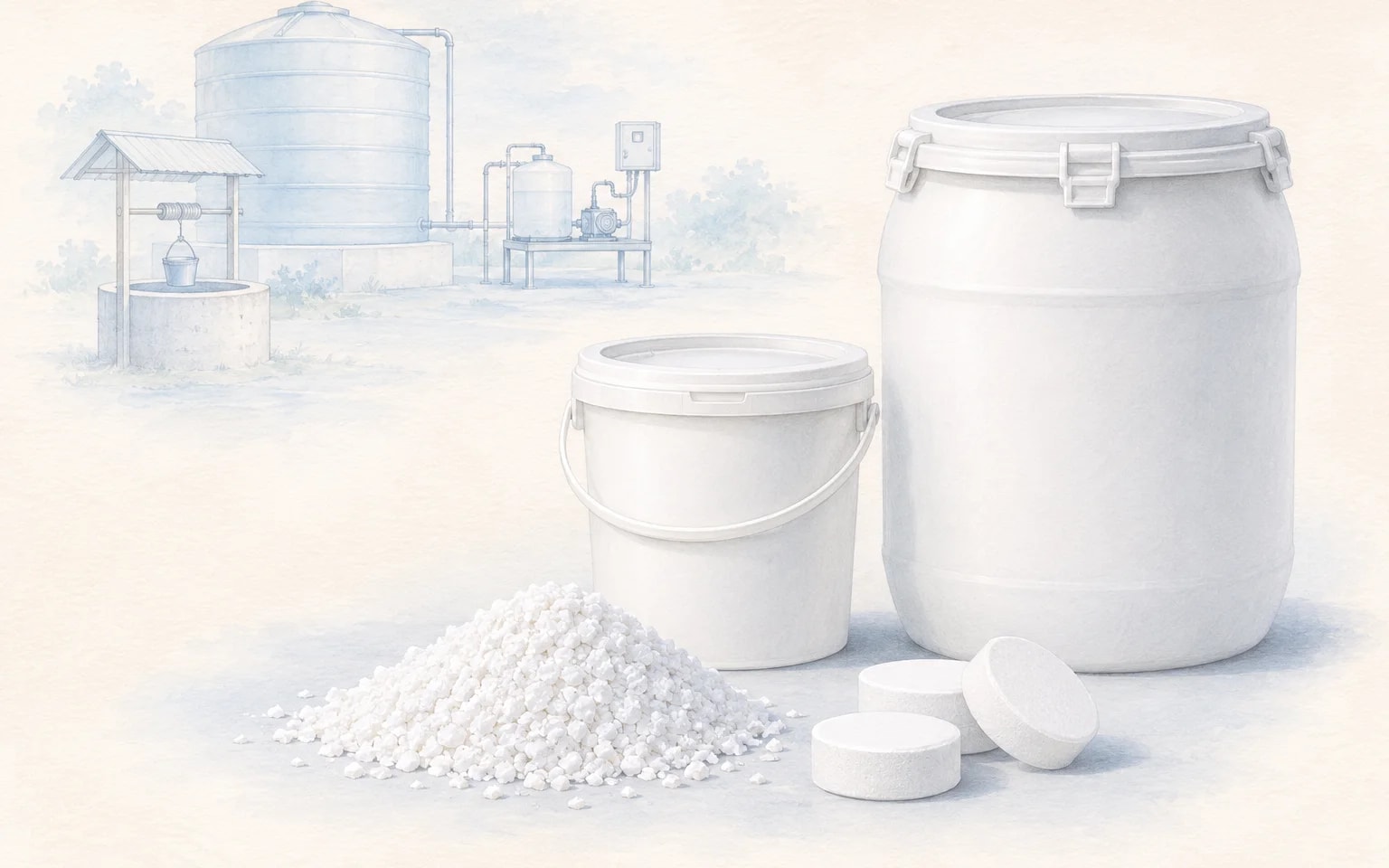
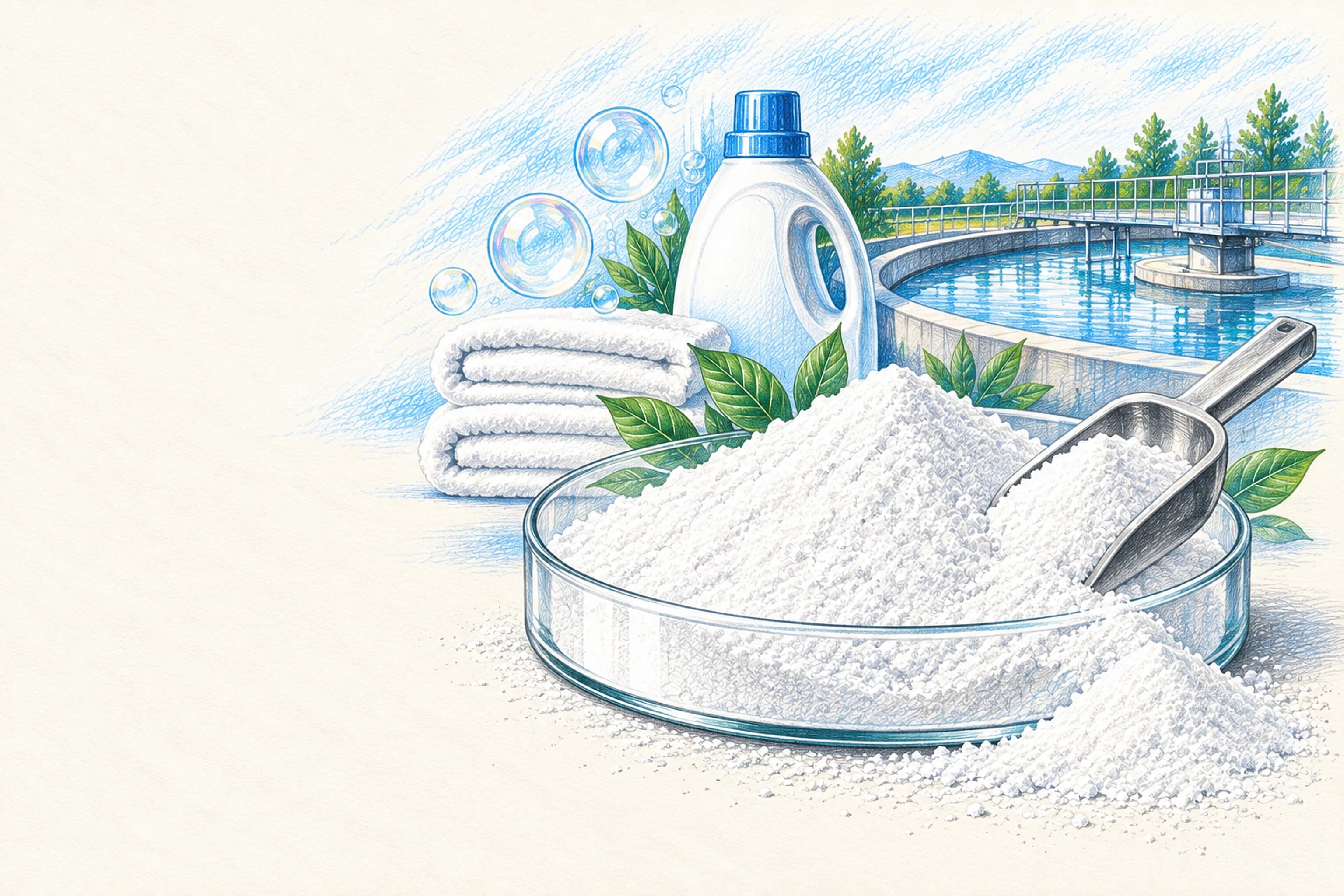
Calcium hypochlorite, Ca(OCl)₂, is a white solid that releases hypochlorous acid, free chlorine, when it dissolves. It carries far more chlorine per kilogram than liquid bleach and keeps it far longer, which is why it is the standard solid chlorine for water disinfection.
It is a strong oxidiser. Kept cool, dry and sealed, and well away from acids, fuels and other chlorine products, it is a dependable way to hold a stock of disinfectant on site.
High chlorine per kilogram65–70% available chlorine, several times the strength of liquid bleach, so less to ship and store.
Stable in storageA dry solid that keeps its strength far longer than sodium hypochlorite solution when stored cool and sealed.
Granules or tabletsGranules for dissolving and shock dosing; tablets for steady release in feeders and floaters.
Documented qualityEach offered batch comes with its Certificate of Analysis and safety data sheet.
What Nuroil does on every order
Why choose calcium hypochlorite from Nuroil?
Checked against the batch CoA
Available chlorine, moisture and insolubles are reviewed on the batch certificate before loading.
Dangerous-goods paperwork handled
Shipped as class 5.1 oxidiser with the correct UN entry, labels and declarations for its moisture grade.
Packed to keep its strength
Sealed drums and pails, kept out of the heat in transit and at the port.
One desk, firm offers
FOB, CFR or CIF from our Sharjah trade desk, usually within 24 hours.
02 TECHNICAL DATA
Technical specification.
Available chlorine
65% min or 70% minIodometric titration
Moisture
5.5–10% (hydrated grade)Gravimetric
Water-insoluble matter
6% maxGravimetric
Granule size
14–50 mesh, above 90%Sieve analysis
Appearance
White or off-white granules or tabletsVisual
Odour
Chlorine
Tablet sizes
7 g, 10 g, 20 g, 200 gWeight
Reference standard
GB/T 10666 (Chinese producers)
0165% AVAILABLE CHLORINE
General disinfection
The common grade for drinking water, wells, tanks and effluent, and the usual choice where price per kilogram matters most.
0270% AVAILABLE CHLORINE
Highest strength
More chlorine per kilogram and per container; preferred for pools and where freight and storage space are the limit.
03GRANULES
Dissolve and dose
Dissolved into a stock solution for dosing pumps, or broadcast for shock chlorination.
04TABLETS
Steady release
Slow-dissolving tablets of 7 to 200 g for erosion feeders, floaters and remote sites.
Selection guidance Tell us the water you treat, the dosing equipment and the target chlorine residual, and we will confirm the grade and form.
The same chemical in two forms. The right one depends on how you dose it.
Property
Granules
Tablets
Available chlorine
65% or 70%
65% or 70%
Dissolving
Fast
Slow, steady
Dosing control
By solution strength
By feeder setting
Dust
Some
Low
Best suited to
Stock solutions, dosing pumps, shock dosing
Erosion feeders, floaters, remote sites
03 HOW IT IS MADE
From lime and chlorine to stable granules.
Slaked lime is chlorinated, in the sodium process together with caustic soda, to form calcium hypochlorite. The crystals are filtered, dried and granulated, then pressed into tablets where needed.
01
Lime and chlorine
Slaked lime and chlorine gas, with caustic soda in the sodium process.
02
Chlorination
The slurry is chlorinated to form calcium hypochlorite crystals.
03
Drying
The crystals are filtered, dried and granulated to size.
04
Testing and packing
Each batch is tested for available chlorine and sealed in drums or pails.
04 APPLICATIONS
Where it disinfects.
01
Drinking water
Disinfection of municipal and community supplies, with a lasting chlorine residual.
02
Wells and storage tanks
Shock chlorination of wells, cisterns, tanks and new pipelines.
03
Wastewater and effluent
Final disinfection of treated effluent before discharge.
04
Swimming pools
Daily chlorination and shock dosing of pool water.
05
Food and surfaces
Sanitising equipment, surfaces and wash water where permitted.
06
Emergency water
Compact disinfectant stock for relief and emergency water supply.
05 SAFETY & HANDLING
An oxidiser. Keep it apart.
This summary does not replace the Safety Data Sheet. Review the SDS and site procedure before first handling.
Danger
H272 May intensify fire; oxidiser.
H302 Harmful if swallowed.
H314 Causes severe skin burns and eye damage.
H400 Very toxic to aquatic life.
EUH031 Contact with acids liberates toxic gas.
UN
2880 hydrated · 1748 dry
Class
5.1, oxidiser
01
Never mix with acids
Contact with acids releases toxic chlorine gas.
02
Never mix chlorine products
Keep it apart from TCCA, SDIC and other chlorine chemicals: mixing can cause fire or explosion.
03
Away from fuels and organics
As an oxidiser it can intensify a fire; keep it from oil, grease, solvents and ammonia.
04
Add it to water
Add the product to water, never water to the product, and protect skin and eyes.
05
Exposure response
Rinse skin or eyes immediately with plenty of water for at least 15 minutes and seek medical attention.
Cool, dry and on its own.
StoreCool, dry, apart
Heat and moisture slowly break it down and release chlorine; kept cool and sealed it holds its strength for a long time. Confirm the producer’s shelf life with the offer.
Keep containers closedMoisture starts decomposition; reseal drums and pails at once.
Cool, ventilated storeOut of direct sun and away from heat sources, with good ventilation.
SegregateApart from acids, fuels, organics and other chlorine products, as an oxidiser.
First in, first outUse the oldest stock first so it is dosed at full strength.
Plan documentation early.
HS code2828.10
CAS number7778-54-3
EC number231-908-7
UN numberUN 2880
UN numberUN 1748
GHS
Oxidising solid; acute toxicity (oral); skin corrosion; very toxic to aquatic life
Transport
Class 5.1 oxidiser: UN 2880 hydrated (5.5–16% water), UN 1748 dry
Drinking water use
Confirm local approval of the product for potable water treatment
National regulations
Confirm the destination’s import and dangerous-goods requirements
06 PACKING OPTIONS
Choose your packing.
Pack sizes and container loads depend on the producer and grade; the offer confirms them.
Small quantities
Plastic drums
Sealed drums of granules, the usual export packing for disinfection plants.
01What is the difference between 65% and 70% calcium hypochlorite?
The amount of available chlorine. 70% carries more chlorine per kilogram, so less product and freight for the same dose; 65% is the common, lower-cost grade.
02Granules or tablets?
Granules dissolve quickly for stock solutions and shock dosing. Tablets dissolve slowly for a steady release in erosion feeders and floaters.
03How does it compare with sodium hypochlorite (liquid bleach)?
Calcium hypochlorite is a solid with 65–70% available chlorine; liquid bleach is usually 10–15% and loses strength faster. The solid is more concentrated and keeps longer, but must be stored as an oxidiser.
04Is it dangerous goods for shipping?
Yes. It is a class 5.1 oxidiser: UN 2880 for the hydrated grade (5.5–16% water) and UN 1748 for the dry grade. We prepare the dangerous-goods documents with the shipment.
05What is the HS code?
Calcium hypochlorite is classified under HS 2828.10. Its CAS number is 7778-54-3.
06Can it be mixed with other pool chemicals?
Never mix it with other chlorine products such as TCCA or SDIC, or with acids. Mixing can cause fire, explosion or toxic gas.
07What documents come with a shipment?
A Certificate of Analysis and Safety Data Sheet, with the Certificate of Origin and dangerous-goods declaration as required.
Include the grade (65% or 70%), granules or tablets, quantity and destination for a tailored offer. We reply with a firm FOB, CFR or CIF offer, usually within 24 hours.