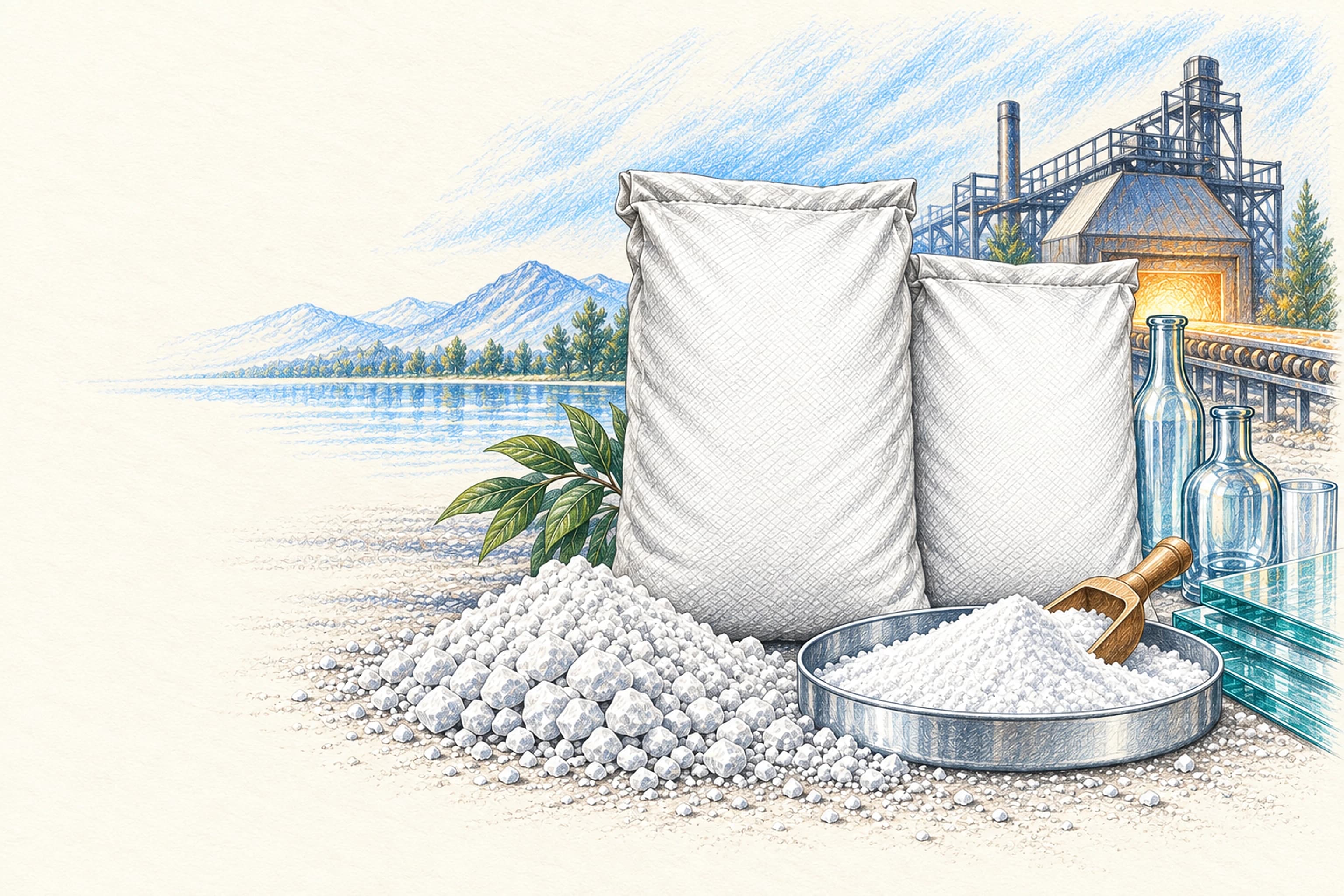
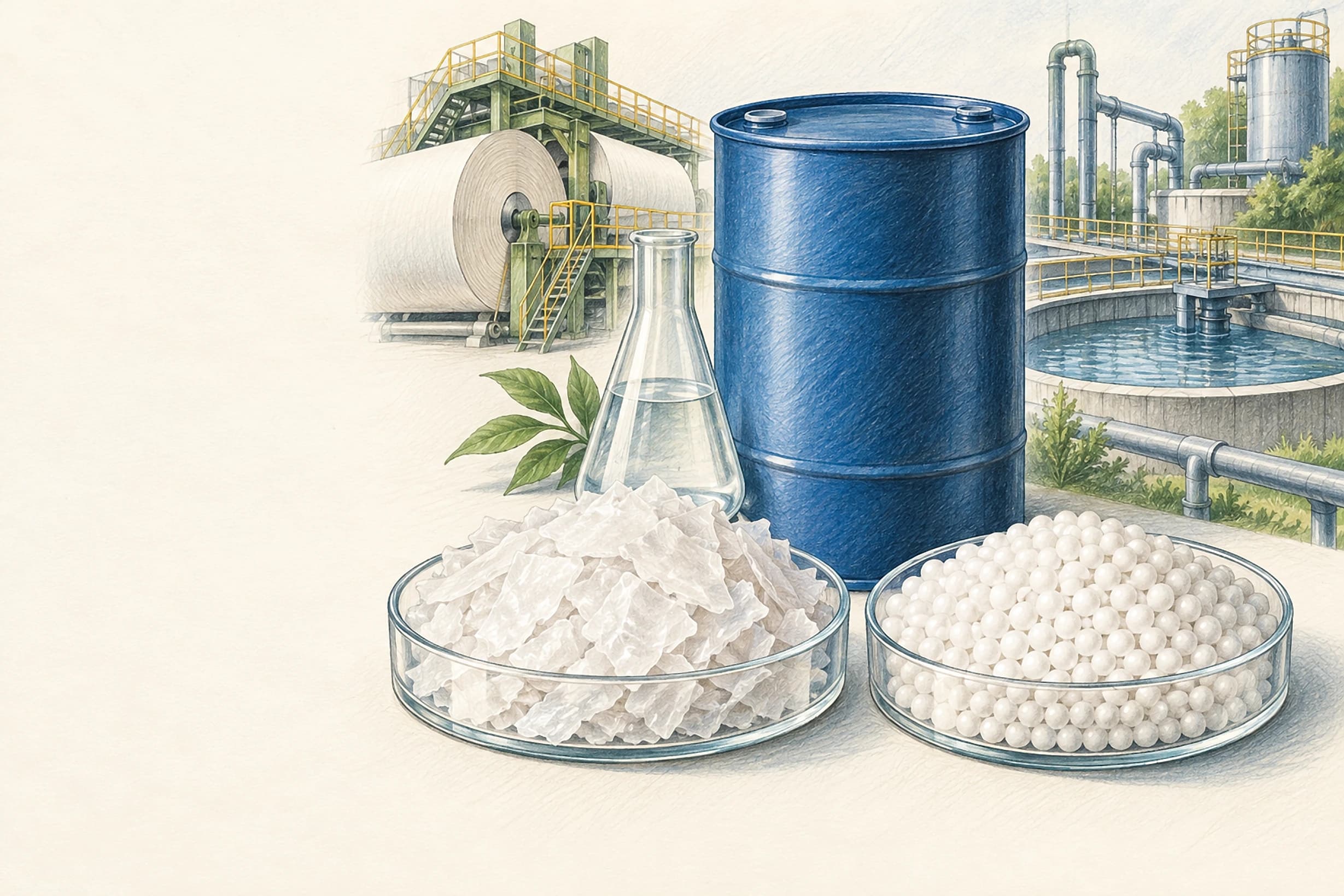
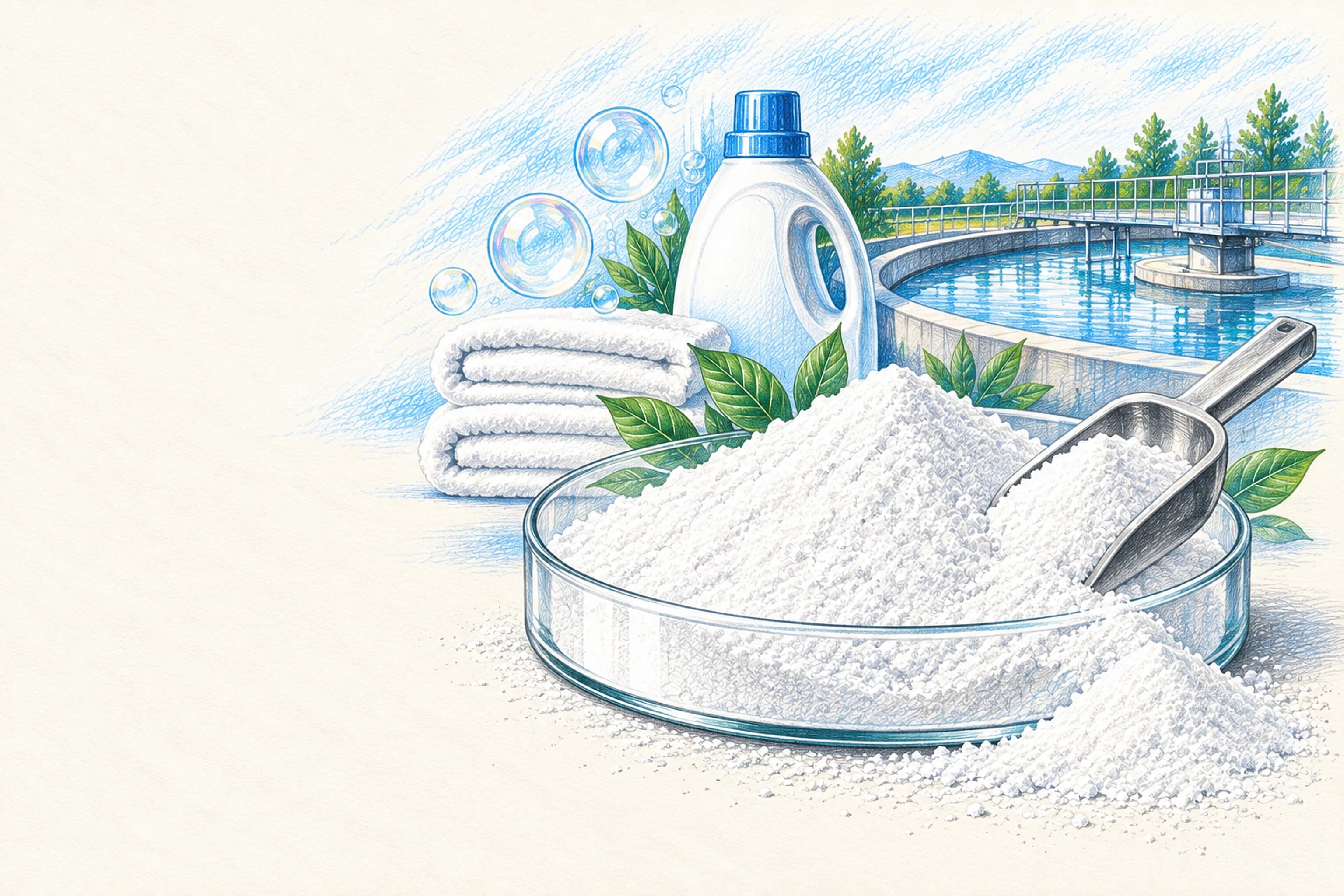
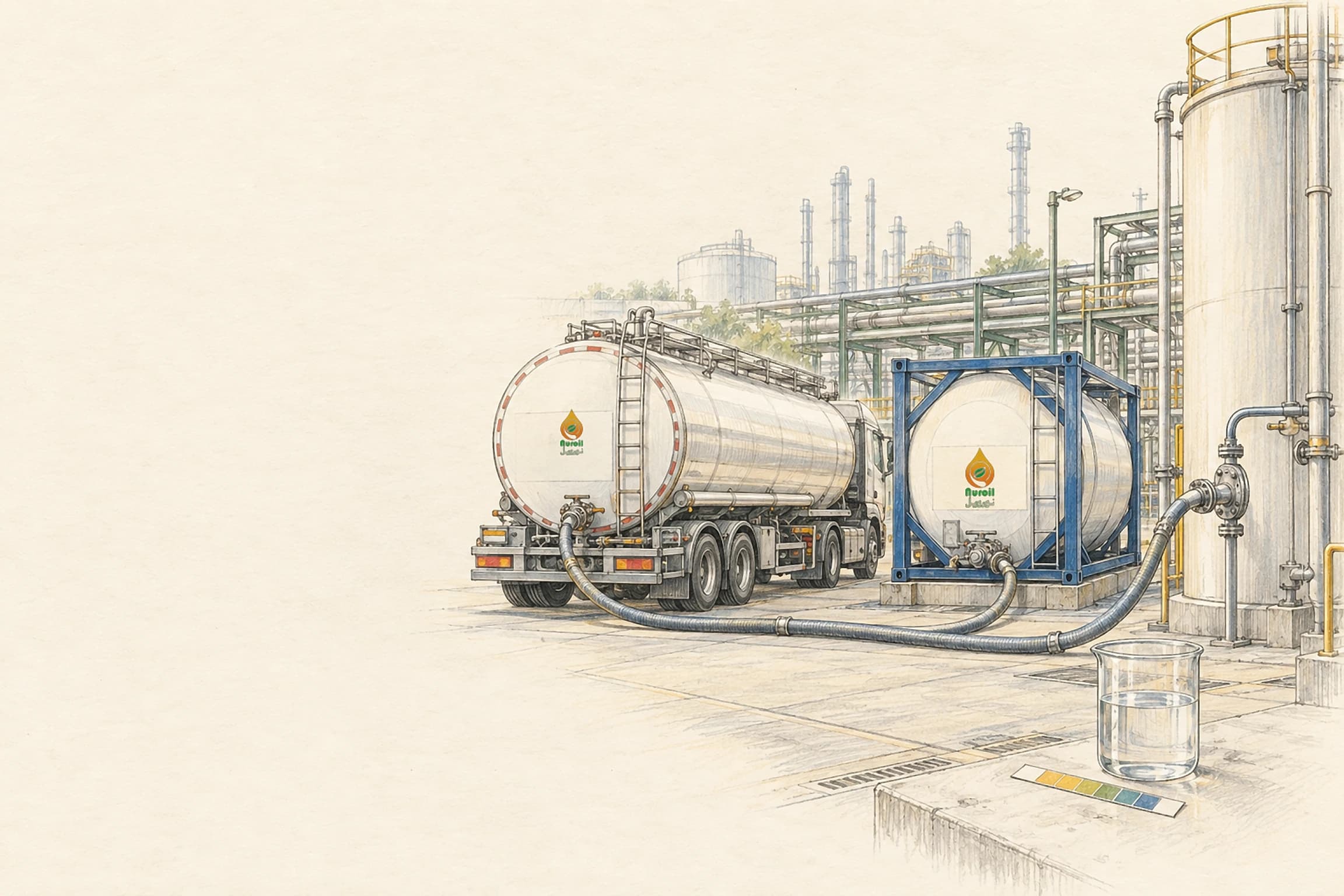
Anhydrous sodium bisulphate, 93% min NaHSO₄: granules that lower pH and total alkalinity in pools, process water and effluent, without handling liquid acid.
Sodium bisulphate, also called sodium hydrogen sulphate or dry acid, NaHSO₄, is the acid salt of sulphuric acid. It is supplied as dry, free-flowing granules that dissolve to a strongly acidic solution, pH about 1 to 2.
It does the job of hydrochloric or sulphuric acid in pH correction, but as a solid: no fumes, no liquid acid to decant, and simple to weigh and dose. Commercial grades are about 93% sodium bisulphate, the balance sodium sulphate.
Acid without the liquidA dry granule in place of hydrochloric or sulphuric acid: no fumes and no splashing liquid to decant.
Easy to doseWeighed or scooped straight into the water, or dissolved for a dosing pump.
Lowers pH and alkalinityBrings both back into range, so chlorine and coagulants work as they should.
Documented qualityEach offered batch comes with its Certificate of Analysis and safety data sheet.
What Nuroil does on every order
Why choose sodium bisulphate from Nuroil?
Checked against the batch CoA
NaHSO₄ content, iron and insolubles are reviewed on the batch certificate before loading.
Grade matched to your use
Technical grade for pools, water and industry; food-grade supply confirmed on request.
Packed to stay dry
Moisture-barrier bags and jumbo bags, because the granules draw in moisture.
One desk, firm offers
FOB, CFR or CIF from our Sharjah trade desk, usually within 24 hours.
02 TECHNICAL DATA
Technical specification.
NaHSO₄ content
93% min (95% and 98% grades available)Acid-base titration
Sodium sulphate (Na₂SO₄)
Balance, about 7%Calculated
Iron (Fe)
0.07% maxICP / colorimetric
Water-insoluble matter
0.1% maxGravimetric
Solution pH
About 1–2pH meter
Appearance
White to off-white granules or beadsVisual
Form
Anhydrous, free-flowing
01TECHNICAL GRADE
Pools, water and industry
For pH and alkalinity reduction in pools and spas, process water, effluent, metal finishing and cleaning products.
02FOOD GRADE / E514(ii)
Certification-controlled use
For food uses where permitted, with the food-additive certification and destination acceptance confirmed before ordering.
Selection guidance Tell us the use and the destination; food-grade supply depends on certification and is confirmed with the offer.
Sodium bisulphate against the liquid acids it often replaces.
Property
Sodium bisulphateThis page
Hydrochloric acid
Sulphuric acid
Form
Dry granules
Liquid, about 30–33%
Liquid, up to 98%
Fumes
None
Corrosive fumes
Little
Handling
Weigh and dose
Decant liquid acid
Concentrated liquid acid
Adds to the water
Sulphate
Chloride
Sulphate
Best suited to
Pools, small plants, dry stores
Large automated dosing
Large industrial dosing
03 HOW IT IS MADE
From salt and acid to dry granules.
Sodium bisulphate is made by reacting sulphuric acid with sodium chloride or sodium hydroxide. The molten product is cooled and formed into anhydrous granules or beads, then screened and packed dry.
01
Salt and acid
Sulphuric acid with sodium chloride, or with sodium hydroxide.
02
Reaction
The two react to sodium hydrogen sulphate.
03
Forming
The melt is cooled and formed into anhydrous granules or beads.
04
Testing and packing
Each batch is tested and sealed in moisture-barrier bags.
04 APPLICATIONS
Where it lowers pH.
01
Pools and spas
Lowers pH and total alkalinity, the dry "pH minus" for pool water.
02
Process water
pH correction of boiler feed, cooling and process water.
03
Effluent
Neutralises alkaline effluent before discharge.
04
Metal finishing
Pickling and cleaning of metal surfaces.
05
Cleaning products
Acid component of toilet-bowl and descaling cleaners.
06
Food
Acidulant and leavening acid, certified food grade only.
05 SAFETY & HANDLING
An acid. Protect your eyes.
This summary does not replace the Safety Data Sheet. Review the SDS and site procedure before first handling.
Danger
H318 Causes serious eye damage.
UN
3260 where classed
Class
8, PG III
01
Protect your eyes
Dust and solutions can cause serious eye damage; wear eye protection and gloves.
02
Never mix with chlorine products
Contact with hypochlorite releases chlorine gas; store and dose them apart.
03
Add it to water
Dissolve it in water, in portions, with stirring.
04
Keep it dry
It draws in moisture and the damp product corrodes metal.
05
Exposure response
Rinse eyes cautiously with water for several minutes, remove contact lenses, and seek medical attention.
Keep it dry, keep it sealed.
Keep itDry and sealed
The granules are hygroscopic: kept sealed in a dry store they stay free-flowing. Confirm the producer’s shelf life with the offer.
Keep bags closedMoisture cakes the granules and makes them corrosive; reseal at once.
Dry, covered storeOff the floor on pallets, out of rain and away from water lines.
Apart from chlorine and alkalisAway from hypochlorite and other chlorine products, and from strong alkalis.
First in, first outUse the oldest stock first and keep the batch label with each lot.
Plan documentation early.
HS code2833.19
CAS number7681-38-1
EC number231-665-7
UN numberUN 3260
GHS
Serious eye damage, category 1 (H318)
Transport
UN 3260, class 8, PG III where classed; some product SDSs list it as not regulated: confirm per product
Food use (E514(ii))
Only certified food-grade batches; confirm local food-authority requirements
National regulations
Confirm the destination’s chemical-import requirements
06 PACKING OPTIONS
Choose your packing.
Pack sizes and container loads depend on the producer; the offer confirms them.
Smaller orders
25 kg bags
Moisture-barrier bags for distributors, pool companies and plants.
It lowers pH and total alkalinity. It is the dry "pH minus" or "pH decreaser" sold for pools and spas.
02Is sodium bisulphate the same as sodium bisulfite?
No. Sodium bisulphate (NaHSO₄) is an acid used to lower pH. Sodium bisulfite (NaHSO₃) is a reducing agent used, for example, to remove chlorine. They are different chemicals.
03Why use it instead of hydrochloric acid?
It is a dry solid: no fumes, nothing to decant, and simpler to store and weigh. Hydrochloric acid suits large, automated dosing systems.
04How strong is it?
Commercial anhydrous grades are about 93% NaHSO₄, the balance sodium sulphate. In water it gives a strongly acidic solution, pH about 1 to 2.
05What is the HS code?
Sodium hydrogen sulphate is classified under HS 2833.19. Its CAS number is 7681-38-1.
06Is it dangerous goods?
Several safety data sheets classify the solid as UN 3260, class 8, packing group III; others list specific products as not regulated. The shipment follows the classification in the producer’s SDS.
07What documents come with a shipment?
A Certificate of Analysis and Safety Data Sheet, with the Certificate of Origin as required.