Polyaluminium chloride, PAC, is a family of partly neutralised aluminium chlorides, Alₙ(OH)ₘCl₃ₙ₋ₘ. Part of the aluminium is already formed into charged polymer chains, so it destabilises particles and builds floc faster than aluminium sulphate, and works over a wider pH and temperature range.
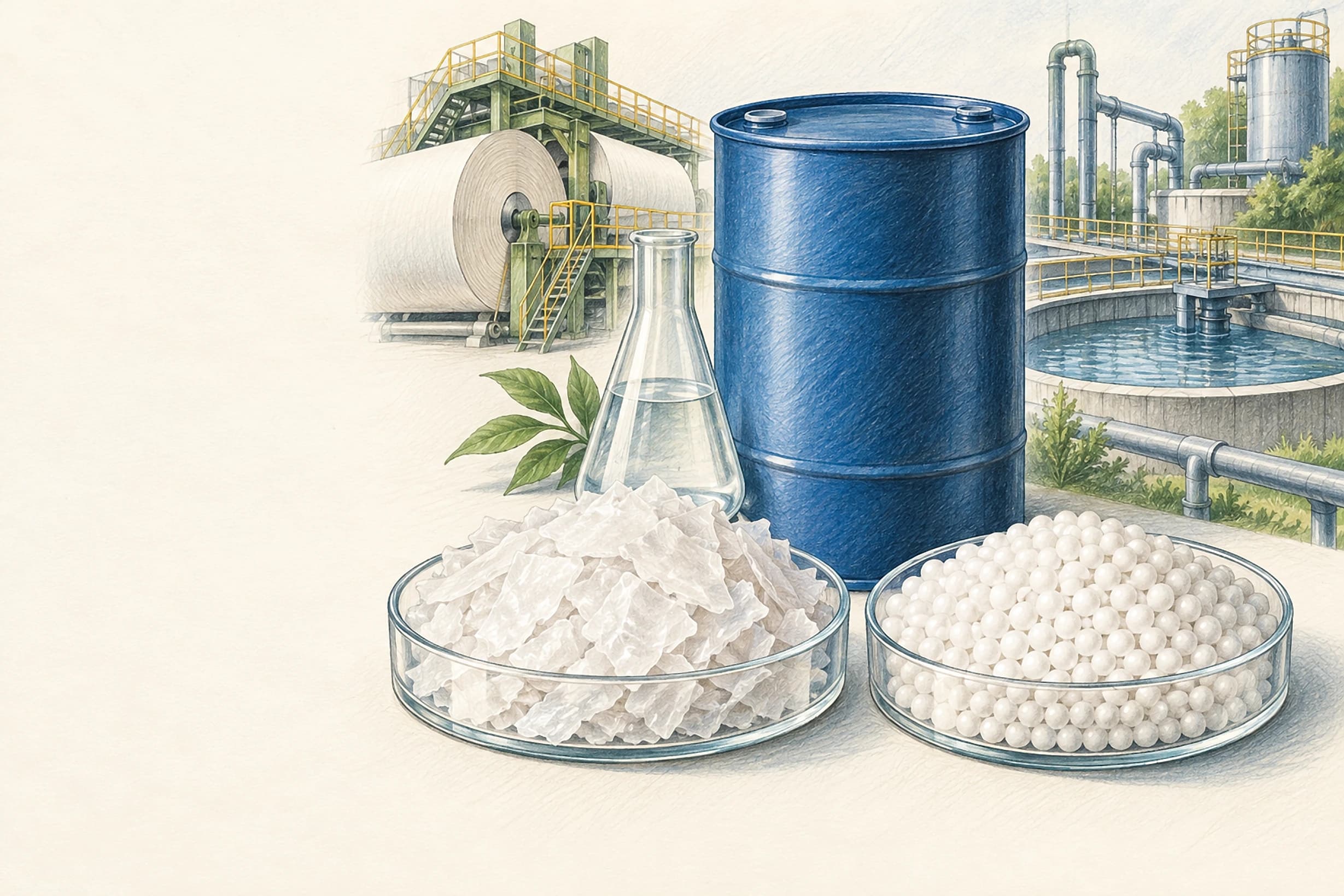
Its basicity, the share of the aluminium already bound to hydroxide, sets how it behaves: higher basicity consumes less alkalinity and lowers the pH of the water less. It is sold as a yellow or white powder, or as a ready-to-dose liquid.
Faster, denser flocPre-formed aluminium polymers build floc quickly, so settling and filtration start sooner than with alum.
Less effect on pHMedium and high basicity grades consume less alkalinity, so less lime or caustic is needed to correct pH.
Works in cold and warm waterKeeps working across a wide temperature and pH range, where alum slows down.
Documented qualityEach offered batch comes with its Certificate of Analysis and safety data sheet.
What Nuroil does on every order
Why choose PAC from Nuroil?
Checked against the batch CoA
Al₂O₃, basicity, insolubles and heavy metals are reviewed on the batch certificate before loading.
Grade matched to the water
Drinking-water or industrial grade, yellow or white, chosen for the water and the plant.
Packed to stay dry
Lined bags for powder, which draws moisture; IBCs and drums for liquid.
One desk, firm offers
FOB, CFR or CIF from our Sharjah trade desk, usually within 24 hours.
02 TECHNICAL DATA
Technical specification.
Aluminium oxide (Al₂O₃), powder
28% min, typically 29–31%EDTA titration
Aluminium oxide (Al₂O₃), liquid
About 10–18%, by gradeEDTA titration
Basicity
40–90%, by grade (often 70–85% for drinking water)Titration
Water-insoluble matter
0.1–0.6% max (powder, drinking-water grade)Gravimetric
pH (1% solution)
3.5–5.0pH meter
Iron (Fe)
0.02% max (white); up to about 2% (yellow)ICP / colorimetric
Arsenic (As)
0.0002% max (drinking-water grade)ICP / AAS
Lead (Pb)
0.001% max (drinking-water grade)ICP / AAS
Appearance
Yellow or white powder; colourless to yellow liquidVisual
Reference standards
EN 883, AWWA B408, GB 15892
01YELLOW POWDER
General water treatment
Spray- or drum-dried PAC with 28–30% Al₂O₃ and some iron; the common grade for drinking water, effluent and industry.
02WHITE POWDER
High purity
Low-iron PAC from aluminium hydroxide, for drinking water where colour matters, paper and cosmetics.
03LIQUID
Ready to dose
About 10–18% Al₂O₃ solution, pumped straight to dosing with no make-up tank; best for nearby supply.
04HIGH BASICITY
Low-alkalinity water
Above about 70% basicity, for soft or low-alkalinity water and desalination pre-treatment where pH must hold.
Selection guidance Tell us the raw-water turbidity, alkalinity and pH, the treatment stage and any jar-test results, and we will confirm the grade and form.
Three common coagulants. The right one depends on the water, the pH and the sludge you can handle; a jar test decides.
Property
PAC
Aluminium sulphate
Ferric chloride
Floc forming
Fast, dense
Moderate
Fast, heavy
Alkalinity used
Low to moderate
High
High
Working pH range
About 5–9
About 5.5–7.5
About 4–11
Sludge volume
Lower
Higher
Higher
Best suited to
Drinking water, cold or low-alkalinity water
General clarifying at low cost
Wastewater, phosphate removal, colour
03 HOW IT IS MADE
From aluminium and acid to a ready coagulant.
An aluminium source, aluminium hydroxide for white grades or bauxite and calcium aluminate for yellow grades, is reacted with hydrochloric acid, then partly neutralised to the target basicity. The liquid is filtered and sold as it is, or spray- or drum-dried to powder.
01
Aluminium and acid
Aluminium hydroxide or bauxite is fed with hydrochloric acid.
02
Reaction and polymerising
The aluminium dissolves and is partly neutralised to the target basicity.
03
Drying
The filtered liquid is spray- or drum-dried to powder, or kept as liquid.
04
Testing and packing
Each batch is tested for Al₂O₃, basicity and insolubles, then packed.
04 APPLICATIONS
Where it clarifies.
01
Drinking water
Coagulation of river, reservoir and well water ahead of settling and filtration.
02
Industrial effluent
Removal of suspended solids, colour, oil and phosphate from process effluent.
03
Sewage treatment
Chemical phosphate removal and better settling in municipal plants.
04
Desalination pre-treatment
Coagulation ahead of media and membrane filters on seawater and brackish feed.
05
Paper making
Sizing aid and retention of fines and fillers in paper and board.
06
Swimming pools
Clarifier to gather fine particles for the filter.
05 SAFETY & HANDLING
Acidic. Protect the eyes.
This summary does not replace the Safety Data Sheet. Review the SDS and site procedure before first handling.
Danger
H318 Causes serious eye damage.
H290 May be corrosive to metals (liquid).
UN
3264 liquid · powder per SDS
Class
8, corrosive · PG III (liquid)
01
Eye protection first
Dust and solution cause serious eye damage; wear goggles or a face shield.
02
Corrosive to metals
The liquid is acidic: use plastic, rubber-lined or suitable stainless equipment, not mild steel.
03
Keep from strong alkalis
Do not mix concentrated product with caustic or lime; dose them at separate points.
04
Control dust
Handle powder with dust extraction or a dust mask, and make up solutions with stirring.
05
Exposure response
Rinse eyes immediately with plenty of water for at least 15 minutes and seek medical attention.
Dry for powder, covered for liquid.
Shelf lifeAbout 12 months
Powder keeps about a year or more when sealed and dry; it draws moisture and cakes if left open. Liquid is usually used within six months. Confirm the producer’s shelf life with the offer.
Keep bags sealedThe powder is hygroscopic; reseal opened bags and keep them off the floor.
Shade the liquidStore liquid out of direct sun in plastic or lined tanks; heat shortens its life.
SegregateApart from strong alkalis and from metals the acidic liquid can corrode.
First in, first outUse the oldest stock first and keep the batch label with each lot.
Plan documentation early.
HS code2827.49
CAS number1327-41-9
EC number215-477-2
UN numberUN 3264
TransportPowder
GHS
Serious eye damage; liquid also corrosive to metals
Transport
Liquid commonly UN 3264, class 8, PG III; powder often not regulated, per the producer SDS
Drinking water use
EN 883, AWWA B408 or GB 15892 grade; confirm local approval (for example NSF/ANSI/CAN 60)
National regulations
Confirm the destination’s import and dangerous-goods requirements
06 PACKING OPTIONS
Choose your packing.
Pack sizes and container loads depend on the producer and grade; the offer confirms them.
Smaller orders
25 kg lined bags
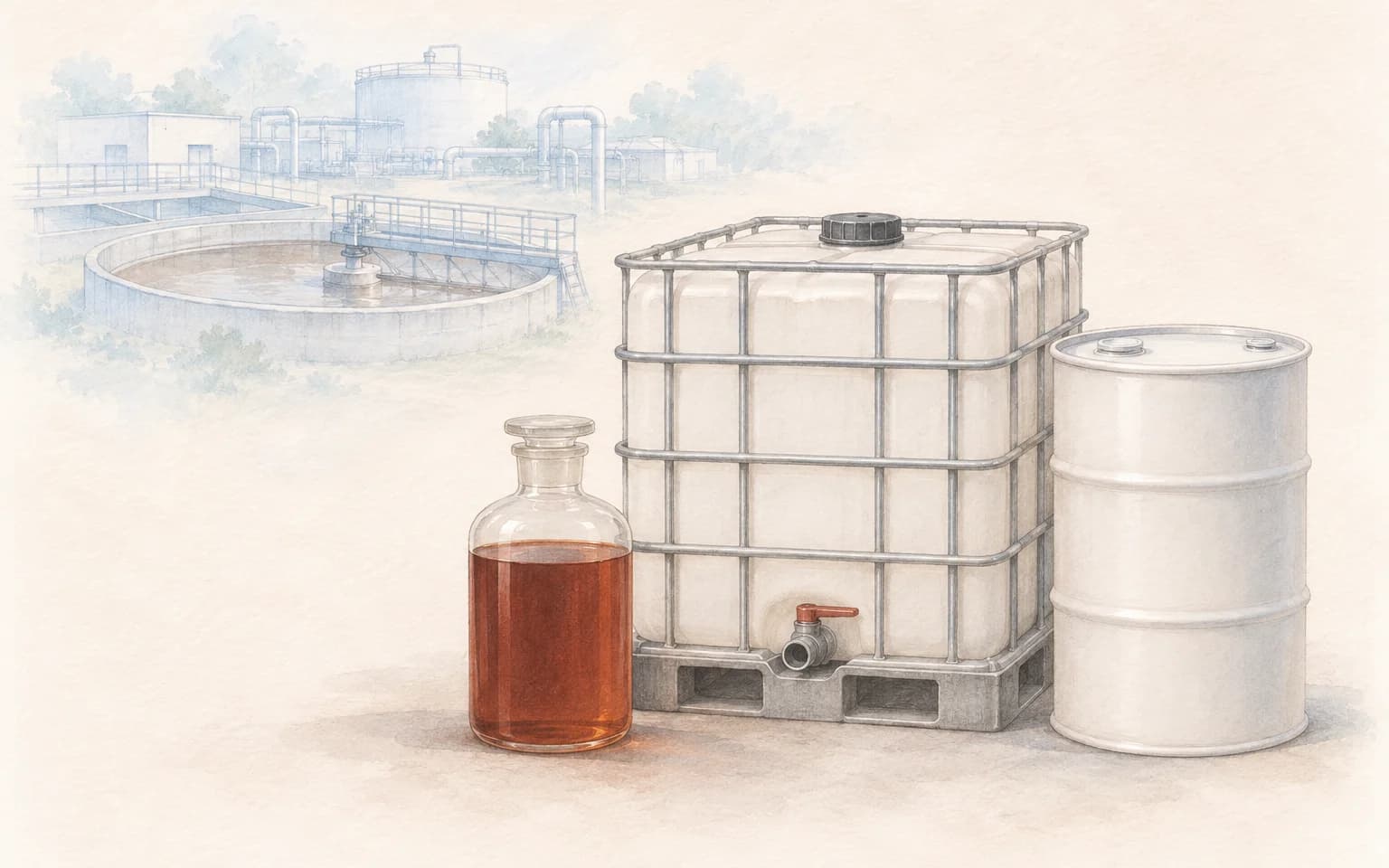
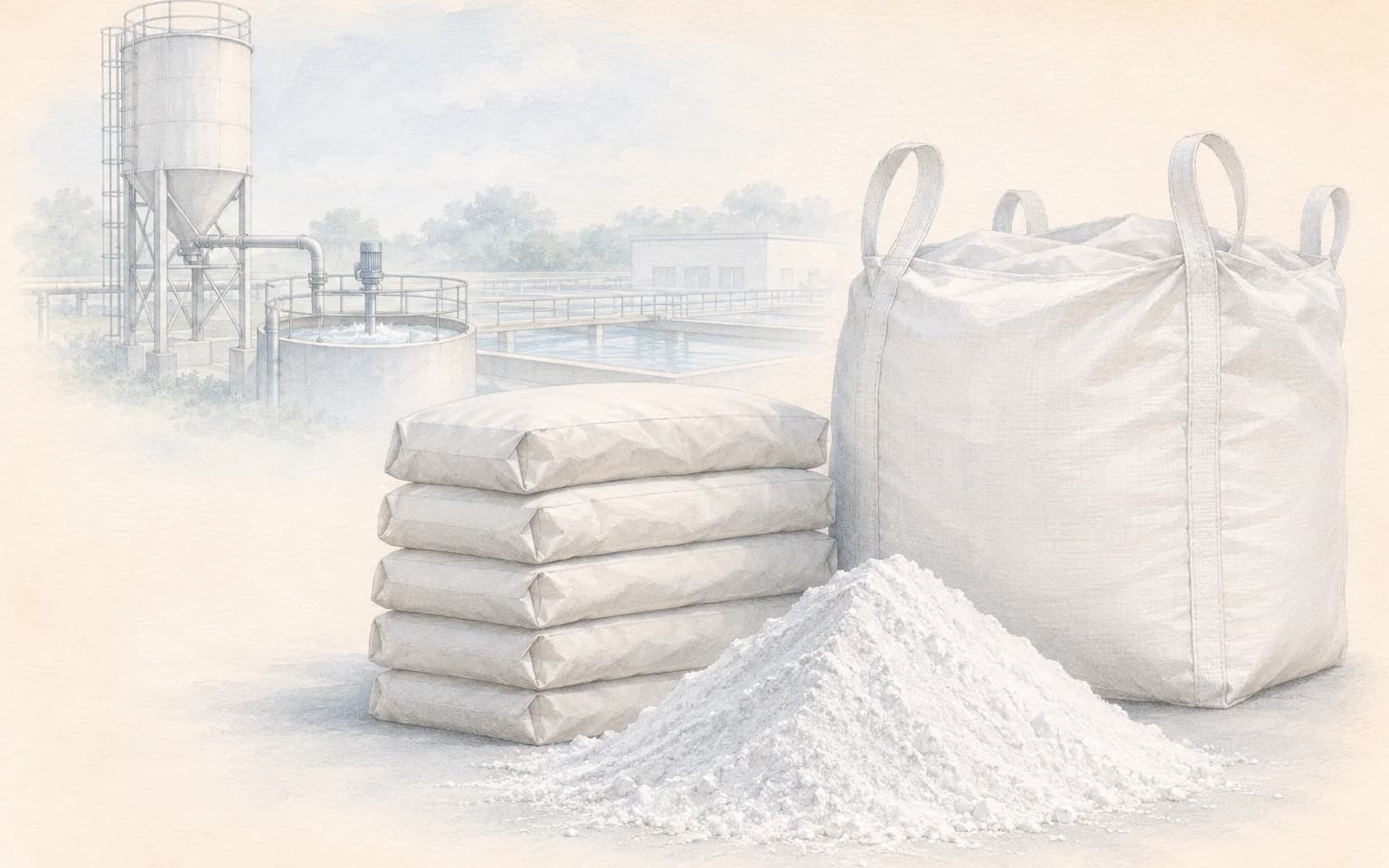
Powder in PP woven or paper bags with a PE liner, palletised, the usual export packing.
The aluminium content expressed as aluminium oxide, Al₂O₃. Powder is usually 28–30%; liquid is about 10–18%. Compare offers on Al₂O₃ and basicity, not on product weight.
02What is basicity?
The share of the aluminium already combined with hydroxide. Higher basicity means faster floc and less alkalinity consumed, so the pH of the treated water drops less.
03Yellow or white PAC?
Yellow PAC carries some iron from bauxite and is the common grade for water and effluent. White PAC is made from aluminium hydroxide, is low in iron and suits drinking water, paper and other uses where colour matters.
04How much PAC do I need?
Doses are often in the range of a few to a few tens of mg/L, but they depend entirely on the water. A jar test on your raw water sets the dose.
05Is it dangerous goods for shipping?
Liquid PAC is commonly shipped as UN 3264, class 8, packing group III. The powder is often not regulated for transport; the producer SDS decides.
06What is the HS code?
PAC is usually declared under HS 2827.49 (chloride hydroxides); some producers use 2827.32. Its CAS number is 1327-41-9.
07What documents come with a shipment?
A Certificate of Analysis and Safety Data Sheet, with the Certificate of Origin and any drinking-water certificate as required.
Include powder or liquid, the Al₂O₃ and basicity you need, the use, quantity and destination for a tailored offer. We reply with a firm FOB, CFR or CIF offer, usually within 24 hours.