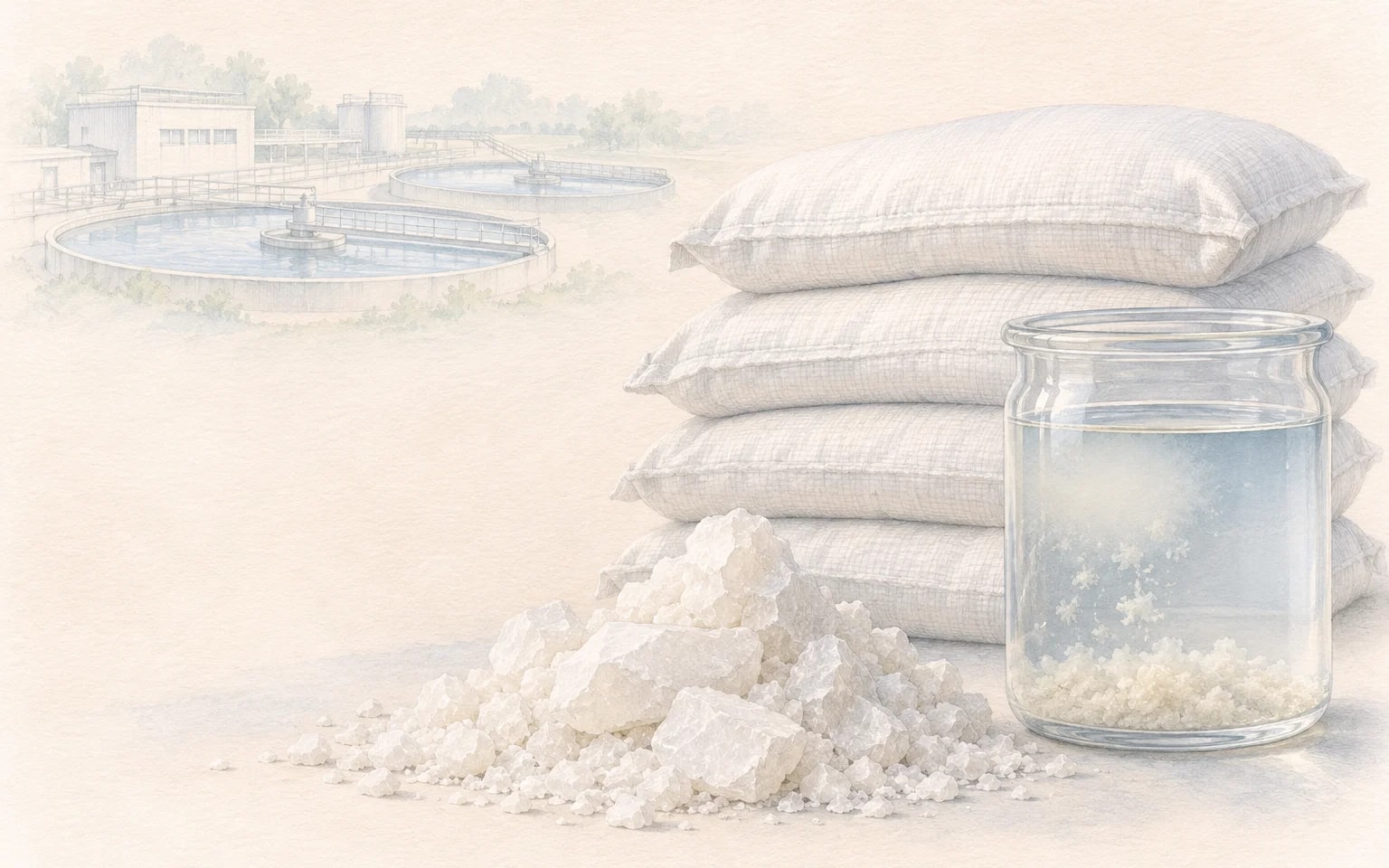
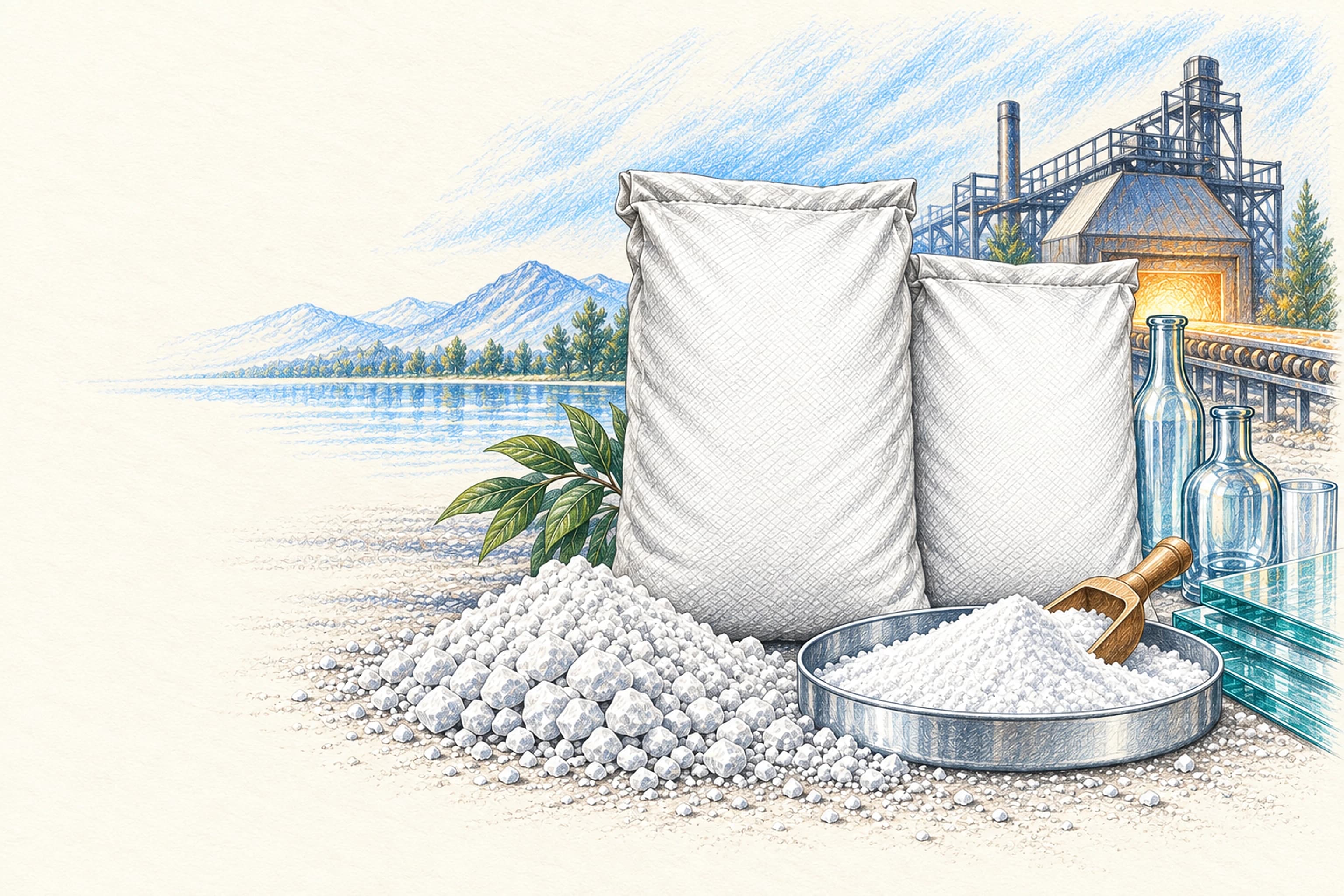
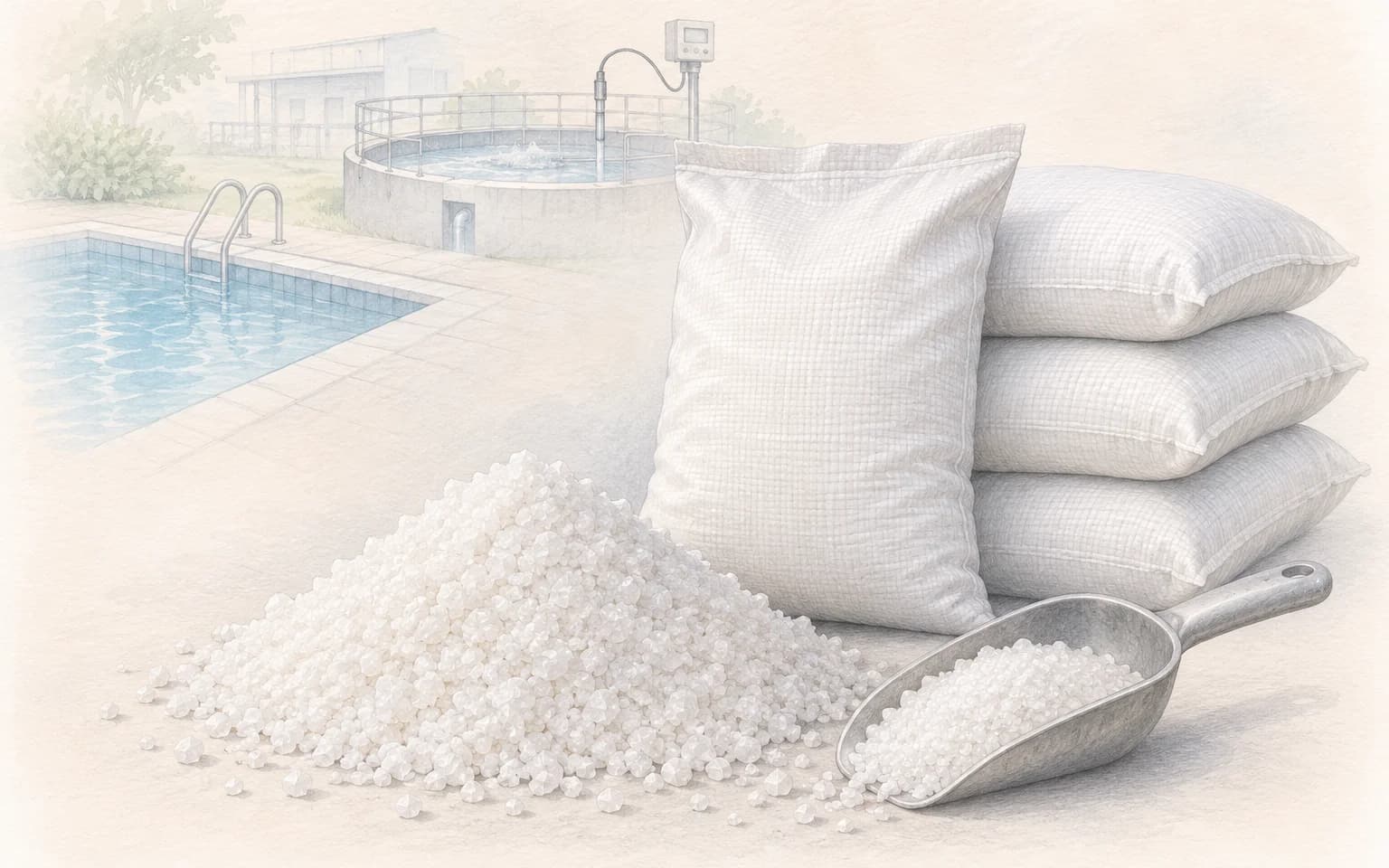
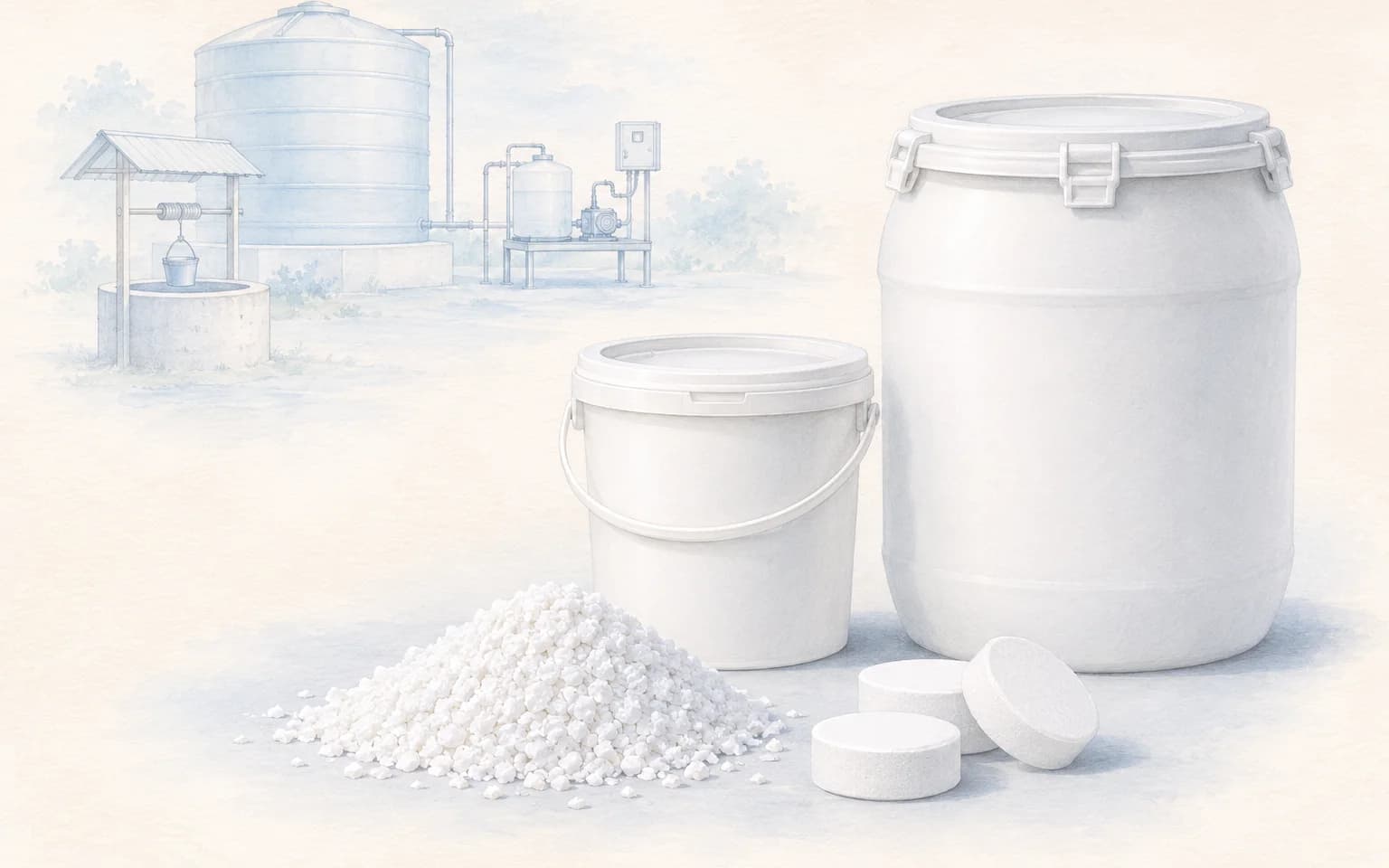
Aluminium sulphate, or alum, Al₂(SO₄)₃·14H₂O, is the most widely used coagulant in water treatment. Dissolved in water it forms aluminium hydroxide floc, which gathers fine suspended particles, colour and some phosphate so they settle out or are caught by the filter.
Commercial solid grades carry about 17% aluminium oxide (Al₂O₃). Iron-free grades, with very low iron, are used where the water or product must not pick up colour; standard grades suit general water treatment and industry.
Proven coagulantThe standard coagulant for drinking water and effluent, with long-established dosing practice.
Clears cloudy poolsSettles fine particles to the floor so they can be vacuumed away, or helps sand filters hold them.
Iron-free or standardA low-iron grade where colour matters, and a standard grade where price per kilogram decides.
Documented qualityEach offered batch comes with its Certificate of Analysis and safety data sheet.
What Nuroil does on every order
Why choose aluminium sulphate from Nuroil?
Checked against the batch CoA
Al₂O₃, iron and insolubles are reviewed on the batch certificate before loading.
Grade matched to your use
Iron-free for drinking water, pools and paper; standard for effluent and industry.
Packed to stay dry
Lined bags and jumbo bags, because the solid draws in moisture and cakes.
One desk, firm offers
FOB, CFR or CIF from our Sharjah trade desk, usually within 24 hours.
02 TECHNICAL DATA
Technical specification.
Aluminium oxide (Al₂O₃)
17% typical; 15.6% min (GB 31060), 17% min on many offersEDTA titration
Iron (Fe)
0.005–0.01% max (iron-free); up to 0.5% (standard)ICP / colorimetric
Water-insoluble matter
0.1–0.2% maxGravimetric
pH (1% solution)
3.0 min, typically 3.0–3.5pH meter
Arsenic (As)
0.0005% max (water-treatment grade)ICP / AAS
Lead (Pb)
0.001–0.002% max (water-treatment grade)ICP / AAS
Appearance
White or off-white granules, powder, flakes or kibbled lumpsVisual
Reference standard
GB 31060 (China), EN 878 (Europe)
01IRON-FREE
Drinking water, pools and paper
Very low iron, so no colour in treated water, pool water or white paper.
02STANDARD (NON-IRON-FREE)
Effluent and industry
Higher iron, for wastewater, effluent and industrial uses where colour does not matter, at lower cost.
03GRANULES AND POWDER
Dissolve and dose
Dissolve quickly for solution dosing; granules give less dust in handling.
04KIBBLED
Bulk dissolving
Coarse broken lumps for dissolving tanks at larger treatment plants.
Selection guidance Tell us the water you treat, how you dissolve and dose, and any limit on iron, and we will confirm the grade and form.
The same coagulant at two iron levels. The right one depends on whether colour matters.
Property
Iron-free
Standard
Aluminium oxide (Al₂O₃)
About 17%
About 15.6–17%
Iron (Fe)
0.005–0.01% max
Up to 0.5%
Colour risk
Very low
Can tint water
Price
Higher
Lower
Best suited to
Drinking water, pools, paper
Effluent, wastewater, industry
03 HOW IT IS MADE
From bauxite and acid to solid alum.
Bauxite or aluminium hydroxide is digested in sulphuric acid to form aluminium sulphate solution. The solution is settled and filtered, concentrated, then cooled to a solid that is crushed to granules, powder or kibbled lumps. Iron-free grades start from aluminium hydroxide.
01
Alumina and acid
Bauxite or aluminium hydroxide with sulphuric acid.
02
Digestion
The two react to aluminium sulphate solution, which is settled and filtered.
03
Solidifying
The solution is concentrated, cooled to a solid and crushed to size.
04
Testing and packing
Each batch is tested for Al₂O₃ and iron and sealed in lined bags.
04 APPLICATIONS
Where it clarifies.
01
Swimming pools
Floc treatment that settles cloudiness to the floor for vacuuming, and a filter aid for sand filters.
02
Drinking water
Coagulation of raw water to remove turbidity and colour before filtration.
03
Wastewater and effluent
Coagulation of suspended solids and removal of phosphate.
04
Paper
Sizing and pH control in papermaking, iron-free grade.
05
Textiles and leather
Mordant in dyeing and an aid in tanning.
06
Construction and industry
Concrete accelerators, fire-fighting foam and catalyst carriers.
05 SAFETY & HANDLING
Acidic in water. Protect your eyes.
This summary does not replace the Safety Data Sheet. Review the SDS and site procedure before first handling.
Danger
H318 Causes serious eye damage.
H290 May be corrosive to metals (some SDSs).
UN
Not regulated
Transport
Not dangerous goods, per most SDSs
01
Protect your eyes
Dust and solutions can cause serious eye damage; wear eye protection and gloves.
02
Avoid dust
Dust irritates the airways; handle with ventilation or a dust mask.
03
Keep it dry
The damp solid and its solution are acidic and corrode steel and aluminium.
04
Away from strong alkalis
It reacts with strong alkalis; dose separately from soda ash and caustic soda.
05
Exposure response
Rinse eyes cautiously with water for several minutes, remove contact lenses, and seek medical attention.
Keep it dry, keep it sealed.
Keep itDry and sealed
Aluminium sulphate is stable but draws in moisture and cakes; kept sealed in a dry store it stays free-flowing. Confirm the producer’s shelf life with the offer.
Keep bags closedMoisture cakes the solid and makes it corrosive; reseal at once.
Dry, covered storeOff the floor on pallets, out of rain and away from water lines.
Apart from alkalisAway from strong alkalis, and off bare steel or aluminium surfaces.
First in, first outUse the oldest stock first and keep the batch label with each lot.
Plan documentation early.
HS code2833.22
CAS number10043-01-3
EC number233-135-0
GHS
Serious eye damage, category 1 (H318); some SDSs add corrosive to metals (H290)
Transport
Solid not regulated as dangerous goods on most SDSs; confirm per product
Drinking water use
EN 878 or GB 31060 water-treatment grade; confirm local approval for potable water
National regulations
Confirm the destination’s chemical-import requirements
06 PACKING OPTIONS
Choose your packing.
Pack sizes and container loads depend on the producer and form; the offer confirms them.
Smaller orders
25 kg and 50 kg bags
PP woven bags with a PE liner, for pool companies, plants and distributors.
It clears cloudy water. It gathers fine particles into floc that settles to the floor for vacuuming, or that a sand filter can hold. It is a clarifier, not a disinfectant.
02What does 17% mean?
The aluminium content stated as aluminium oxide, Al₂O₃. Commercial solid grades are about 17%, which equals roughly 9% aluminium.
03Iron-free or standard?
Iron-free grades carry very little iron and do not tint water or paper; use them for drinking water, pools and paper. Standard grades cost less and suit effluent and industry.
04Does it affect pH?
Yes. It lowers pH and alkalinity as it forms floc. Check and correct pH and alkalinity after dosing, for example with soda ash.
05Is it dangerous goods for shipping?
Most safety data sheets list solid aluminium sulphate as not regulated for transport. It is still classed as causing serious eye damage, so handle it with eye protection.
06What is the HS code?
Aluminium sulphate is classified under HS 2833.22. Its CAS number is 10043-01-3; hydrated grades are also listed under 17927-65-0.
07What documents come with a shipment?
A Certificate of Analysis and Safety Data Sheet, with the Certificate of Origin as required.
Include the grade (iron-free or standard), form, quantity and destination for a tailored offer. We reply with a firm FOB, CFR or CIF offer, usually within 24 hours.