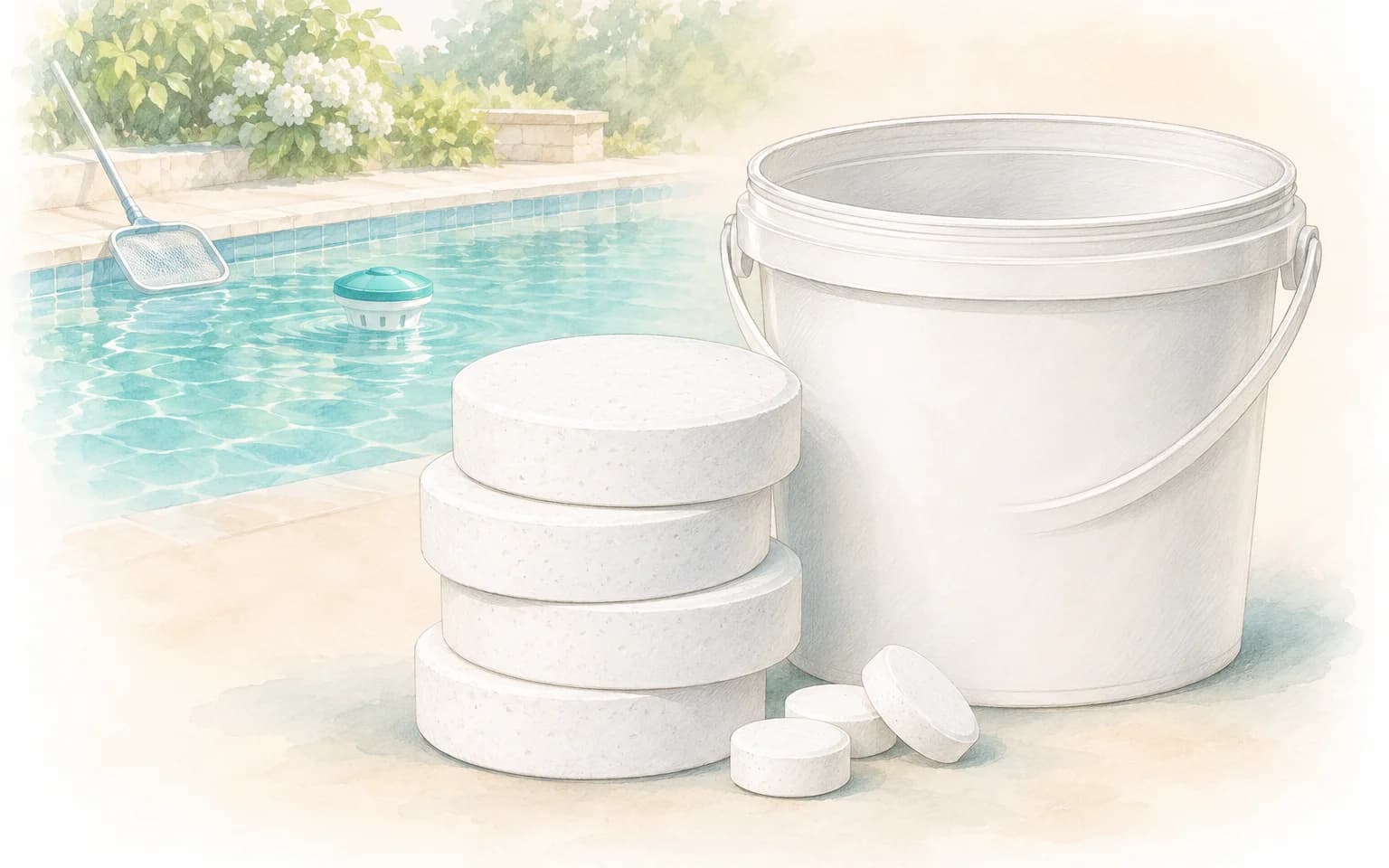
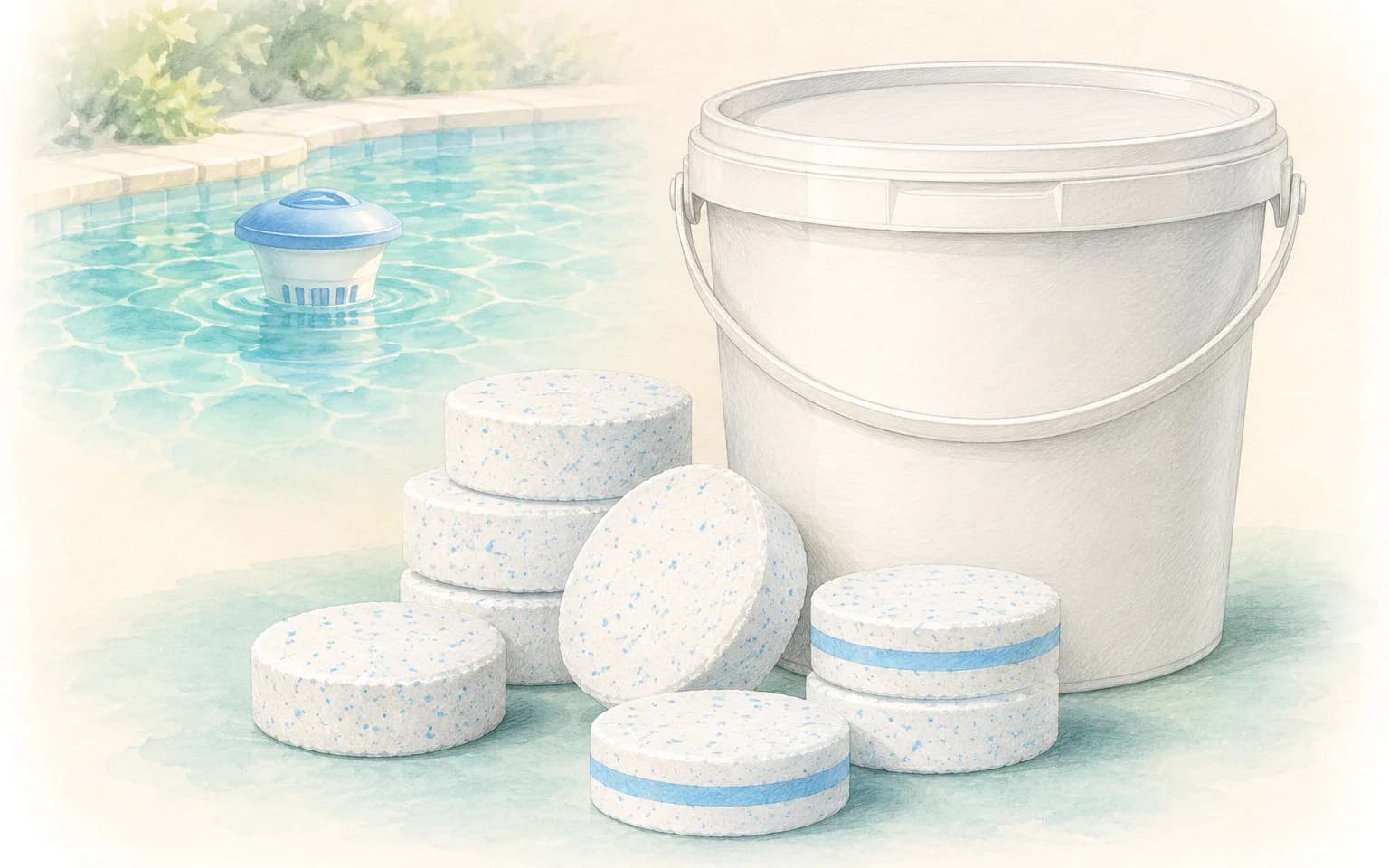
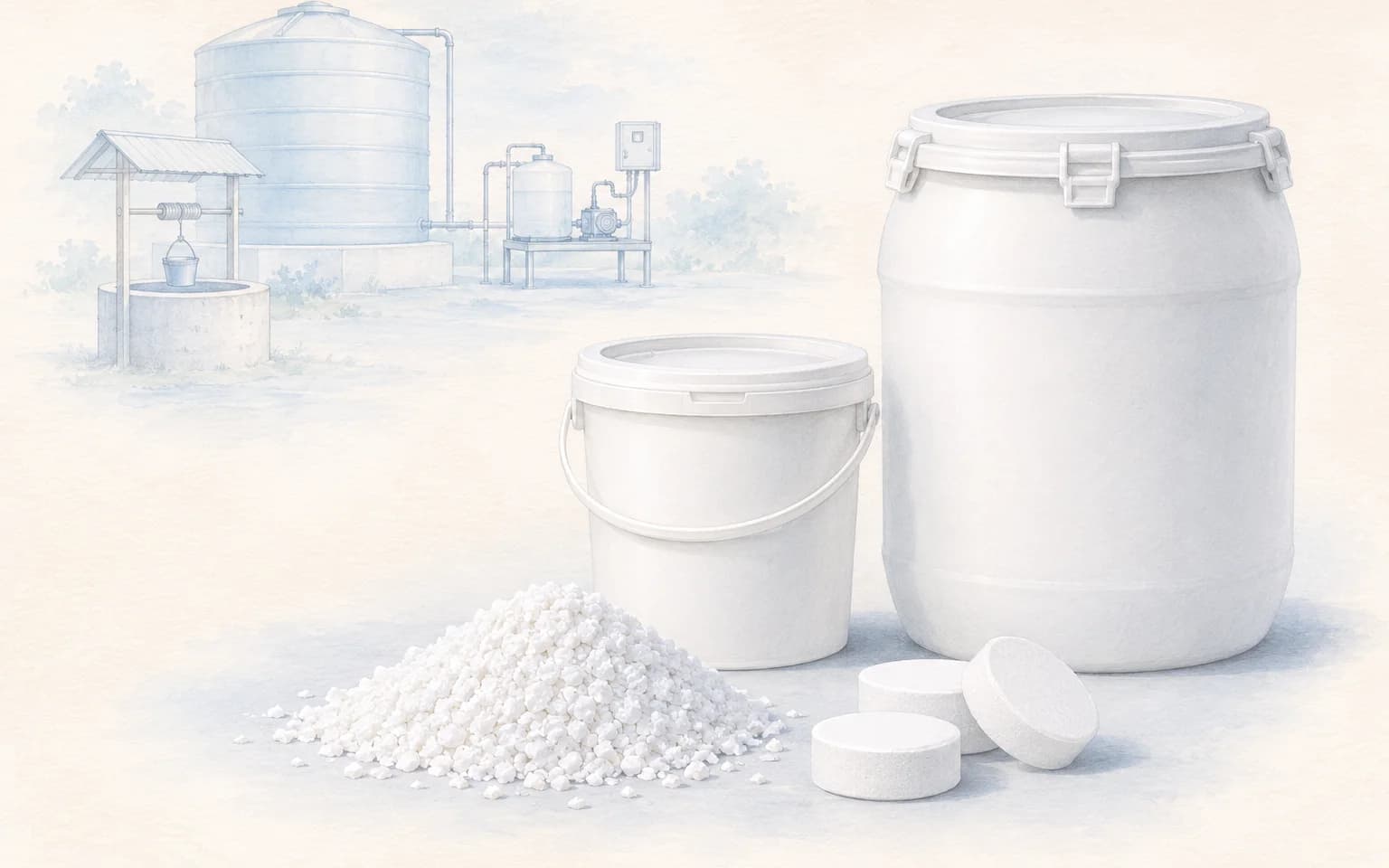
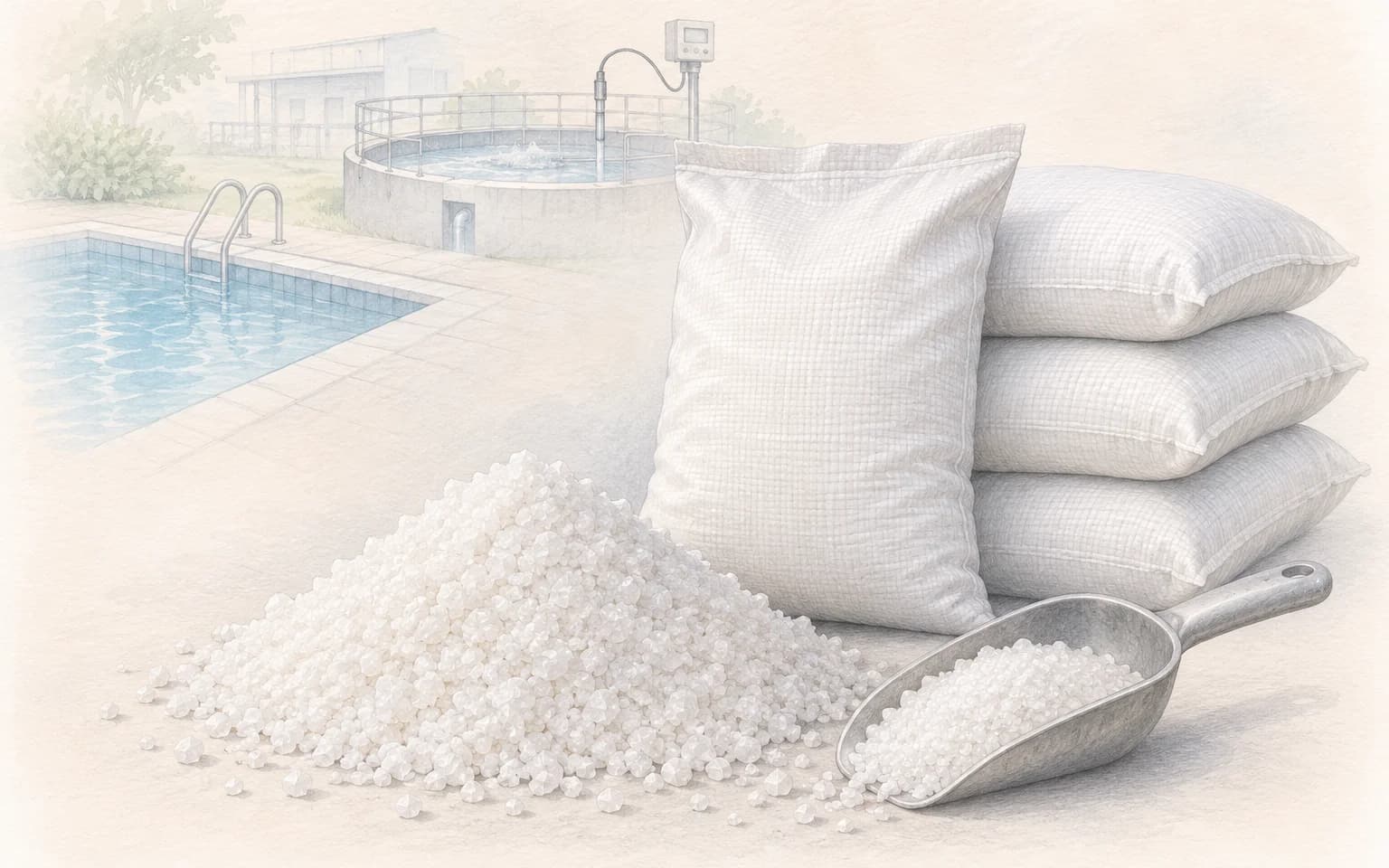
Sodium dichloroisocyanurate granules, dihydrate 55–56% or anhydrous 60–62% available chlorine, that dissolve quickly for pool dosing, shock treatment and water disinfection.
Sodium dichloroisocyanurate, SDIC or NaDCC, C₃Cl₂N₃NaO₃, is a white solid that dissolves quickly and completely to release hypochlorous acid, free chlorine. Like TCCA it also releases cyanuric acid, which protects chlorine from sunlight.
It is sold as the dihydrate, with about 55–56% available chlorine, or as the anhydrous salt, with about 60–62%. Its solution is close to neutral, so it barely moves pool pH, and it leaves no insoluble residue.
Dissolves fast and fullyHighly soluble with no insoluble residue, so it works within minutes and leaves no cloudiness.
Near-neutral pHIts solution is close to neutral, so it needs little pH correction after dosing.
Stabilised against sunlightThe cyanuric acid it releases slows the loss of chlorine to sunlight in outdoor pools.
Documented qualityEach offered batch comes with its Certificate of Analysis and safety data sheet.
What Nuroil does on every order
Why choose SDIC from Nuroil?
Checked against the batch CoA
Available chlorine, moisture and pH are reviewed on the batch certificate before loading.
Classified for its grade
Shipped under the UN entry the producer’s SDS gives for the dihydrate or anhydrous grade, with matching labels and declarations.
Packed to stay dry
Sealed drums and lined bags, kept out of the heat in transit and at the port.
One desk, firm offers
FOB, CFR or CIF from our Sharjah trade desk, usually within 24 hours.
02 TECHNICAL DATA
Technical specification.
Available chlorine
55% min, typically 56% (dihydrate); 60% min, up to 62% (anhydrous)Iodometric titration
Moisture
About 5–10% (dihydrate); 3% max (anhydrous)Gravimetric
pH (1% solution)
5.5–7.0pH meter
Appearance
White granules, powder or tabletsVisual
Odour
Chlorine
Granule size
8–30 mesh or 20–60 meshSieve analysis
Reference standard
HG/T 3779 (Chinese producers)
01DIHYDRATE · 55–56%
The common pool grade
The usual SDIC for pools, spas and general disinfection, and the more widely traded grade.
02ANHYDROUS · 60–62%
Highest strength
More chlorine per kilogram; used where freight and dose volume matter, and for compounding.
03GRANULES
Dose directly
8–30 or 20–60 mesh granules to broadcast or pre-dissolve for quick dosing and shock treatment.
04TABLETS AND POWDER
Effervescent and formulation
Effervescent tablets for drinking water and surface disinfection; powder for formulating products.
Selection guidance Tell us the water you treat, how you dose and the target chlorine level, and we will confirm the grade and form.
The same chemical with or without its water of crystallisation. The right one depends on strength, handling and freight.
Property
Dihydrate
Anhydrous
Available chlorine
55–56%
60–62%
Chlorine per kilogram
Standard
Higher
Transport class
Commonly class 9 (UN 3077)
Class 5.1 oxidiser (UN 2465)
Availability
Widely traded
Less common
Best suited to
Pools, spas, general disinfection
High-strength dosing, compounding
03 HOW IT IS MADE
From cyanuric acid to soluble granules.
Cyanuric acid in caustic soda is chlorinated to dichloroisocyanuric acid, which is then neutralised with caustic soda to the sodium salt. The crystals are filtered, dried to the dihydrate or anhydrous grade and granulated.
01
Cyanuric acid and caustic
Cyanuric acid is dissolved in caustic soda solution.
02
Chlorination
Chlorine gas forms dichloroisocyanuric acid, which is neutralised to SDIC.
03
Drying
The crystals are filtered, dried to the dihydrate or anhydrous grade and granulated.
04
Testing and packing
Each batch is tested for available chlorine and sealed in drums or lined bags.
04 APPLICATIONS
Where it disinfects.
01
Swimming pools
Quick daily dosing and shock treatment of outdoor and indoor pools.
02
Spas and hot tubs
Fast-dissolving granules that barely move pH in small water volumes.
03
Drinking water
Emergency and household water disinfection, as effervescent tablets where approved.
04
Hospitals and hygiene
Surface and equipment disinfection in healthcare, hospitality and public facilities.
05
Food premises
Sanitising equipment, surfaces and wash water, where permitted.
06
Industrial water
Control of algae and slime in cooling water and process circuits.
05 SAFETY & HANDLING
A chlorine product. Keep it apart.
This summary does not replace the Safety Data Sheet. Review the SDS and site procedure before first handling.
Danger
H272 May intensify fire; oxidiser (anhydrous grade).
H302 Harmful if swallowed.
H319 Causes serious eye irritation.
H335 May cause respiratory irritation.
H410 Very toxic to aquatic life with long lasting effects.
EUH031 Contact with acids liberates toxic gas.
UN
2465 anhydrous · 3077 dihydrate
Class
5.1 or 9, per SDS
01
Never mix chlorine products
Keep it apart from calcium hypochlorite especially: mixing can cause fire or explosion.
02
Never mix with acids
Contact with acids releases toxic chlorine gas.
03
Away from fuels and organics
The anhydrous grade is an oxidiser and can intensify a fire; keep both grades from oil, grease, solvents and ammonia compounds.
04
Avoid dust
Dust irritates the eyes and airways; wear eye protection and gloves, and add the product to water, never water to the product.
05
Exposure response
Rinse eyes with plenty of water for several minutes and seek medical attention; move to fresh air if dust or gas is inhaled.
Cool, dry and on its own.
StoreCool, dry, apart
SDIC is a stable chlorine solid: kept cool, dry and sealed it loses little strength. Moisture and heat speed its breakdown. Confirm the producer’s shelf life with the offer.
Keep containers closedDamp product breaks down and releases chlorine; reseal drums and bags at once.
Cool, ventilated storeOut of direct sun and away from heat sources, with good ventilation.
SegregateApart from calcium hypochlorite, acids, fuels and organics.
First in, first outUse the oldest stock first and keep the batch label with each lot.
Plan documentation early.
HS code2933.69
CAS number51580-86-0
EC number220-767-7
UN numberUN 2465
UN numberUN 3077
GHS
Acute toxicity (oral); eye irritation; respiratory irritation; very toxic to aquatic life; anhydrous grade also oxidising solid
Transport
Anhydrous: UN 2465, class 5.1, PG II. Dihydrate: commonly UN 3077, class 9, PG III; confirm per SDS
Biocide registration
Pool and drinking-water disinfectants need product approval in many markets; confirm the destination’s rules
National regulations
Confirm the destination’s import and dangerous-goods requirements
06 PACKING OPTIONS
Choose your packing.
Pack sizes and container loads depend on the producer and grade; the offer confirms them.
Small quantities
Plastic or fibre drums
Lined drums of granules, commonly 25 or 50 kg, the usual export packing.
01What is the difference between SDIC 56% and 60%?
The 56% grade is the dihydrate, with two molecules of water of crystallisation; the 60% grade is anhydrous. The anhydrous grade carries more chlorine per kilogram but is classed as an oxidiser for transport.
02How does SDIC differ from TCCA?
Both are stabilised chlorine. SDIC dissolves fast and is near neutral, suiting quick dosing and spas; TCCA dissolves slowly with about 90% chlorine, suiting tablets and steady daily dosing.
03Does SDIC add stabiliser to the pool?
Yes. It releases cyanuric acid, which protects chlorine from sunlight. With regular use the cyanuric acid level should be checked and kept in range.
04Can it be stored with calcium hypochlorite?
No. SDIC and calcium hypochlorite can react violently together. Store and dose them separately.
05Is it dangerous goods for shipping?
Anhydrous SDIC ships as UN 2465, class 5.1. The dihydrate is commonly shipped as UN 3077, class 9, environmentally hazardous; some SDSs give UN 2465 for it too. The shipment follows the producer’s SDS.
06What is the HS code?
SDIC is usually classified under HS 2933.69. Its CAS number is 51580-86-0 for the dihydrate and 2893-78-9 for the anhydrous salt.
07What documents come with a shipment?
A Certificate of Analysis and Safety Data Sheet, with the Certificate of Origin and dangerous-goods declaration as required.
Include the grade (56% dihydrate or 60% anhydrous), form, quantity and destination for a tailored offer. We reply with a firm FOB, CFR or CIF offer, usually within 24 hours.