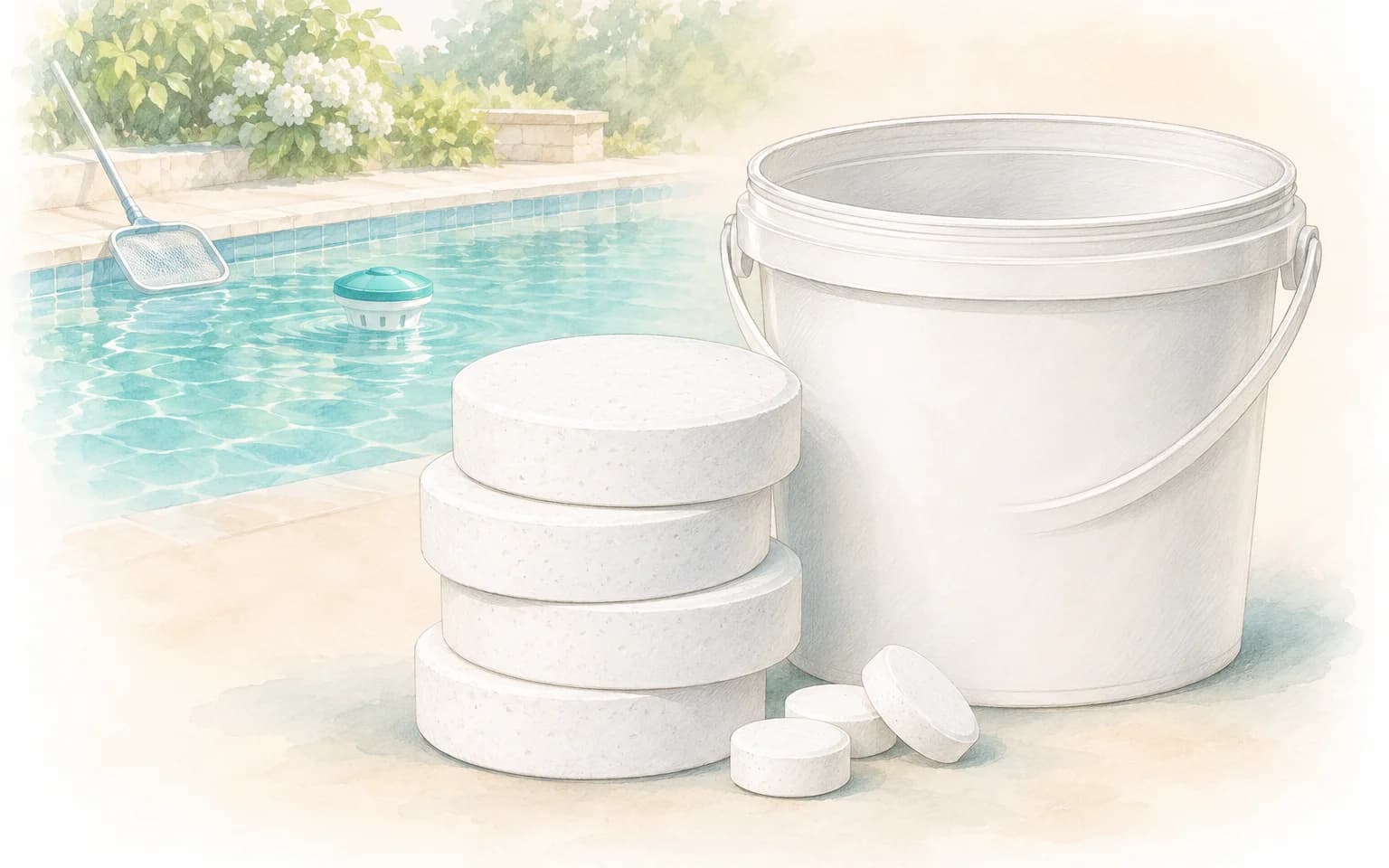
Multifunction tablets are slow-dissolving trichloroisocyanuric acid (TCCA) tablets with small amounts of other pool chemicals pressed in. TCCA makes up most of the tablet and supplies the chlorine and the cyanuric acid stabiliser.
The additives are typically aluminium sulphate as a clarifier, copper sulphate as an algaecide and often boric acid, each at a few per cent or less. The aim is simpler upkeep: one tablet in the skimmer or floater in place of separate products. Many tablets carry a coloured fleck or layer to tell them from plain TCCA.
Simpler pool upkeepChlorine, stabiliser, clarifier and algaecide from one tablet, with fewer products to store and dose.
Slow, steady releaseTablets dissolve over days, giving a steady chlorine level from a skimmer, floater or feeder.
Stabilised against sunlightThe TCCA base releases cyanuric acid, which slows the loss of chlorine to sunlight.
Documented blendEach offered batch comes with its Certificate of Analysis and a safety data sheet listing the blend.
What Nuroil does on every order
Why choose multifunction tablets from Nuroil?
Checked against the batch CoA
Available chlorine, tablet weight and additive content are reviewed on the batch certificate before loading.
Dangerous-goods paperwork handled
Shipped as a class 5.1 oxidiser under the UN entry in the producer’s SDS, with the correct labels and declarations.
Packed to stay dry
Sealed pails and drums with tablets wrapped or lined, kept out of the heat in transit.
One desk, firm offers
FOB, CFR or CIF from our Sharjah trade desk, usually within 24 hours.
02 TECHNICAL DATA
Technical specification.
Available chlorine
Typically 80–88%, by blendIodometric titration
TCCA content
Typically above 85%Calculated from available chlorine
Clarifier (aluminium sulphate)
About 0.5–2.5%Producer formulation
Algaecide (copper sulphate)
About 0.5–2.5%Producer formulation
Boric acid
About 0.1–1%, where usedProducer formulation
Moisture
0.5% maxGravimetric
Appearance
White tablets, often with blue flecks or a coloured layerVisual
Tablet sizes
200 g and 20 gWeight
01200 g TABLETS
Larger pools
The standard size for skimmers, floaters and erosion feeders in hotel, club and public pools.
0220 g TABLETS
Small pools and spas
Smaller tablets for small pools, spas and finer control of the dose.
03BLEND ON REQUEST
Matched to the market
Additive content and colouring can follow the buyer’s specification, subject to the producer and destination approvals.
Selection guidance Tell us the pool volume, the dosing equipment and any local limits on copper or boron, and we will confirm the size and blend.
Both are TCCA tablets. The difference is what else goes into the tablet.
Property
Multifunction tabletsThis page
Plain TCCA tablets
Available chlorine
Typically 80–88%
90% min
Stabiliser (cyanuric acid)
Yes
Yes
Clarifier and algaecide
In the tablet
Dosed separately
Simplicity of upkeep
One product
Several products
Best suited to
Hotel, villa and service-company pools
Pools with separate clarifier and algaecide dosing
03 HOW IT IS MADE
From TCCA and additives to pressed tablets.
TCCA is made by chlorinating cyanuric acid in caustic soda. The dry TCCA granules are blended with the clarifier, algaecide and other additives in set proportions, then pressed into tablets.
01
TCCA base
Cyanuric acid in caustic soda is chlorinated to TCCA, then dried.
02
Blending
TCCA granules are mixed with clarifier, algaecide and other additives.
03
Pressing
The blend is pressed into 200 g or 20 g tablets.
04
Testing and packing
Each batch is tested for available chlorine and tablet weight, then sealed in pails or drums.
04 APPLICATIONS
Where it works.
01
Outdoor pools
Daily chlorination with stabiliser, where sunlight would otherwise burn off chlorine.
02
Hotel and resort pools
Simpler upkeep for service teams dosing many pools.
03
Clear water
The clarifier helps fine particles gather so the filter can hold them.
04
Algae prevention
The algaecide helps keep algae from taking hold between shock doses.
05
Private and villa pools
One product for owners and maintenance contractors.
06
Spas and small pools
20 g tablets for small water volumes.
05 SAFETY & HANDLING
An oxidiser. Keep it apart.
This summary does not replace the Safety Data Sheet. Review the SDS and site procedure before first handling.
Danger
H272 May intensify fire; oxidiser.
H302 Harmful if swallowed.
H319 Causes serious eye irritation.
H335 May cause respiratory irritation.
H410 Very toxic to aquatic life with long lasting effects.
EUH031 Contact with acids liberates toxic gas.
UN
2468, per SDS
Class
5.1, oxidiser
01
Never mix chlorine products
Keep it apart from calcium hypochlorite especially: the two together can cause fire or explosion.
02
Never mix with acids
Contact with acids releases toxic chlorine gas.
03
Away from fuels and organics
As an oxidiser it can intensify a fire; keep it from oil, grease, solvents and ammonia compounds.
04
Keep it dry
A small amount of water on the tablets can release chlorine-rich gas; handle with dry gloves.
05
Exposure response
Rinse eyes with plenty of water for several minutes and seek medical attention; move to fresh air if dust or gas is inhaled.
Cool, dry and on its own.
StoreCool, dry, apart
Like plain TCCA, the tablets hold their strength well when kept cool, dry and sealed. Confirm the producer’s shelf life with the offer.
Keep containers closedMoisture starts decomposition and releases chlorine; reseal pails and drums at once.
Cool, ventilated storeOut of direct sun and away from heat sources, with good ventilation.
SegregateApart from calcium hypochlorite, acids, fuels and organics, as an oxidiser.
First in, first outUse the oldest stock first and keep the batch label with each lot.
Plan documentation early.
HS code3808.94
CAS number87-90-1
UN numberUN 2468
GHS
Oxidising solid; acute toxicity (oral); eye irritation; respiratory irritation; very toxic to aquatic life
Transport
Usually UN 2468, class 5.1, PG II, as for dry TCCA; confirm per SDS
Biocide registration
Pool disinfectants and algaecides need product approval in many markets; copper and boron content may be limited
National regulations
Confirm the destination’s import and dangerous-goods requirements
06 PACKING OPTIONS
Choose your packing.
Pack sizes, tablet wrapping, labelling and container loads depend on the producer; the offer confirms them.
Small quantities
Plastic pails
Tablets in sealed pails, commonly 1, 5, 10 or 25 kg, for pool shops, service companies and sites.
Mostly TCCA, which supplies chlorine and stabiliser, with small amounts of a clarifier such as aluminium sulphate, an algaecide such as copper sulphate and often boric acid. The exact blend is on the producer’s SDS.
02How do they differ from plain TCCA tablets?
Plain TCCA tablets supply chlorine and stabiliser only. Multifunction tablets add clarifier and algaecide, at a slightly lower chlorine content.
03Do they replace shock treatment?
No. They keep a steady chlorine level. Pools still need shock dosing, for example with calcium hypochlorite or SDIC, after heavy use or an algae bloom, dosed separately.
04Can they be stored with calcium hypochlorite?
No. TCCA-based tablets and calcium hypochlorite react violently together and can cause fire or explosion. Store and dose them separately.
05Is it dangerous goods for shipping?
Yes. They usually ship as UN 2468, class 5.1 oxidiser, packing group II, like dry TCCA; the producer’s SDS sets the entry.
06What is the HS code?
Classification depends on the blend and packing: mixed disinfectant tablets are often entered under HS 3808.94, and some producers declare them under 2933.69 with TCCA. Confirm with the destination’s customs.
07What documents come with a shipment?
A Certificate of Analysis and Safety Data Sheet, with the Certificate of Origin and dangerous-goods declaration as required.
Include the tablet size (200 g or 20 g), any blend requirement, quantity, packing and destination for a tailored offer. We reply with a firm FOB, CFR or CIF offer, usually within 24 hours.