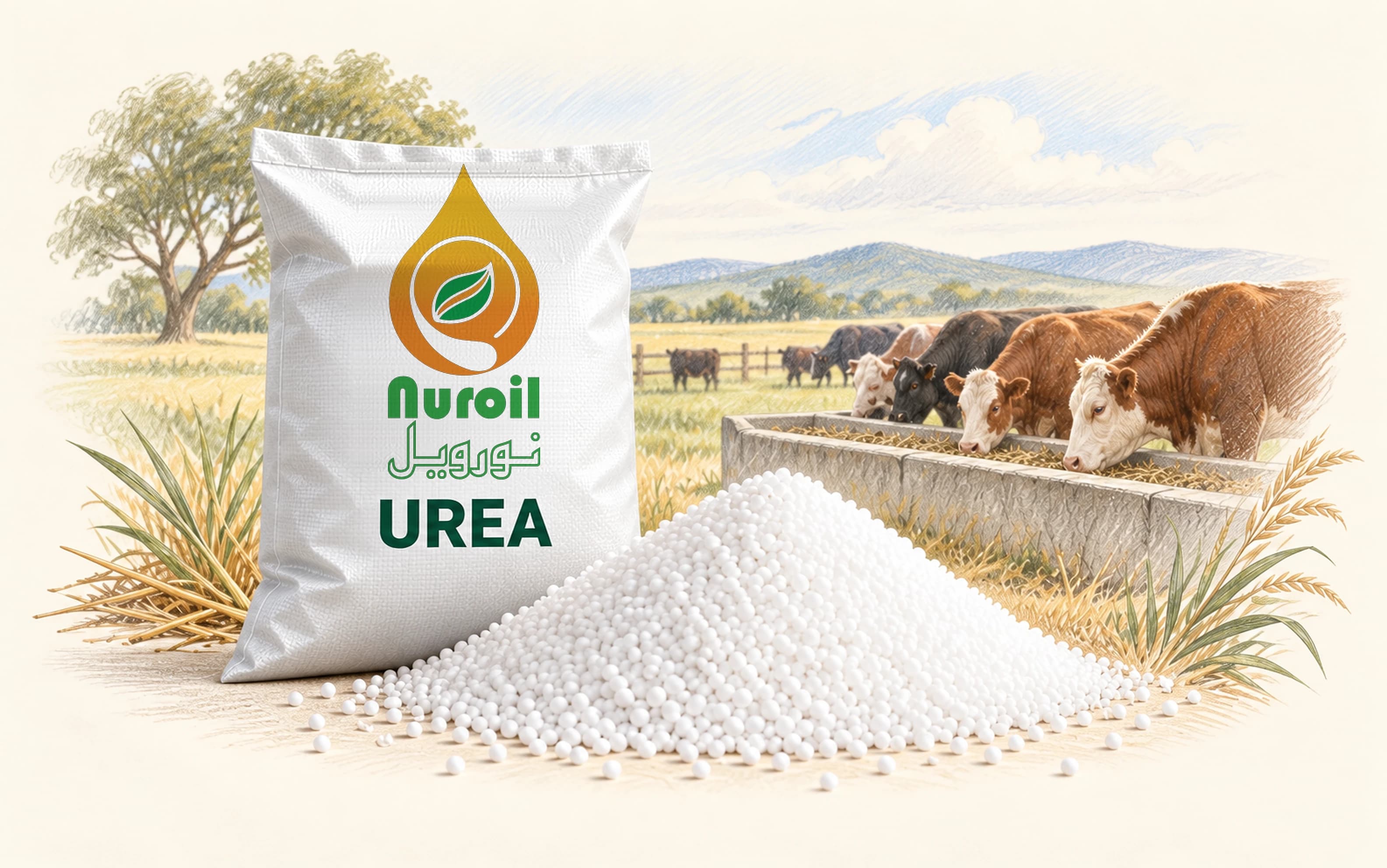
Urea is widely used in cattle, sheep and goat rations as a source of non-protein nitrogen (NPN). Used correctly it can replace part of the protein supplement in a ration at lower cost. Used carelessly it can poison animals within an hour. This article covers the principles behind safe use. It is not a substitute for advice from a qualified nutritionist or veterinarian, who should set inclusion rates for any specific ration.
How ruminants use urea
Ruminants cannot use urea directly. Microbes in the rumen break it down to ammonia and use that ammonia, together with energy from the diet, to build microbial protein, which the animal then digests. Because urea is 46% nitrogen, one kilogram is equivalent to roughly 2.9 kg of crude protein on paper. That conversion only works if three conditions are met:
- The animal has a fully functioning rumen. Young calves and non-ruminant species such as pigs, poultry and horses should not be fed urea.
- The diet provides readily fermentable energy, such as grain or molasses, so microbes can capture the ammonia.
- Urea is released into the rumen gradually rather than in one large dose.
Why urea poisoning happens
If ammonia is released faster than the microbes can use it, it is absorbed into the bloodstream. When the amount exceeds what the liver can clear, ammonia toxicity follows. Extension guidance notes that poisoning can occur in under 30 minutes. Signs include restlessness, muscle tremors, excess salivation, rapid breathing, incoordination, bloat and tetany. Any suspected case needs urgent veterinary attention.
Most poisoning incidents trace back to management errors:
- Poor mixing, leaving pockets or lumps of urea in the feed.
- Top-dressing urea onto a ration instead of blending it through.
- Animals reaching stored fertilizer or concentrated urea supplements by accident.
- Feeding urea to hungry or unadapted animals, or after a break in feeding.
- Combining urea with feeds that contain the enzyme urease, notably raw soybeans, which convert urea to ammonia very quickly.
Basic rules for safe use
University extension and feed reference sources give broadly consistent guidance:
- Limit the share of protein from urea. One widely cited guideline is that no more than one-third of the ration's crude protein should come from urea. Reference figures for inclusion are around 1% of a complete ration or up to about 3% of a concentrate.
- Adapt animals gradually. Introduce urea over at least a week. Tolerance can be lost after a few days without urea, so restart cautiously after any interruption.
- Mix thoroughly. Disperse urea evenly through the whole feed, and check mixer performance regularly.
- Supply energy and minerals. Urea provides no energy, sulphur or phosphorus, so rations need these from other ingredients.
- Spread intake. Feeding the daily allowance across several meals reduces peaks of rumen ammonia.
- Exclude young stock. Calves under about 120 days old should not receive urea.
Urea is safe only when it is diluted, mixed evenly, introduced slowly and paired with enough energy.
Feed grade versus fertilizer grade
Feed-grade urea is produced and handled for use in animal feed. It is typically conditioned to flow freely and resist caking so it mixes evenly, and some forms are coated, which lowers the nitrogen content slightly below 46%. Fertilizer urea is hygroscopic, may contain conditioning agents intended for agricultural use, and is not produced under feed controls. Feed mills should use product supplied and documented as feed grade and check that it meets the feed regulations in their market.
Storage matters too. Keep feed urea in a dry, secure store, away from animals and clearly separated from fertilizers, so there is no chance of mix-ups or accidental access.
Specifying feed-grade urea
When buying, state that the product is for animal feed and name the applicable feed standard or regulation. Ask for nitrogen content, biuret, moisture, particle size and any coating or additive, together with a certificate of analysis for each lot and the SDS. Some markets also require feed registration or specific labelling. Nuroil supplies feed-grade urea with a CoA on every delivery and can arrange independent inspection on request. Share your requirements through our contact page.