Diammonium phosphate (DAP) and monoammonium phosphate (MAP) are the two most traded ammonium phosphate fertilizers. Both are made by reacting phosphoric acid with ammonia, both are highly water soluble, and both supply nitrogen and phosphorus in a single granule. The differences are smaller than the sales literature sometimes suggests, but they matter for placement, soil type and blending.
How the two products are made
The difference starts in the reactor. MAP is produced with roughly one part ammonia to one part phosphoric acid, while DAP takes about twice as much ammonia for the same amount of acid. The extra ammonia raises the nitrogen content of DAP and lowers its phosphate content per tonne. After the reaction, the slurry is granulated, dried, screened to size and usually coated to reduce caking.
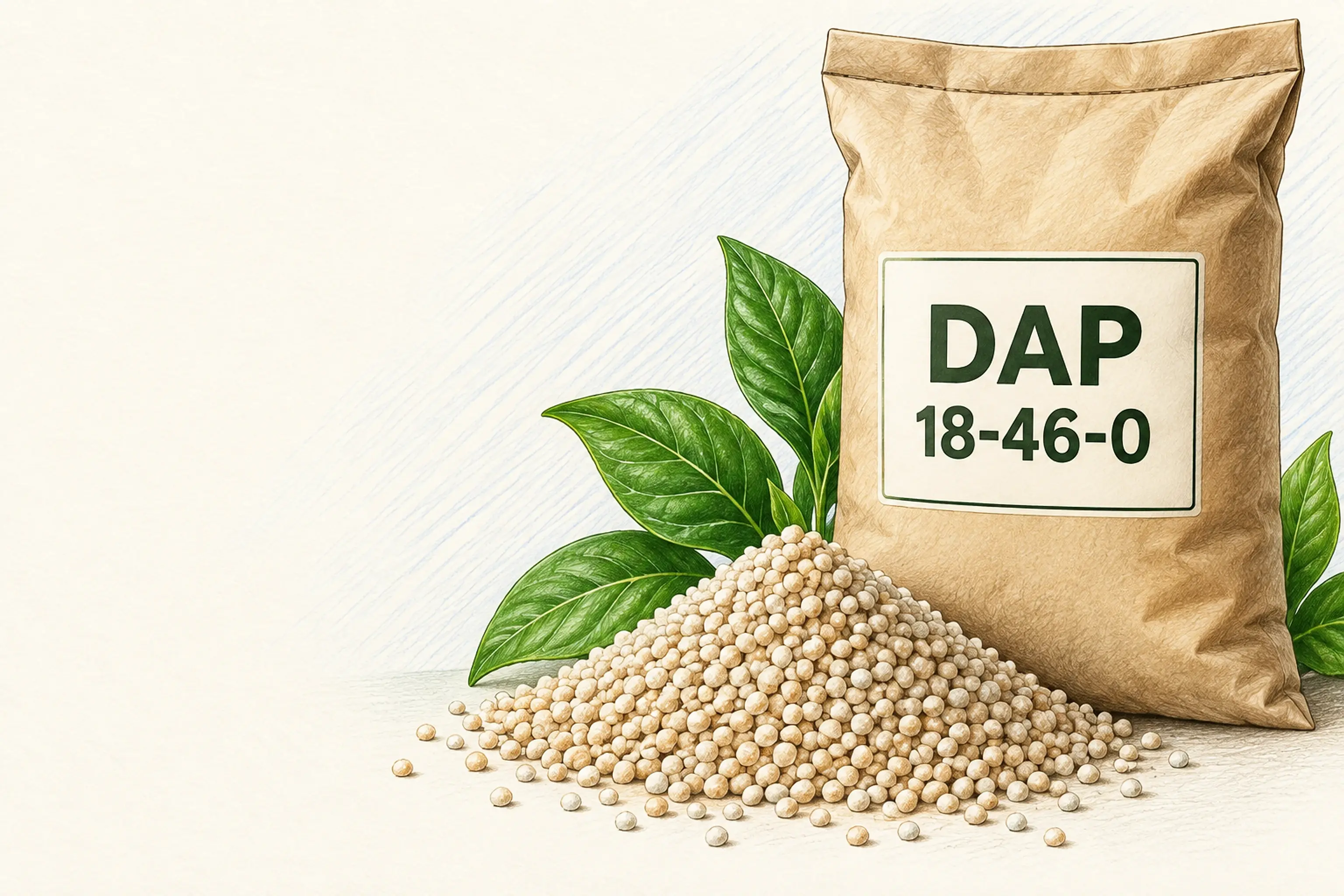
The standard commercial grades are 18-46-0 for DAP and 11-52-0 for MAP. MAP grades vary a little more, because the phosphate content depends on the purity of the acid used; analyses from about 48% to 61% P2O5 are found in trade.
| Property | DAP | MAP |
|---|---|---|
| Formula | (NH4)2HPO4 | NH4H2PO4 |
| Common grade (N-P2O5-K2O) | 18-46-0 | 11-52-0 |
| Water solubility at 20 °C | About 588 g/L | About 370 g/L |
| pH of solution | Mildly alkaline, about 7.5 to 8 | Acidic, about 4 to 4.5 |
| Free ammonia near the granule | Can be released as it dissolves | Negligible |
What happens in the soil
As a DAP granule dissolves, the soil solution around it becomes alkaline and some free ammonia can form. That ammonia can damage germinating seeds and young roots if the fertilizer is placed in or very close to the seed row, and the risk is higher where soil pH is already above 7. The alkaline zone can also temporarily reduce the availability of micronutrients such as zinc and manganese close to the granule.
MAP behaves the other way. Its solution is acidic, it releases little or no free ammonia, and it is generally regarded as the safer choice for seed-placed or banded starter fertilizer. The acidic zone also makes it well suited to neutral and alkaline soils.
These effects are local and short-lived. Soil bacteria convert the ammonium in both products to nitrate over the following weeks, and the reaction zone around each granule fades. For that reason, field trials comparing DAP and MAP under good management usually show little or no difference in crop yield when the fertilizer is broadcast and incorporated before planting.
For broadcast application the choice is mostly about nutrient ratio and delivered cost per unit of phosphate. For seed-row placement, MAP is the lower-risk option.
Practical points for choosing
- Nutrient balance. DAP delivers more nitrogen per tonne, which can reduce the separate nitrogen needed. MAP delivers more phosphate per tonne, which lowers freight and handling cost per unit of P2O5.
- Placement. If fertilizer goes in the seed row, follow local agronomic limits and favour MAP, especially for sensitive crops and light soils.
- Soil pH. MAP fits neutral to alkaline soils well. The ammonia released by dissolving DAP is more of a concern where soil pH is above 7.
- Blending. Both blend well with potash and most other granular materials when granule sizes are matched. Avoid mixing MAP into spray or fertigation solutions with calcium or magnesium fertilizers, which can precipitate.
- Other uses. Technical grades of both products have non-farm uses, such as fire retardants, fermentation nutrients and dry-powder extinguishers, which need their own purity specifications.
What to specify when buying
State the grade (for example 18-46-0 DAP) and ask for the guaranteed total nitrogen, available P2O5 and water-soluble P2O5, maximum moisture, and the size range with the minimum percentage inside it. If the product will be bulk blended, ask for the size guide number as well. A certificate of analysis should accompany every lot; Nuroil supplies one with each delivery and can arrange third-party inspection, certificate of origin and SDS on request. For DAP availability and packing options, see our diammonium phosphate page or request a quote.