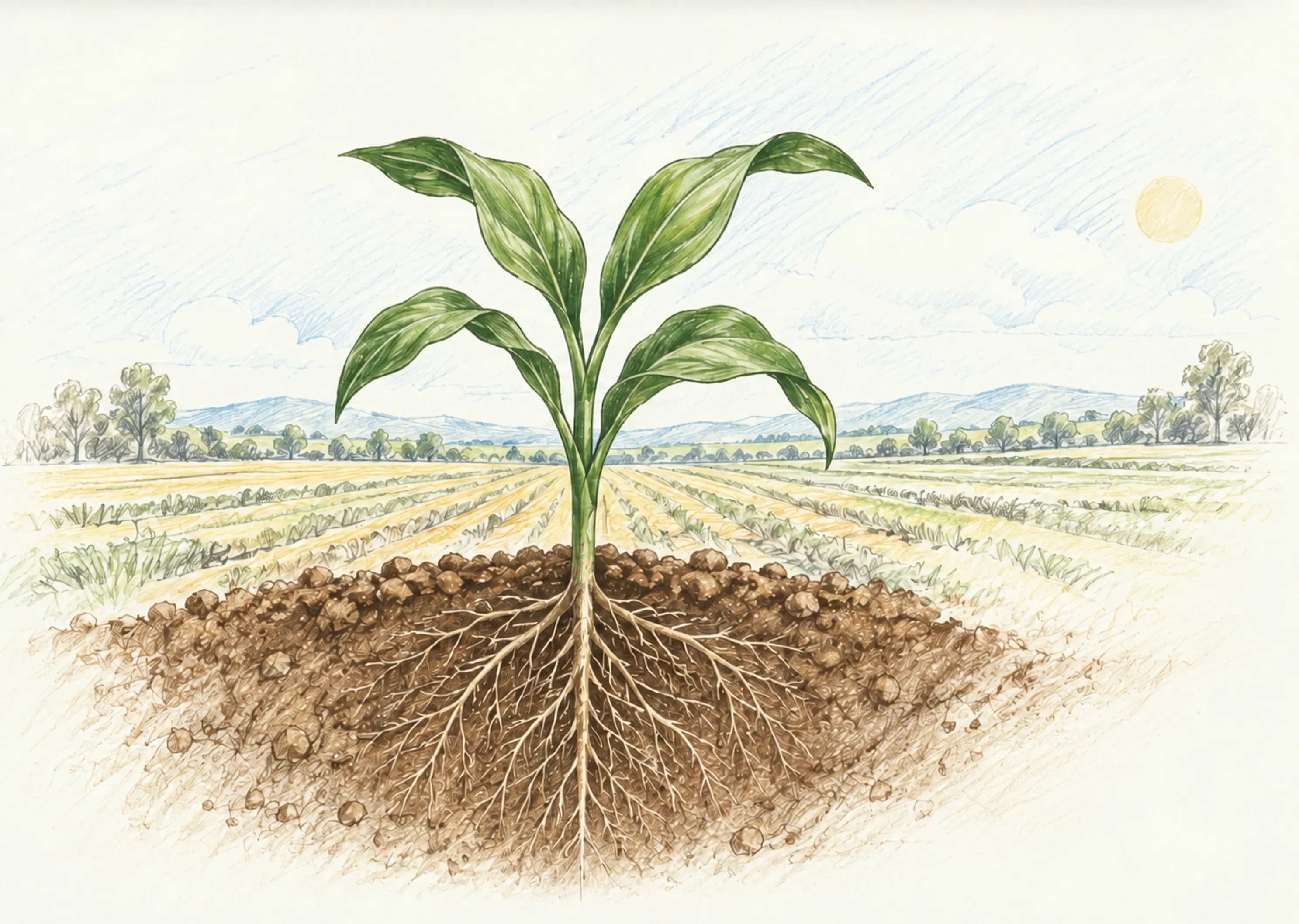
Nitrogen gets most of the attention in crop nutrition because crops respond to it quickly and visibly. But a crop can only turn applied nitrogen into yield and protein if other nutrients are not holding it back. Phosphorus and sulphur are two of the most common limits. Understanding how the three work together helps growers and distributors build fertilizer programmes that make every tonne of urea count.
Nitrogen: the growth driver
Nitrogen is a building block of proteins, chlorophyll and enzymes, and crops need it in larger amounts than any other mineral nutrient. Urea, at 46% nitrogen, is the most concentrated solid nitrogen fertilizer in common use. In soil, urea is converted to ammonium and then, by soil bacteria, to nitrate. Nitrate is mobile and can be lost by leaching, and surface-applied urea can lose nitrogen to the air as ammonia. That is why nitrogen is often split across the season and timed to crop demand.
Phosphorus: roots and energy
Phosphorus is part of ATP, the molecule plants use to store and move energy, and it supports early root growth and branching. Its behaviour in soil is the opposite of nitrate: phosphorus moves very little from where it is placed, and it is easily tied up by calcium in alkaline soils or by iron and aluminium in acidic soils. Annual crops also take up a large share of their phosphorus early in growth. The practical result is that phosphorus is usually applied at or before sowing, often banded near the seed rather than broadcast.
Sulphur: the partner nutrient for nitrogen
Sulphur is needed to form certain amino acids, so a crop short of sulphur cannot fully convert nitrogen into protein. Adding more nitrogen to a sulphur-deficient crop can widen the imbalance rather than lift yield. Sulphur deficiency is easily mistaken for nitrogen deficiency, but there is a useful clue: sulphur shortage tends to show as yellowing on the younger, upper leaves, while nitrogen shortage usually starts on the older, lower leaves.
High-yielding crops remove sizeable amounts of sulphur, particularly when the whole above-ground crop is harvested. Sandy, low-organic-matter soils and crops with heavy sulphur demand, such as oilseeds, forage crops and some vegetables, are most at risk. Sulphate is mobile in soil, a bit like nitrate, so it is usually applied in-season with nitrogen. Elemental sulphur must first be oxidised by soil bacteria before plants can use it, so it acts more slowly.
| Nutrient | Main role | Mobility in soil | Typical timing |
|---|---|---|---|
| Nitrogen (N) | Proteins, chlorophyll, growth | High as nitrate | Split: at sowing and top-dress |
| Phosphorus (P) | Energy transfer, root growth | Very low | At or before sowing, near the seed |
| Sulphur (S) | Amino acids, nitrogen use | High as sulphate | With nitrogen in-season |
Using tissue tests and the N:S ratio
Because visual symptoms are unreliable, soil and tissue testing are the better guide. Many agronomists look at the nitrogen-to-sulphur ratio in plant tissue as well as absolute levels. Extension guidance for wheat, for example, treats a tissue ratio around 15:1 as adequate, with much wider ratios pointing to sulphur shortage. Targets vary by crop and laboratory, so ratios should be read alongside local recommendations rather than as fixed rules.
Nitrogen sets the pace, but phosphorus and sulphur decide how much of that nitrogen ends up as yield.
Putting it together in a programme
The 4R framework of right source, rate, time and place is a practical way to balance the three nutrients:
- Base phosphorus rates on soil tests and place it early, close to the roots.
- Split nitrogen to follow crop demand, and limit losses from surface urea through timing or incorporation.
- Where tests or crop type suggest risk, supply sulphate sulphur together with the main nitrogen applications.
Sourcing a balanced range
For distributors, balance means stocking more than one product. A typical range might combine urea for nitrogen, a phosphate or compound fertilizer for sowing and a sulphate or sulphur-bearing product for deficient soils. When enquiring, specify each product's nutrient content and form, the applicable national standard, packing and required arrival dates. Ask for a certificate of analysis for every lot, and SDS and independent inspection where needed. Nuroil sources urea and other fertilizers from established producers and can quote them together for a season.