Rubberized bitumen coating is bought by contractors for single projects and by distributors who hold stock for many smaller users. In both cases the product is a water-based emulsion with a limited shelf life, so packing, storage and documentation matter as much as the price. This guide sets out what to consider.
Pack sizes
Regional producers commonly supply rubberized bitumen coating in two sizes:
| Pack | Typical use | Points to note |
|---|---|---|
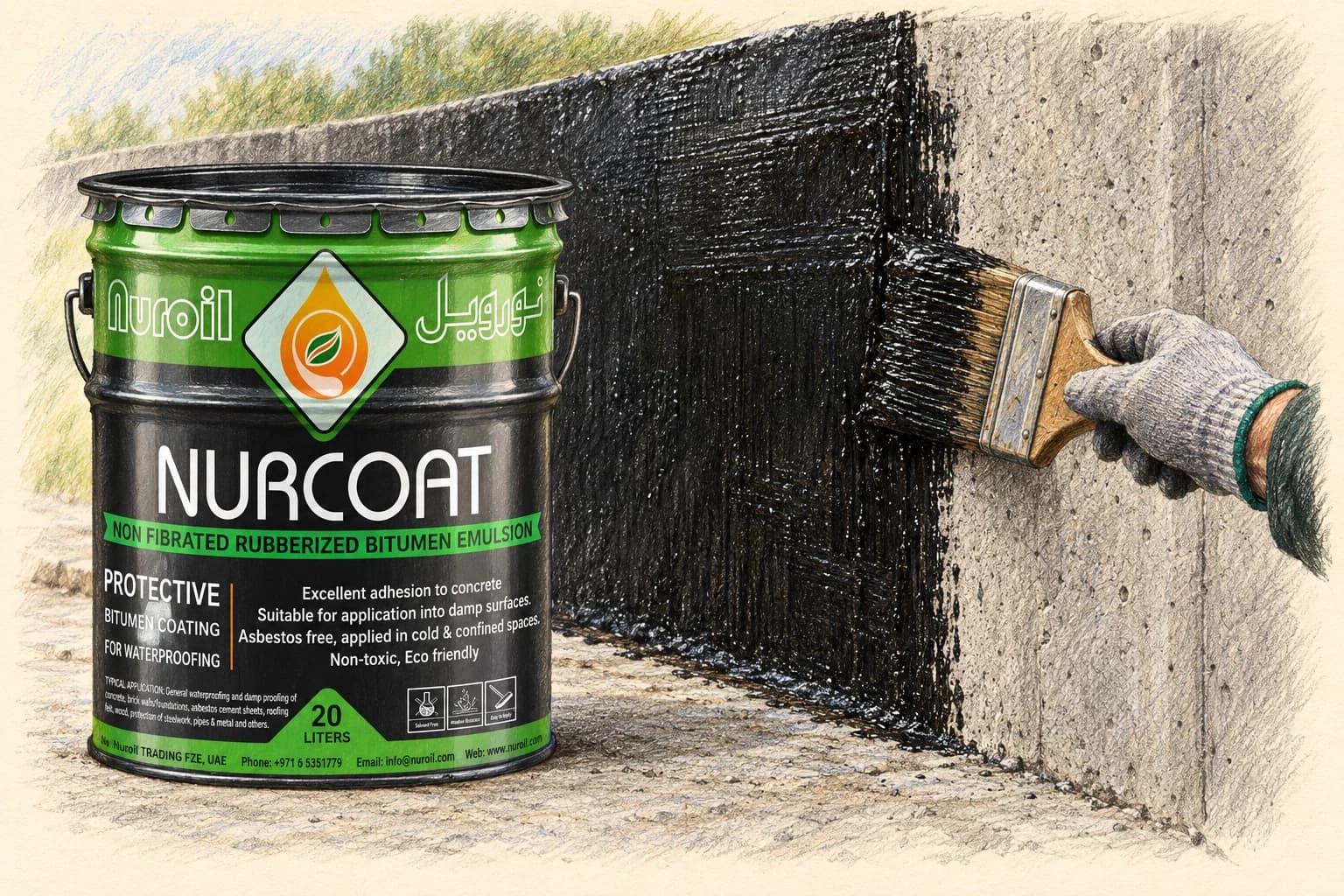
| 20 L pail | Small sites, retail and distribution, repair work | Easy to carry to the work face; more packaging per litre |
| 200 L drum | Large foundations, spray application, contractors | Needs handling equipment; must be stirred well before use |
Smaller tins are sometimes available for retail. Ask how many pails or drums fit on a pallet and in a container, because emulsion is dense (around 1 kg per litre) and containers may reach their weight limit before they are full.
Shelf life
Manufacturers usually quote a shelf life of up to 12 months in unopened containers stored as recommended. Over time an emulsion can settle, thicken or start to separate. For distributors, this means ordering in volumes that will sell through well within the shelf life and checking manufacturing dates on arrival.
- Ask for the production date or batch number on each pack.
- Agree a minimum remaining shelf life at delivery.
- Rotate stock first in, first out.
Storage conditions
Data sheets ask for containers to be kept in a covered area, away from direct sunlight, UV and other heat sources. In hot climates, drums left in the sun can overheat, which shortens shelf life. At the other extreme, emulsions must not freeze: water separating as ice can break the emulsion permanently. One emulsion safety data sheet sets a minimum storage temperature of 2 °C. Where products travel through cold regions in winter, discuss frost protection with the supplier.
- Keep lids tightly closed; a skin forms on exposed product.
- Store on pallets, off the ground, with drums upright.
- Do not stack pails higher than the packaging allows.
- Keep away from food and drinking water.
Checks on delivery
- Compare labels, batch numbers and quantities with the packing list.
- Look for damaged, dented or leaking containers.
- Open a sample pail and stir: the product should be smooth and uniform, without hard lumps or separated water that will not remix.
- Match the batch numbers to the certificate of analysis.
Handling and safety
Water-based rubberized coatings are less hazardous than solvent-based products, but they still need care. Wear gloves and eye protection, wash splashes from skin and eyes with clean water, and follow the safety data sheet. Tools can be cleaned with water while the coating is wet; hardened material usually needs a solvent.
Enquiry checklist
A complete enquiry saves time and makes quotations comparable. Include:
- product description, such as rubberized bitumen emulsion coating, and the standard required (for example ASTM D1227 Type III, Class 1);
- minimum solids and rubber content, and any VOC limit;
- quantity in litres, and preferred pack (20 L pails or 200 L drums);
- destination port and Incoterm (FOB, CFR or CIF);
- labelling requirements, such as language or private label;
- required remaining shelf life on arrival;
- documents needed: technical data sheet, safety data sheet, certificate of analysis, certificate of origin and any inspection certificate.
Ask for cost per square metre at your required film thickness as well as cost per litre; it is the fairer comparison between offers.
Supply from Nuroil
Nuroil supplies rubberized bitumen coating sourced from established producers, with a certificate of analysis on every delivery and certificate of origin, MSDS or third-party inspection on request. Send your checklist through request a quote or ask questions via contact us.