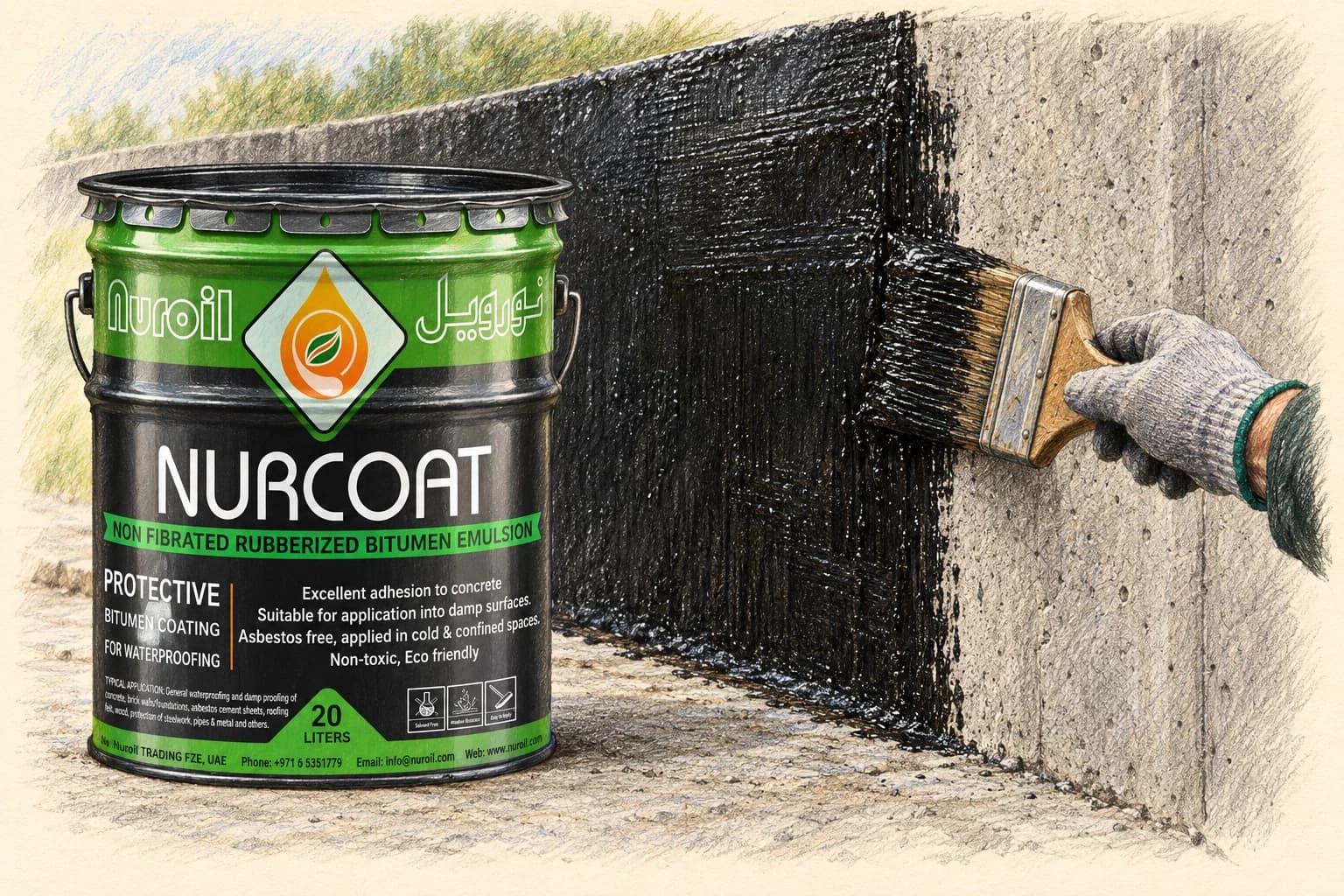
Rubberized bitumen coating is one of the most common ways to dampproof concrete that will be buried: footings, raft edges, pile caps, grade beams and the outer face of retaining walls. It is a cold-applied, brush or spray-grade bitumen product modified with rubber, usually supplied as a water-based emulsion. Once the water evaporates it leaves a seamless, flexible black film that keeps ground moisture and dissolved salts away from the concrete.
The product is forgiving, but the result depends heavily on how it is applied. This article walks through the usual sequence on a foundation job.
1. Prepare the concrete
The coating can only be as sound as the surface under it. Typical data sheets ask for concrete that is clean and free from dust, oil, grease, form-release agents and traces of curing compound. Light grinding, grit blasting or high-pressure water jetting may be needed where contamination is heavy.
- Remove form-tie ends, fins and sharp protrusions that could puncture the film.
- Cut out honeycombed or friable concrete and repair it with a suitable repair mortar.
- Round off or fillet internal corners so the coating does not bridge a sharp angle.
One practical advantage of emulsion-type rubberized coatings is that many can go onto damp or freshly cast concrete. They should not be applied over standing or running water, so dewatering of the excavation still matters.
2. Prime the surface
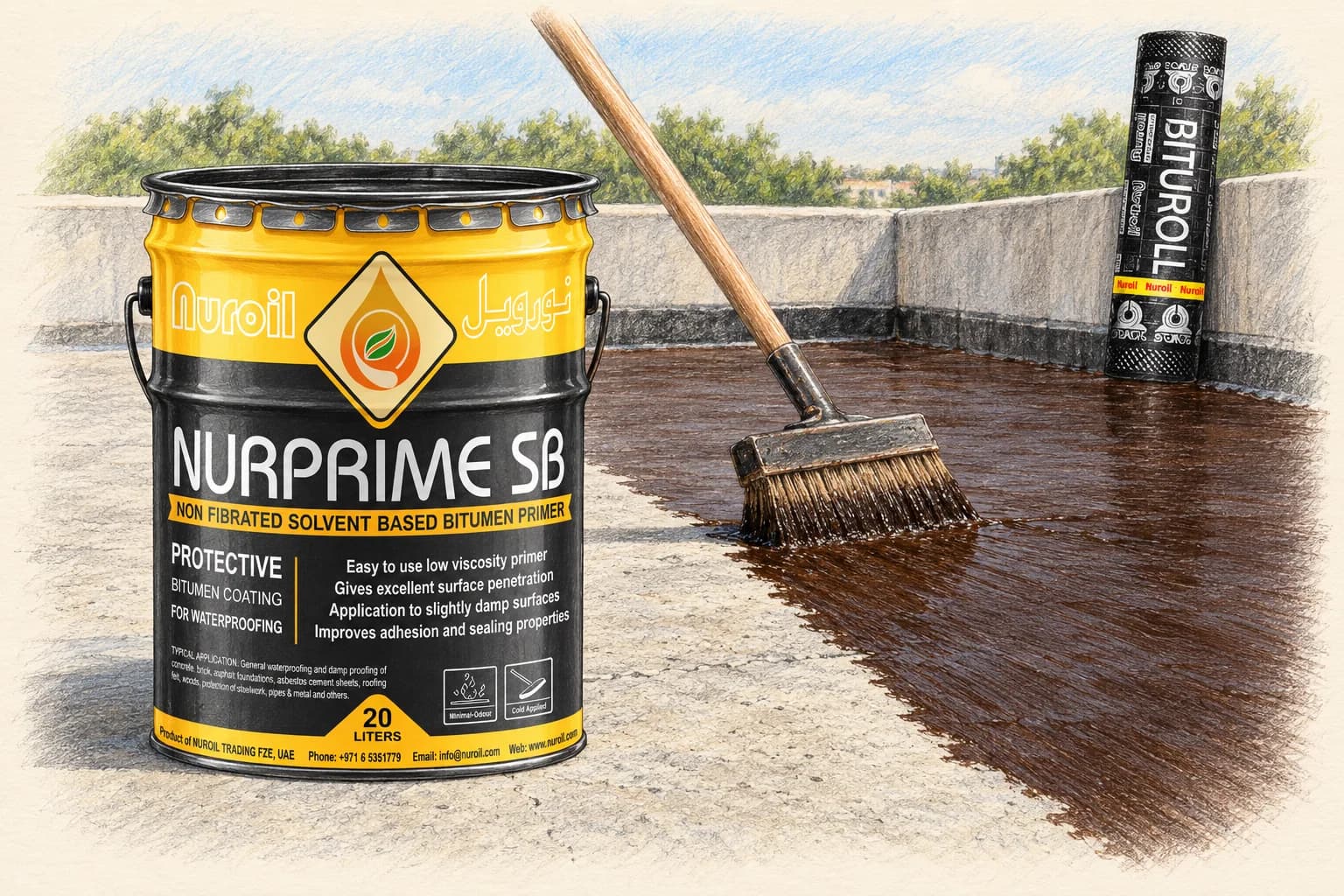
Most manufacturers recommend a priming coat. With emulsion products this is often made on site by diluting the coating itself with clean water; one Gulf manufacturer's data sheet suggests about 20 percent water. Very dry or porous blockwork may need two primer coats. If the next coat is delayed by more than a day, the same data sheet advises priming again. Where a solvent-based bitumen primer is specified instead, the surface must be dry and the primer fully dried before the coating goes on.
3. Build the film in coats
The full coating is applied in two or more coats rather than one heavy one. Thick single coats tend to sag on vertical faces and can skin over before the water underneath has escaped.
- Stir the drum thoroughly to bring up any settled material.
- Apply the first coat by brush, roller or spray at the rate given in the data sheet. Published rates for foundation work range from roughly 1 to 4 m² per litre per coat, depending on the dry film thickness required.
- Let each coat dry completely before the next. Drying times of around one to two hours are typical in warm weather, but recoat intervals can be several hours.
- Apply the next coat at right angles to the previous one so pinholes and thin spots are covered.
- Carry the coating up to the damp-proof course level and down over the footing edge.
If plaster or render will be applied over the coating, clean dry sand is usually broadcast onto the final coat while it is still wet to give the render a mechanical key.
4. Cure and protect before backfilling
The film needs time to cure before it is loaded. One manufacturer specifies a minimum of 48 hours before fixing protection board or backfilling. Rubberized coatings are thin and can be torn by stones, compaction equipment and careless trades.
- On vertical faces, fix bitumen protection board over the coating before backfilling.
- On horizontal surfaces, a cement-sand screed or protection board is normally used.
- Inspect before covering: damaged areas can be cleaned and over-coated if caught in time.
Most failures of foundation coatings come from thin spots, poor surface preparation and backfill damage, not from the coating material itself.
5. Where a coating is not enough
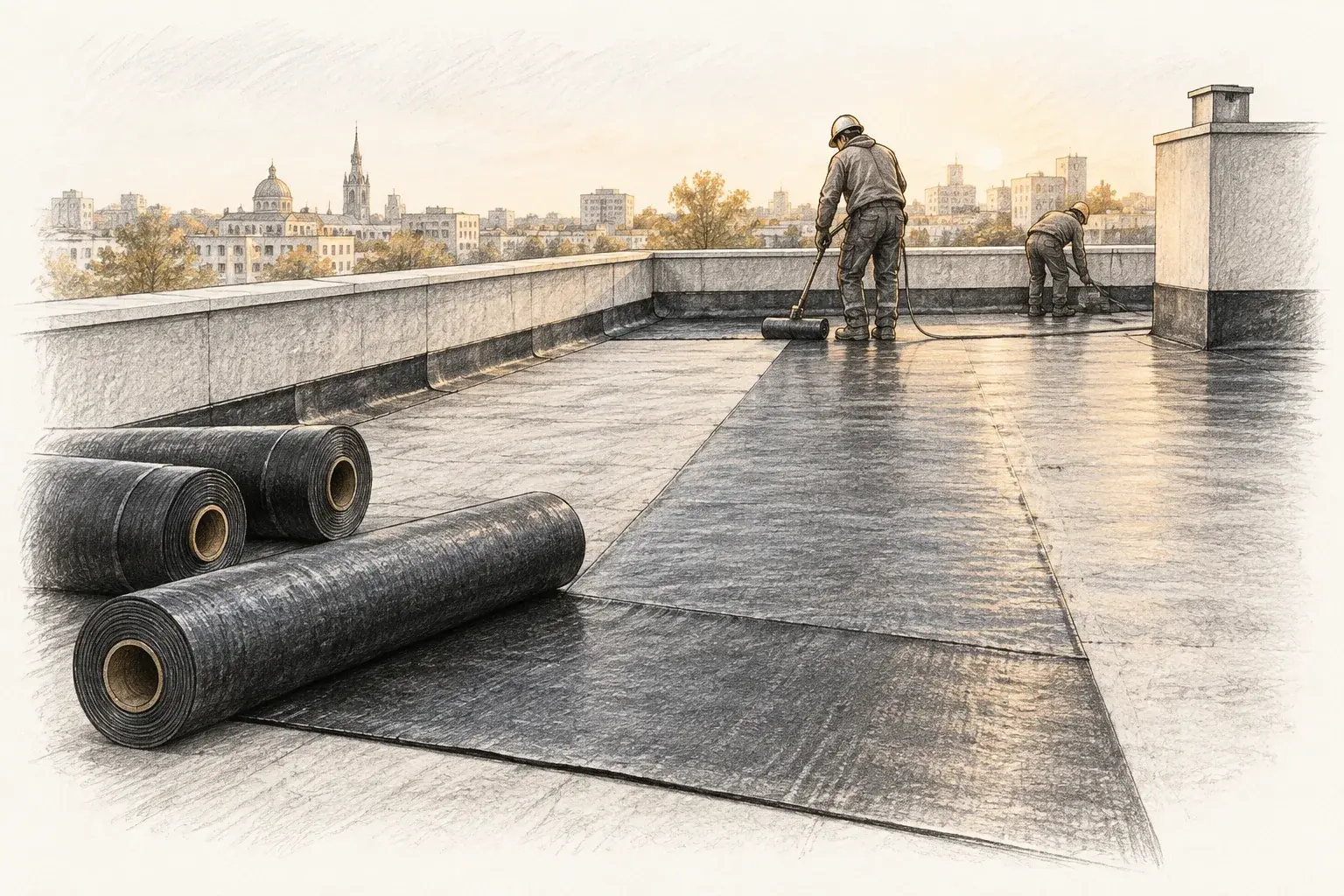
Rubberized bitumen coating is a dampproofing layer. Where there is a permanent water table, hydrostatic pressure or aggressive ground conditions, designers normally specify a membrane system or a combination of membrane and coating. The coating then works as a secondary protection or for details the membrane cannot reach.
What to put in your enquiry
When requesting rubberized bitumen coating for foundation work, state the area to be covered, the target dry film thickness or number of coats, whether you need it to meet a named specification such as ASTM D1227, and the pack size you prefer (pails or drums). Ask for the technical data sheet, safety data sheet and certificate of analysis for the batch. Nuroil can supply rubberized bitumen coating with a CoA for every delivery; use the quote request form to send your quantities.