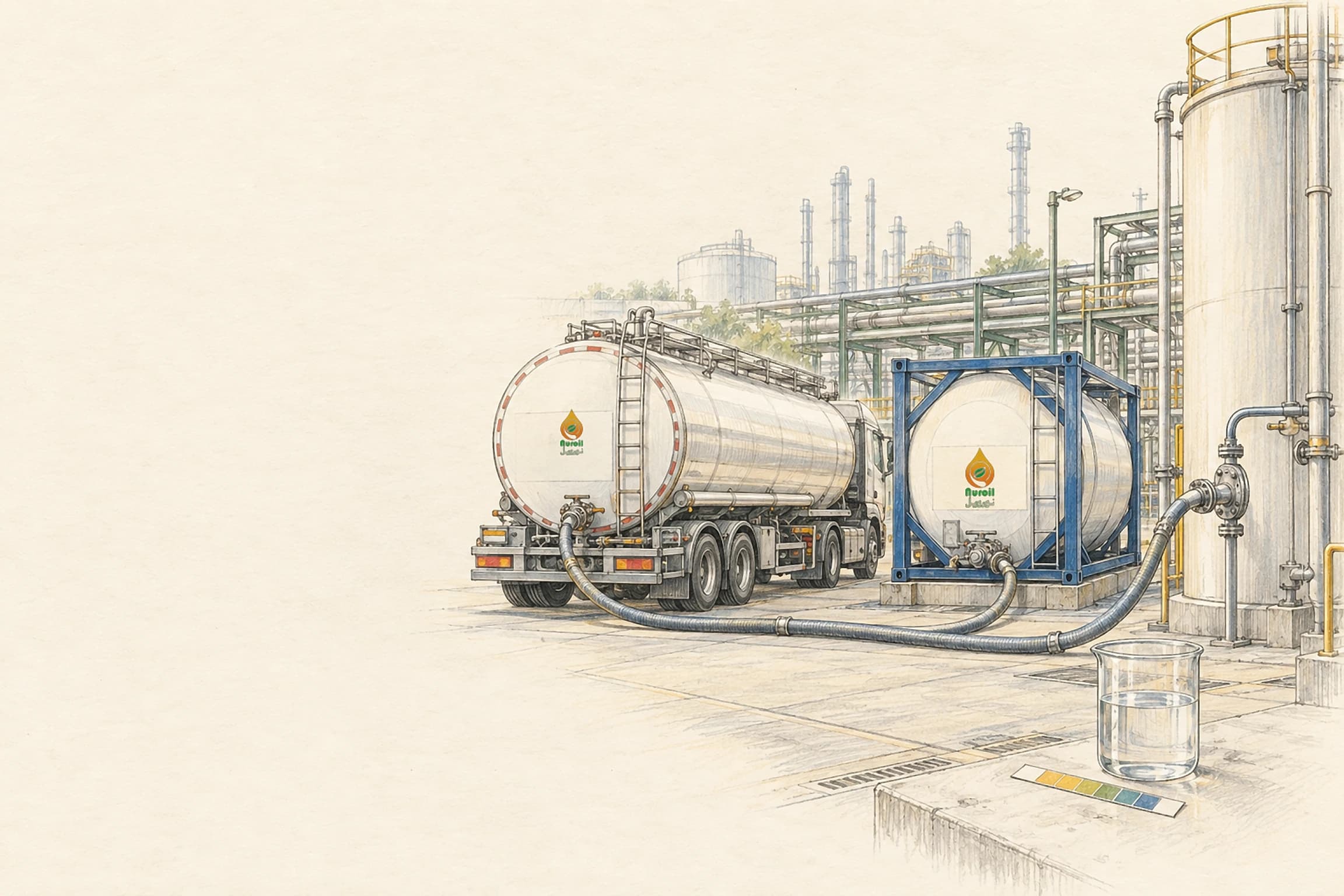
Caustic soda lye reaches buyers in three main ways: bulk road tankers for local supply, ISO tank containers for export, and intermediate bulk containers (IBCs) or drums for smaller users. Each needs a slightly different reception routine. This guide sets out the options and a practical unloading checklist.
Transport classification
Sodium hydroxide solution is a dangerous good for transport. Producer safety data sheets list it as UN 1824, Sodium hydroxide solution, Class 8 (corrosive), Packing Group II under road, sea (IMDG) and air rules. Containers must carry the corrosive label, and the shipping documents should show this entry. Very dilute solutions may fall into a different packing group, so confirm the entry against the actual concentration on the SDS.
Delivery options compared
| Option | Suits | Points to check |
|---|---|---|
| Road tanker | Plants with bulk storage near the source | Hose connection, pump or air unloading, access and bund |
| ISO tank container | Export bulk cargoes into a storage tank | Lined or stainless shell, heating coils for 50% in cold areas, bottom outlet fittings, return of empty tank |
| IBC (about 1,000 litres) | Smaller users, dosing direct from the container | HDPE bottle rated for the product's density; about 1.5 t gross weight when filled with 50% lye; forklift capacity |
| Drums | Laboratories, small dosing points | UN-approved drums, closed storage, drum pump |
Because 50% lye has a specific gravity around 1.5, a container that would hold a full volume of water may be weight-limited before it is full. Agree the net quantity per unit with your supplier.
Before the vehicle arrives
- Test the safety shower and eyewash, running water through to clear rust.
- Check the receiving tank has room for the full load and that the fill line is labelled "Caustic Soda".
- In cool weather, preheat the fill line and hose; for 50% lye, aim for a product temperature of at least about 21 °C at unloading.
- Agree who unloads: the driver and site staff must both wear goggles, face shield, rubber gloves, chemical suit and rubber boots.
Unloading step by step
- Check the documents against the order: product, concentration, quantity, UN number and seal numbers.
- Place a drip tray or pail under the outlet connection.
- Connect the hose to the vessel outlet and to the site fill line.
- Confirm valve positions to the correct tank, then open the receiving valve.
- Start the pump, or apply air pressure only within the container's rated limits and through a regulator and relief valve.
- Stay with the transfer until it is complete; watch the tank level.
- If air was used, blow the line clear to the tank, then close valves, drain the hose to a container and disconnect.
- Cap all connections and restore flange covers.
Sampling on receipt
Take a sample from the top manway or the outlet valve, using a proper sampling device and flushing it with product first. Avoid sampling from air purge points. Seal the sample promptly, because lye absorbs carbon dioxide from the air and forms carbonate. Keep a retained sample until the batch is used.
If the product has thickened or frozen
Measure the temperature through the manway with a long probe. Heat gently with low-pressure steam to the jacket, coils or valve area; never inject steam or water into the lye. Keep the vessel vented while heating, and do not leave coils on as the tank empties.
Documents to request
Ask for the certificate of analysis for the batch, the SDS, the dangerous goods declaration for sea freight and, where needed, the certificate of origin or third-party inspection report. Nuroil supplies lye in ISO tanks and IBCs on FOB, CFR or CIF terms; specify your preferred unit when you request a quote.