LABSA (linear alkylbenzene sulphonic acid) is supplied as a strong acid, but the surfactant that does the cleaning in a detergent is its sodium salt. Every plant that buys LABSA 96% therefore has to neutralise it, either in a dedicated step or inside the mixing vessel. The two usual alkalis are caustic soda and soda ash, and the choice changes the heat, gas, water balance and colour of the finished product.
What neutralisation actually does
The sulphonic acid group reacts with a sodium base to form sodium alkylbenzene sulphonate and water (and, with carbonate, carbon dioxide). The acid as delivered also contains a small amount of free sulphuric acid left over from sulphonation, which is neutralised at the same time to sodium sulphate. Both reactions release heat, and the sulphuric acid reaction is especially vigorous.
The sodium salt is far more water-soluble and less irritating than the acid, which is why finished products are formulated with the salt and why the pH of the final batch is always checked.
Estimating how much alkali you need
Most LABSA certificates of analysis report a neutralisation value (sometimes called total acidity) in mg KOH per gram. For 96% material this figure commonly falls somewhere around 175 to 188 mg KOH/g. Because it already includes the free sulphuric acid, it is the best number to calculate alkali from.
- Caustic soda (100% NaOH): multiply the neutralisation value by 40/56.1. A value of 180 mg KOH/g works out to roughly 128 g of NaOH per kg of LABSA, or about 257 g of 50% caustic lye.
- Soda ash (Na₂CO₃): full neutralisation to carbon dioxide needs about 53/56.1 times the value, so around 170 g per kg of LABSA at 180 mg KOH/g. In powder plants soda ash is usually added well in excess because it also works as a builder.
Always calculate from the neutralisation value on the CoA of the lot you are using, then fine-tune with a pH check on a sample of the batch.
Neutralising with caustic soda
Caustic soda gives a fast, clean reaction with no gas, so it is the usual choice for liquid detergents and for the paste that feeds a spray-drying slurry. Points to control:
- Add acid to dilute alkali, slowly and with good stirring, rather than pouring concentrated caustic into the acid. This spreads the heat and avoids local hot spots.
- Watch the temperature. Patent literature on detergent processing notes that the heat from the free sulphuric acid reacting with strong alkali can locally decompose the sulphonate and darken the product.
- Approach the end point gradually. Over-shooting leaves free alkali in the product; under-shooting leaves it acidic. Add the last portion of caustic in small steps.
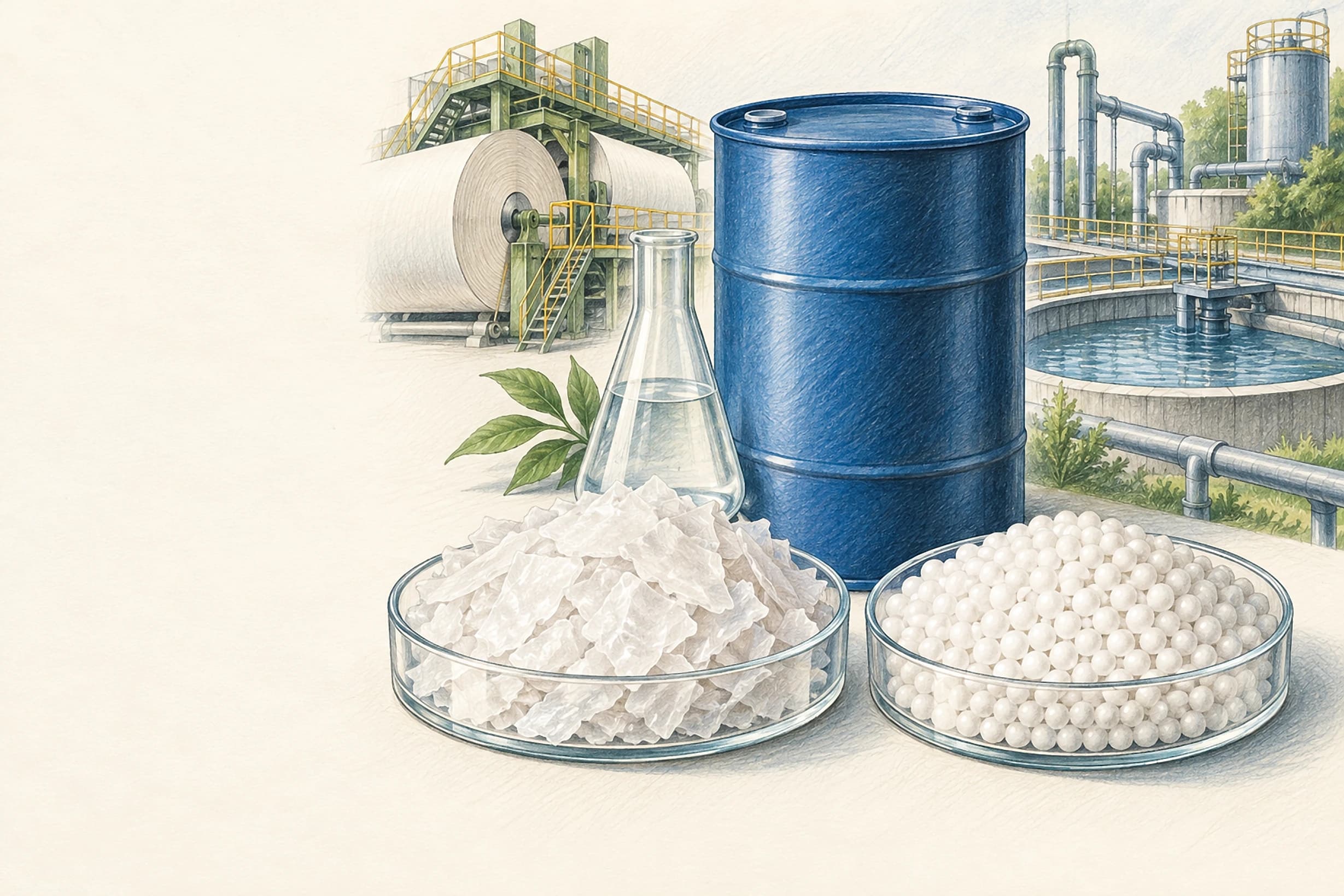
Our separate article on caustic soda forms explains why many detergent plants use 48 to 50% lye for this step instead of dissolving flakes on site.
Neutralising with soda ash
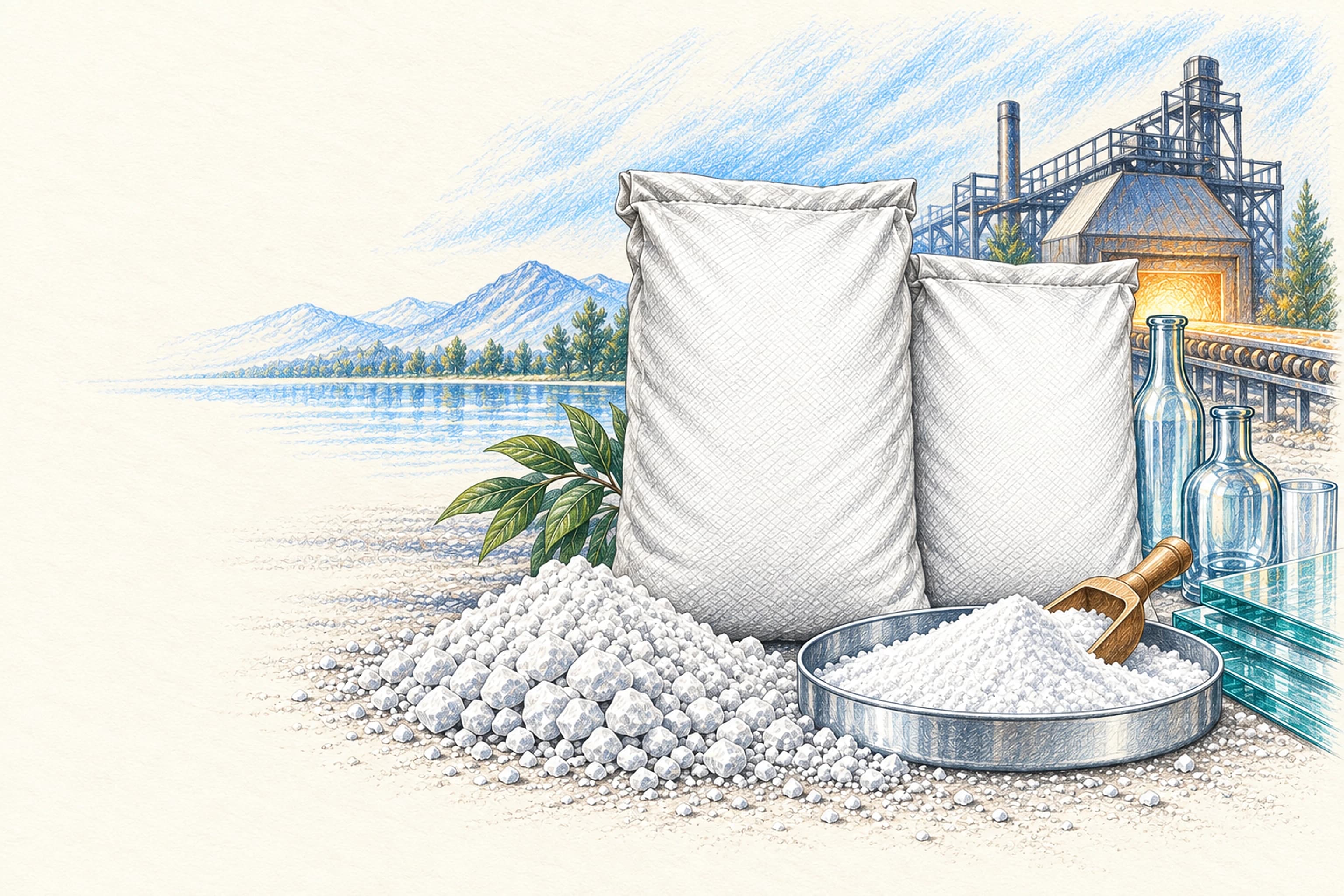
In washing powder production, LABSA can be neutralised directly by solid soda ash, either in the slurry or by spraying the acid onto a moving bed of powder (often called dry neutralisation). The carbonate does two jobs at once: it neutralises the acid and remains in the powder as a builder.
- Carbon dioxide and foam: carbonate releases CO₂ as it reacts. With carbonate solutions this can create unmanageable foam, which is one reason solid soda ash is preferred for this route.
- Loading limits: there is a practical limit to how much acid a powder bed can absorb before it becomes sticky. Formulators work out that limit on their own equipment.
- Slower and less exact: the reaction is gentler than with caustic but harder to bring to a precise end point, which matters less in a powder that is meant to stay alkaline.
| Point | Caustic soda | Soda ash |
|---|---|---|
| Typical use | Liquid detergents, paste for slurry | Washing powders, dry neutralisation |
| Gas released | None | Carbon dioxide |
| Heat | High, needs control | Lower |
| End point control | Precise | Approximate; excess acts as builder |
| Water added | With the lye | Little or none |
Calculate alkali from the neutralisation value on the CoA, add acid to alkali slowly, and confirm the end point by pH rather than by recipe alone.
Buying for a neutralisation process
Ask for a CoA that shows active matter, neutralisation value, free sulphuric acid, free oil, water and Klett colour for each lot, so your alkali calculation stays accurate. If you also buy caustic soda or soda ash, specify the form (lye, flakes, dense or light ash) that suits your process. Nuroil can supply LABSA alongside both alkalis; send the grades and volumes through a quote request.