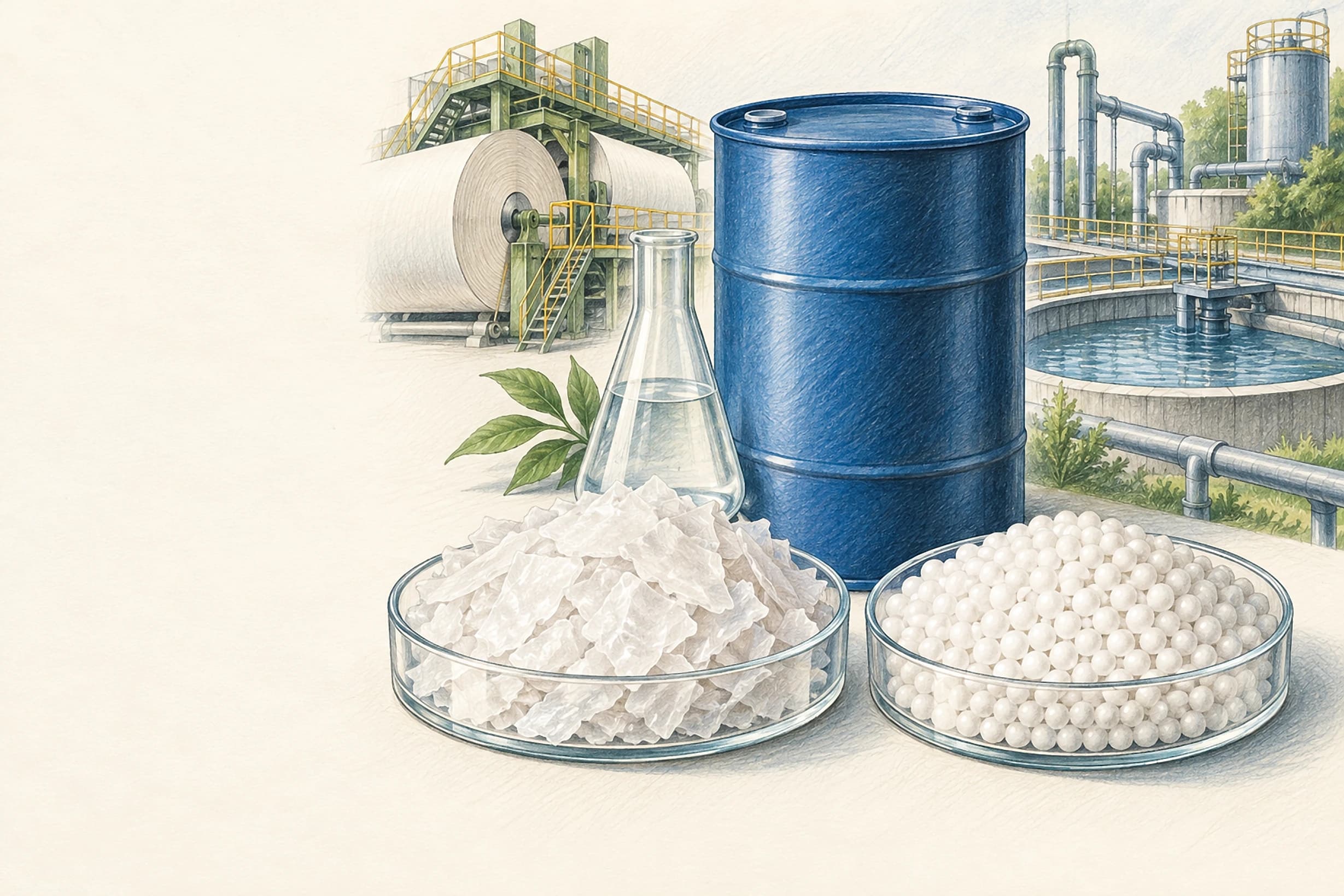
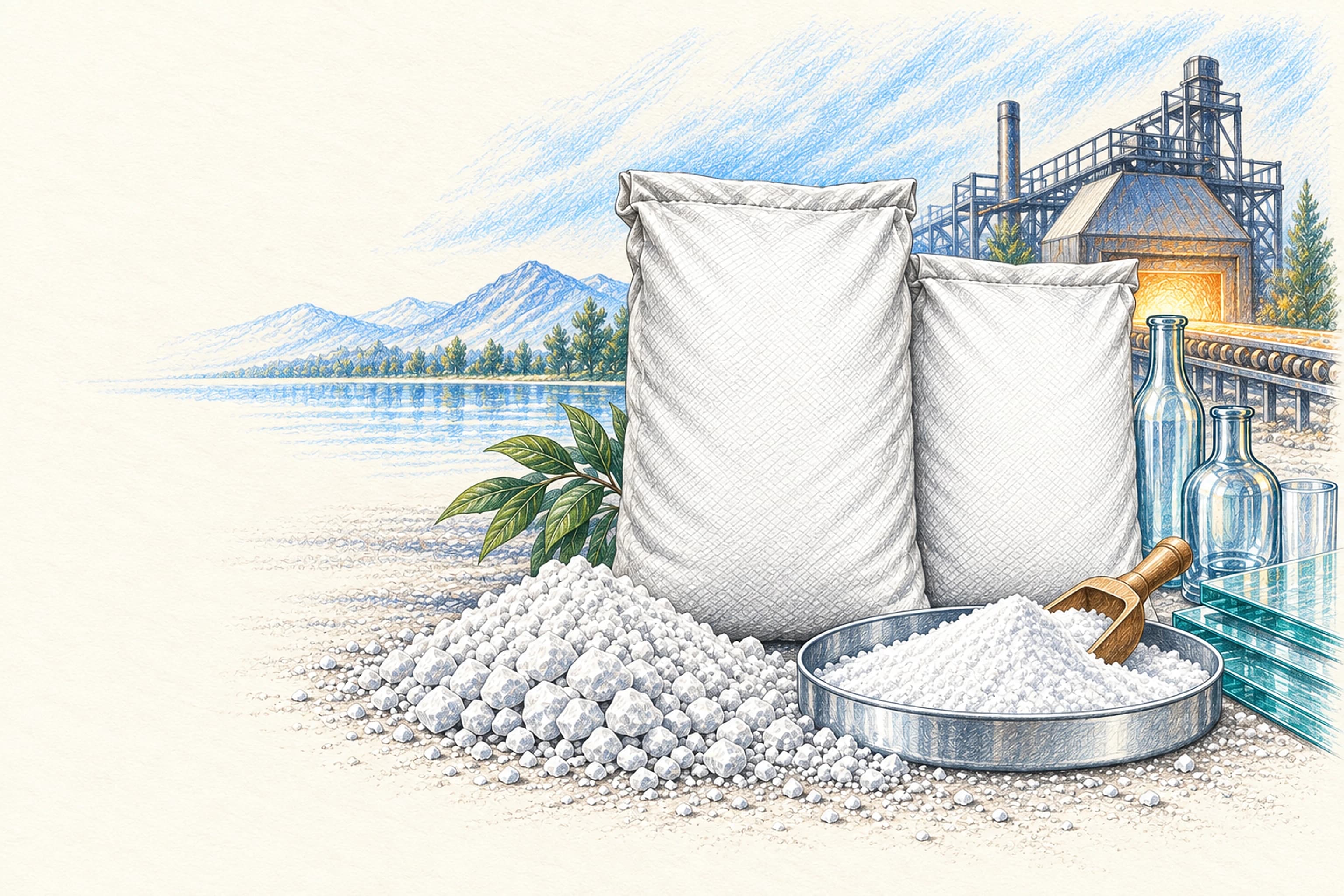
A basic liquid detergent looks simple: a coloured, scented, slightly thick liquid. Behind it is a short list of raw materials, each with a defined job. Knowing what those jobs are helps a new manufacturer plan purchasing, troubleshoot a batch that will not thicken, and talk sensibly with suppliers. Exact percentages depend on the product, local regulation and cost targets, so the figures below are indicative only.
Water, the largest ingredient
Water usually makes up most of the formula. It should be demineralised or at least softened, and bacteriologically clean. Hardness minerals react with anionic surfactants and reduce their performance, and contaminated water is the most common route for microbes to enter the finished product. Some humanitarian procurement specifications set very low microbial limits for cleaning liquids, which shows how seriously buyers treat this.
Surfactants: the cleaning system
The primary surfactant is anionic. Common choices are linear alkylbenzene sulphonate, made by neutralising LABSA with caustic soda, and sodium lauryl ether sulphate (SLES). A general-purpose washing liquid might contain roughly 10 to 15% anionic active matter. A smaller amount of non-ionic surfactant, such as a fatty alcohol ethoxylate, is often added because it is better at lifting oily and greasy soil. Amphoteric surfactants such as betaines are sometimes used as co-surfactants for mildness and foam stability in hand dishwash products.
Builders and water conditioners
Builders tie up the calcium and magnesium in wash water so the surfactants can work. In liquids, soluble builders are preferred: sodium citrate, chelating agents such as EDTA salts, and certain polymers. Zeolites are avoided in liquids because they do not dissolve, and phosphate builders are restricted or banned in many markets, so check local rules. In powder detergents, soda ash is a widely used builder and alkali source.
The supporting cast
| Raw material | Role | Practical note |
|---|---|---|
| Caustic soda | Neutralises LABSA; adjusts pH | Add slowly; the reaction gives off heat |
| Citric acid | Lowers pH if the batch is too alkaline | Adjust in small steps and re-measure |
| Sodium chloride | Builds viscosity in SLES-based systems | Too much salt makes the liquid thin out again |
| Hydrotrope (e.g. sodium xylene sulphonate) | Reduces viscosity and keeps concentrates clear | Used in concentrated or LAS-rich formulas |
| Preservative | Protects against bacteria, yeast and mould | Must suit the product pH and local regulation |
| Fragrance | Masks the base odour | Commonly up to about 1% |
| Colourant | Appearance and brand consistency | Use water-soluble dyes |
| Soap or silicone | Controls excess foam in laundry liquids | Not needed in hand dishwash, where foam is wanted |
Thickening with salt
Consumers associate a thicker liquid with strength, so most hand dishwash liquids are thickened. With SLES-based formulas, sodium chloride does this cheaply. Viscosity rises as salt is added, reaches a peak, then falls if more is added. The peak position depends on the surfactant blend, so formulators add salt solution in small increments near the end of the batch and measure viscosity after each step. If a batch will not thicken, the usual causes are low active matter, the wrong surfactant ratio or too much salt already.
A typical order of addition
- Charge most of the water to a clean stainless or plastic-lined mixer.
- Add LABSA, then neutralise slowly with caustic soda solution to the target pH, allowing the batch to cool.
- Add SLES and any non-ionic or amphoteric co-surfactant under gentle mixing to avoid excessive foam.
- Dissolve builders or chelating agents.
- Add preservative, fragrance and colour.
- Adjust pH, then add salt in steps to reach the target viscosity.
Write the formula, order of addition and target pH and viscosity on a batch sheet and follow it every time. Consistent raw materials and a fixed procedure are what make batches repeatable.
Safety in the mixing room
LABSA and caustic soda are both corrosive, and fragrance concentrates can be irritant or flammable. Provide chemical goggles, gloves and an eyewash station, keep acids and alkalis apart in storage, and read each raw material's safety data sheet before first use.
Sourcing the raw materials
When enquiring, list each raw material with its grade and key limits: active matter for LABSA and SLES, purity and form (flakes, pearls or lye) for caustic soda, and density grade if you also make powders with soda ash. Ask for a certificate of analysis per batch, the safety data sheet, and packing that suits your plant. Nuroil can quote the commodity alkalis and surfactant raw materials together through the quote request form, with CoA supplied on every delivery.