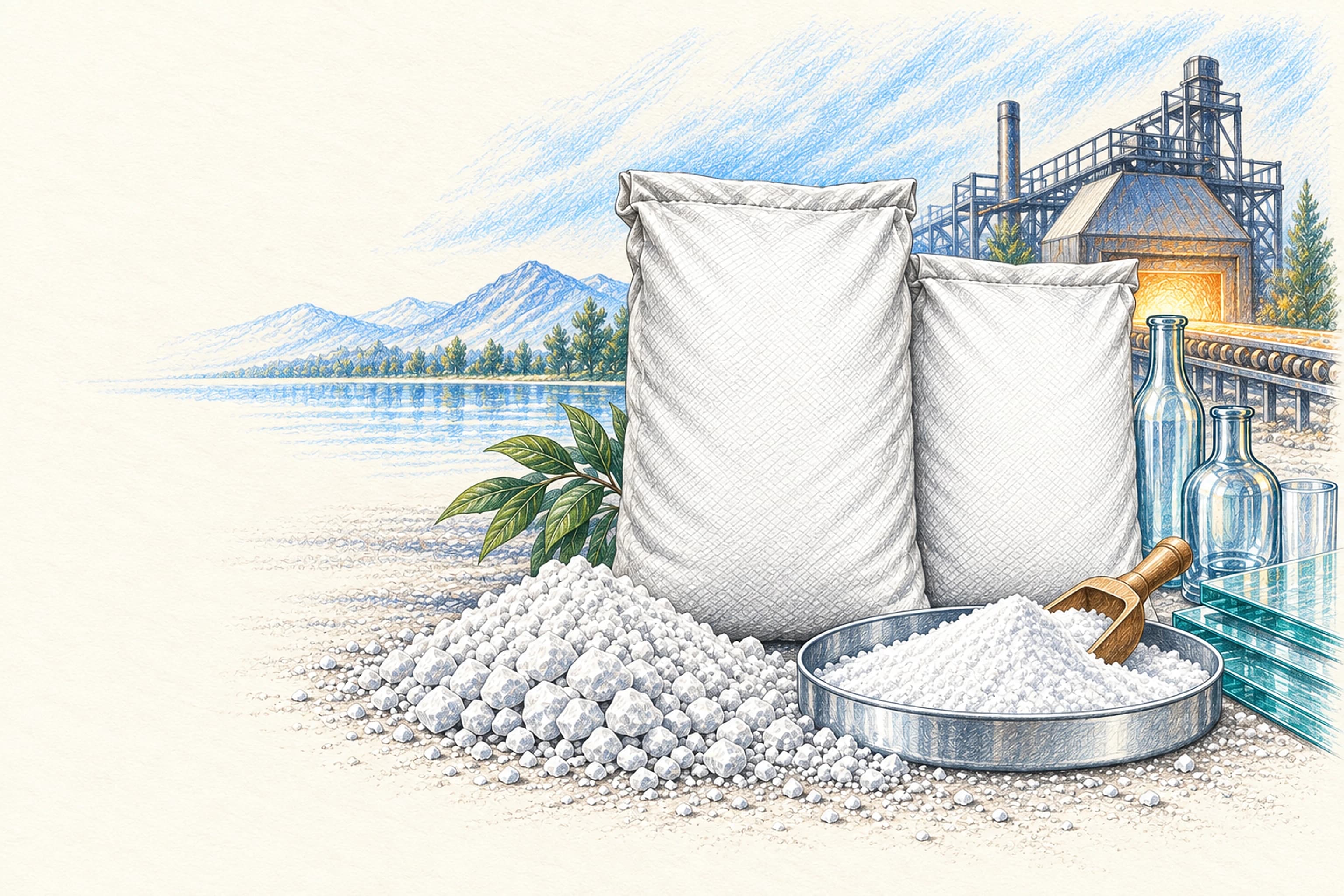
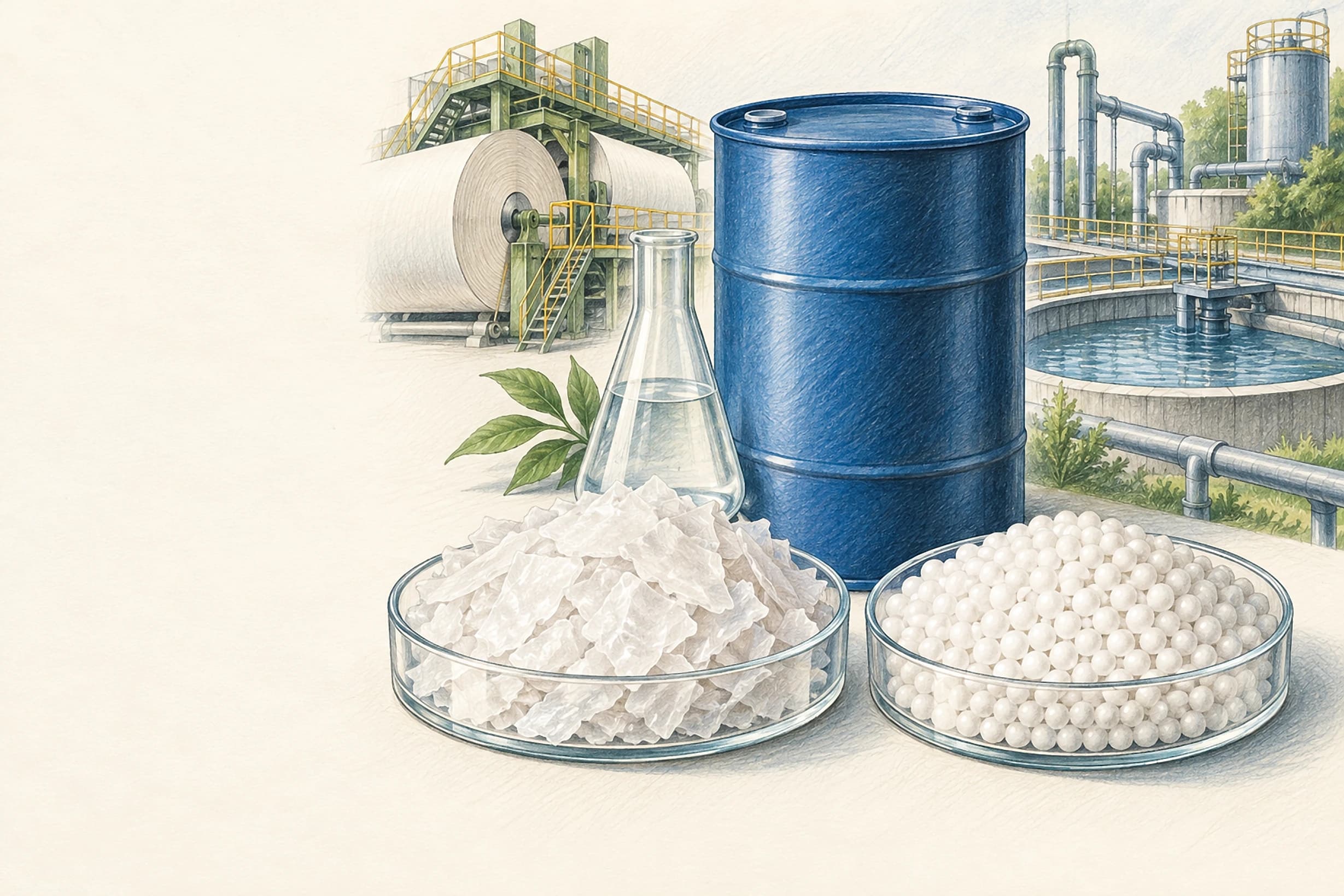
The same drum of LABSA 96% can end up in a box of washing powder or a bottle of liquid detergent, but the way it is processed, and the acid properties that matter most, differ between the two. This article walks through both routes from the point of view of a plant buying the acid.
The common starting point
In both cases the acid is converted to sodium alkylbenzene sulphonate, the anionic surfactant that lifts and suspends soil. The difference lies in how the neutralisation is done, what else is in the mix, and how much water is present at the end.
Washing powder: spray-dried and dry-mixed
Large powder plants usually make an aqueous slurry of surfactant, builders, silicate, sulphate and other heat-stable ingredients, then spray-dry it into hollow granules. LABSA can be pre-neutralised with caustic soda into a paste, or dosed straight into the slurry vessel where alkali is already present. Patent literature notes that the heat of neutralisation is useful for bringing the slurry up to working temperature.
Smaller and newer plants often skip the tower and make powder by dry neutralisation: the acid is sprayed onto a bed of soda ash and other powders in a mixer, reacting in place. The excess soda ash stays in the product as a builder. Typical points for powder makers:
- Order of addition matters. Formulators traditionally neutralise the acid before sodium silicate is added, to avoid unwanted interaction.
- Stickiness limits loading. There is a limit to how much acid a powder bed can absorb before lumps form.
- Free sulphuric acid becomes sodium sulphate, which is already a normal powder filler, so moderate levels are not a problem.
- Water in the acid adds to the drying or caking load.
Liquid detergent: dishwash and laundry liquids
For liquids, LABSA is neutralised in water with caustic soda (sometimes with other bases) and then blended with co-surfactants, salt for thickening, preservative, fragrance and dye. Here the acid properties show up directly in the bottle:
- Colour is visible, especially in clear products.
- Free oil (unsulphonated alkylbenzene) can cause haze or a faint odour if it is high.
- Free sulphuric acid ends up as sodium sulphate, which affects viscosity and the amount of salt needed to thicken.
- pH end point must be adjusted precisely, because the final product is used directly on skin and dishes.
Our earlier piece on how surfactants work in detergents covers formulation chemistry; this one concentrates on processing the acid itself.
| Point | Washing powder | Liquid detergent |
|---|---|---|
| Usual alkali | Caustic soda (slurry) or soda ash (dry neutralisation) | Caustic soda |
| Water in final product | Low | High |
| Most critical acid properties | Active matter, water | Colour, free oil, active matter |
| Effect of free sulphuric acid | Becomes sulphate filler | Becomes sulphate; influences viscosity |
| Typical equipment | Slurry crutcher and spray tower, or batch mixer | Stirred stainless steel mixing tank |
Choosing one grade for both
Many traders and smaller manufacturers stock one LABSA 96% grade for both uses. That works well if the specification is set by the more demanding application, which is usually the clear liquid. If you only make powder, you may be able to accept a slightly darker acid; if you make premium clear liquids, specify a lower Klett colour and free oil.
Powder makers care most about active matter and water; liquid makers add colour and free oil to that list.
Specifying LABSA for your product
Tell your supplier which products the acid goes into, the active matter and colour limits you need, and your preferred packing. For powder plants, consider buying soda ash and LABSA together; for liquid plants, caustic soda lye. Nuroil can quote both with a CoA for each lot; reach us through contact us.