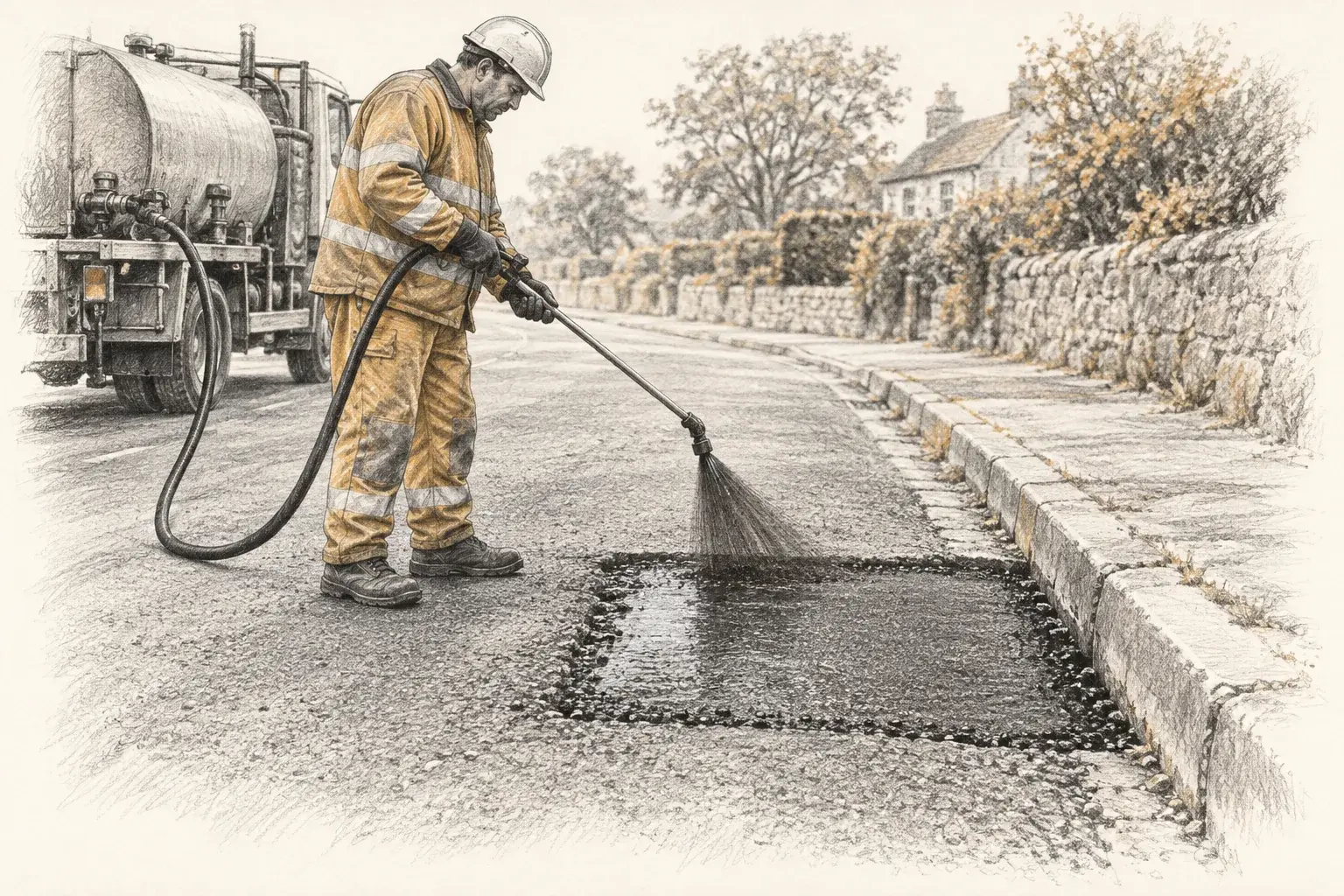
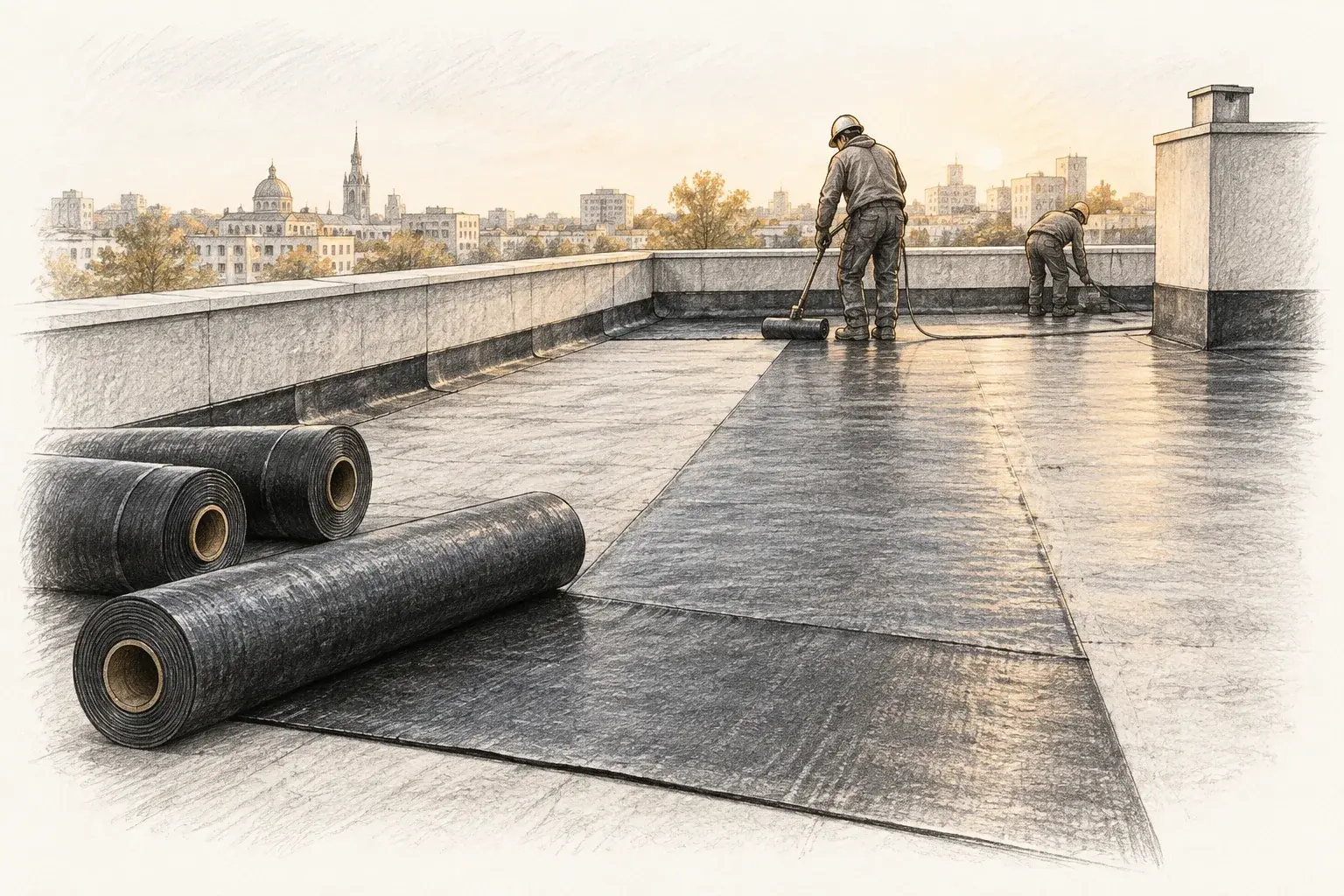
Cold asphalt is best known as a pothole filler, but road owners, utility contractors and facility managers use it for a wider range of small surfacing jobs. Its advantages are the same everywhere: it can be bought in bags or tubs, stored on site, and placed by a small crew without a hot plant or heated transport. Its limits are also the same: it is not as strong as hot mix and works best in thin, well-compacted layers on a sound base.
Temporary trench reinstatement
When cables, pipes or ducts are laid under a road, the trench has to be reopened to traffic quickly. Cold asphalt is widely used as a temporary surface over the compacted backfill until a permanent hot-mix reinstatement is scheduled.
- Compact the backfill properly in layers first; cold asphalt will not bridge a soft trench.
- Place the cold mix in one or two compacted lifts to finish slightly proud of the road surface.
- Compact with a plate compactor or roller, paying special attention to the trench edges.
- Inspect regularly until permanent reinstatement and top up any settlement.
Around manholes, gully covers and kerbs
The asphalt around ironwork and kerbs is often damaged because it is hard to compact against rigid edges and takes concentrated loads. Cold asphalt is convenient for these small areas. Clean out loose material, tack the faces of the ironwork and existing surface, then hand-tamp the mix firmly into corners before using a compactor. These areas carry heavy point loads, so plan for a permanent repair if the frame itself is loose.
Driveways, footways and car parks
Lightly trafficked surfaces suit cold asphalt well. Typical uses are:
- filling holes and depressions in private driveways and estate roads;
- patching footways and cycle paths;
- repairing car park bays and access lanes;
- making small ramps and level transitions at thresholds.
In car parks and footways, a finer-graded product gives a neater finish. Where vehicles turn sharply or park for long periods in strong sun, the patch can mark or deform until it has fully cured, so allow curing time or choose a stiffer product for hot climates.
Where cold asphalt is not the right choice
| Situation | Why cold asphalt struggles | Better approach |
|---|---|---|
| Large areas of resurfacing | Hard to compact evenly; slower strength gain | Hot mix asphalt |
| Heavy truck routes and junctions | Shoving and rutting under braking and turning loads | Hot mix or full-depth repair |
| Failed or saturated base | Patch has no firm support | Dig out, rebuild base and drainage |
| Thick single layers | Lower part cannot be compacted or cure | Place in lifts or use hot mix |
Good practice for any of these jobs
- Cut or trim the area to sound material with roughly vertical sides.
- Remove water, dust and loose stones.
- Apply a light tack coat of bitumen emulsion to the edges and base where specified.
- Place the mix, overfill slightly and compact in layers.
- Dust the surface with fine sand if it is to be walked on or trafficked immediately, to reduce pick-up.
Weather and timing
One reason contractors keep cold asphalt in stock is that it can be placed when hot mix is unavailable, such as at night, at weekends or in the wet season. Even so, results are better in dry conditions. Avoid placing into standing water, and in cold weather keep the material in a warm store before use so it spreads and compacts more easily. In very hot weather, allow the patch time to firm up before heavy vehicles turn on it.
Cold asphalt is a maintenance material. It is excellent for small, quick, well-compacted repairs on a firm base, not a replacement for a new hot-mix surface.
Ordering for these applications
Tell your supplier the application, expected traffic, climate, layer thickness, whether you need a fine or standard grading, and the pack size that suits your crews. Ask for the data sheet, SDS and shelf life. Nuroil supplies ready-to-use cold asphalt alongside other construction products; you can request a quote with your quantities.