Liquid caustic soda is traded mainly in two strengths: a stronger solution around 48–50% and a weaker one around 30–32%. Both contain the same chemical, and both are used for pH control, neutralisation, cleaning and chemical processing. The choice between them is a practical one, driven by freight, climate, storage and how the plant doses the product.
Why these two strengths exist
Most liquid caustic soda comes from the electrolysis of brine. In the membrane process the cell produces a solution of roughly 33% sodium hydroxide, which is then evaporated to 50% for sale. The weaker product is therefore close to what leaves the cell, while 50% has had energy spent to remove water. Many buyers then dilute the 50% product again on site, which is why the choice deserves some thought.
How the two compare
| Factor | About 32% | About 50% |
|---|---|---|
| Solution needed per tonne of NaOH | About 3.1 t | 2 t |
| Typical specific gravity | About 1.33 at 30% | About 1.5 |
| Freezing risk | Low; around 30% stays liquid below 0 °C | Begins to crystallise near 12 °C |
| Viscosity when cool | Moderate | High; poor flow in cold weather |
| Storage volume per tonne NaOH | Larger | Smaller |
| Typical buyer | Water works, smaller users, cold sites | Larger plants, long-haul shipments, sites that dilute |
Freight and storage
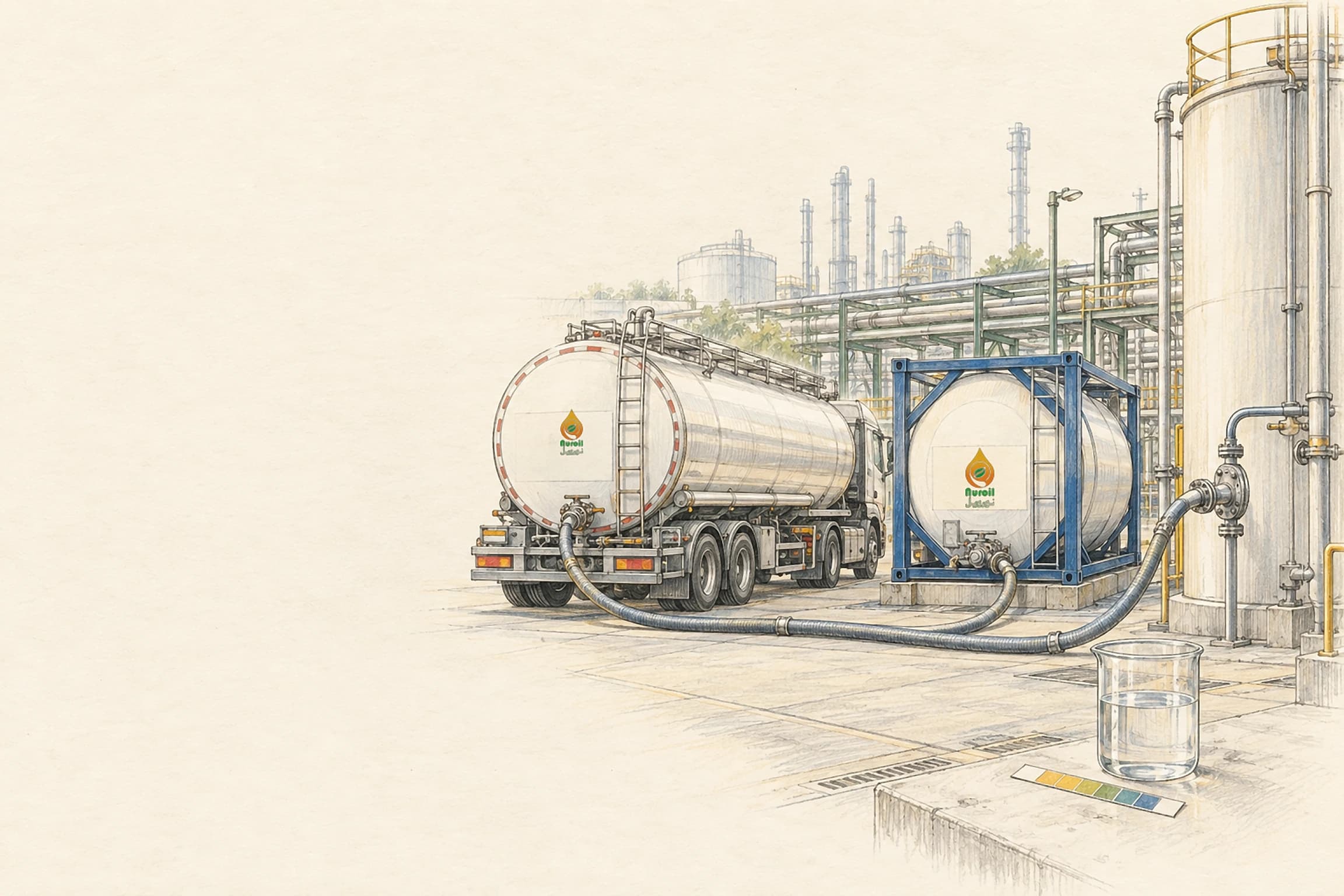
Every tonne of 32% lye carries a little over two tonnes of water; 50% lye carries one. Over long distances, or when shipping in ISO tanks where the payload is limited by weight, the stronger product moves more sodium hydroxide per trip. It also needs less tank volume for the same days of cover. That is the main reason export cargoes are often quoted at 48–50%.
The weaker product earns its place where the distance is short, the tank is small, or the plant would otherwise have to build a dilution station.
Climate and heating
A 50% solution begins to crystallise at about 12 °C and thickens well before that. Sites that see cool nights need insulated, heated tanks and traced lines for 50% lye. Drinking-water guidance notes that freezing becomes a concern for any concentration above about 30%. A 32% product removes most of that cost, which is why it is common at outdoor dosing points and remote water works.
In hot climates the concern reverses: lye stored in sun-exposed carbon steel can exceed the temperature at which steel starts to corrode quickly, roughly 49 °C, so tank material and shading matter whichever strength is chosen.
Dosing accuracy
Very small dose rates are easier to control with a weaker solution, because the pump moves a larger, more measurable volume. Many water plants dose caustic at a few milligrams per litre, and some dilute bought-in 50% to 20–25% for that reason. If your plant already dilutes, buying 50% and diluting under control is usually the economical path. If it doses neat, the strength you buy is the strength you dose, so the pumps and calibration must match it.
Quality is the same chemistry, not always the same grade
Concentration is separate from grade. Membrane-grade lye typically holds less than 100 ppm sodium chloride at 50%, while diaphragm grade can contain around 1%. For drinking water, food or rayon processes, specify the grade and impurity limits as well as the strength.
What to put in an enquiry
- Concentration and tolerance (for example 48–50% or 31–33% NaOH).
- Grade (membrane or other) and limits for chloride, chlorate, iron and carbonate if they matter to you.
- Delivery form: ISO tank, IBC, or drums, and unloading arrangements at site.
- Destination climate and any need for heating coils.
Nuroil supplies caustic soda lye with a certificate of analysis on every delivery, and the SDS and certificate of origin on request; send your requirements through request a quote.