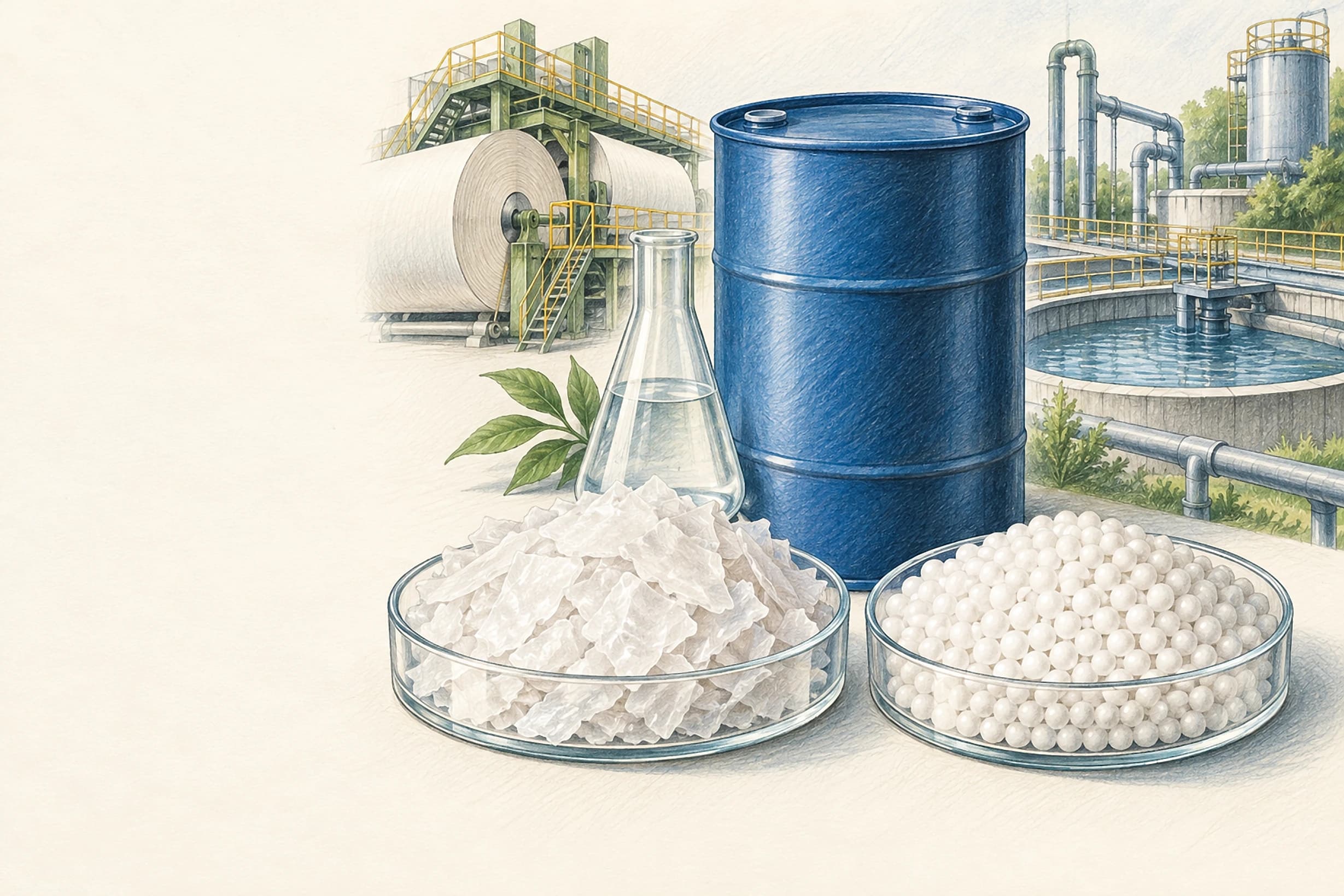
Zinc chloride, ZnCl₂, is a white, strongly hygroscopic salt that dissolves in water very readily and gives a mildly acidic solution. In water treatment it is the usual source of zinc ions for cooling-water corrosion inhibitor programmes, where a few milligrams of zinc per litre, together with phosphate or phosphonate, protect steel at the cathode.
Outside water treatment it is a galvanising and soldering flux, a battery electrolyte, a dehydrating agent and catalyst in chemical synthesis, and a feed for activated carbon, textile and wood-preserving processes. It is corrosive and very toxic to aquatic life, and it draws moisture from the air, so it must stay sealed.
Identity
Formula
ZnCl₂
Molar mass
136.3 g/mol
CAS
7646-85-7
Zinc chloride · ZnCl₂Why Zinc chloride
A clean zinc sourceDissolves completely and quickly, so inhibitor blends get their zinc without residue.
Solid or solution98% solid for blenders who make their own solution; 62–65% solution for direct dosing.
Low iron and leadTechnical grades are purified to low iron, lead and sulphate, reported on the batch certificate.
Documented qualityEach offered batch comes with its Certificate of Analysis and safety data sheet.
What Nuroil does on every order
Why choose zinc chloride from Nuroil?
Checked against the batch CoA
ZnCl₂ content, basic salt, iron and lead are reviewed on the batch certificate before loading.
Dangerous-goods paperwork handled
Shipped as class 8 corrosive and marine pollutant, with the correct UN entry, labels and declarations.
Packed against moisture
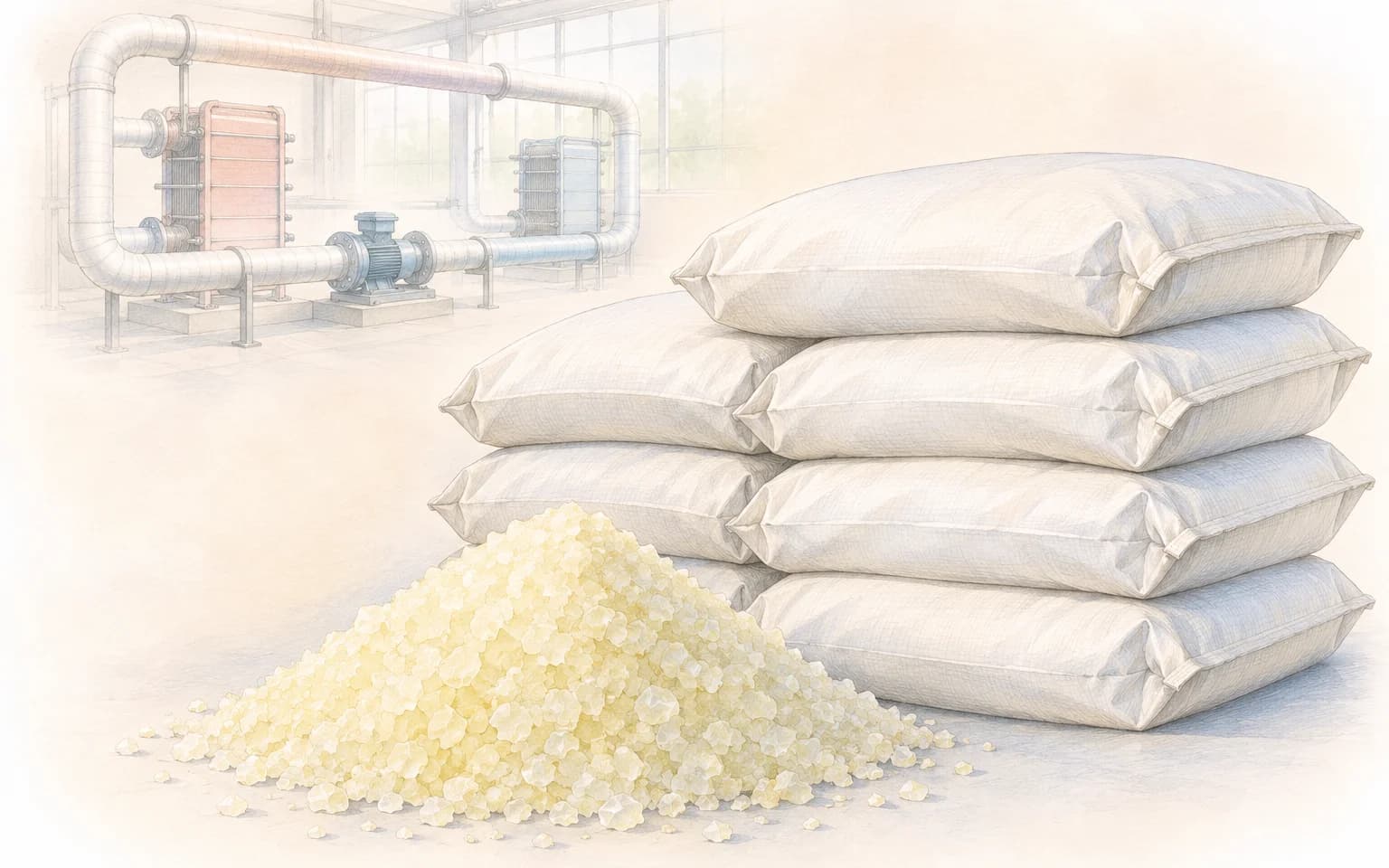
Lined, sealed bags and drums, because the solid takes up water from the air and cakes.
One desk, firm offers
FOB, CFR or CIF from our Sharjah trade desk, usually within 24 hours.
02 TECHNICAL DATA
Technical specification.
ZnCl₂ content (solid)
98.0% min (96% grades also traded)Complexometric (EDTA) titration
ZnCl₂ content (solution)
About 62–65%Complexometric (EDTA) titration
Basic salt (as ZnO)
2% maxTitration
Acid-insoluble matter
0.01–0.02% maxGravimetric
Sulphate (SO₄)
0.01% maxTurbidimetric
Iron (Fe)
0.0005–0.001% maxICP / colorimetric
Lead (Pb)
0.0005–0.001% maxICP / AAS
Alkali and alkaline-earth metals
1% maxGravimetric
Appearance
White powder or granules; clear, colourless solutionVisual
Reference standard
HG/T 2323 (Chinese producers)
0198% POWDER
Blending and synthesis
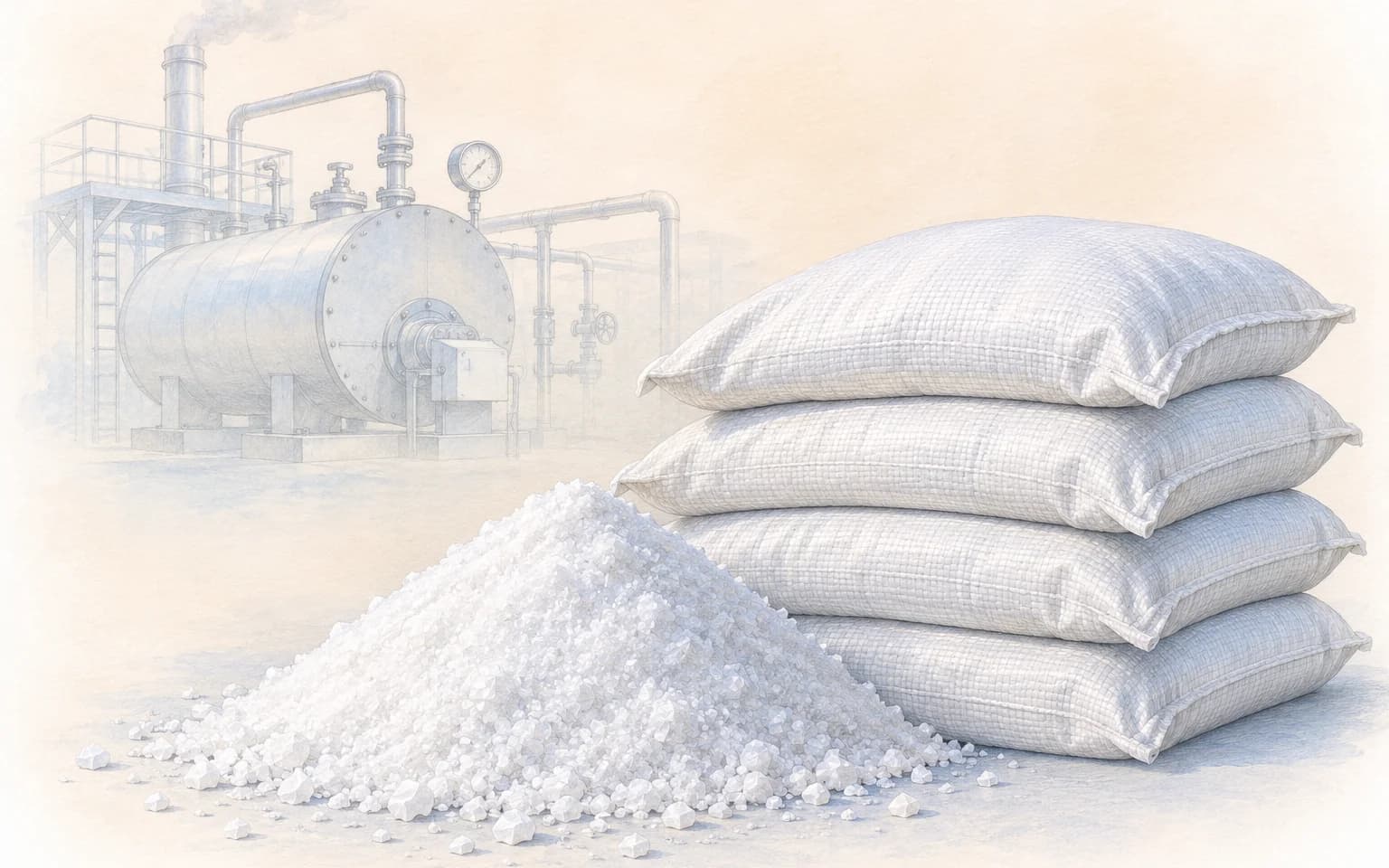
Fine white powder for inhibitor blenders, flux makers and chemical synthesis.
0298% GRANULES
Less dust
Granular solid that pours with less dust and dissolves almost as fast as powder.
0362–65% SOLUTION
Direct dosing
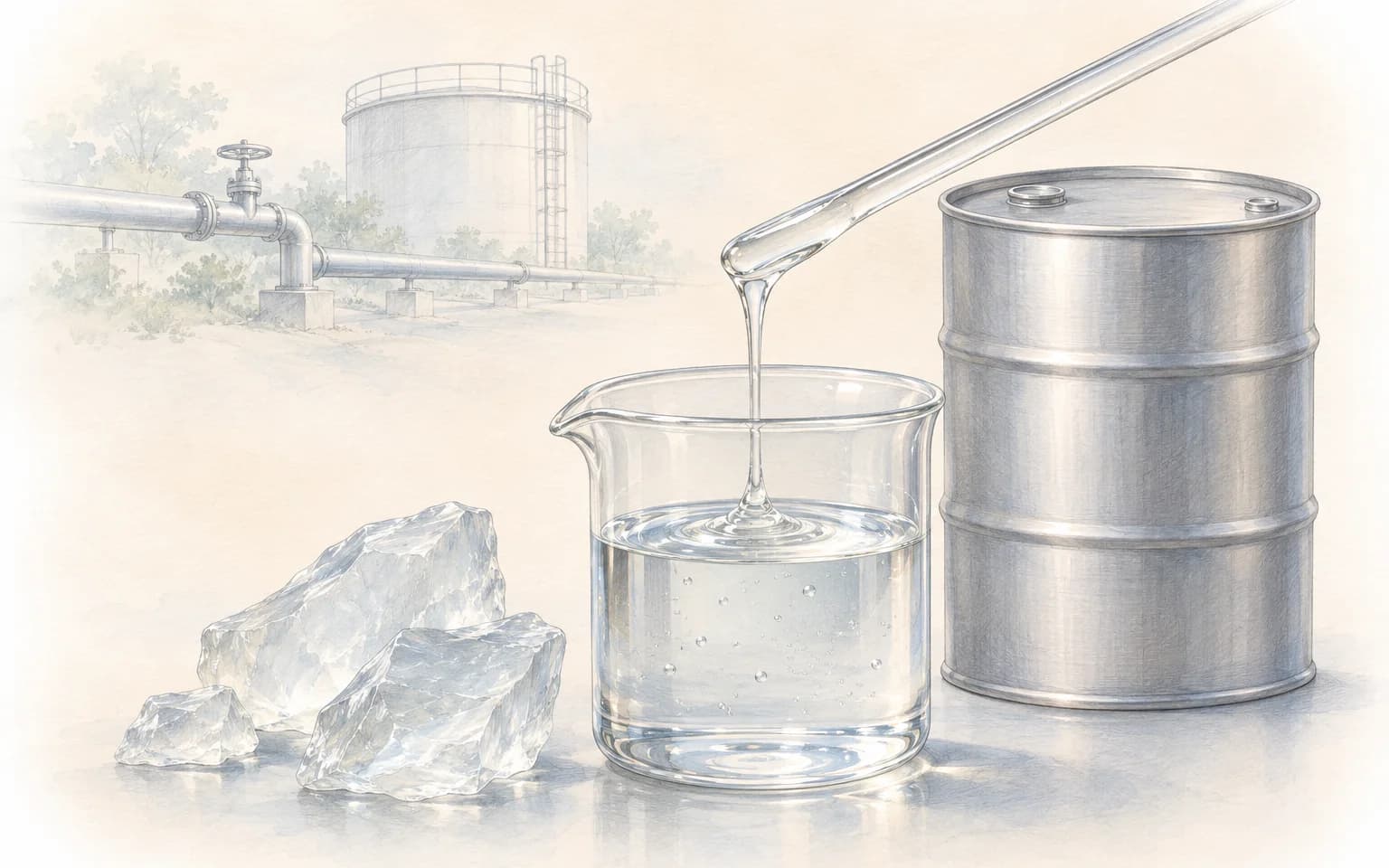
Ready solution for dosing pumps and blending tanks, with no dissolving or dust on site.
04BATTERY GRADE
Low impurities
Tighter limits on iron, lead and other metals for dry-cell electrolytes, on request.
Selection guidance Tell us the use, the zinc dose or blend you make and how you handle the product on site, and we will confirm the grade and form.
The same chemical in two forms. The right one depends on how you blend and dose it.
Property
Solid 98%
Solution 62–65%
ZnCl₂ content
98% min
About 62–65%
Zinc per tonne shipped
Highest
Lower
Handling on site
Dissolve, control dust
Pump directly
Moisture sensitivity
Cakes in humid air
None
Best suited to
Blenders, flux and battery makers, export
Dosing plants and inhibitor blending tanks
03 HOW IT IS MADE
From zinc and acid to a dry salt.
Zinc metal, zinc oxide or zinc-bearing secondary materials are dissolved in hydrochloric acid. The solution is purified, iron oxidised and removed, heavy metals cemented out with zinc dust, then sold as solution or evaporated and dried to powder or granules.
01
Zinc and acid
Zinc metal or zinc oxide with hydrochloric acid.
02
Dissolving
The zinc dissolves to zinc chloride solution, releasing hydrogen from metal.
03
Purifying and drying
Iron and heavy metals are removed; the solution is evaporated and dried.
04
Testing and packing
Each batch is tested for ZnCl₂ content and impurities and sealed against moisture.
04 APPLICATIONS
Where it works.
01
Cooling-water inhibitors
Zinc source in zinc–phosphate and zinc–phosphonate corrosion inhibitor programmes.
02
Galvanising and soldering
Flux, with ammonium chloride, for hot-dip galvanising and soldering.
03
Batteries
Electrolyte in zinc–carbon and zinc chloride dry cells.
04
Chemical synthesis
Lewis-acid catalyst and dehydrating agent in organic chemistry.
05
Activated carbon
Chemical activation of wood and other carbon feedstocks.
06
Textiles and wood
Textile processing and wood preservation, where permitted.
05 SAFETY & HANDLING
Corrosive. Protect skin and eyes.
This summary does not replace the Safety Data Sheet. Review the SDS and site procedure before first handling.
Danger
H302 Harmful if swallowed.
H314 Causes severe skin burns and eye damage.
H335 May cause respiratory irritation (some SDSs).
H410 Very toxic to aquatic life with long lasting effects.
UN
2331 solid · 1840 solution
Class
8, corrosive · PG III
01
Full protection
Wear chemical goggles or a face shield, alkali- and acid-resistant gloves and protective clothing.
02
Control dust and fumes
Avoid breathing dust; heated zinc chloride gives off irritating fumes.
03
Dissolve with care
Dissolving the solid releases heat; add it slowly to water with stirring.
04
Keep out of drains
Very toxic to aquatic life; contain spills and collect them for disposal.
05
Exposure response
Rinse skin or eyes immediately with plenty of water for at least 15 minutes and seek medical attention.
Sealed and dry.
StoreSealed, dry
The solid is deliquescent: open to the air it takes up water, cakes and eventually liquefies. Kept sealed and dry it is stable. Confirm the producer’s shelf life with the offer.
Keep containers closedReseal bags and drums at once; moisture makes the solid cake.
Dry, ventilated storeUnder cover, off the floor and out of humid air.
SegregateApart from strong alkalis, potassium and sodium metals, and food and feed.
First in, first outUse the oldest stock first and keep the batch label with each lot.
Plan documentation early.
HS code2827.39
CAS number7646-85-7
EC number231-592-0
UN numberUN 2331
UN numberUN 1840
GHS
Acute toxicity (oral); skin corrosion; eye damage; very toxic to aquatic life with long lasting effects
Transport
Class 8 corrosive, PG III: UN 2331 solid, UN 1840 solution; marine pollutant
As a zinc source in cooling-water corrosion inhibitor programmes. Zinc ions, usually with orthophosphate or phosphonate, form a protective film at the cathodic areas of steel. Many discharge permits limit zinc, so check the local limit first.
02Solid or solution?
The 98% solid carries the most zinc per tonne and suits blenders and export. The 62–65% solution can be pumped straight into dosing and blending tanks with no dust or dissolving.
03Why does the solid cake?
Zinc chloride is deliquescent: it draws moisture from the air. Keep bags sealed and stored dry, and use opened packs quickly.
04Is it dangerous goods for shipping?
Yes. It is class 8 corrosive, packing group III: UN 2331 for the solid and UN 1840 for the solution, and a marine pollutant. We prepare the dangerous-goods documents with the shipment.
05What is the HS code?
Zinc chloride is usually classified under HS 2827.39. Its CAS number is 7646-85-7.
06What documents come with a shipment?
A Certificate of Analysis and Safety Data Sheet, with the Certificate of Origin and dangerous-goods declaration as required.
Include the form (solid or solution), the use, quantity, packing and destination for a tailored offer. We reply with a firm FOB, CFR or CIF offer, usually within 24 hours.